

Introduction
Simple Definition
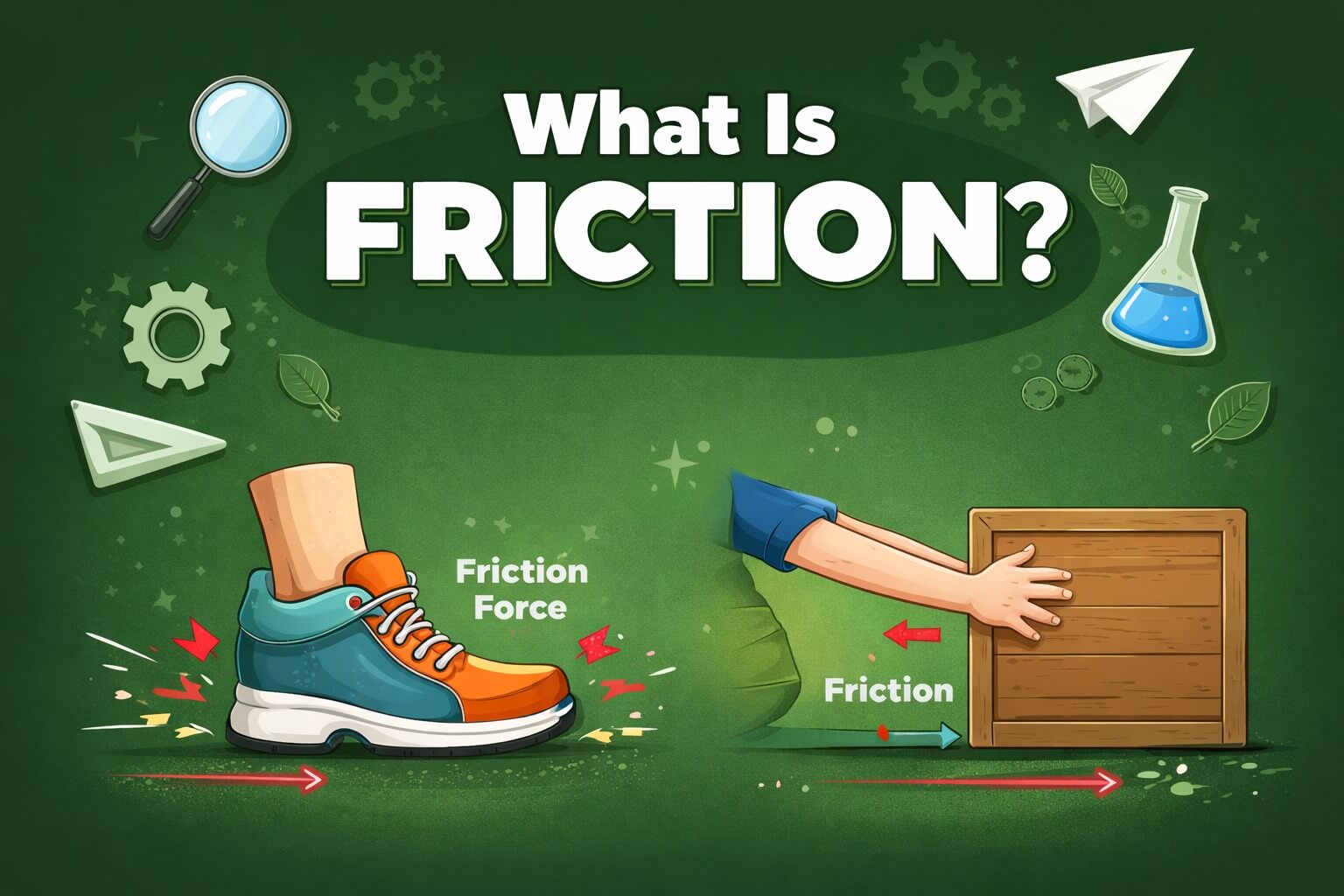
Friction is a force that opposes motion when two surfaces come in contact with each other.
In simple words, friction is the force that slows down or stops moving objects.
Everyday Connection
We experience friction every day without even realising it.
When we walk, write with a pencil, ride a bicycle, or apply brakes in a vehicle, friction is always at work. Without friction, life would be very difficult—we would slip, fall, and be unable to control movement.
Definition of Friction
What Friction Means
Friction is a contact force that acts between two surfaces that are touching each other.
It resists the motion of one object over another.
How It Acts Between Surfaces
Even smooth surfaces have tiny irregularities.
When two surfaces touch, these irregularities interlock, creating resistance.
This resistance is the cause of friction.
How Friction Works
Contact Between Surfaces
Friction occurs only when two surfaces are in contact.
If there is no contact, friction cannot act.
Direction of Friction Force
The frictional force always acts opposite to the direction of motion.
For example:
- If a box moves forward, friction acts backward.
- If a ball rolls to the right, friction acts to the left.
Types of Friction
There are four main types of frictional force:
Static Friction
Static friction acts on an object at rest.
It prevents the object from moving until enough force is applied.
Example:
Trying to push a heavy cupboard that does not move at first.
Sliding Friction
Sliding friction definition:
Sliding friction is the force that acts when one surface slides over another surface.
Example:
A book sliding across a table.
Rolling Friction
Rolling friction occurs when an object rolls over a surface.
Example:
A bicycle moving on the road.
Rolling friction is less than sliding friction, which is why wheels are used.
Fluid Friction
What is fluid friction?
Fluid friction is the force that opposes motion when an object moves through a fluid (liquid or gas).
Examples:
- Air resistance on a moving car
- Water resistance while swimming
Factors Affecting Friction
Nature of Surfaces
Rough surfaces produce more friction, while smooth surfaces produce less friction.
Force Pressing Surfaces Together
The more the force pressing two surfaces together, the greater the friction.
Advantages of Friction
Friction is not always bad. It has many important uses:
Walking
Friction between our feet and the ground helps us walk without slipping.
Writing
Friction between the pen or pencil and paper allows us to write.
Braking
Friction between brakes and wheels helps vehicles stop safely.
Disadvantages of Friction
Wear and Tear
Friction causes parts of machines to wear out over time.
Heat Production
Friction produces heat, which may damage machines.
Energy Loss
Some useful energy is lost as heat due to friction.
Methods to Reduce Friction
Lubrication
Oil or grease fills gaps between surfaces and reduces friction.
Polishing Surfaces
Smooth surfaces create less friction.
Use of Wheels and Rollers
Wheels convert sliding friction into rolling friction, which is much smaller.
Real-Life Examples of Friction
Walking on the Road
Friction prevents us from slipping.
Moving a Box
More force is needed due to sliding friction.
Riding a Bicycle
Rolling friction and air friction act on the bicycle.
Common Mistakes Students Make
Confusing Friction with Gravity
- Frictional force acts between surfaces in contact.
- Gravitational force acts between masses without contact.
Thinking Friction Always Slows Motion
Friction can also help motion, like walking or gripping objects.
FAQs
Is friction a force?
Yes, friction is a force that opposes motion.
Can friction be useful?
Yes, friction is very useful in walking, writing, driving, and holding objects.
Does friction exist in air?
Yes, air causes fluid friction, also called air resistance.
Why is friction less on smooth surfaces?
Smooth surfaces have fewer irregularities, so there is less resistance.