

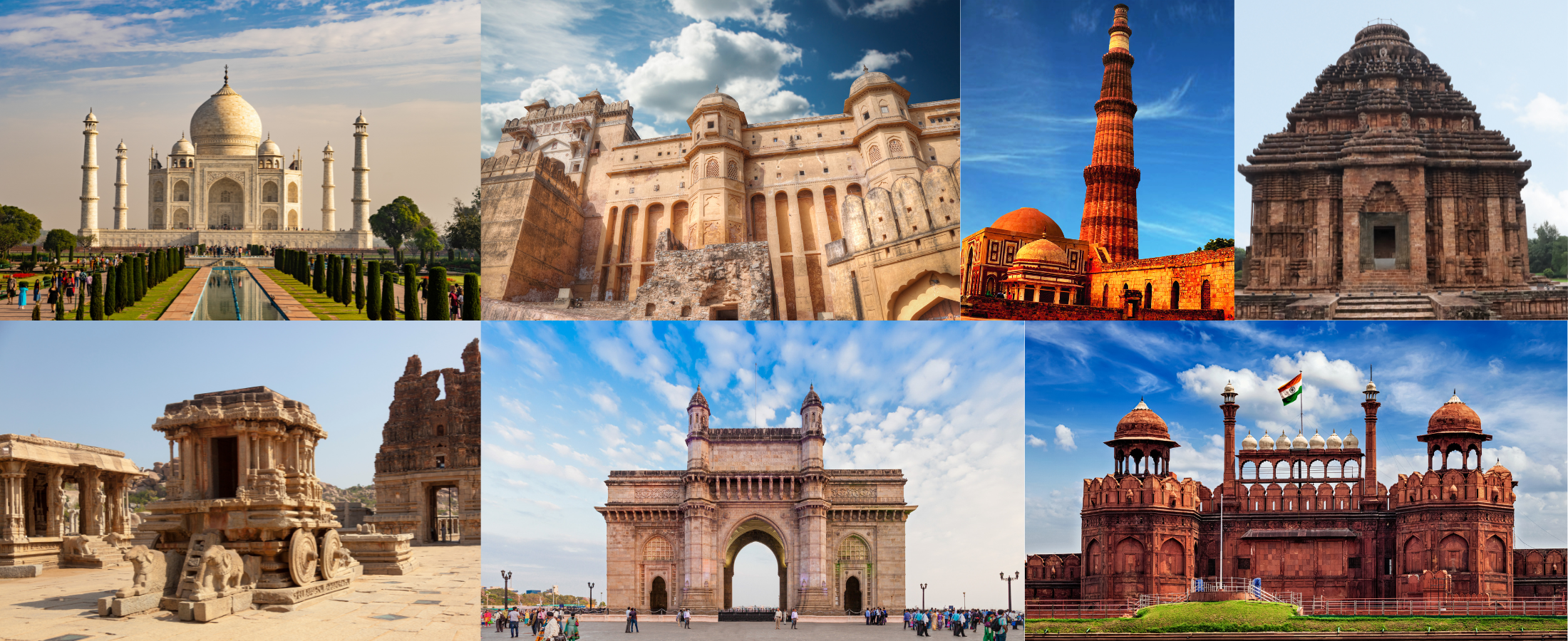
India is a treasure trove of history, culture, and heritage. Every corner of this vast country offers something unique, from ancient temples and forts to stunning palaces and breathtaking monuments. As we journey through some of India’s most famous indian historical places, we invite you to explore these 20 must-visit destinations that embody the essence of the country’s rich cultural heritage.
Exploring the historical places of India allows travelers and students alike to understand how centuries of culture, architecture, and tradition have shaped the nation we see today.
1. The Taj Mahal, Agra: A Symbol of Love and Architecture
Undoubtedly, the Taj Mahal is one of the most iconic and famous monuments in India. Built by Mughal Emperor Shah Jahan in memory of his beloved wife, Mumtaz Mahal, this UNESCO World Heritage Site stands as a symbol of eternal love. Its stunning white marble architecture, intricate carvings, and reflective pools make it a must-visit for anyone exploring India’s cultural heritage.
The Taj Mahal is often included in lists of the top 10 historical monuments in India because of its unmatched beauty and global recognition.
2. Jaipur’s Amer Fort: A Stunning Example of Rajput Architecture
Nestled in the Pink City of Jaipur, Amer Fort is a majestic example of Rajput architecture. This beautiful fort, with its large ramparts, cobbled paths, and a series of gates, reflects the valor and grandeur of the Rajput rulers. Inside, you’ll find palaces, temples, and beautifully decorated halls that glimpse India’s royal past.
3. Qutub Minar, Delhi: The Tallest Brick Minaret in the World
A UNESCO World Heritage Site, the Qutub Minar is an architectural marvel and one of the tallest brick minarets in the world. This historical monument in Delhi is a testament to India’s rich Islamic heritage and is surrounded by various other ancient structures, including the Iron Pillar of Delhi, which has puzzled scientists for its rust resistance.
Sites like Qutub Minar are considered places of historical importance because they reflect the architectural achievements of earlier civilizations.
4. Red Fort, Delhi: A Glimpse into India’s Mughal Past
Another UNESCO World Heritage Site, the Red Fort in Delhi, is a symbol of India’s rich Mughal history and one of the important places in india that is a must-visit. Built by Emperor Shah Jahan, this massive fort made of red sandstone once served as the main residence of the Mughal emperors. Today, the Red Fort stands as a reminder of India’s glorious past and is the site of the annual Independence Day celebrations.
5. Hampi, Karnataka: The Lost Empire of Vijayanagara
Hampi, a UNESCO World Heritage Site, is a historical treasure in Karnataka. Once the capital of the Vijayanagara Empire, the ruins of Hampi offer a glimpse into the architectural brilliance of ancient India. Temples, palaces, and forts dot the landscape, making it a must-visit for history buffs and travelers alike.
6. Fatehpur Sikri, Uttar Pradesh: A Mughal Masterpiece
Fatehpur Sikri was once the capital of the Mughal Empire under Emperor Akbar. The city is an architectural marvel and features grand palaces, courtyards, and mosques. The Buland Darwaza, one of the largest gateways in the world, is a key highlight of this UNESCO World Heritage Site.
7. Konark Sun Temple, Odisha: A Marvel of Ancient Engineering
The Konark Sun Temple is a 13th-century architectural masterpiece dedicated to the Sun God. This UNESCO World Heritage Site is known for its intricate carvings and the iconic chariot-shaped structure with twelve massive wheels. The temple is not only a symbol of India’s rich architectural heritage but also showcases the country’s advanced engineering skills during ancient times.
8. Sanchi Stupa, Madhya Pradesh: The Oldest Stone Structure in India
Sanchi Stupa is one of India’s oldest and most important Buddhist monuments. Built during the reign of Emperor Ashoka in the 3rd century BCE, this UNESCO World Heritage Site stands as a symbol of peace and enlightenment. The Great Stupa is renowned for its intricate carvings and sculptures that depict scenes from the life of Buddha.
9. Mysore Palace, Karnataka: A Royal Heritage
Mysore Palace is one of the most stunning palaces in India, known for its Indo-Saracenic architecture. The palace, once home to the Wodeyar dynasty, is a spectacular blend of Hindu, Mughal, Rajput, and Gothic styles. When illuminated at night, Mysore Palace is a sight to behold, drawing visitors from around the world.
10. Khajuraho Temples, Madhya Pradesh: Intricate Sculptural Beauty
The Khajuraho Temples, a UNESCO World Heritage Site, are renowned for their stunning erotic sculptures and intricate carvings. Built between the 9th and 11th centuries by the Chandela dynasty, these temples represent India’s architectural and artistic excellence.
Many travel guides list Khajuraho among the top 20 historical places in India because of its cultural and artistic significance.
11. Jallianwala Bagh, Amritsar: A Site of Historical Tragedy
Jallianwala Bagh is a somber reminder of India’s struggle for independence. The garden commemorates the tragic massacre of 1919, where British troops opened fire on unarmed civilians. A visit here is a poignant experience, offering insights into the sacrifices made for India’s freedom.
12. Gateway of India, Mumbai: A Symbol of Colonial History
The Gateway of India is an iconic landmark in Mumbai and one of the most important monuments of India’s colonial past. Built to commemorate the visit of King George V and Queen Mary to India, this grand structure stands as a symbol of British rule and its eventual end when the last British troops left India through this gateway in 1948.
13. Ajanta and Ellora Caves, Maharashtra: Buddhist and Hindu Masterpieces
Ajanta and Ellora Caves are India’s most famous UNESCO World Heritage Sites. These ancient rock-cut caves house Buddhist, Hindu, and Jain temples, with intricate carvings that depict scenes from mythology. Ajanta is known for its Buddhist paintings, while Ellora showcases a blend of Hindu, Jain, and Buddhist art and architecture.
14. Rani ki Vav, Gujarat: The Queen’s Stepwell
Rani ki Vav, located in Patan, Gujarat, is an ancient stepwell and a UNESCO World Heritage Site. Built in the 11th century, this stepwell was constructed in memory of a king by his queen and is known for its intricate sculptures and water management system.
15. Chittorgarh Fort, Rajasthan: A Symbol of Rajput Valor
Chittorgarh Fort, the largest fort in India, is a UNESCO World Heritage Site and a symbol of Rajput bravery and sacrifice. The fort has witnessed several battles and is associated with the tales of Rani Padmini and Maharana Pratap. A visit to this fort offers a glimpse into Rajasthan’s glorious history.
16. Elephanta Caves, Maharashtra: Hindu Cave Temples
Located on Elephanta Island near Mumbai, the Elephanta Caves are a UNESCO World Heritage Site. These rock-cut caves date back to the 5th century and are dedicated to Lord Shiva. The most famous sculpture in the caves is the Trimurti, a three-headed depiction of Shiva.
17. Victoria Memorial, Kolkata: A British Legacy
Victoria Memorial in Kolkata is a beautiful blend of British and Mughal architecture. Built in memory of Queen Victoria, this grand monument stands as a symbol of the British Empire in India. Today, it houses a museum showcasing India’s colonial history and artistic heritage.
18. Rameshwaram Temple, Tamil Nadu: A Pilgrimage of Devotion
Rameshwaram Temple, one of the holiest pilgrimage sites in India, is dedicated to Lord Shiva. The temple is known for its stunning corridors, ornate pillars, and intricate carvings. It is believed that Lord Rama built a bridge from Rameshwaram to Lanka during his quest to rescue Sita.
19. Mahabalipuram, Tamil Nadu: Ancient Shore Temples
Mahabalipuram, another UNESCO World Heritage Site, is famous for its ancient shore temples and rock-cut monuments. The stunning stone carvings and sculptures here depict stories from Indian mythology and highlight the artistic brilliance of the Pallava dynasty.
20. Mehrangarh Fort, Jodhpur: A Marvel of Rajasthan
Mehrangarh Fort, perched high above the blue city of Jodhpur, is one of the largest forts in India. Built in the 15th century, this majestic fort offers stunning views of the city and houses a museum showcasing the rich history and culture of Rajasthan.
A quick historical monument chart can also help students identify major monuments, their locations, and the dynasties that built them.
Conclusion
At Bethany High, we believe in providing our students with a holistic education that goes beyond the classroom. Just like our field trips and activities, which expose students to the wonders of the world around them, India’s vast array of historical places offers a glimpse into the nation’s rich cultural heritage and legacy. These iconic sites tell the story of India’s past and inspire future generations to appreciate and preserve the legacy for years to come.
Whether it’s the towering forts of Rajasthan, the serene beauty of the Taj Mahal, or the ancient wonders of Hampi, India’s historical landmarks stand as a testament to the country’s incredible diversity and cultural depth. Just as we encourage our students to explore, learn, and grow, we invite you to embark on your journey to these must-visit historical places in India. Through exploration, we understand who we are and where we come from—a valuable lesson that stays with us for a lifetime.
FAQs
Which Is the Coldest Place in India?
The coldest place in India is Drass in Ladakh, where winter temperatures can be as low as -30°C.
Which Is the Driest Place in India?
Jaisalmer in Rajasthan is considered the driest place in India.
Which Is the Hottest Place in India?
Phalodi in Rajasthan holds the record for the highest temperature in India, reaching up to 51°C.
Which Place in India Receives the Highest Rainfall?
Mawsynram in Meghalaya is the wettest place in India, receiving the highest annual rainfall.
Which Place Is Called Switzerland of India?
Khajjiar, a hill station in Himachal Pradesh, is often referred to as the “Switzerland of India.”
Which Places in India Experience Sunrise First and Last Respectively?
Dong in Arunachal Pradesh experiences the first sunrise in India, while Gujarat’s westernmost point near Koteshwar experiences the last sunset.
What Is a World Heritage Site?
A World Heritage Site is a landmark or area recognized by UNESCO for its cultural, historical, or natural significance.
How Many UNESCO World Heritage Sites Are There in India?
India has 40 UNESCO World Heritage Sites, reflecting its rich cultural and natural heritage.