
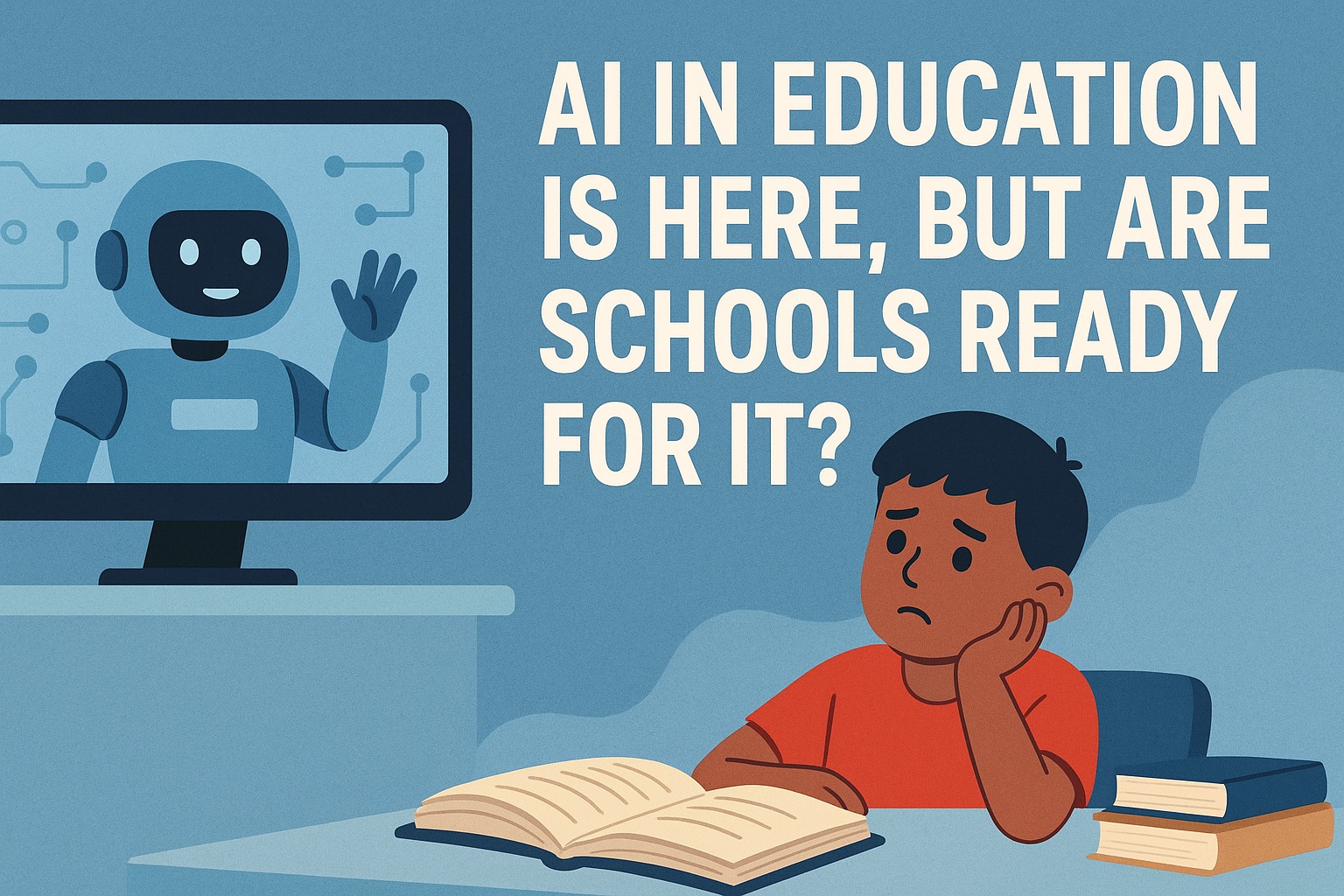
Artificial Intelligence is no longer just science fiction or Silicon Valley jargon. It’s in our homes, our phones, and yes, in our classrooms, too. From AI-powered personalised tutoring apps and adaptive learning platforms to tools that can write essays or generate instant, real-time feedback, AI transforms how students learn and teachers teach.
But amidst all this change, there’s one question that matters more than ever.
Are Indian schools truly ready for AI?
At Bethany Institutions, we’ve always believed in staying ahead of the curve. But more than that, we believe schools must be thoughtful, not just tech-savvy. AI in education isn’t just a new gadget. It’s a whole new way of thinking about what learning looks like, and here’s how we see it.
AI Is Changing Learning. Dramatically.
Gone are the days of “one-size-fits-all” education. Today, AI can analyse how each child learns best and adapt accordingly. For learners who need more time, AI offers revision. For the fast-paced, it opens doors to more advanced material. Whether it’s a student who needs more time on algebra or one who races ahead in English literature, AI-powered platforms are stepping in where traditional methods couldn’t.
Tools like Khan Academy’s AI tutor, Byju’s personalised journeys, and Google’s Read Along app are already being used by Indian students from metros to tier-2 cities.
And that’s not all.
In India, the Central Board of Secondary Education (CBSE) has already introduced AI as an optional skill subject from Class IX to XII, and almost 8 lakh students enrolled in these courses in 2024–25. Kendriya Vidyalayas are running pilot programmes using AI tools to personalise learning. Even popular edtech platforms like Toppr are integrating AI to make content smarter and more responsive.
In other words, the technology is here. What we do with it next matters most.
At Bethany, we see this as a huge opportunity. AI should be used to personalise learning and not standardise it. Every child learns differently. If AI can help us cater to that, while teachers focus on mentorship and values, that’s a win.
The AI Revolution in Assessments
Here’s a hard truth: Traditional exams don’t always tell the full story of what a student knows or can do. But that’s starting to change, thanks to AI.
Today, AI isn’t just helping students with tutoring or homework. It’s also beginning to transform how we assess their learning. Imagine an exam that doesn’t just give a score, but instantly shows which topics a student struggled with or which concepts each child missed. AI-powered assessment systems can also grade multiple-choice tests in seconds and even analyse essays for grammar, structure, and writing style, delivering feedback in minutes instead of weeks. That kind of immediate response can help students learn from their mistakes right away.
Plus, these assessments, powered by AI, are also making online tests smarter and more secure. Some platforms use them to spot unusual patterns that might indicate cheating. This is increasingly important as digital exams become more common.
But that’s not all.
These tools or systems can also support teachers in powerful ways. With insights from AI assessments, educators can identify learning gaps early, adjust lesson plans, and offer timely support, making sure no one falls through the cracks.
But, of course, there are valid concerns, too. Parents and teachers alike worry that students might lean too heavily on AI and use it to generate answers or complete assignments without really learning. And that’s a real risk.
That’s why many education experts at our school say AI should be seen as a “co-pilot,” not the driver. In other words, it’s a tool to support thinking and not replace it. For example, a teacher might encourage students to use an AI chatbot to gather information for a project, but still expect them to come up with their ideas and conclusions. This keeps learning active, creative, and student-driven, rather than letting algorithms do all the work.
AI and the Role of Teachers
At Bethany, we’re convinced AI is here to help teachers, not replace them. In fact, many experts echo this. There are fears of “teacher displacement”, but the reality is a role shift. Instead of delivering facts, teachers become learning facilitators. AI handles routine tasks, while the teacher focuses on discussion, critical thinking, and motivation. As one India Today report notes, educators will move “from deliverers of information to facilitators of learning,” which will “definitely require new skills and training”.
But we must be honest in acknowledging that this shift can be overwhelming. It’s a big change to learn new tech. That’s why teacher training is crucial. In India, initiatives like 1M1B (One Million for One Billion) are already empowering teachers: They have trained over 500,000 educators in future tech, including AI. And at Bethany, we believe all schools should scale up similar efforts if we ever want our teachers to gain confidence with AI tools.
The Real Question: Are We Prepared?
Despite the promise of AI, the digital divide remains a real concern. Many Indian schools still struggle with infrastructure, internet access, and basic digital literacy. In fact, a global survey by EdWeek found that 87% of educators had received no formal AI training as part of their professional development, and only around 10% had even minimal exposure. Introducing AI without addressing these gaps would only widen the inequality.
That’s why readiness must go beyond devices. It’s about:
- Training teachers, not just students.
- Choosing the right tools, not the most expensive ones.
- Asking tough questions about ethics, bias, and data safety.
So, Are We Ready?
The truth is, while India is experimenting with AI in education, there’s still a long way to go in terms of readiness.
We need:
- Stronger infrastructure (especially in rural areas)
- Clear ethical policies for AI use in schools
- Robust teacher training
- Indian-language-friendly AI platforms
- Student data protection norms
At Bethany, we’re not just watching the AI wave. We’re preparing for it. We’ve initiated internal dialogues, encouraged safe experimentation, and are learning alongside our students and teachers. We’re also taking deliberate steps by piloting AI-assisted assessments, training our educators, and engaging with policymakers to ensure AI benefits all students, not just a few. In the end, our school believes that readiness is not just about having the tools. It’s about having the right mindset.
Embracing Change Thoughtfully
AI in education is an exciting frontier. It can personalise lessons, free teachers for deeper engagement, and bridge gaps for many learners. At Bethany, we’re excited by these possibilities. But excitement is not enough, readiness matters. We must ensure our schools have the resources, training, and wisdom to use AI wisely.
We see our role as both learners and leaders. We are observing how AI unfolds in Indian education and will introduce it carefully when the time is right. We will pilot small projects, listen to feedback from teachers and parents, and always put students’ well-being first. Our goal is clear: to enrich our students’ learning without losing sight of human values.
To fellow educators and leaders: let’s keep talking. How can we use AI to make Maths class fun, or help our quiet students speak up?
To parents and students: Be curious but cautious. Ask questions about how these tools work and how your privacy is protected.
And, to policymakers: Let’s invest in infrastructure and training, so every school, in every village and city, can benefit.
In the end, AI is here, and it will stay. The question isn’t if schools should use it, but how. Are we ready to guide it? We at Bethany invite fellow schools, innovators, and stakeholders to join us in building a bold, balanced, and beautifully human education system even in an AI-driven world.