

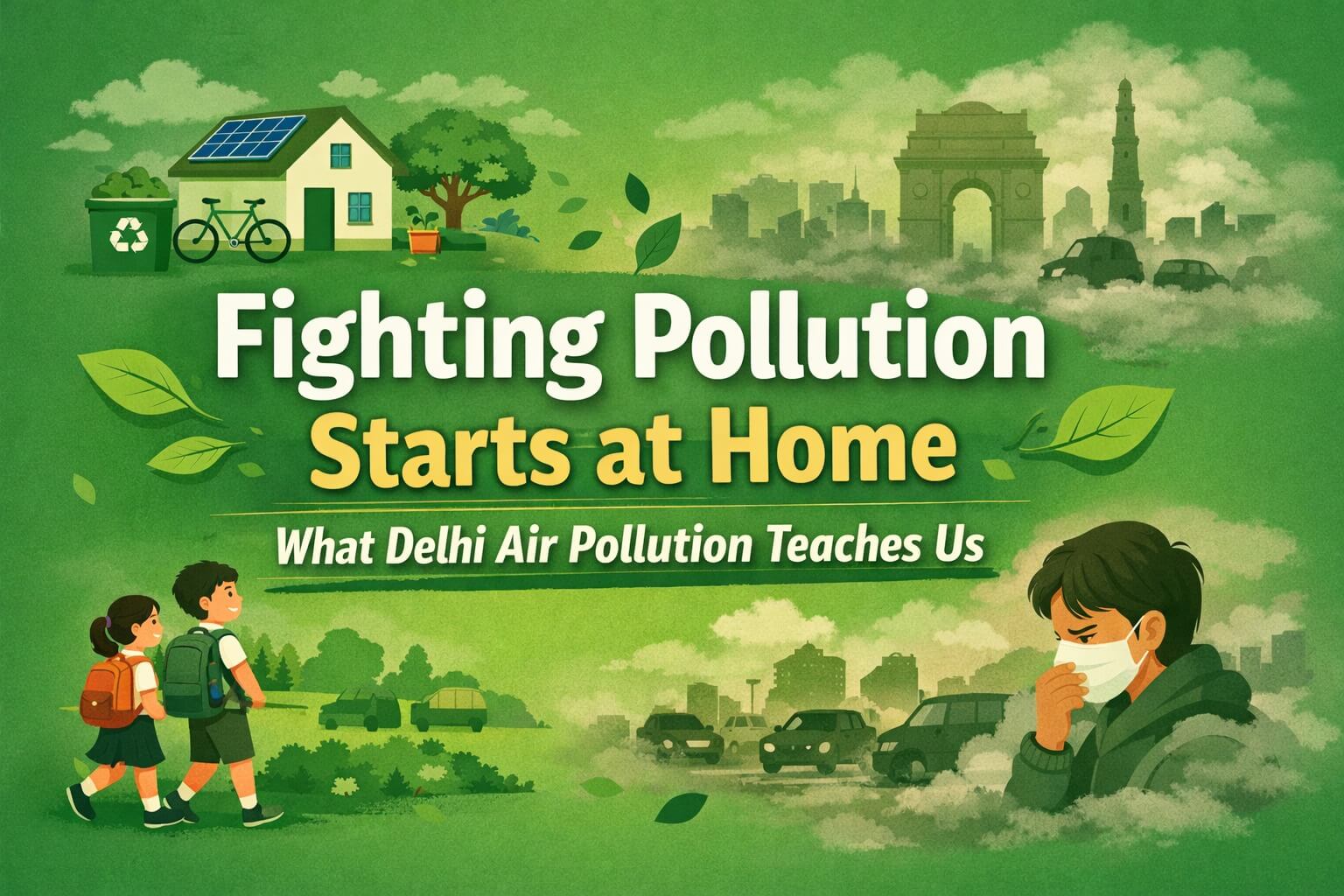
Delhi air pollution has become a major concern for everyone, especially students and families, because it now affects daily life in visible and invisible ways. Thick haze in winter, burning eyes, and frequent coughs are no longer rare events but common experiences. Pollution is no longer only a city problem. It reaches nearby towns, villages, and even enters homes through windows, doors, and daily activities. So no one is fully protected. Small actions at home can create change. When families become aware and adjust their habits, they protect themselves today.
Understanding Delhi’s Air Crisis
Air pollution means harmful substances mix with the air we breathe. Smoke from vehicles, dust from construction, and gases from burning fuels make the air unhealthy. The air quality in Delhi often becomes dangerous because of heavy traffic, constant construction, nearby factories, and seasonal crop burning. Weather conditions trap polluted air close to the ground, stopping it from spreading. Smog is a thick grey layer that forms when smoke and fog mix, reducing visibility and making breathing difficult. People check the Delhi AQI to know how polluted the air is. High values mean the air is unsafe, especially for children and older people.
Why Air Pollution Is a Serious Concern
The effects of air pollution on health appear as frequent coughs, asthma, allergies, and breathing trouble. Children and older people are more sensitive because their lungs are still growing or are already weak. Poor air also changes daily life, as schools cancel outdoor sports and families avoid parks and morning walks. Doctors warn that high PM2.5 and PM10 levels enter deep into the lungs and harm the heart over time.
If pollution continues for years, it can cause lasting lung damage and shorter life spans. The impact of pollution on children is serious because it slows lung growth, reduces focus, and raises illness risk, affecting their future well-being and overall quality of life.
What Delhi’s Air Crisis Teaches Us
Delhi’s situation teaches us important lessons about how pollution grows and how it can be reduced.
- Pollution builds up over time: Pollution does not appear suddenly. It grows through daily actions like driving, using generators, and burning waste, showing that habits matter more than one-time events.
- Prevention is easier than control: Once pollution becomes severe, it is hard to fix quickly. Knowing the causes of Delhi pollution helps people act early and prevent bigger problems.
- Individual habits affect collective air quality: When many people pollute, everyone suffers. When many people improve their habits, air quality improves for all.
Many people across the country also check the air quality index in India to compare pollution levels between cities and understand how serious the problem is nationwide.
Fighting Pollution Starts at Home
Homes are the first and easiest place to begin change because families control what happens inside and around their living spaces. Learning how to reduce air pollution at home begins with noticing everyday actions that add to pollution, such as wasting electricity, burning garbage, or using vehicles when they are not needed. Family awareness matters because children often copy adult behaviour. When parents act responsibly, children naturally learn to respect and care for the environment. These simple habits are practical air pollution solutions that reduce harm without expensive tools or technology.
Simple Steps Families Can Take at Home
Below are easy actions that every household can follow to support cleaner air.
- Reduce waste and avoid burning garbage: Burning waste releases harmful smoke into the air. Families can separate wet and dry waste, compost kitchen waste, and recycle properly to avoid burning and reduce landfills. Regular cleaning, good ventilation, and avoiding incense smoke support indoor air pollution prevention at home.
- Save electricity and fuel: Switching off unused lights, using energy-efficient appliances, and limiting air conditioner use lowers power demand and reduces pollution from power plants.
- Use public transport or carpool when possible: Sharing vehicles or using buses and metro reduces the number of cars on the road, leading to less smoke and cleaner air for everyone.
How Students Can Help Reduce Pollution
Students play a strong role because they influence families and future habits.
- Walking or cycling short distances: Choosing to walk or cycle instead of using vehicles for short trips reduces fuel use and keeps students healthy at the same time.
- Avoiding firecrackers: Firecrackers release heavy smoke and chemicals that pollute the air instantly. Celebrating festivals in eco-friendly ways protects both the environment and public health.
- Spreading awareness among friends and family: Students can talk about pollution in school, share ideas at home, and encourage others to make small changes. This spreads responsibility beyond one person.
Role of Schools and Communities
Schools and neighbourhoods can guide and support eco-friendly behaviour.
- Encouraging eco-friendly habits: Schools can promote saving paper, switching off lights, and using reusable bottles. These habits slowly become part of daily life.
- Tree plantation and clean-up drives: Planting trees improves air quality, while clean-up drives reduce waste that could otherwise be burned or left to decay.
- Teaching responsibility beyond textbooks: Environmental education should not remain only in books. Practical activities help students understand their role in protecting nature.
Small Actions That Create Big Impact
Real change comes from regular effort, not from one-time campaigns.
- Consistency over perfection: People do not need to be perfect. Even small, regular actions make a difference over time.
- Collective effort and shared responsibility: When many people act together, the effect becomes visible. This shows the power of community.
- How small changes add up: Choosing cleaner habits daily slowly reduces pollution and builds a healthier environment for future generations.
Conclusion
Pollution control starts with awareness and simple daily choices. Homes shape habits, and habits shape cities. When families and students act responsibly, they protect their own health and support a cleaner world. Everyone can take one simple step today and be part of a healthier tomorrow. Learning how to protect your family from air pollution helps build a healthier and safer future for everyone.
FAQs
Why is Delhi’s air pollution so severe?
It is severe because of traffic, construction, burning of waste and crops, and weather conditions that trap polluted air.
How can students help reduce pollution?
They can walk or cycle short distances, avoid firecrackers, and spread awareness among others.
What are easy ways to fight pollution at home?
Saving electricity, avoiding burning waste, and using public transport help reduce pollution.
Does one person’s effort really matter?
Yes, because many small efforts together create big positive change.