

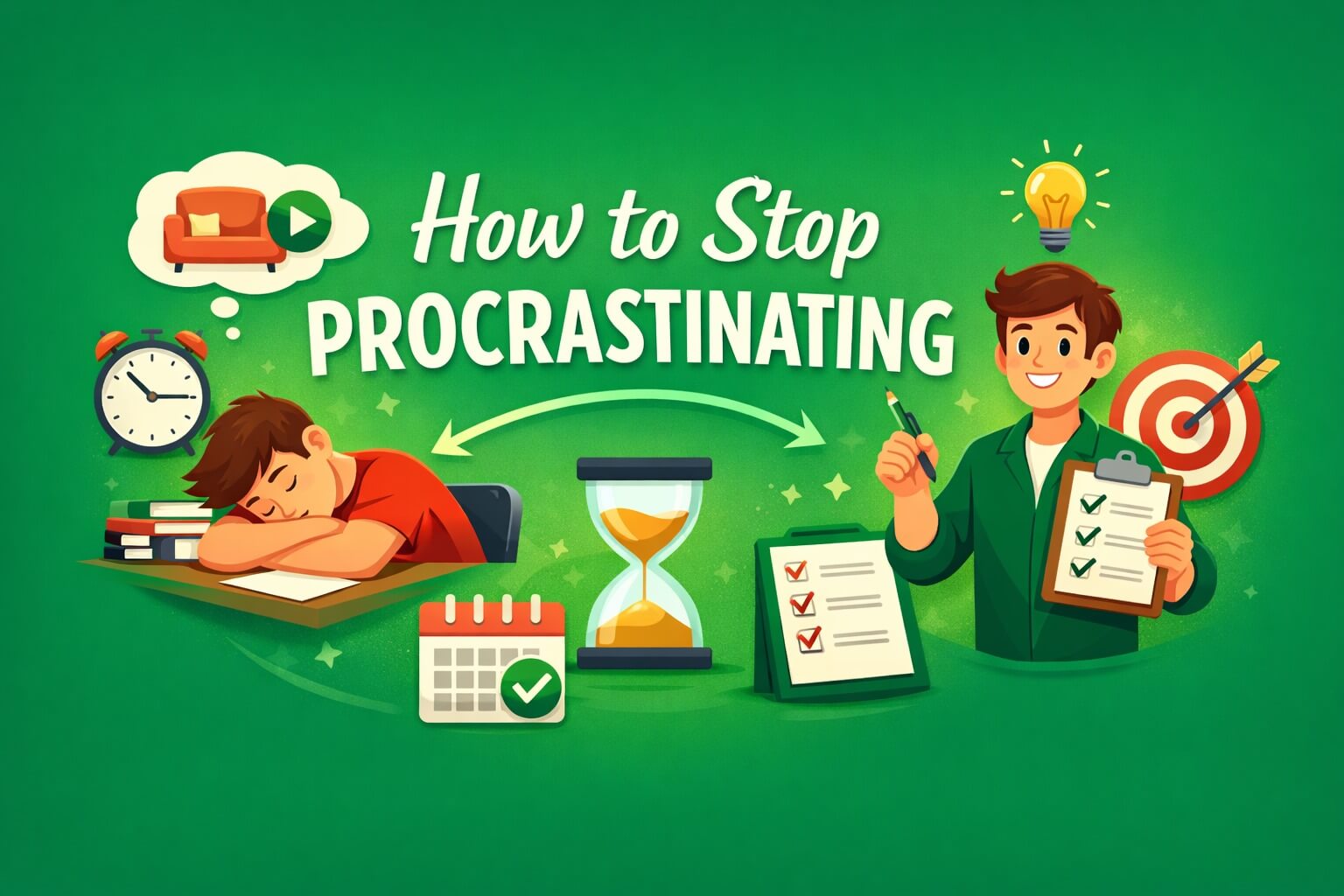
Many students struggle with procrastination, and it is completely normal. Putting off tasks often feels easier than doing difficult or boring work. While delaying can seem relaxing, it usually increases stress as deadlines get closer, affecting sleep and focus. Procrastination is a habit, not a flaw, and it can be changed. Learning simple strategies helps students avoid procrastination, stay on track, and make studying and homework easier and less stressful.
What Is Procrastination?
Procrastination is choosing to delay tasks even when they need to be done. Unlike resting, which helps the brain recharge, procrastination increases worry and guilt. Students often put off work by watching videos, playing games, or leaving assignments until the last day. These procrastination examples show how delaying tasks can make life more stressful and harder to manage. Recognising these habits is the first step to staying focused and reducing unnecessary stress.
Why Do We Procrastinate?
Procrastination isn’t just laziness; deeper psychological factors often drive it, and understanding them helps reduce delays. Some common causes include:
- Fear of failure or making mistakes: When we worry that our efforts won’t meet expectations, we may put off starting tasks to avoid potential disappointment or criticism.
- Feeling overwhelmed by big tasks: Large or complex tasks can seem daunting, leading to paralysis and avoidance. Breaking them into smaller steps can make them more manageable.
- Lack of motivation or clarity: Without a clear purpose or understanding of what to do next, it’s easy to delay action. Motivation often grows when goals are specific and achievable.
How Procrastination Affects Students
Procrastination can have a significant impact on students’ academic performance and well-being. Putting off tasks often leads to a cycle of stress and reduced effectiveness. Some common effects include:
- Last-minute stress and panic: Delaying assignments or exam preparation often results in a rush to complete tasks at the last moment, causing high levels of stress and anxiety.
- Lower quality of work: When work is done hastily, students are less likely to produce their best work, which can affect grades and learning outcomes.
- Loss of confidence and motivation: Repeated procrastination can erode self-confidence and decrease motivation, making it even harder to start tasks in the future.
Simple Ways to Stop Procrastinating
Procrastination can make schoolwork feel harder than it really is, but small steps can help children get started and stay on track. Here are some simple ways to begin:
- The five-minute rule is a great way to begin a task. Children can tell themselves, “I’ll work on this for just five minutes.” Often, starting is the hardest part, and once they begin, they may continue naturally.
- Big assignments can feel overwhelming. Splitting them into smaller, manageable parts makes it easier to focus and finish each step without feeling stressed. The 5-minute rule can be applied to each small step to make progress easier.
- A quiet and tidy study area helps children concentrate better. Turning off gadgets, putting away toys, or keeping only study materials nearby can make a big difference.
How to Build Better Study Habits
Understanding how to stop procrastinating and start studying helps children stay focused and complete tasks on time. Here are some simple ways to build better habits:
- Create a daily routine: Having a regular routine helps children know what to do and when. A consistent schedule reduces delays and makes studying a natural part of the day.
- Study at the same time each day: Studying at the same time every day trains the mind to focus. This consistency makes it easier to start tasks and follow through without putting them off.
- Use short study sessions with breaks: Short study periods with small breaks keep the mind fresh and alert. This method makes learning easier and more enjoyable.
Dealing With Fear and Overthinking
Fear of making mistakes or overthinking can stop children from starting tasks. Simple strategies can help.
- Focus on progress, not perfection: Encourage children to do their best without worrying about being perfect. Small steps forward are more important than flawless work.
- Accept that mistakes are part of learning: Mistakes are normal. Each one is an opportunity to learn and improve.
- Replace “I’ll do it later” with “I’ll start now”: Changing this mindset helps children take the first step, making tasks less scary.
Tools That Can Help Reduce Procrastination
Using simple tools can make studying easier and more fun.
- To-do lists: Writing down tasks helps children organise work and remember what to do.
- Timers or Pomodoro method: Timers keep track of short study sessions, helping children focus and take breaks regularly.
- Simple rewards after completing tasks: Small rewards, like stickers or playtime, motivate children to finish tasks and feel proud of their progress.
How Parents and Teachers Can Help
Parents and teachers can guide children on how to stop procrastinating, making it much easier for them to stop procrastinating. Here are some ways they can follow.
- Encourage effort, not pressure: Praise children for trying and making progress rather than only rewarding perfect results. This builds confidence and motivation.
- Help students plan realistically: Assist children in breaking tasks into manageable steps and setting achievable goals. A clear plan reduces stress and delays.
- Avoid shaming or comparisons: Negative comments or comparing children to others can increase fear and procrastination. Support and understanding help them stay focused and positive.
Conclusion
Procrastination is normal but manageable. Small, consistent actions—like starting with just five minutes, breaking tasks into steps, and using simple tools—create momentum and make work feel easier. Encouragement and realistic planning also help. Remember, starting is often the hardest and most important step, and once children begin, progress and confidence naturally follow, reducing stress and improving focus.
FAQs
Why do students procrastinate so much?
Students often procrastinate due to fear of failure, feeling overwhelmed, lack of motivation, or finding tasks boring and stressful.
Is procrastination a sign of laziness?
No, procrastination is a habit, not laziness. It usually happens when tasks feel difficult, boring, or overwhelming.
How can I stop procrastinating before exams?
Break study into small steps, follow a schedule, use short focused sessions, and remove distractions to stay on track.
Can routines really reduce procrastination?
Yes, routines create consistency. Studying at the same time daily trains the mind, making starting tasks easier and reducing delays.