

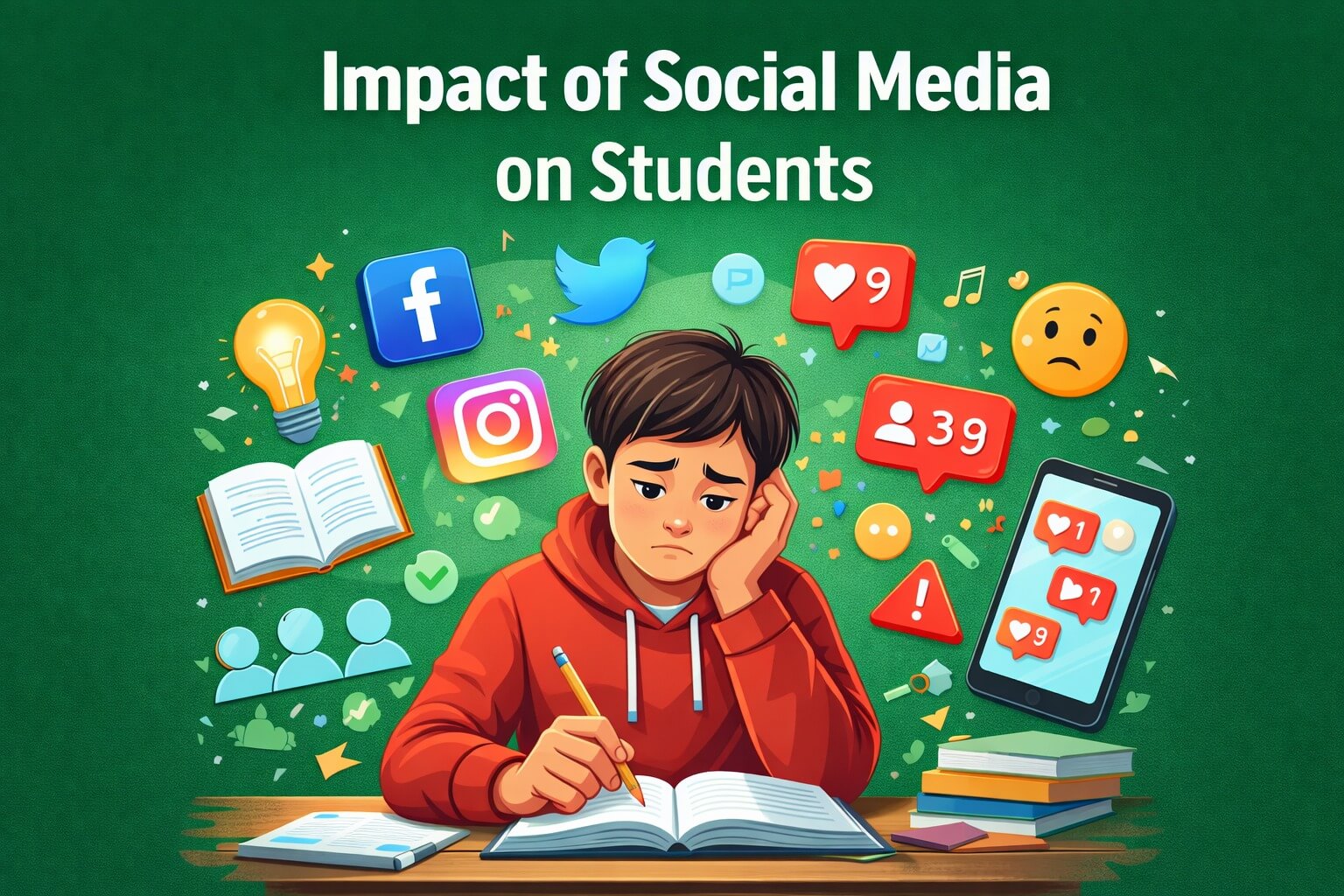
Social media has become a daily companion for students, shaping how they learn, relax, and connect with others. From watching educational videos to chatting with friends, online platforms influence almost every part of student routines.
The impact of social media on students is both helpful and challenging, offering quick access to information while also creating distractions. When used wisely, it can support growth and creativity, but careless use may affect focus, health, and emotional wellbeing in daily academic life too.
What Is Social Media and How Students Use It
Social media includes online platforms where people share content, communicate, and learn from one another. Students commonly use apps for messaging, video sharing, online communities, and study discussions.
Many learners rely on these platforms to watch tutorials, follow educational pages, and join subject-related groups. At the same time, social media serves as a space for entertainment, such as short videos, memes, and games.
Daily screen time varies among students. Some use it for a few hours, mainly for learning, while others spend long periods scrolling for fun. This mix of education and leisure makes social media a powerful but sensitive part of student life.
Positive Impact of Social Media on Students
There are many positive effects of social media on students, which include
Access to Learning Resources
Students can quickly find notes, articles, and study material on almost any subject through social media. This makes learning easier and more flexible outside the classroom, especially when quick revision is needed.
Educational Videos and Tutorials
Short lessons and explanation videos help students understand difficult topics in a simple way. Visual learning also improves memory, focus, and interest in studies.
Collaboration with Classmates
Online groups allow students to discuss homework, share ideas, and prepare for exams together, even after school hours, making teamwork stronger.
Awareness of Global Trends and Opportunities
Students stay updated about new courses, careers, competitions, and world events that help guide future goals.
Creative Expression and Skill Building
Many students share art, writing, and school projects online, which builds confidence and develops useful skills.
Negative Impact of Social Media on Students
Along with benefits, there is a clear negative impact of social media on students when usage becomes excessive.
Distraction from Studies
One common issue is distraction. Constant notifications pull attention away from studies, making it harder to concentrate.
Reduced Attention Span
Over time, frequent scrolling can reduce attention span. Students may struggle to focus on long lessons, books, or assignments.
Sleep Disturbances
Sleep problems are another concern. Late-night phone use affects sleep quality, leading to tiredness during classes and poor academic performance.
Low Self-Confidence from Comparison
Social comparison also affects confidence. Seeing edited photos and success stories can make students feel inadequate or unhappy with themselves.
Exposure to Misinformation
There is also the risk of misinformation. Not all online content is accurate, and students may believe false news or poor-quality study material without checking sources.
Effect of Social Media on Academic Performance
The effects of social media on education can be both positive and negative depending on how students manage their time.
- Poor time management: Excessive use of social media often wastes valuable study hours. Time spent online reduces time for homework, revision, and reading.
- Reduced focus through multitasking: Switching between studying and social apps lowers concentration and affects memory and understanding.
- Academic benefits when used wisely: Using social media for research, online classes, and group discussions helps students learn better through quick answers and shared notes.
- Need for balanced usage: Purposeful use supports academic growth, while uncontrolled use harms performance.
Social Media and Mental Health
Social media affects students’ emotions more than they realise.
- Emotional influence: Social media strongly affects students’ moods and self-image. Positive comments can boost confidence, but constant comparison often creates pressure.
- Stress and low self-esteem: Seeing perfect lifestyles, bodies, and achievements online may cause anxiety and make students feel inadequate.
- Cyberbullying risks: Hurtful messages, rumours, and online teasing can seriously harm mental health and emotional well-being.
- Importance of digital boundaries: Limiting screen time, avoiding negative content, and focusing on real-life connections help maintain emotional balance.
Social Media and Communication Skills
Social media shapes how students communicate every day.
- Improved online expression: One good effect of social media on students is improved online communication. Students learn to share ideas through messages, videos, and posts while connecting with people from different backgrounds.
- Reduced face-to-face interaction: Too much online chatting can make some students uncomfortable with real-life conversations.
- Changes in language habits: Frequent use of short forms and casual writing may weaken grammar and formal writing skills.
- Need for communication balance: Mixing online interaction with real-world conversations helps build strong overall communication abilities.
Advantages and Disadvantages of Social Media for Students
| Advantages | Disadvantages |
| Easy access to information | Distraction from studies |
| Online learning support | Screen addiction |
| Creative expression | Sleep issues |
| Networking opportunities | Mental stress |
| Awareness and exposure | Reduced physical activity |
Tips for Healthy Social Media Use for Students
Practising the do’s and don’ts of social media for students helps maintain balance and wellbeing.
- Set daily screen time limits to avoid overuse
- Use social platforms mainly for learning and skill development
- Avoid scrolling before bedtime for better sleep
- Follow educational and positive content
- Take regular breaks to refresh the mind
Role of Parents and Teachers
Parents and teachers play an important role in guiding responsible online behaviour.
- Teach students about online safety, privacy, and respectful communication
- Encourage balance between screen time and offline activities like sports, reading, and hobbies
- Use supportive monitoring instead of strict control
- Maintain open conversations to build trust and awareness
- Set a good example by practising healthy digital habits
Social media strongly shapes modern student life by offering learning resources, creativity, and global connections when used wisely. However, overuse can harm focus, sleep, and mental wellbeing. The benefits of social media for students appear only with balance and discipline. By setting limits, following positive content, and staying mindful, students can enjoy technology as a tool instead of a distraction.
Navigating the digital landscape is one of the most pressing challenges for parents and educators today. At Bethany Institutions, we believe that digital wellbeing is not an optional add-on, but a fundamental component of holistic student development.
On January 31, 2026, we hosted our Annual Digital Awareness and Wellbeing Session to address this exact challenge.
The event, titled “Digital Perspectives – The Experts Speak,” brought together over 400 parents from our Koramangala and Sarjapur campuses. Rather than offering a singular view, we curated a diverse panel to examine the issue from every angle:
Dr. Darelin (Psychiatrist) and Ms. Swati (Neurologist) provided clinical insights into the mental, emotional, and neurological impacts of screen use.
Mr. Vipin Pai (IT Professional) offered practical knowledge regarding the digital ecosystem.
Ms. Charanya (Parent and Journalist) and Ms. Aarefa (Student Representative) grounded the discussion in reality, sharing lived experiences from both the parenting and student perspectives.
The session included a panel discussion moderated by our Director, Dr. Akash Ryall, followed by an open forum led by Ms. Rohina Thomas, Head of the Counselling Department. This interactive format allowed parents to voice specific concerns and engage in a meaningful dialogue with the experts.
We are grateful to the Bethany Counselling Department for organizing such a timely and relevant session. The strong attendance and engagement from our parent community reinforce our shared commitment to guiding students toward a balanced, healthy, and aware relationship with technology.
FAQs
How does social media affect students’ studies?
It can support learning through resources and groups, but excessive use causes distraction and poor focus.
Is social media good or bad for students?
It is both helpful and harmful depending on how wisely it is used.
How many hours of social media is healthy?
Around one to two hours daily is generally considered balanced for students.
How can students reduce social media distraction?
By setting time limits, turning off notifications, and using apps mainly for educational purposes.