

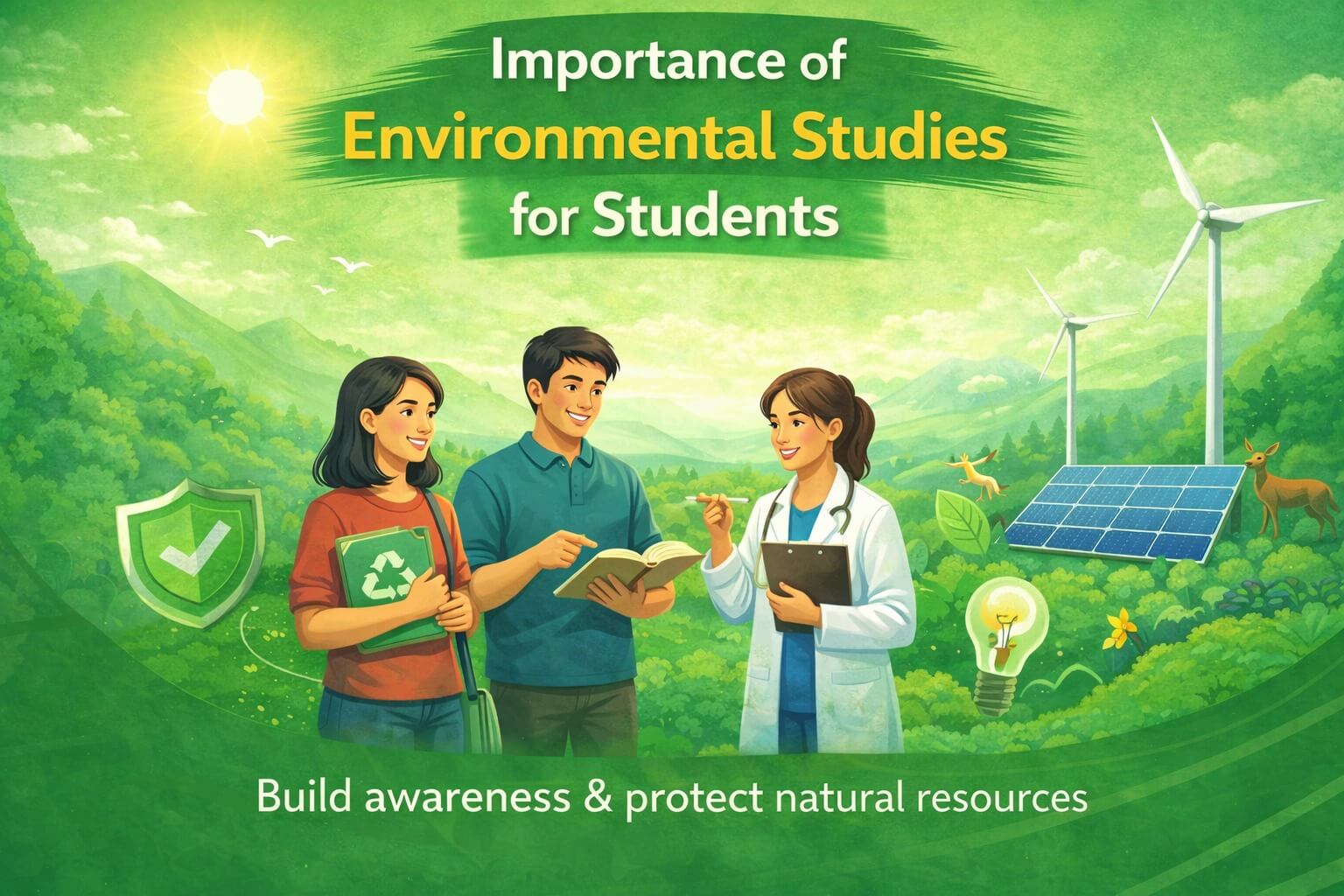
Every year, the world experiences stronger heat waves, rising sea levels, and rapid biodiversity loss. These changes affect how we live, what we eat, and the air we breathe. In this context, understanding our relationship with nature has become essential. Environmental education helps students recognize these connections and think about practical solutions. Understanding the meaning of environmental studies gives learners a clear foundation to explore how natural systems, human activities, and social decisions influence the planet and shape our shared future.
Understanding the World We Live In
One of the key benefits of this subject lies in the importance of environmental studies in helping students understand the natural systems that support life. By learning about ecosystems, water cycles, and climate patterns, students begin to see how different elements of nature are closely connected.
This knowledge builds awareness of how human life depends on clean air, safe water, fertile soil, and stable climates. Students also learn how pollution, deforestation, and excessive resource use can harm the environment. In addition, the scope of environmental studies extends beyond science, connecting geography, economics, and social policy to help students understand how environmental decisions affect society and development.
Developing Critical Thinking and Problem-Solving Skills
Environmental challenges rarely have simple answers. They involve science, society, economics, and public policy. Learning about these issues helps students analyze problems carefully and explore balanced solutions.
- Understanding complex environmental problems: Issues like climate change and pollution affect ecosystems and communities together, highlighting the significance of environmental studies in understanding global challenges.
- Learning to analyze data and evaluate choices: Students examine environmental data and compare solutions, helping them describe the importance of environmental studies through thoughtful analysis.
- Learning through real-world case studies: Examples such as pollution, deforestation, and urban planning show the importance of environmental science in finding practical and sustainable solutions.
Cultivating Civic Responsibility and Environmental Citizenship
Environmental education encourages students to understand their responsibilities as citizens and see how environmental awareness connects with public participation and policy decisions.
- Understanding environmental policies: Students learn about regulations and global agreements that protect natural resources, helping them understand what is the importance of environmental studies in shaping environmental policies.
- Building a sense of stewardship: Environmental learning encourages respect for nature and helps students see why environmental studies are important for responsible citizenship.
- Connecting learning with community action: Students participate in activities such as clean-ups, recycling drives, and tree-planting programs that create positive community impact.
Career Opportunities and Future Readiness
The environment directly affects human health and quality of life. Studying environmental systems helps students understand how natural conditions influence physical and mental well-being.
- Growing demand for green careers: Governments and organizations seek professionals who understand environmental challenges. The scope and importance of environmental studies becomes clear as industries focus on sustainable practices.
- Diverse career pathways: Students can pursue careers in environmental science, policy, conservation, urban planning, renewable energy, or environmental law.
- Environmental literacy across industries: Environmental awareness benefits many sectors, reflecting what is the scope of environmental studies in shaping decisions across industries
Promoting Health and Well-Being
The environment directly affects human health and quality of life. Studying environmental systems helps students understand how natural conditions influence physical and mental well-being.
- The link between environment and health: Clean air, safe water, and healthy ecosystems are essential for health. Environmental education highlights the importance of environmental science in understanding how pollution and climate change affect communities.
- Understanding air, water, and food systems: Students learn how natural resources support daily life, including how water, air quality, and food systems function.
- Encouraging healthier and sustainable choices: Environmental awareness encourages students to reduce waste, conserve energy, and adopt sustainable habits that support personal and environmental well-being.
Fostering Interdisciplinary Learning
Environmental Studies integrates knowledge from many academic fields. This approach helps students understand environmental challenges in a broader and more balanced way.
- Fostering interdisciplinary learning: Environmental Studies brings together knowledge from different academic fields, helping students understand environmental challenges in a broader and more balanced way.
- Connecting multiple fields of study: It combines insights from science, technology, social sciences, and the humanities to show how environmental issues influence societies and economies.
- Encouraging systems thinking: Students learn to see environmental systems as interconnected, understanding how natural processes, human activities, and economic systems affect each other.
- Collaboration across disciplines: Environmental challenges require cooperation among scientists, policymakers, engineers, and communities, encouraging teamwork and shared problem-solving.
Building a Sustainable Future
Environmental education prepares students to become thoughtful decision-makers who understand the long-term impact of human actions.
- Preparing future decision-makers: Students today will become future leaders and professionals. Environmental education helps them understand why environmental studies are important when making decisions about development, resources, and environmental protection.
- Investing in planetary health: Environmental awareness in schools supports long-term environmental well-being and encourages sustainable practices.
- Aligning with global sustainability goals: Environmental education connects with global initiatives like the United Nations Sustainable Development Goals that promote balanced and sustainable development.
Conclusion
Environmental education equips students with knowledge that extends far beyond the classroom. It strengthens analytical thinking, encourages responsible citizenship, and prepares young people to address global environmental challenges. As students learn how natural systems function and how human actions affect them, they develop the awareness and motivation needed to protect the planet and support a more sustainable future for generations to come.
FAQs
Q1. What is Environmental Studies?
Environmental Studies is an interdisciplinary field that examines the relationship between humans and nature. It combines science, geography, economics, and policy to understand environmental challenges.
Q2. Why should students study Environmental Studies?
Students study Environmental Studies to build environmental awareness, develop problem-solving skills, and prepare for future careers while learning how to make responsible decisions.
Q3. Is Environmental Studies only for science students?
No. Environmental Studies benefits students from all disciplines, including business, law, and social sciences, because environmental knowledge supports decisions across many fields.
Q4. What careers can Environmental Studies lead to?
Environmental Studies can lead to careers such as environmental scientist, sustainability consultant, conservation officer, policy analyst, environmental lawyer, and urban planner.
Q5. How does Environmental Studies help in everyday life?
It helps people understand resource use, reduce waste, conserve energy and water, and make sustainable choices that improve personal health and environmental quality.
Q6. Is Environmental Studies a good subject for school or college?
Yes. It develops awareness, practical knowledge, and critical thinking skills while preparing students to address environmental challenges and support sustainable development.
Q7. How does Environmental Studies relate to climate change?
Environmental Studies explains climate systems and human impacts on the planet, helping students understand climate change and explore practical actions to reduce environmental harm.
Q8. Can Environmental Studies make a difference in the real world?
Yes. Many students and young environmentalists lead sustainability campaigns, influence policies, and promote community action that creates positive environmental change.