
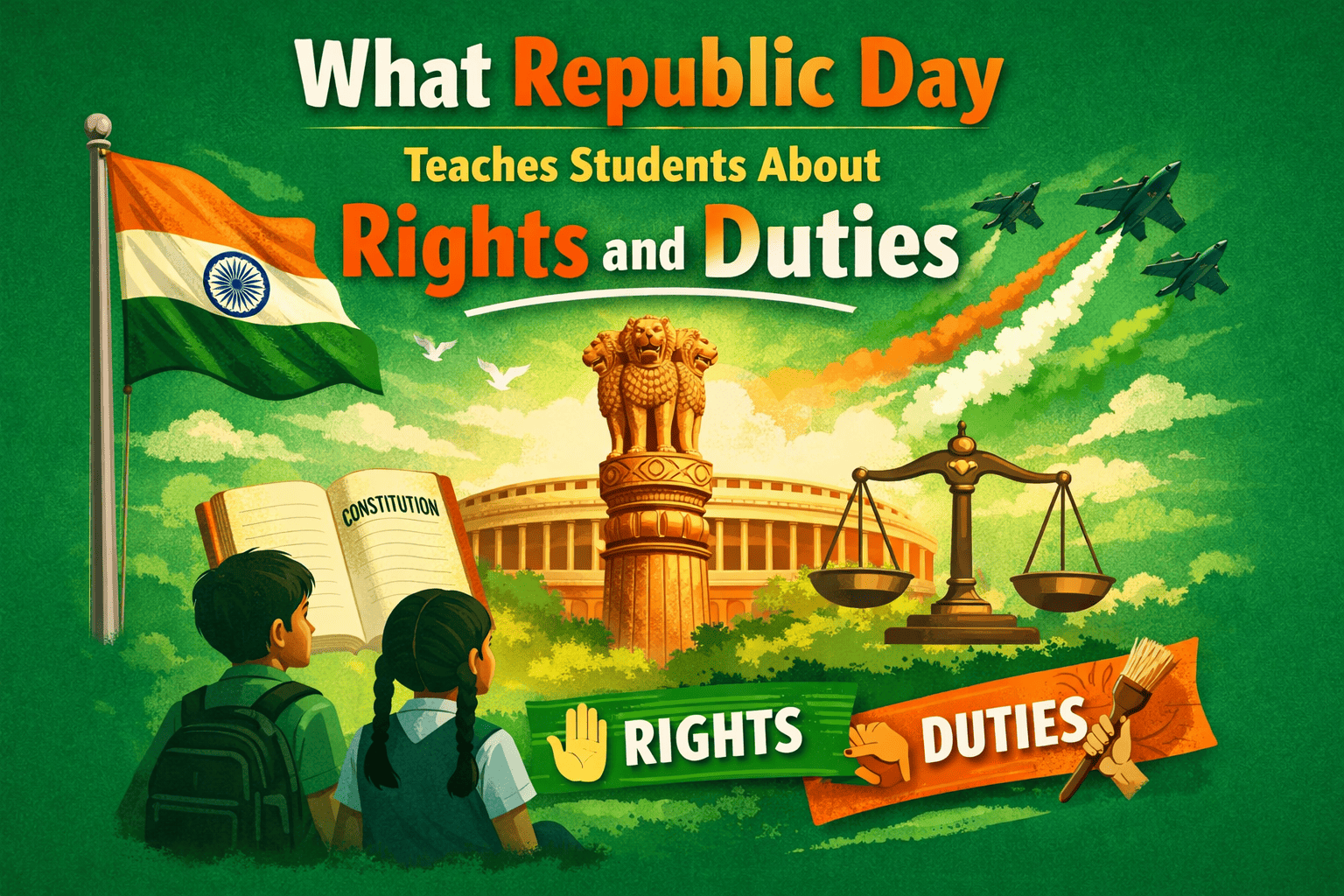
Republic Day is not only about flag unfurling, cultural programs, or watching parades on television. It marks the moment when India began living by the Constitution.
What is Republic Day?
Republic Day is celebrated on 26 January every year because this is the day India adopted its constitution. We celebrate it to remember that the country runs on rules made for the people, by the people.
The word “Republic” means that no one becomes a leader by birth, and citizens choose their representatives. India follows the Constitution to ensure fairness, equality, and justice, so everyone lives under the same laws.
Why Republic Day is Important for Students
Republic Day helps students learn about India’s culture and traditions while also allowing them to appreciate the privilege of living in a democratic country, where people have the right to share their opinions and take part in decisions. Students can understand the values that uphold the nation, like equality, respect, honesty, and unity. These lessons encourage them to behave responsibly, respect others, and grow into thoughtful citizens.
What are rights?
Rights are basic freedoms and protections that allow people to live with dignity, safety, and confidence. They ensure that every citizen receives fair treatment and respect.
Why Rights Matter in Everyday School Life
Rights foster a sense of fairness in the classroom and on the playground. They ensure equal treatment for all students, regardless of background. They also allow students to learn freely, ask questions, and feel safe as they grow emotionally and intellectually.
Fundamental Rights Students Should Know
Right to Equality – This right ensures that teachers and schools treat every student fairly without discrimination.
Right to Freedom – Students can express opinions, ask questions, and share ideas politely and responsibly.
Right Against Exploitation – This right protects children from unsafe work and harmful treatment.
Right to Freedom of Religion – Schools respect all religions and allow students to practice their beliefs peacefully.
Cultural and Educational Rights – Students can learn their language, celebrate traditions, and preserve cultural identity.
Right to Constitutional Remedies – If any person’s rights are violated, the Constitution provides legal ways to protect and support them.
What are Duties?
Duties are the responsibilities that guide how citizens should behave toward the nation and toward one another. They remind us that our actions affect not just ourselves, but everyone around us.
Why Do Duties Matter More Than Just Knowing Rights?
Knowing our rights is important, but duties make those rights work in real life. When people follow their duties, it builds respect, discipline, and harmony in schools and in society.
Fundamental Duties Students Can Practise Daily
- Respect the Constitution and national symbols by standing properly for the national anthem and treating them with care.
- Follow school rules and practice discipline to maintain order and fairness.
- Protect public property by using classrooms, desks, and books responsibly.
- Be kind, inclusive, and respectful toward classmates, teachers, and staff.
- Promote unity and teamwork during group work, sports, and activities.
- Keep surroundings clean by throwing waste in bins and caring for shared spaces.
- Stand up against bullying or unfair behavior by speaking out or seeking help.
- Learn sincerely, work hard, and contribute positively to school and society.
Best Lesson of Republic Day: Rights and Duties Go Together
The rights and duties that our Constitution gives us are meant to work together, not separately.
Rights without duties can create problems. For example, freedom of expression becomes harmful when it is misused to insult others or spread negativity.
Duties help protect everyone’s rights. When students follow rules and treat one another with respect, classrooms remain safe, fair, and supportive for all.
Classroom Examples That Explain Rights and Duties
- The right to equality means teachers treat every student fairly, without favoritism.
- The right to freedom allows students to share their opinions politely during class discussions.
- Students show their duty to protect public property by not damaging desks, walls, or school items.
- Respecting others means not bullying, teasing, or hurting classmates.
- Being responsible includes completing homework on time and coming to class punctually.
- Keeping the classroom clean is everyone’s duty, and students help maintain it together.
Activities Teachers Can Do on Republic Day
Role plays around rights and duties – Students act out everyday situations, such as sharing opinions or following rules, to understand how freedom and responsibility must stay balanced.
Constitution pledge and discussion – Students take a pledge together and then discuss its meaning, helping them connect national values with daily behavior.
Poster making – This can be a great way to encourage creativity while reinforcing awareness and responsibility.
“Good Citizen of the Week” activity – Teachers recognize students who show discipline, kindness, or honesty, motivating others to follow positive behaviour.
Talking about the real heroes of democracy – Teachers tell stories of real heroes like Mahatma Gandhi, who fought for independence peacefully, Dr. B.R. Ambedkar, who drafted the Constitution, and Rani Lakshmibai, who showed courage and leadership. These stories teach students honesty, bravery, and respect for the law.
How Republic Day Builds Responsible Citizens
Republic Day builds confidence by creating awareness about national values. It nurtures respect for diversity and strengthens leadership qualities. It also shapes discipline, moral thinking, and civic responsibility, which guide students throughout life.
Key Takeaways for Students
Republic Day helps students understand that rules help run the country and keep everyone equal. Rights give students freedom to learn, speak, and grow. Duties teach students how to behave responsibly. By following simple habits every day, students learn to be good and responsible citizens.
FAQs
Why is Republic Day important for students?
It helps students understand the values of equality, responsibility, and respect for rules.
Do students have rights in school?
Yes. Every student has the right to safety, respect, and a fair learning environment.
What is one important duty every student should follow?
Students should respect their teachers, classmates, and school rules.
How are rights and duties connected?
Duties help ensure that everyone’s rights are protected.
How can students become responsible citizens?
By being honest, respectful, and disciplined in their daily actions.