

Introduction
Volcanoes are one of nature’s most awe-inspiring yet unpredictable wonders. They can be as majestic as they are dangerous, with the power to reshape entire landscapes instantly. While volcanoes are not as prevalent in India as in some other parts of the world, the country has its share of active and dormant volcanoes. Understanding these natural phenomena helps us appreciate the Earth’s dynamic processes and the geological wonders that shape our environment. Let’s explore India’s active and dormant volcanoes and learn more about these fascinating landforms.
What is a Volcano?
A volcano is a rupture in the Earth’s crust through which hot magma, volcanic ash, and gases escape from below the surface. When the pressure of the magma builds up, it forces its way to the surface, often resulting in a spectacular display of molten rock, ash clouds, and sometimes explosions. Once the magma reaches the surface, it is referred to as lava.
Volcanoes form in areas where tectonic plates converge or diverge or where the Earth’s crust is particularly thin. Over time, these eruptions create mountains and islands, constantly reshaping the landscape.
Different Types of Volcanoes
- Shield Volcanoes:
Shield volcanoes are broad, gently sloping volcanoes that resemble a warrior’s shield. They are primarily formed by low-viscosity lava that flows easily, resulting in wide, gently rising mounds. Shield volcanoes typically produce non-explosive eruptions, with lava flowing for long distances.
Example: Mauna Loa in Hawaii. - Stratovolcanoes (Composite Volcanoes):
These tall, steep-sided volcanoes are made up of layers of hardened lava, tephra, pumice, and volcanic ash. Stratovolcanoes often have explosive eruptions caused by the high viscosity of their magma, which traps gases and increases pressure.
Example: Mount Fuji in Japan. - Cinder Cone Volcanoes:
Cinder cone volcanoes are the smallest type of volcano. They are made up of volcanic debris, such as ash and cinders, accumulating around a single vent. These volcanoes typically have short-lived eruptions and steep sides.
Example: Parícutin in Mexico. - Lava Domes:
Lava domes form when lava is too thick to flow far from the vent, resulting in a dome-shaped mound. The pressure within these domes can build up over time, causing violent eruptions.
Example: Mount St. Helens in the United States.
List of Volcanoes in India
Here is a table summarising some of India’s notable volcanoes:
| Volcano Name | Location | Activity Status |
| Barren Island | Andaman and Nicobar Islands | Active (Last eruption in 2020) |
| Narcondam Island | Andaman and Nicobar Islands | Dormant (Last eruption in 1681) |
| Baratang Island | Andaman and Nicobar Islands | Mud volcano (Not highly active) |
| Dhinodhar | Gujarat | Extinct (500 million years ago) |
| Dhosi Hill | Haryana | Dormant (750 million years ago) |
| Tosham Hills | Haryana | Extinct (732 million years ago) |
| Loktak Lake | Manipur | Supervolcanic caldera (Status unknown) |
| Deccan Plateau | Maharashtra, Karnataka | Extinct (Approx. 25 million years ago) |
Active, Dormant, and Extinct Volcanoes in India
Barren Island
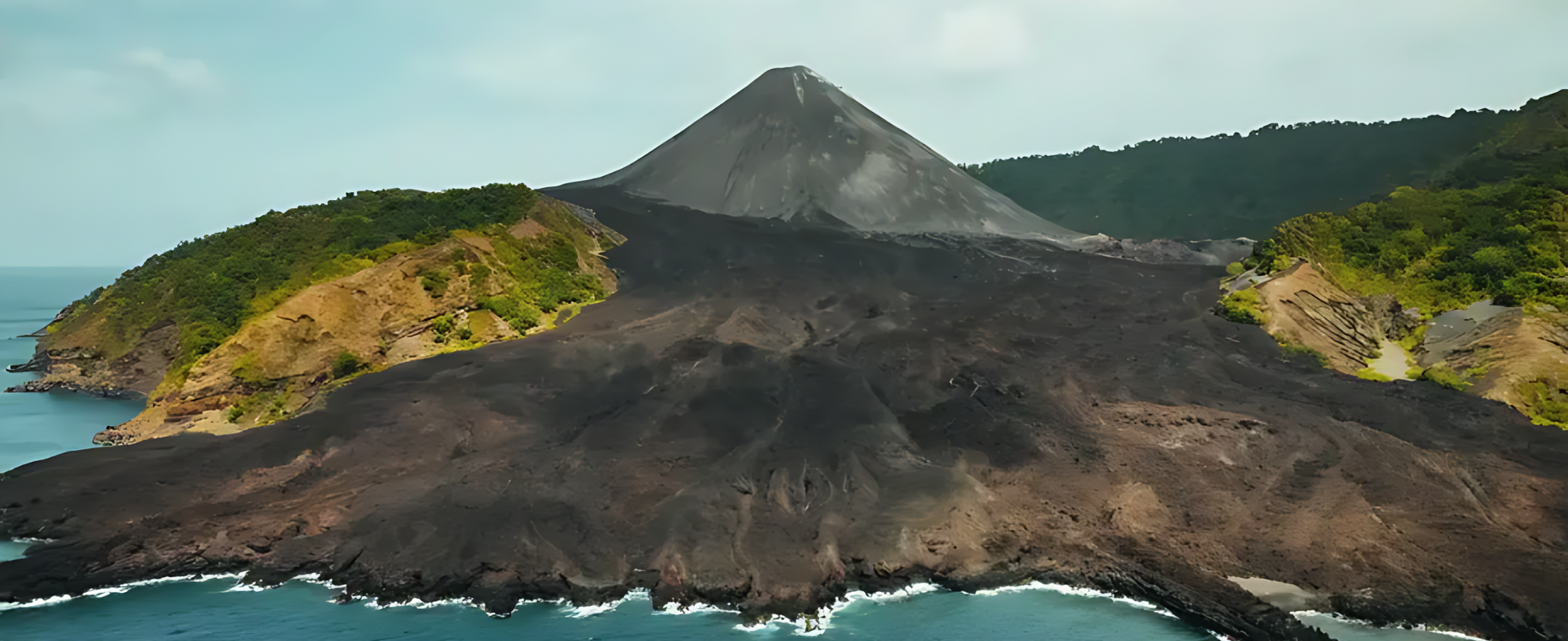
Barren Island, located in the Andaman Sea, is the only active volcano in India. It has a long history of eruptions, with its first recorded outbreak in 1787. The island’s most recent eruption occurred in 2020. The sight of glowing red lava against the night sky and daytime ash clouds makes this an extraordinary volcanic feature in India.
Narcondam Island
Narcondam Island is home to a dormant volcano in the Andaman Sea, located to the northeast of Barren Island. The last known eruption occurred in 1681, and since then, the volcano has remained inactive, though minor activity, such as gas releases, was observed as recently as 2005.
Baratang Island
Baratang Island is famous for its mud volcanoes rather than traditional lava eruptions. Located in the Andaman and Nicobar Islands, these mud volcanoes emit mud, gases, and small amounts of lava, but they are considered less dangerous than other types of volcanic activity. The last recorded activity was in 2005, following the 2004 Indian Ocean earthquake.
Deccan Plateau Volcanoes
The Deccan Plateau, spanning across Maharashtra and Karnataka, is an ancient volcanic region. It was formed approximately 66 million years ago, and its extensive lava flows cover much of central India. Although now extinct, the Deccan Traps represent one of the largest volcanic formations in the world.
Causes of Volcanic Eruptions
Volcanic eruptions are caused by the movement of magma from beneath the Earth’s crust. Some of the main triggers include:
- Tectonic Plate Movements: When tectonic plates collide, separate, or slide past one another, the resulting cracks in the Earth’s crust allow magma to escape.
- Pressure Build-up: Over time, the pressure of gases and molten rock beneath the surface increases until the volcano erupts.
- Subduction Zones: Areas where one tectonic plate moves under another, causing magma to rise to the surface.
- Hotspots: Specific areas where the Earth’s mantle is particularly hot, creating magma that breaks through the crust.
Types of Volcanic Eruptions
- Effusive Eruptions: Lava flows steadily out of a volcano without much explosiveness. These are characteristic of shield volcanoes.
- Explosive Eruptions: Violent eruptions with pyroclastic flows, ash clouds, and significant lava expulsion. These eruptions occur in stratovolcanoes.
- Phreatic Eruptions: Steam-driven explosions caused by water interacting with magma, often creating ash clouds and debris without much lava.
Historical Eruptions of Indian Volcanoes
India’s most notable volcanic activity has come from Barren Island. Since 1787, this volcano has erupted over 10 times. Though long extinct, the Deccan Plateau’s volcanic activity played a significant role in shaping the Indian subcontinent millions of years ago.
Importance of Studying Volcanoes in India
Studying volcanoes helps us understand the Earth’s geological processes and can provide essential insights into seismic activity, plate tectonics, and climate change. Monitoring volcanic activity is crucial for public safety and disaster preparedness in regions like the Andaman and Nicobar Islands.
Conclusion
India may not be known for frequent volcanic activity, but the presence of volcanoes like Barren Island and Narcondam offers a unique glimpse into the dynamic forces shaping our planet. By understanding these geological wonders, we deepen our appreciation for nature’s power and prepare ourselves for future events. At Bethany High, we believe in fostering curiosity and learning about the natural world. We encourage students to explore these natural wonders and introduce some of them in our Social studies classes as part of their educational journey to develop their sense of wonder about our world.
FAQs
- What Is a Dormant Volcano?
A dormant volcano is a volcano that has not erupted for a long time but still has the potential to erupt again. Dormant volcanoes can remain inactive for thousands of years, but the possibility of future activity still exists. - What Is an Active Volcano?
An active volcano is one that has erupted recently and is likely to erupt again. These volcanoes show signs of activity, such as gas emissions, magma movement, or seismic activity. Barren Island in the Andaman Sea is an example of an active volcano in India. - What Is Volcanic Eruption?
A volcanic eruption transports magma, gases, ash, and volcanic rock from beneath the Earth’s surface through a volcanic vent. Eruptions can vary from gentle lava flows to violent explosions that throw ash and rocks high into the atmosphere. - How Do Volcanoes Erupt?
Volcanoes erupt when magma from the Earth’s mantle rises to the surface due to the movement of tectonic plates or pressure build-up within the Earth’s crust. When the pressure becomes too great, magma, gases, and ash are forced through the Earth’s surface cracks, creating an eruption. - How Many Volcanoes Are in the World?
There are more than 1,500 potentially active volcanoes worldwide, excluding those found along the deep ocean floor. - How Many Active Volcanoes Are There in India?
India has only one active volcano: Barren Island, located in the Andaman and Nicobar Islands. - Where Is the Active Volcano in India?
The only active volcano in India is located on Barren Island in the Andaman and Nicobar Islands, around 138 km from Port Blair. - Which Is the Active Volcano in India?
Barren Island in the Andaman and Nicobar Islands is the only active volcano in India. - How Many Volcanoes Are There in India?
India has a few volcanoes, including Barren Island (active) and Narcondam Island (dormant), and several extinct volcanoes, such as those found in the Deccan Plateau and Tosham Hills. - How Many Active Volcanoes Are There in the World?
There are about 1,500 active volcanoes worldwide, not including the ones found beneath the ocean. - Which Is the Biggest Volcano in the World?
The biggest volcano in the world by volume is Mauna Loa in Hawaii, which covers an area of around 5,271 Square Kilometres. - Which Is the Largest Volcano in the World?
Mauna Loa in Hawaii is the largest volcano in the world by volume and area. - How Many Types of Volcanoes Are There?
There are four main types of volcanoes:
- Shield Volcanoes: Wide and gently sloping, with slow lava flows.
- Stratovolcanoes (Composite Volcanoes): Tall, steep-sided, and known for explosive eruptions.
- Cinder Cone Volcanoes: Small, with steep slopes, formed by volcanic debris.
- Lava Domes: Created by slow extrusion of viscous lava, forming dome-shaped mounds.
- Which Country Has the Most Volcanoes?
Indonesia has the most volcanoes globally, with more than 130 active volcanoes.