

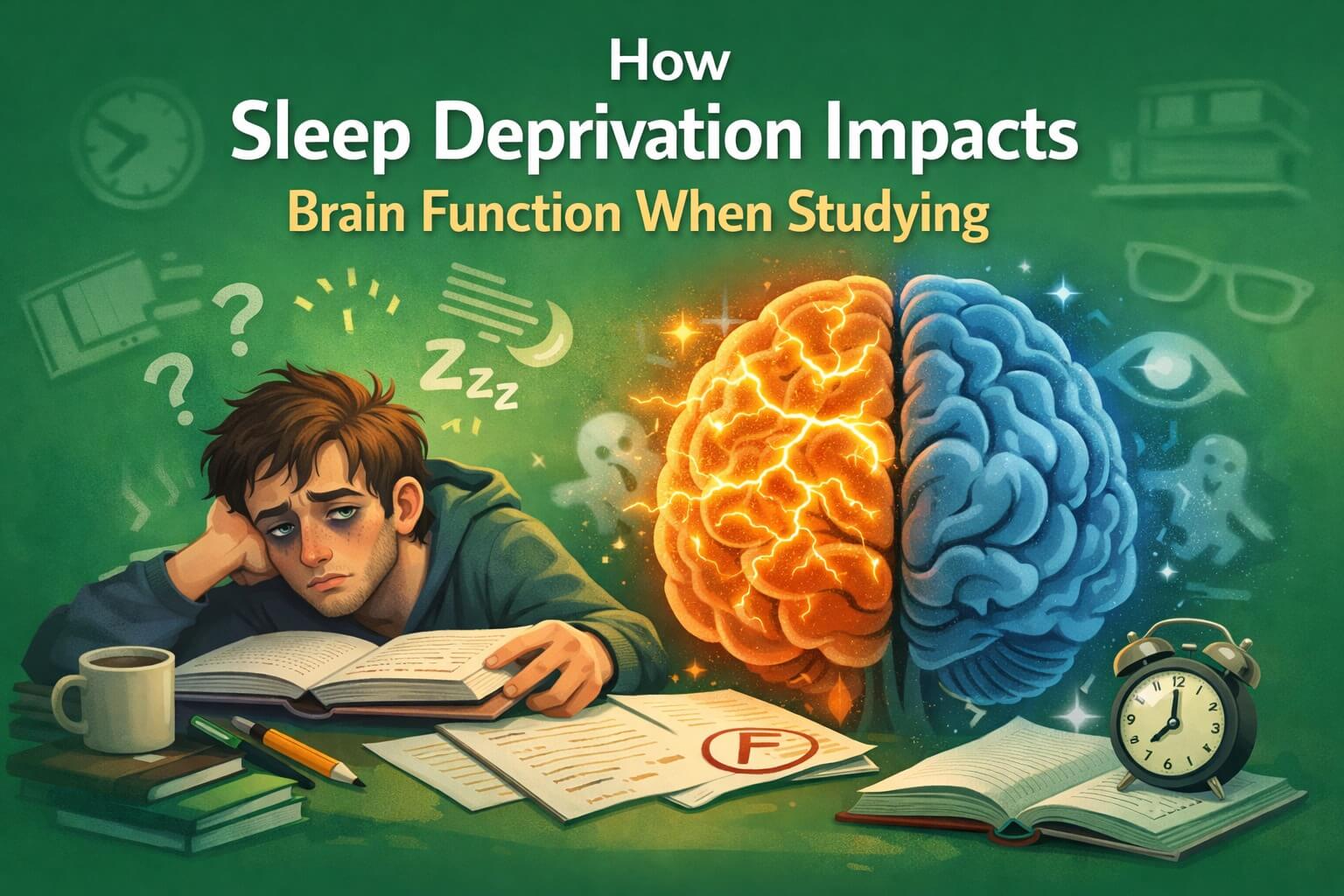
Students often give up sleep to finish homework, revise for exams, or scroll on their phones late at night. Many believe that sleeping less gives them more time to study and perform better in school. But what happens to your brain when you sleep high and when you don’t sleep enough are very different things. Sleep plays a major role in how the brain absorbs information, builds memory, and stays focused.
When students sleep well, the brain processes what they learn during the day and prepares itself for new learning. When they skip sleep, the brain struggles to focus, remember, and think clearly, which makes studying harder instead of easier.
What Is Sleep Deprivation
Sleep deprivation means not getting enough sleep for your body and brain to rest and recover properly. When a person does not sleep well, they may feel tired, sleepy, and unable to focus during the day. It can affect memory, learning, mood, and decision-making. Over time, poor sleep can weaken the immune system, increase stress, and raise the risk of health problems like heart disease, anxiety, and accidents
How the Brain Uses Sleep to Learn
Sleep helps the brain organise and strengthen what students learn during the day. During sleep, the brain selects which connections to keep and which to remove, keeping useful ones and clearing away weak or unnecessary ones so learning becomes clearer and more efficient.
When a person does not sleep enough, the brain not only feels tired but also changes its behaviour at a cellular level. Research shows that long-term sleep loss can make certain brain cells overactive, causing them to damage healthy brain connections. This idea is often described as “the brain eats itself from lack of sleep.”
Sleep also supports attention, creativity, and pattern recognition. That is why students often understand topics better and remember information more easily after a good night’s sleep.
Effects of Sleep Deprivation on Brain Function
Sleep loss directly affects how well the brain works during study time and may even lead to sleep deprivation delirium in extreme cases. It creates several thinking-related problems, such as:
- Reduced ability to concentrate for long periods during lessons or self-study.
- Slower mental processing, making tasks feel harder and take longer.
- Difficulty understanding new topics, especially subjects that require deep thinking.
Sleep loss also affects behaviour beyond learning. Research on “How does lack of sleep affect risk of injury” shows that tired students lose coordination and awareness, which can lead to small daily accidents like tripping, lab mistakes, or sports injuries.
How Lack of Sleep Affects Memory While Studying
Memory suffers greatly when students don’t sleep enough. Lack of proper sleep leads to problems like:
- Weak short-term memory makes it harder to hold information while learning.
- Poor retention, where studied material fades quickly instead of staying stored.
- Increased forgetting during exams, even after hours of revision.
Impact on Problem-Solving and Decision-Making
Sleep loss also affects reasoning and judgement. Tired brains react more slowly and make poor choices. This causes:
- Reduced logical thinking, making complex problems feel confusing.
- More mistakes in calculations, reading questions, and choosing answers.
- Poor decisions during tests and assignments due to mental fatigue.
Emotional and Behavioural Effects on Students
Sleep deprivation affects mood as well as thinking. Many experts link insomnia and brain health because long-term sleep loss changes emotional balance. It leads to:
- Higher stress levels and irritability, which make studying feel overwhelming.
- Lower motivation causes students to avoid study tasks or delay them.
- Reduced confidence and mental energy, making students doubt their abilities.
Signs a Student Is Studying While Sleep-Deprived
Here are some clear signs that a student may not be getting enough sleep:
- Frequent yawning, heavy eyelids, and headaches during classes or homework time.
- Difficulty staying focused even during short and simple learning tasks.
- Taking much longer than usual to complete routine schoolwork.
Can Extra Studying Make Up for Lost Sleep
Many students try to replace sleep with more study hours, especially before exams, but this strategy usually backfires. Late-night studying reduces focus, slows thinking, and weakens memory, which means students spend more time learning less. In contrast, a well-rested brain understands concepts faster, remembers information longer, and applies knowledge more accurately. This shows that the quality of study matters far more than the number of hours spent awake with books.
Tips to Improve Sleep for Better Studying
Simple changes can improve sleep and make studying easier:
- Follow a regular sleep and wake schedule, even on weekends.
- Avoid mobile phones, tablets, and bright screens at least before bedtime.
- Choose short naps instead of late-night study when feeling very tired.
How Parents and Teachers Can Help
Adults play an important role in supporting healthy sleep habits and reducing problems like dehydration and sleep deprivation, which together worsen fatigue and focus. They can:
- Encourage consistent daily routines that include enough rest and downtime.
- Reduce pressure around late-night studying by promoting better planning habits.
- Teach students how sleep supports learning, memory, and mental health.
Final Words
Sleep is not wasted time or a break from learning. It is one of the brain’s most powerful learning tools. When students sleep well, they focus better, remember more, feel calmer, and perform better in school. Even small improvements in sleep habits can lead to big improvements in attention, confidence, and academic results. Choosing sleep is not being lazy; it’s essential for effective learning and cognition.
FAQs
How many hours of sleep do students need?
Most school students need eight to ten hours of sleep each night to support memory, attention, emotional balance, physical health, and steady learning performance during school days.
Does studying late at night reduce memory?
Yes. Late-night studying reduces memory because the brain needs sleep to store information. Without enough rest, newly learned material fades faster and becomes harder to recall.
Are naps helpful for learning?
Short naps can refresh attention and reduce mental fatigue. A 20 to 30-minute nap can improve focus and mood, but naps should not replace full nighttime sleep.
Can sleep improve exam performance?
Yes. Good sleep before exams improves concentration, recall, and decision-making. Resting students manage stress better, read questions more carefully, and avoid simple mistakes during tests.