

Not long ago, “burnout” was a word we associated with frazzled office workers or maybe college seniors during finals week. Today, that word is echoing in middle school hallways and high school classrooms.
We’re seeing children as young as ten experiencing stress, fatigue, and anxiety levels once considered “normal” only in adult professionals.
But let’s be clear. This isn’t just about kids being dramatic or too sensitive. This is about a changing world that’s putting intense pressure on young shoulders, and we at Bethany Institutions believe that every school needs to know why this matters and what to do about it.
The Pressure Starts Early
Children today are growing up in an environment that’s far more fast-paced and demanding than ever before. Academic competition begins before they even learn long division. There are entrance exams for nursery school. Coding bootcamps for thirteen-year-olds. College counselling sessions in the ninth grade.
Parents aren’t to blame. Many are simply trying to give their children the best start possible. But when “best” becomes synonymous with “nonstop achievement,” we have a problem.
The Many Faces of Burnout
So, what does student burnout look like in a school-going child? It can be subtle because it often creeps in gradually. On the surface, a burnt-out student might seem “lazy” or disengaged – losing motivation, struggling to concentrate, or letting grades slip. But look closer, and you might notice deeper signs of exhaustion.
According to an article by the Learning Counsel, common symptoms of burnout in school-aged kids include:
- Emotional fatigue (kids who are chronically drained and irritable)
- Physical fatigue (always tired, low energy)
- A negative attitude toward school, and
- Disinterest in learning or activities they used to enjoy
Burnt-out students may also withdraw from friends, skip assignments, or complain of frequent headaches or sleeplessness. But that’s not all.
Research shows that student engagement often drops after fifth grade as academic pressures build. By middle school, some kids already feel overwhelmed and helpless, classic hallmarks of burnout, which can snowball into complete disengagement from classes. And by High school, some students ( facing more intense workloads) might express cynicism (“What’s the point of all this?”) or appear “checked out” even though they once were eager learners.
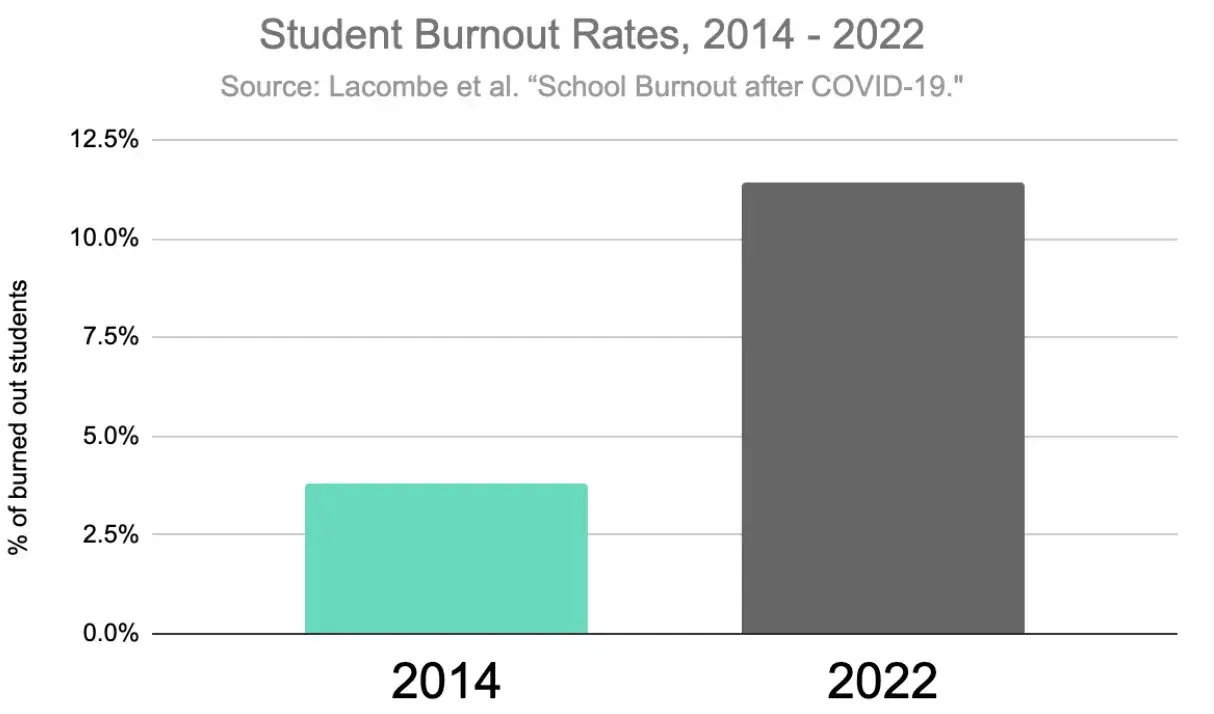
Figure: Severe burnout among high school students has risen sharply. In one European study, 11.4% of students reported severe burnout in 2022, up from 3.8% in 2014. Burnout is clearly affecting younger students, and the pressures of recent years (like pandemic disruptions) have only exacerbated the trend.
Source link: https://www.polygence.org/blog/high-school-bordedom-and-burnout
What’s Causing This Wave of Burnout in School Kids?
Why are students as young as 12 or 15 feeling burnt out? There isn’t one simple cause – it’s usually a mix of factors piling on. Here are some of the big ones:
1. The Academic Pressure to Perform
Many kids today feel like they have to be great at everything: top grades, extracurriculars, sports, social life, all while thinking about college before they’ve even hit high school. Plus, “If you are not ahead, you are behind” has become a common mindset, and it’s a recipe for burnout.
2. Performance Anxiety and the Need to be “Perfect”
Hand-in-hand with pressure comes fear of failure. Frequent high-stakes tests, constant grading, and the competitive academic culture can make kids extremely anxious and keep them in a constant state of stress.
For some, even a single B or a failed quiz triggers panic that “I’m not good enough.” Over time, this anxiety wears them down. They may start avoiding challenges or feel paralyzed by the need to always be perfect. Middle schoolers, for instance, are still learning to cope with evaluation; when they feel everything “counts” toward their future, it can become overwhelming.
3. Digital Overload
Today’s youth are practically born with smartphones in hand, and this constant screen time and information overload are taking a toll on their mental well-being. Think about it: a student spends 7 hours a day or more on screens – researching for assignments, doing online classes or homework, then scrolling YouTube or Instagram into the night. This near-constant digital engagement can lead to “technostress,” a tech-induced strain that leaves students mentally fried. And it’s not just about blue light or sedentary habits. The never-ending stream of notifications, the pressure of social media comparisons (“Everyone else seems to be hndling life better!”), and the inability to truly unplug all contribute to a growing sense of exhaustion and anxiety. The result? Tired, overstimulated minds that struggle to focus and cope.
4. Lack of Balance and Downtime
According to Psychology Today, a schedule that’s too intense with zero time to relax or have fun is a major driver of burnout.
Many young people today have schedules that would make an adult’s head spin. School, sports practice, music lessons, tutoring, clubs – and repeat. With life on this hamster wheel, there’s no time to recover or play, and students end up exhausted and cynical.
In other words, pushing kids to do that one extra thing (one more class, one more club, one more hour of homework) can backfire badly. Children need time to be children – to play, to daydream, to sleep – yet that time keeps shrinking. By high school, afternoons and weekends become extensions of work, not breaks from it. No wonder teenagers are running on empty.
5. Sleep? What Sleep?
Most teens are chronically sleep-deprived. Late-night studying, exam prep marathons, and doomscrolling have taken the place of proper rest. And when kids are always tired, they can’t focus, they get frustrated easily, and everything feels harder.
In fact, a report by the Hindustan Times found that over 70% of Indian kids sleep less than 7 hours a night during exams, and some even sleep as little as 3 to 5 hours. That’s way below the 8 to 10 hours experts recommend for teenagers. And this isn’t just during exam season. Many students fall into these poor sleep habits all year round, making them even more vulnerable to burnout.
What Can Schools Actually Do About It?
At Bethany Institutions, we believe education must go beyond academics. Burnout is real, and we see it as a call to action. As educators, parents, and mentors, it’s our responsibility to create environments where students thrive, and not just survive.
Here’s how we’re working on that:
1. Reclaim Balance
It’s time to rethink the “more is better” mentality. At Bethany, we encourage a course load and activity roster that challenges kids without overloading them. Sometimes that means deliberately doing less – dropping one advanced class for a regular one, or keeping weeknights free from extra clubs.
Our educators are also trained to recognise signs of burnout and stress. They know when to slow things down, when to offer support, and when to simply listen.
2. Protect Sleep Like It’s Gold
Both schools and families should treat sleep as a non-negotiable priority. Educators might avoid assigning homework that requires all-nighters and consider later school start times. Parents can set consistent bedtimes and limit late-night device use. They can encourage device-free dinners, tech-free hours before bed, or even one day a week with no social media.
3. Listen Without Fixing
Sometimes kids don’t need advice. They just need someone who hears them. Let them vent. Don’t dismiss how they feel. “I’m tired” might mean more than just a rough day. And if they do need help, guide them to support (counsellors, mentors, etc.).
This Is a Wake-Up Call. Let’s Not Hit Snooze
Burnout isn’t a trend or a buzzword; it’s a warning. If we don’t shift how we approach school and student life, we’re going to keep raising kids who are done before they even begin.
But we can change that. At Bethany Institutions, we believe schools have the power to lead this shift. Because no dream university or prestigious job is worth a childhood lost to burnout.
So let’s take a breath and reimagine the journey. We hope you’ll join us.