

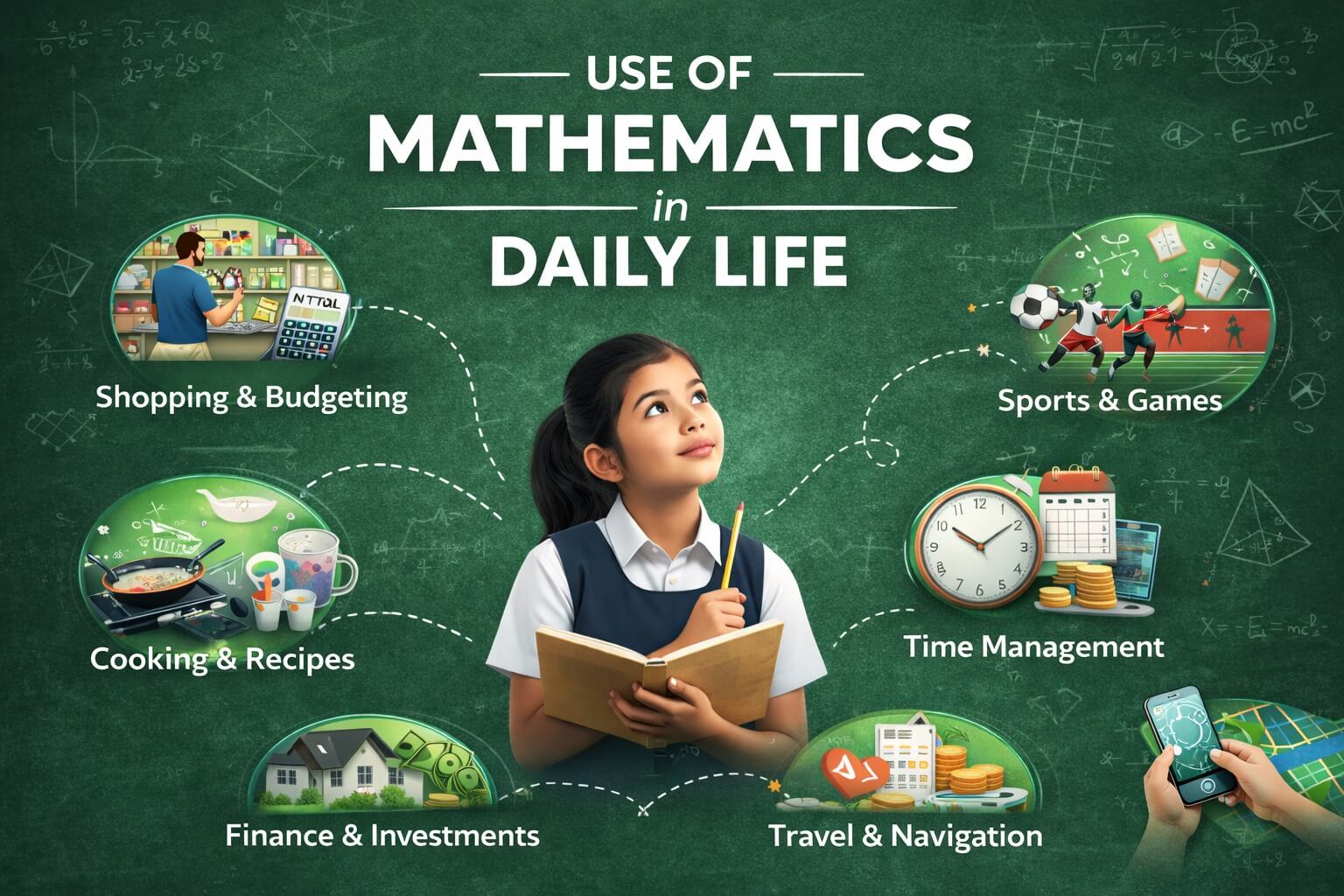
The presence of mathematics in daily life helps people think clearly, plan better, and avoid mistakes. Whether at home, school, or work, numbers support almost every activity. Learning how math connects to real situations allows students and adults to use knowledge in practical and meaningful ways.
What Is Mathematics in Daily Life
Practical math refers to the use of numbers and calculations in real situations. It includes counting, measuring, comparing, and problem solving. People use math when they pay bills, read clocks, or measure ingredients.
Basic skills such as addition, subtraction, multiplication, and division help in everyday decisions. When people understand these concepts, they feel more confident and independent. These simple abilities form the foundation for more advanced thinking and planning in life.
Use of Math in Managing Money
Managing money is one of the clearest examples of the use of mathematics in daily life.
- Planning monthly budgets: People use math to divide their income for rent, food, savings, and other needs. This planning helps control spending and avoid unnecessary debt.
- Tracking income and expenses: By adding daily expenses and checking totals, people understand where their money goes. This habit encourages better saving and smarter financial choices.
- Understanding banking and bills: Math helps people read bank statements, calculate interest on savings or loans, and pay electricity or phone bills on time without mistakes.
- Making smart Shopping Decisions: People compare product prices, calculate discounts, and check final amounts before paying. These simple steps help save money and prevent overspending.
Mathematics in Time Management
Math helps people organise their day and use time wisely.
- Reading clocks and setting alarms for daily routines
- Planning school, work, and personal activities
- Estimating travel time before leaving home
- Scheduling tasks to meet deadlines
- Avoiding delays through better planning
- Improving focus and productivity
Math in Shopping and Cooking
Math supports accurate buying and proper food preparation.
- Adding prices while shopping
- Checking total bills before payment
- Comparing product quantities and prices
- Understanding weight and volume
- Measuring ingredients for recipes
- Adjusting portions for more or fewer people
- Ensuring better results in cooking
Math in Travel and Distance
Travel planning involves distance, speed, and cost. People calculate how far they need to go and how long it will take. Fuel estimates depend on distance and mileage.
Ticket prices, hotel stays, and travel budgets all use math. Route planning also requires comparing shorter or faster paths. These calculations help travellers save time and money while staying organised.
Application of Maths in Daily Life
Math plays a practical role in everyday decisions across home, school, and work life.
- Supporting daily home tasks: People use math to plan budgets, measure cooking ingredients, and organise time properly. These small calculations make daily routines smoother.
- Improving learning in school: Students solve math problems to build logical thinking and accuracy. This practice strengthens focus and problem-solving skills.
- Helping at the workplace: Math supports planning, handling data, and clear communication. It helps complete tasks correctly and on time.
- Making small decisions easier: Simple activities such as splitting bills, checking change, and planning trips rely on basic calculations. Over time, regular math use builds confidence and sharper thinking.
Importance of Learning Math Early
Learning maths from an early age plays a vital role in shaping a child’s thinking, showing the real importance of mathematics in everyday learning and future success.
- Sharpens thinking skills: Early practice helps children analyse problems and find clear solutions, building logical thinking habits.
- Strengthens other subjects: Maths supports learning in science, economics, and more by improving understanding of numbers and patterns.
- Boosts confidence early: Strong basics reduce fear of maths and prepare students for higher studies and careers.
How Students Can Apply Math in Real Life
Students use maths every day without realising it, which clearly shows the importance of maths in daily life and learning.
- Daily calculations: Adding shopping bills, managing pocket money, and planning homework time help build quick number skills.
- Learning through play: Games, puzzles, and challenges make maths fun while improving thinking abilities.
- Real-world connections: Tracking expenses and schedules helps students understand how numbers work in real situations.
Everyday Value of Math Skills
Many people often ask why math is important when they struggle with numbers. The answer lies in daily convenience and confidence. Math reduces errors in spending, planning, and time management.
It helps people think logically and solve problems calmly. With strong math skills, individuals make better decisions and handle responsibilities with ease. These abilities support personal growth and independence throughout life.
Common Ways People Use Math
There are countless examples that show the 10 uses of maths in our daily life, including Budgeting monthly expenses
- Cooking with measurements and portions
- Shopping and calculating totals
- Planning time and schedules
- Travelling and estimating distances
- Banking and managing accounts
- Measuring length, weight, and volume
- Saving money and setting goals
- Paying bills and tracking due dates
- Solving everyday problems
Conclusion
Mathematics is a practical life skill used in daily activities. It helps with planning, decision making, and understanding the world better. Strong math basics make everyday tasks simpler and improve confidence. When students learn to apply math outside textbooks, they see its true value in daily life. Regular practice builds accuracy and independence. Math does not remain limited to classrooms. It becomes a helpful tool that supports personal growth, smart choices, and success in both small and big moments of life.
FAQs
Why is mathematics important in daily life?
Mathematics helps in managing money, time, travel, and everyday decisions. It improves problem solving and logical thinking.
Where do we use math in everyday life?
Math is used in shopping, cooking, banking, travel planning, and even in digital payments and mobile apps.
How does math help students in real life?
Math builds reasoning skills, improves accuracy, and helps students manage tasks such as budgeting, measuring, and planning.
Can daily practice improve math skills?
Yes. Using math in small daily activities like calculating expenses or time improves speed, confidence, and understanding.