
What STEM Actually Means (Beyond the Buzzword)
STEM stands for Science, Technology, Engineering, and Mathematics, but in most schools it has become shorthand for robotics kits and coding classes. That’s a narrow reading. Real STEM education is less about specific tools and more about a way of thinking: framing a problem, testing an approach, learning from what fails, and iterating. Coding and robotics are useful vehicles for teaching that mindset, not the point of it.
Why It Matters More Now Than a Decade Ago
Three shifts make STEM foundations more important today than for previous generations of students:
- Career paths are less linear: A student entering school today will likely work in roles that don’t exist yet. The specific tools they’ll use in 15 years can’t be predicted, but the underlying skills (logical reasoning, data literacy, comfort with technology, structured problem-solving) will still be relevant regardless of which field they land in.
- Non-technical fields now require technical literacy : Marketing, healthcare, law, and design all increasingly involve data interpretation, digital tools, or basic technical fluency. Students who build comfort with STEM thinking early aren’t limiting themselves to “STEM careers,” they’re building a baseline skill set that applies broadly.
- Competitive exams reward this thinking directly : NEET, JEE, and most aptitude-based entrance exams test applied reasoning over rote recall. Students with strong STEM foundations from middle school onward tend to find these exams less of a jump, because the underlying skill (breaking a problem into steps and reasoning through it) is the same one STEM education builds.
STEM vs a Computer Lab: What’s the Difference?
| A Computer Lab | Real STEM Education |
| A physical facility | A teaching approach |
| Used for specific classes or exhibitions | Woven across subjects and daily learning |
| Teaches software or tools | Builds reasoning and problem-solving |
| Standalone period on the timetable | Integrated into science, math, and beyond |
What Good STEM Education Looks Like in Practice
Not all “STEM programs” deliver on this. A strong program should include:
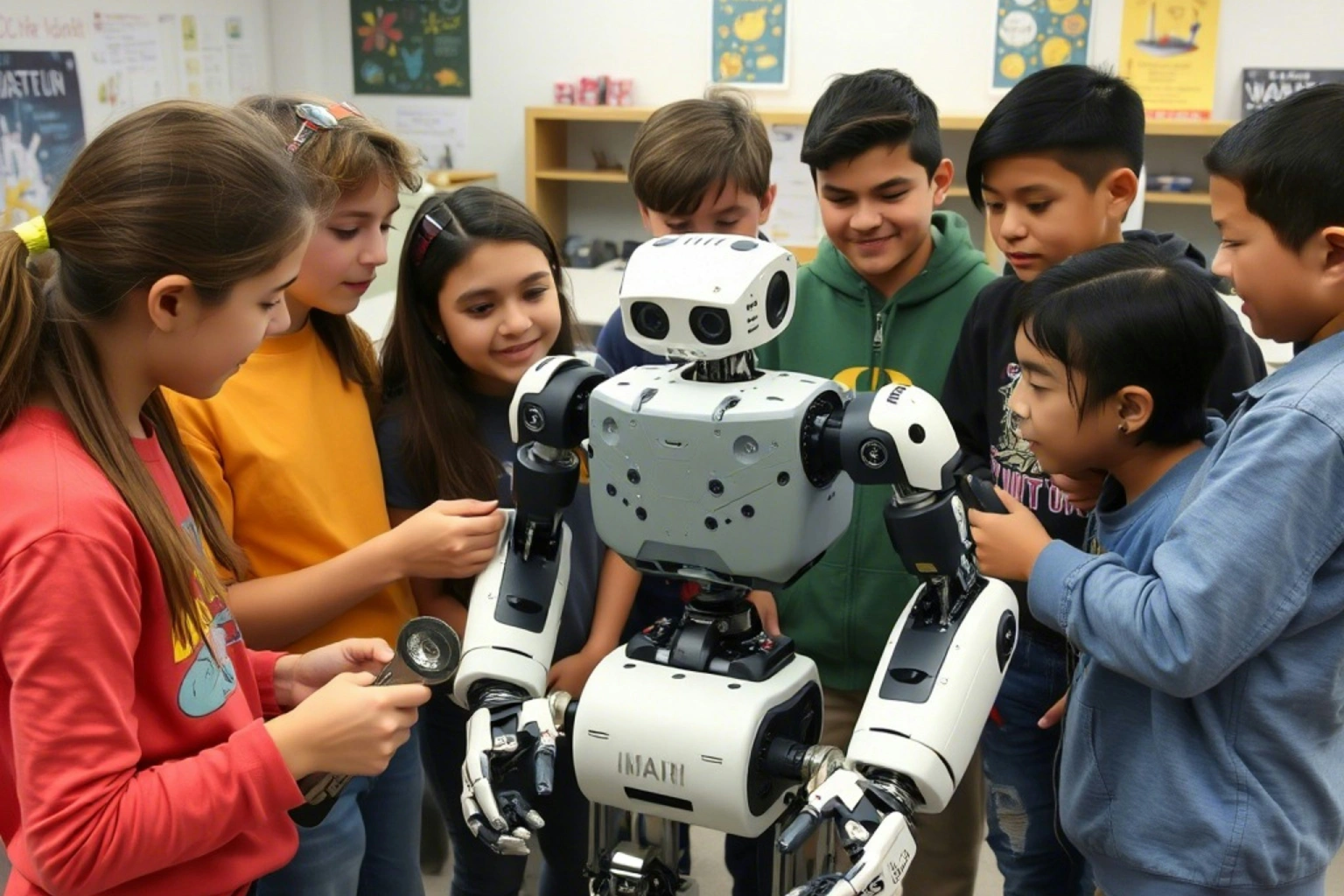
- Hands-on, not just theoretical, learning : Labs, experiments, and project-based work where students apply a concept rather than memorise it.
- Integration across subjects, not a standalone period : Math concepts showing up in science labs, computing tying into both, rather than STEM being one isolated class on the timetable.
- Early exposure, not a late addition : Foundational STEM thinking introduced from primary and middle school, not bolted on in Class 9 once board exams are in sight.
- Access to the right infrastructure : Functional labs and computer facilities that students actually use regularly, not just for annual exhibitions.
STEM Isn’t Just for Future Engineers
A common misconception is that STEM education is only relevant for students planning to pursue engineering, medicine, or pure sciences. That’s not how the underlying skills work. A student headed toward economics, design, journalism, or law benefits just as much from being comfortable with data, systematic reasoning, and technology, because these are baseline expectations in most careers now, not specialised ones.
Checklist: What to Look for in a School’s STEM Program
- Is learning hands-on and project-based, not just theoretical?
- Is STEM integrated across subjects rather than a single isolated period?
- Does STEM thinking start in primary/middle school, not just high school?
- Are labs and computer facilities used regularly, not only for exhibitions?
- Does the program build reasoning skills, not just tool familiarity?
- Is STEM framed as relevant for all students, not only future engineers?
FAQs
Is STEM education only useful for science and engineering careers?
No. The core skills built through STEM (data literacy, structured problem-solving, technical comfort) apply across most fields, including non-technical ones like design, economics, and law.
At what age should STEM education start?
Foundational STEM thinking is most effective when introduced from primary school, not saved for middle or high school. Early, low-stakes exposure to problem-solving and hands-on learning builds the habits that later coursework depends on.
Does STEM education help with NEET and JEE preparation?
Indirectly, yes. Both exams reward applied reasoning over memorisation, which is exactly the kind of thinking a strong STEM foundation builds from an early age.
What’s the difference between STEM and just having a computer lab?
A computer lab is infrastructure. STEM education is a teaching approach that uses hands-on tools like labs and computing to build reasoning and problem-solving skills across subjects, not a single class or facility on its own.
Our Approach
At Bethany, STEM isn’t treated as a standalone subject bolted onto the regular curriculum. Across more than 3,500 students, it’s built into how we approach academics at every grade level, supported by our computer department and reinforced through our Learning Lab for students who need extra support with core concepts. This foundation carries forward into our Junior College programs, where reasoning skills built early support students in ISC and competitive exams. The goal isn’t just exam readiness, it’s building the kind of thinking that holds up regardless of which career path a student eventually chooses.
Want to know more about how we approach STEM learning at Bethany? Get in touch with our admissions team.