
A Junior College is a post-secondary educational institution that serves as a stepping stone between high school and a full-fledged degree programme at a university. These institutions play a vital role in making higher education more accessible through flexible curriculum, affordable tuition, and convenient locations.
Junior Colleges emerged in the early 20th century as a revolutionary concept in education which served as an experiment to extend high school education. Pioneered by William Rainey Harper, the first president of the University of Chicago, these institutions were designed to bridge the gap between high school and university education. Harper’s vision of dividing the university into senior and junior colleges laid the foundation for a system that, by the late 20th century, had grown to over 1,200 junior colleges in the United States, accounting for nearly 40% of all undergraduate enrolments. These colleges became vital hubs for accessible, democratic education, providing opportunities that were previously out of reach for many.
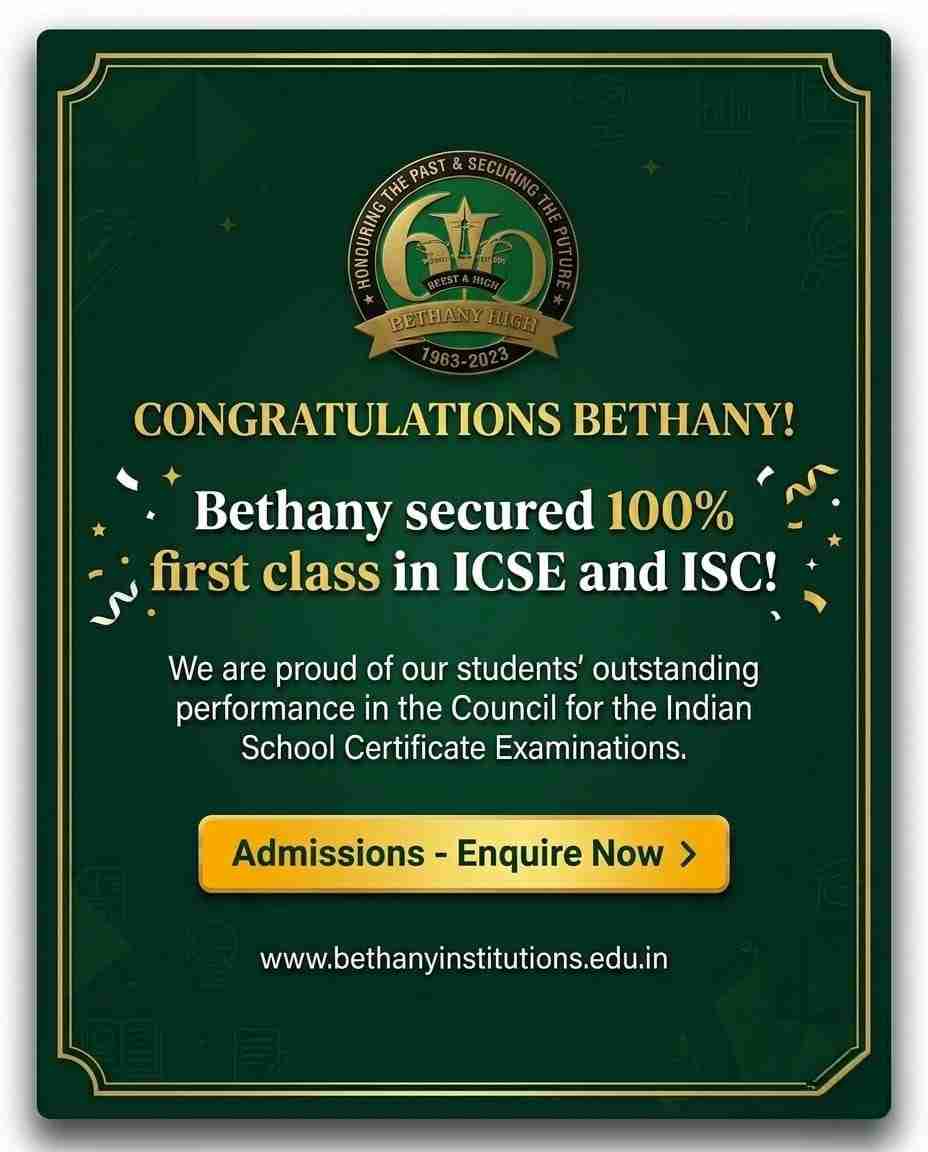
In India, the concept took root in the 1950s when educational leaders sought to adapt the Cambridge School Certificate Examination to better serve Indian students. This led to the establishment of the Council for the Indian School Certificate Examinations (CISCE), which began administering the Indian School Certificate Examination (ISC) after Class 10. The ISC, conducted in English, is a pivotal examination that follows two years of rigorous study, aligning with the national educational goals and setting the stage for students’ success in higher education.
Bethany Junior College, Koramangala, established in 1991 exemplifies our desire to set higher standards in higher secondary education to our students in the two crucial years that precede their University education. The Junior College got its own campus in 2005, diagonally opposite the old campus, catering to the needs of our students in choosing their desired streams in Classes 11 and 12.
Importance of Junior College in the Education System
- In India, one of the pioneers in the successful establishment and functioning of Junior Colleges is the CISCE. As a National Board, it has a rich legacy beginning in 1958, rooted in the Cambridge University Examinations conducted in India at the time. The CISCE has always stood firm on its values and principles, as stated in its mission statement and motto: Empowering Minds and Transforming Lives since 1958.
- CISCE’s approach to education is built on the core belief that diversity and plurality are the fundamental strengths for the evolution of ideas. Our schools are designed to motivate pupils towards the cultivation of excellence, both in the Indian and global experience. We place a strong emphasis on values, both spiritual and cultural, which form the bedrock of our educational experience.
- Our schools are dedicated to fostering an ‘Indian Ethos,’ ensuring that they have strong roots in the national psyche while being sensitive to national aspirations. This commitment helps cultivate students who are not only academically proficient but also deeply aware of their cultural heritage and societal responsibilities.
Purpose and Benefits of Junior College
Junior Colleges have always stood out and pioneered many changes, always adopting and adapting to the global scenario and demands. With the release of the New Education Policy (NEP 2020) introduced by the Government and the changes proposed, CISCE too will be making suitable course corrections to be in sync with these proposals.
Benefits of attending a Junior College
Every Junior College affiliated to the CISCE ensures that certain key ideas, such as trust and fair play, are at the core of our values. In such a system, there is minimum monitoring by the CISCE, thereby allowing schools to evolve their own niche.
Junior Colleges in India also strive to have an Indian ethos, that is, strong roots in the national psyche. We are always sensitive to our national aspirations.
- Catering to the needs of the children.
- Giving freedom to experiment with new ideas and practices.
- Diversity and plurality – the basic strength for evolution of ideas.
- Schools to motivate pupils towards the cultivation of:
- Excellence – The Indian and Global experience.
- Values – Spiritual and cultural – to be the bedrock of the educational experience.
- Trust and fair play.
- Minimum monitoring.
- Allowing schools to evolve their own niche.
Meet Our Alumni
Poojitha Reddy, a proud alumnus of Bethany Junior College owes majority of her personality development to Bethany. “Serving as President during my time at Junior College, I was able to make memories for a lifetime while learning skills like effective people and time management. The kind of exposure one gets at Bethany truly prepares them for the real world whilst providing a comforting environment to grow. Further, the high competence of all the students in Junior College nudges one to be the best versions of themselves, inculcating a positive competitive spirit. With highly knowledgeable and experienced teachers, classes are engaging and allow for personal attention as well. Be it academics, extra curricular activities or the overall quality of education, there isn’t a better place to be. Bethany will always be Home!”
Junior College Programmes
The Indian School Certificate Examination (ISC) has been framed and designed as an Examination through the medium of English, after a two-year course of studies beyond the Indian Certificate of Secondary Education Examination (Class X) or its equivalent. All candidates eligible to appear will be required to enter for English (Compulsory) with three, four or five elective subjects and be assessed by the school in Socially Useful Productive Work and Community Service (Compulsory).
Differences between various Junior College programmes(Humanities, Commerce and Science)
The CISCE offers a range of subjects from which students can select subjects of their choice, across the boundaries of Humanities, Commerce and Science, in keeping with their aptitude and ability.
- The ISC curriculum emphasises on the development of effective communication skills in English and other languages.
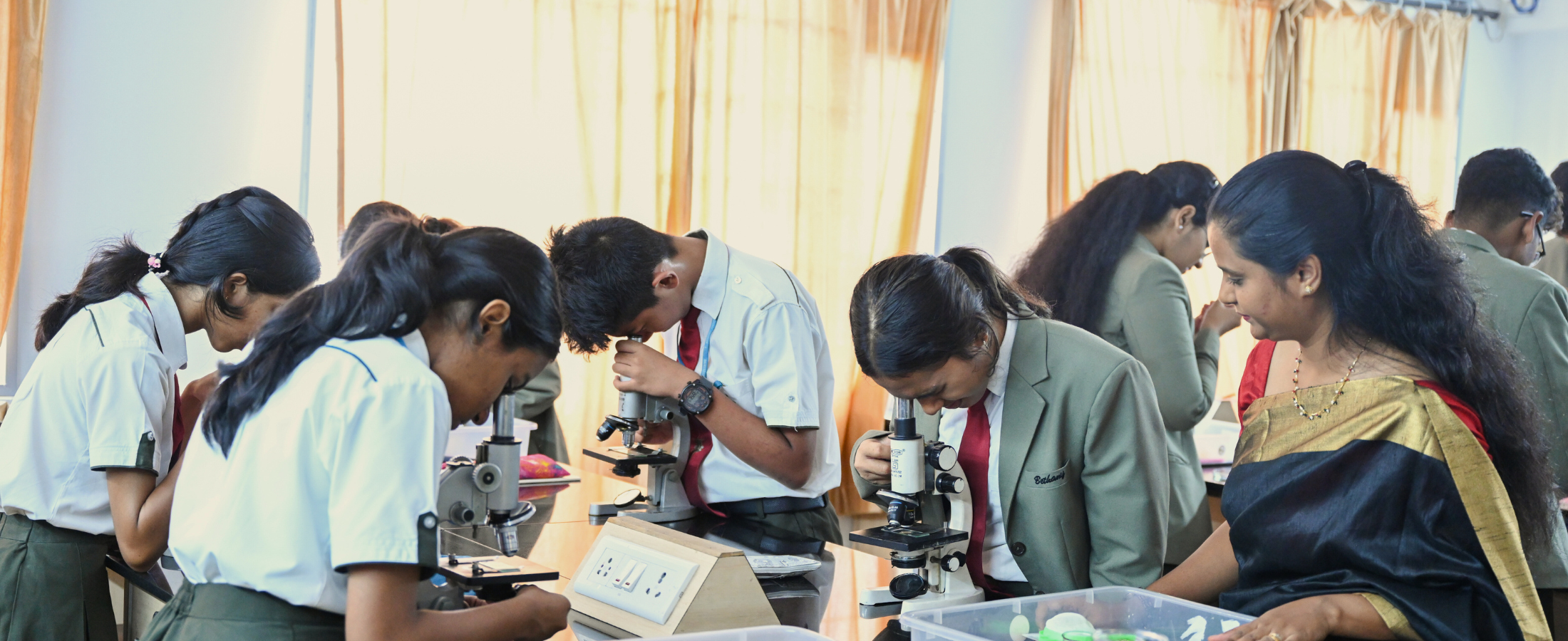
- The vast practical experiences built into the curriculum enable students to become active problem-solvers, in addition to gaining academic excellence.
- ISC offers a wide range of subjects for students to select from, based on their aptitude and abilities.
- The ISC examination caters to the needs of all students, where the assessment is based on an array of simple, difficult, analytical, and critical thinking questions.
- The curriculum is framed to ensure students are equipped for tackling all forms of competitive entrance examinations at the National & Global arena.
- It focuses on soft skills development which helps in handling new and complex situations successfully in life.
- ISC provides opportunities for holistic education.
Specialised programmes at Bethany Junior College.
Bethany Junior College offers specialised programs to the ISC aspirants in the three respective streams- Science, Commerce and Humanities. We also offer a wide variety of subjects for the students to choose from- English, Physics, Chemistry, Mathematics, Biology, Economics, Computer Science, Physical Education and Fine Arts respectively for the Science stream. Accounts, Commerce, Business Studies, Economics, English, Mathematics, Fine Arts and Physical Education are the subjects offered to the Commerce stream.
For the Humanities stream, the range of subjects to choose from are- English, Sociology, Psychology, Economics, Home Science, Elective English, Fine Arts and Physical Education.
Admission to Junior College
The admission process at the Bethany Junior College consists of filling up the applications online, an entrance examination that tests the students’ basic knowledge followed by an interactive session with the prospective students and parents..
Students who have cleared the ICSE examination or any equivalent one by any other board, with 90% and above are the candidates preferred for the Science stream and 85% and above for the Commerce stream and 80% and above for the Humanities stream.
Key dates and application procedures
Application Availability: Forms are available online in August (for feeder schools) and September (for the main school).
Submission: Fill out and submit the online application along with required documents.
Entrance Test and Interaction
- Pre-Nursery/Nursery: Selection is based on interaction with Academic Coordinators.
- Classes above Junior 1: Selection is based on entrance tests in English, Maths, and a second language.
Notification and Confirmation: Parents receive confirmation and are required to complete fee payment.
Final Step: Submit the signed application form and documents at the school office to finalize admission.
Tips for prospective students and parents.
Understand the Curriculum
Familiarise yourself with the courses and programs offered. Review the curriculum and understand the prerequisites for your intended program.
Develop Study Skills
Junior college often requires more self-directed learning. Enhance your study habits, time management, and organisational skills to stay on top of assignments and exams.
Review Basic Concepts
If you’re entering a specialised field, brush up on relevant basic concepts to ensure you’re well-prepared for advanced topics.
By staying organised, proactive, and open-minded, you’ll set yourself up for a successful and fulfilling junior college experience.
Junior College vs. High School
One of the key differences between Junior College and traditional high school lies in the level of academic rigour and the focus on career preparation. Junior Colleges provide a more specialised education, with programmes designed to prepare students for specific fields of study at the university level.
In contrast to high schools, where the curriculum is often more general, Junior Colleges offer courses that are directly aligned with the demands of higher education and the job market. This means that students who attend Junior Colleges are often better prepared for the challenges of university and have a clearer sense of their career goals.
Furthermore, Junior Colleges typically offer more flexibility in terms of course selection and scheduling, allowing students to tailor their education to their individual needs and interests. The smaller class sizes also mean that students receive more personalised attention, which can greatly enhance their learning experience.
Conclusion
Junior Colleges play a pivotal role in the education system, providing an accessible and supportive pathway to higher education. By offering a range of academic programmes and fostering a holistic approach to learning, these institutions help students develop the skills and knowledge they need to succeed in university and beyond.
At Bethany Junior College, we are committed to empowering our students through a comprehensive education that combines academic excellence with personal growth. Whether you are looking to pursue a career in science, commerce, or the humanities, our programmes are designed to help you achieve your goals.
We invite you to explore the opportunities that await you at Bethany Junior College and take the first step towards a bright and successful future.