
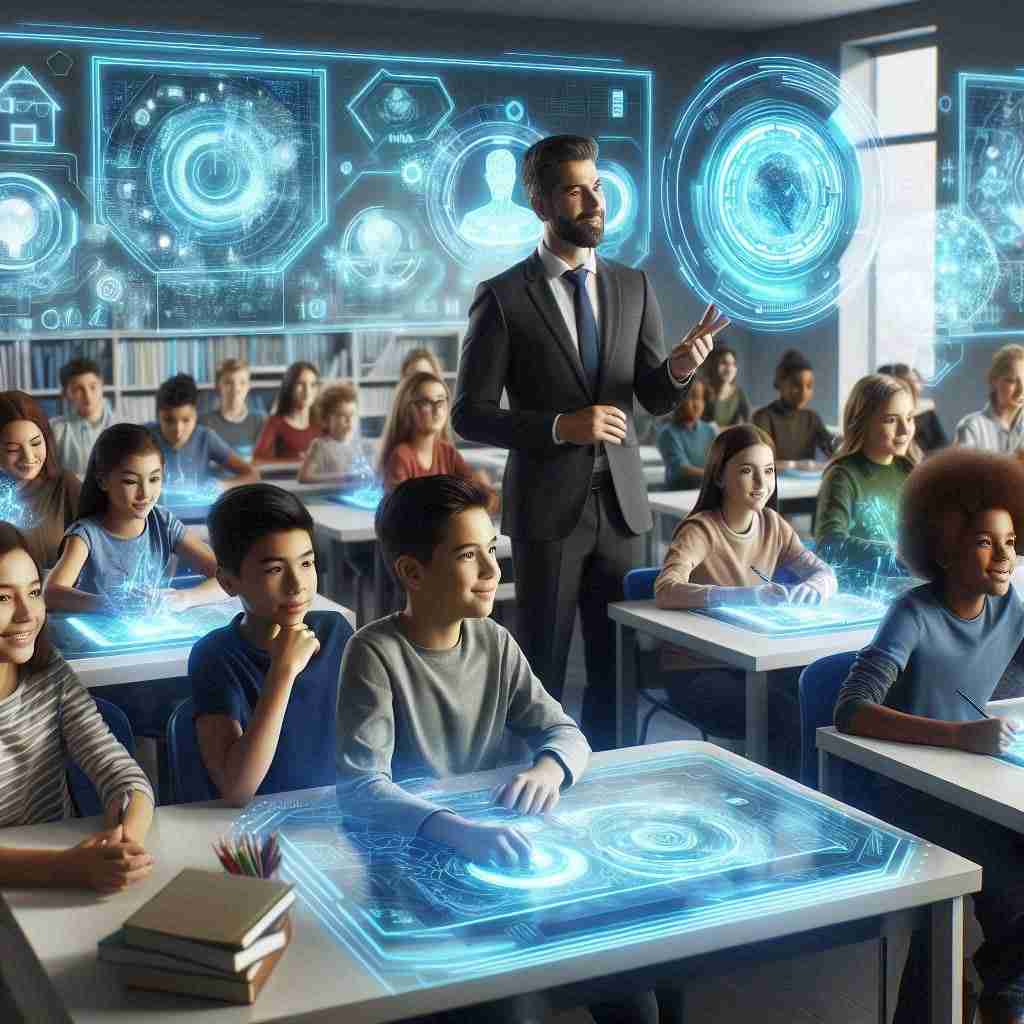
Have you ever imagined what our classrooms will look like in the next 10 or 20 years? I often find myself wondering that too. If there’s one trend that’s impossible to ignore, it’s the growing presence of AI in education.
We’re not talking about robots replacing teachers—thankfully, that’s not the plan! But rather, artificial intelligence (AI) is becoming an incredible support system for students, teachers, and school administrators. So in this blog, I’d love to take you through what the future of AI in schools might look like—and how it’s already starting to change the way we teach and learn.
AI-Powered Personalized Learning
Let’s start with something that excites me the most: personalised learning with AI.
Every child learns differently—some grasp concepts quickly, while others need a bit more time and repetition. In a traditional classroom, it’s not always easy to give every child the individual attention they need. But AI is helping bridge that gap.
With AI-powered adaptive learning platforms, students can now receive lessons tailored to their learning pace and style. These tools analyse a child’s performance in real-time and adjust the content to suit their strengths and weaknesses. Think of it as a smart tutor who knows exactly when to slow down or speed up.
For us in India, where class sizes can often be large, this technology could be a game-changer in helping teachers support every student more effectively.
AI in Classroom Teaching: Enhancing the Teacher’s Role
Now, there’s often a concern I hear—Will AI replace teachers?
Let me be clear: absolutely not. What AI will do is empower teachers like never before.
AI in classrooms can handle repetitive tasks like grading quizzes, tracking attendance, or even summarising student performance. This gives teachers more time to do what they do best—connect with students, spark curiosity, and make learning meaningful.
We’re also seeing the rise of AI education tools that can support teachers with content creation, lesson planning, and language translation. For example, if a student is struggling with English, an AI tool could translate instructions into their mother tongue. That’s incredibly helpful in a multilingual country like ours.
The Role of AI in School Administration
AI isn’t just limited to the classroom—it’s also making school management smarter and smoother.
Running a school involves a great deal of planning, scheduling, and record-keeping. Automation in school administration using AI can handle things like admissions, timetabling, fee tracking, and parent communication.
Here at Bethany High, we’re always looking for ways to improve efficiency without compromising the human touch. AI tools can help reduce manual workload for our staff and ensure nothing falls through the cracks.
In short, AI isn’t just about the future of learning—it’s also transforming how schools are run on a daily basis.
AI for Special Education: Improving Accessibility
Another area where AI impact on teaching is profound is in special education. I’ve seen how technology can open up a world of possibilities for students with disabilities.
AI tools can support students with learning differences or physical challenges through speech-to-text software, reading aids, and even emotion-recognition apps that help teachers understand how a student is feeling.
For instance, a student with dyslexia might benefit from AI software that reads content aloud. Or a visually impaired student could use a tool that describes images and diagrams. These innovations are making education more inclusive, which is something we’re very passionate about at Bethany High.
Ethical Concerns and Challenges of AI in Education
Of course, no technology comes without its challenges—and AI in education is no exception.
One of the biggest concerns is data privacy. AI systems rely on student data to personalise learning, which raises questions about who has access to this information and how securely it’s stored.
Then there’s the issue of bias. If an AI tool is trained on data that’s not diverse, it might unintentionally favour certain learning styles or cultural contexts. That’s why it’s important for schools and developers to work together to build ethical, transparent, and inclusive AI systems.
We must also consider the digital divide in India. Not every student has access to a device or the internet. So while AI brings exciting opportunities, we need to make sure it doesn’t leave anyone behind.
The Future: AI’s Long-Term Impact on Schools
So, what does the future of learning with AI really look like?
I believe we’re heading towards future classrooms with AI that are more interactive, inclusive, and learner-focused. Imagine classrooms where AI helps teachers identify struggling students early, suggests new teaching strategies, and keeps parents updated in real time.
Students will likely learn at their own pace, with lessons that adapt as they grow. Schools will become more efficient, with systems that handle the admin work in the background. And teachers will have more time to mentor, inspire, and guide—something AI can never truly replace.
Here in India, where the education landscape is vast and varied, the thoughtful use of AI and school management systems could level the playing field and bring quality education within reach for many more children.
FAQs
How is AI currently used in education?
AI is already being used in schools to personalise learning, assist teachers with lesson planning, automate grading, and manage administrative tasks. It’s also used in learning apps and platforms that adapt content to each student’s level.
Will AI replace teachers in the future?
Not at all. AI is a tool to support teachers, not replace them. It can help with repetitive tasks and data analysis, allowing teachers to focus on building relationships and guiding students.
How will AI benefit students with special needs?
AI tools can provide personalised support like speech recognition, reading assistance, and emotion analysis, making learning more accessible and effective for students with disabilities.
What are the ethical concerns around AI in education?
Key concerns include data privacy, algorithmic bias, and unequal access to technology. Schools must be careful to use AI responsibly and ensure fairness for all students.
Are Indian schools ready for AI?
Many private and international schools in India, like ours at Bethany High, are already exploring AI tools. While there’s still work to be done—especially in bridging the digital divide—there’s no doubt we’re moving in the right direction.
Conclusion
AI in education is not a distant dream—it’s already here, and it’s growing fast. As schools across India explore the possibilities, we at Bethany High are excited to be part of this journey.
Whether it’s through AI-driven education tools, smart classrooms, or personalised learning, the future is bright and full of promise. But as we embrace this technology, let’s also stay grounded in our mission—to nurture young minds with care, creativity, and compassion.
We’re excited about the future—and we’d love for you to be a part of it.
If you’re a parent looking for ICSE syllabus schools in Bangalore that blend tradition with innovation, do have a look at how we do things at Bethany High. The future of education is here—and we’re ready for it.