

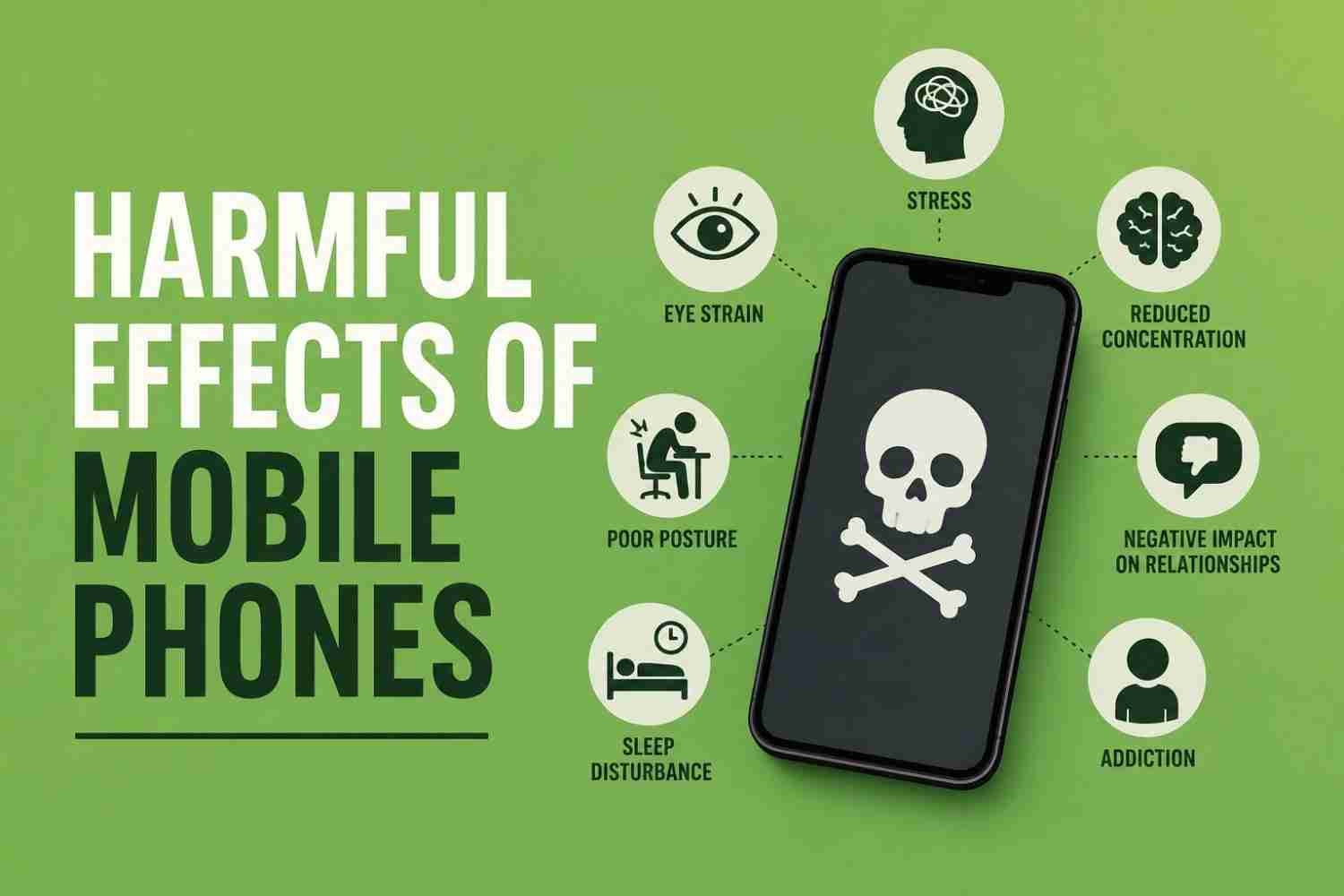
Mobile phones have become an inseparable part of our lives. From school projects to social chats, everything happens through a screen. However, too much mobile use can quietly harm our body, mind, and focus. Many students are unaware of the long-term mobile side effects that can affect their health and academic performance.
Understanding the bad effects of mobile phones on students helps parents, teachers, and learners make better choices about screen time and digital habits.
Let’s understand the harmful side effects and how to stay safe.
1. Eye Strain
Staring at bright screens for long hours can lead to digital eye strain. Your eyes start to feel dry, itchy, and tired. Over time, this bad effect of mobile phone use can cause blurred vision or headaches. Students who use phones for studying or watching videos often complain of these symptoms.
Continuous screen exposure is one of the most common side effects of watching mobile for long periods, especially when students sit close to the screen without breaks.
To stay safe, follow the 20-20-20 rule. Every 20 minutes, look at something 20 feet away for 20 seconds. It’s a simple step that keeps your eyes relaxed and healthy.
2. Poor Sleep
Using phones at night reduces deep rest. The glow from your screen tricks your brain into staying awake. As a result, your sleep quality drops, and you feel tired the next day.
Sleep disturbance is among the most common mobile phone side effects, particularly when students scroll through social media or watch videos before going to bed.
Keep your phone away at least 30 minutes before bed. A good night’s rest helps you focus, think better, and stay active the next day.
3. Less Focus on Studies
Among the many phone use side effects, loss of concentration is one of the biggest challenges students face today.
It’s tough to focus on homework when your phone keeps buzzing. Every notification, message, game, or social post pulls your attention away. This leads to poor time management and reduced academic performance.
This negative impact of smartphones is especially visible among students. The use of mobile phones in school advantages and disadvantages debate continues, but one thing is clear: constant distractions hurt concentration. Turning off notifications during study time helps maintain focus and productivity.
4. Posture Problems
Do you ever notice how you bend your neck while scrolling through your phone? That’s called “text neck,” and it’s a common side effect of phone use. Prolonged bad posture can cause severe neck, shoulder, and back pain.
Holding your phone at eye level and taking short breaks to stretch can reduce this strain. Remember, your posture today shapes your health tomorrow.
5. Social Impact
Mobile phones connect us virtually, but often disconnect us emotionally. Spending more time on screens means spending less time with family and friends. This is one of the most overlooked bad effects of mobile use.
Instead of sharing a real laugh, we react with emojis. Over time, this can weaken relationships and communication skills, especially among youth. The impact of mobile phones on youth is visible in reduced face-to-face interactions and increased loneliness.
6. Addiction Risk
Mobile addiction is real. The endless scrolling, games, and short videos create a dopamine rush that keeps you hooked. Studies show that the average person checks their phone over 150 times a day.
Experts warn that the harmful effects of overusing cell phones include addiction, reduced productivity, and increased mental fatigue among students.
This overuse turns into dependence; students can’t focus without checking their phones. This mobile use side effect is one of the most harmful because it affects both mental health and productivity. Setting screen time limits helps you regain control.
7. Reduced Physical Activity
The more time you spend on your phone, the less time you spend moving. Long hours of sitting and scrolling can lead to weight gain and low energy. Lack of exercise also affects your mood and overall health.
This clearly shows the difference between the uses and abuses of mobile phone, where helpful technology becomes harmful when used excessively instead of responsibly.
Try replacing some phone time with outdoor play, cycling, or a quick walk. It keeps both body and mind active.
8. Hearing Issues
Earphones placed directly into the ear canal amplify sound pressure. S, when we listen to music or videos at high volumes, we risk causing damage to our ears.
Over time, this harmful effect of mobile phones can lead to tinnitus (ringing in the ears) or hearing loss. Keep your volume below 60% and take breaks from headphones to protect your hearing.
9. Anxiety and Stress
Constant alerts, social media comparisons, and online pressure can increase anxiety and stress. Many students feel the need to stay “always online,” fearing they’ll miss out on something.
This negative impact of smartphones leads to emotional fatigue and lower confidence. Try digital detox days. Put your phone aside and spend time doing something creative or relaxing.
10. Reduced Academic and Social Growth
Too much mobile use affects both learning and personal growth. Students may struggle to think creatively or communicate clearly. The effects of mobile phones on students include poor grades, short attention spans, and less interest in outdoor activities.
While the advantages and disadvantages of mobile phones essay often highlights connectivity as a benefit, excessive use blurs the line between use and misuse. Striking the right balance is the key to avoiding long-term harm.
Example / Quick Illustration
Imagine Riya, a bright student, who studies with her phone nearby. Each notification distracts her. One message turns into another, and one hour becomes two. But when she puts her phone on silent, she completes her homework faster and scores better. Her secret is being focused and disciplined.
Conclusion
Mobile phones are both a boon and bane of mobile phones. Powerful when used wisely, harmful when overused. While there are many advantages of phone use, the side effects of using mobile phones can’t be ignored. The merits and demerits of mobile phone use depend entirely on how we handle them. Understanding the uses and misuses of mobile phone helps students develop responsible habits and maintain a healthy balance between digital life and real-world experiences.
FAQs
Are mobile phones always harmful?
No. They are helpful for learning and staying connected, if used in limitation and with appropriate awareness. Balance is key.
Can kids get addicted to mobile phones?
Absolutely! Overuse can lead to addiction and lead to various behavioural problems. Therefore, setting daily limits is necessary.
How long should students use phones daily?
Less than 1-2 hours of non-study screen time is ideal and allows them to experience life outside the digital screen, which is essential for their overall development and wellbeing.