

50+ Rhyming Words for Kindergarten Students | Bethany High
Rhyming words make learning English fun for young children. Studies show that kids who hear rhymes early develop better vocabulary, listening, and memory skills. Rhymes also help children notice sounds, which prepares them for reading. When kindergarteners learn simple rhyming words, they enjoy playing with language and build stronger communication skills. This guide shares 50 English rhyming words for young learners, plus tips, examples, games, and activities to make rhyming a daily, enjoyable habit that boosts confidence and creativity.
Teachers often introduce rhyming words in small groups so children can recognise sound patterns more easily. Many lessons begin with 10 rhyming words in English and gradually expand to 20, 30, or even 50 rhyming words as students become more confident. This structured approach works especially well for rhyming words for UKG, KG class, and early primary learners.
Step-by-Step Guide to Learning Rhyming Words
Learning rhyming words helps children improve reading, speaking, and listening, and it makes language more fun. Teaching rhymes is easier when teachers use clear and playful methods.
Many teachers use a rhyme chart to group words with similar endings, such as -at, -og, and -oon. A well-designed rhyming words chart helps children quickly identify patterns and makes classroom practice more interactive. Visual tools, such as rhyming words paired with pictures, are particularly effective because children can connect the sound of a word to a familiar image.
1. Listen Carefully
Start by saying two words out loud and listen to how they end. Paying close attention helps children hear sound patterns and learn which words rhyme.
2. Identify the Rhyme
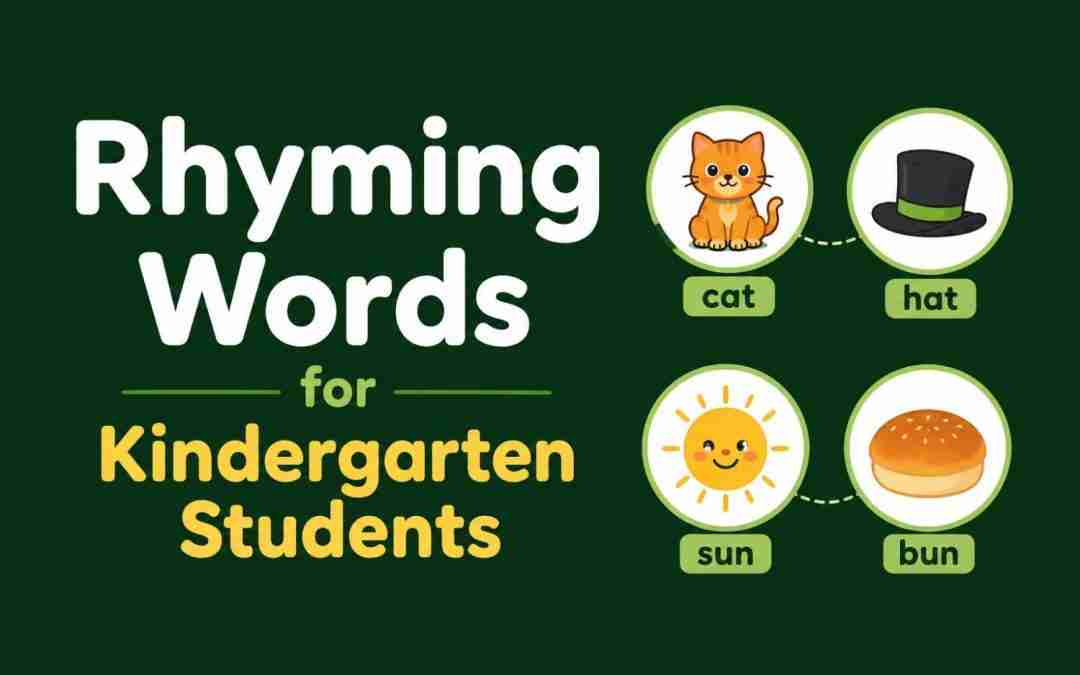
Listen for the ending sounds in words. Words rhyme when their last sounds are the same. For example, “cat” and “hat” rhyme because they both end with the “-at” sound. Learning this helps children hear and use sounds, which is important for reading and writing.
3. Practice with Word Pairs
Start with simple and familiar pairs like “dog-log” or “sun-fun.” Practising with these pairs helps children notice sound patterns. As they improve, add new words with similar endings to make it a bit harder.
4. Use Fun Rhyming Activities
Add rhyming to games, songs, or flashcards. Activities like clapping along, singing nursery rhymes, or matching cards make learning fun and hands-on. When children join in, they remember patterns better and enjoy learning more.
By listening, finding rhymes, practising pairs, and playing games, children build stronger sound skills, learn new words, and feel more confident spotting rhymes in daily language. Teachers can also make a rhyming words chart to visually show common sound patterns in the classroom.
Key Rules and Tips for Teachers
Rhyming words for Jr. KG are a vital part of early language learning. Here are some key tips for teachers to make teaching rhymes both effective and fun:
- Understand the concept: Rhymes match ending sounds, not spelling. For example, “see” and “tree” rhyme despite having different letters.
- Start simple: Begin with short vowel sounds like “cat,” “hat,” and “bat” to build a foundation.
- Use creative materials: Integrate songs, poems, and stories that naturally include rhymes to make learning enjoyable.
- Encourage oral practice: Let children repeat words aloud to boost memory, pronunciation, and confidence.
- Gradually increase difficulty: Introduce longer and more complex rhyming words as students get used to the basics. Using rhyming words in sentences helps children see how rhymes fit into everyday language.
- Use visual and hands-on tools: Try flashcards, charts, or matching games to help children remember sound patterns and keep lessons lively.
- Consistent reinforcement: Revisit rhyming words regularly to strengthen retention and recognition in everyday language.
Common Mistakes Students Make
Even with practice, children sometimes find rhyming tricky. Teachers can help by spotting and fixing these common mistakes early:
- Assuming similar spellings rhyme: Words like “cough” and “rough” look alike but sound different, so they don’t rhyme.
- Listening to the wrong sounds: Many focus on the initial sounds instead of the final ones, missing the actual rhyme pattern.
- Confusing sound with spelling: Rhyming depends on how a word sounds, not how it’s written.
- Overlooking word endings: Students may ignore the final syllables that determine whether two words rhyme.
- Skipping pronunciation practice: Without saying words aloud, children struggle to accurately hear rhyming similarities.
Recognising these mistakes helps students sharpen their listening skills and understand rhymes correctly.
Example / Quick Illustration
Word: Cat
Rhymes with: hat, bat, mat, sat.
In a sentence: “The cat wore a hat.”
Word: Dog
Rhymes with: log, frog, jog, bog
In a sentence: “The dog jumped over the log.”
10 Rhyming Words in English
If you are starting, here are 10 rhyming words that are easy for young learners to understand:
- Cat – Hat
- Sun – Fun
- Dog – Log
- Book – Look
- Bee – Tree
- Ball – Wall
- Pen – Hen
- Car – Star
- Light – Kite
- Room – Broom
These 10 rhyming words in English are commonly taught to preschool and kindergarten students because they are simple, familiar, and easy to pronounce.
Three Letter Rhyming Words
Three-letter rhyming words are ideal for beginners because they focus on short and simple sound patterns. Examples include:
- Cat, Bat, Hat
- Pin, Tin, Win
- Top, Hop, Mop
- Bug, Hug, Rug
- Pan, Man, Fan
These words are excellent for rhyming words for UKG and help children recognise ending sounds with ease.
Rhyming Words for Kindergarten
Here is a list of over 100 rhyming words you can use in the classroom or at home. These words are chosen to make it easy and fun for young children to hear and practice different sounds.
| 1 | play | day | say |
| 2 | sun | fun | run |
| 3 | hat | cat | bat |
| 4 | bat | rat | mat |
| 5 | man | can | pan |
| 6 | log | dog | fog |
| 7 | run | bun | fun |
| 8 | book | look | cook |
| 9 | bin | tin | fin |
| 10 | ball | wall | call |
| 11 | star | car | far |
| 12 | pen | hen | ten |
| 13 | pig | wig | fig |
| 14 | bed | red | fed |
| 15 | jar | far | star |
| 16 | bee | tree | see |
| 17 | shoe | blue | true |
| 18 | home | dome | foam |
| 19 | light | fight | kite |
| 20 | cry | try | dry |
| 21 | five | live | dive |
| 22 | top | mop | drop |
| 23 | read | lead | seed |
| 24 | go | flow | blow |
| 25 | down | brown | town |
| 26 | cake | lake | make |
| 27 | tall | fall | small |
| 28 | gold | fold | scold |
| 29 | sky | buy | high |
| 30 | soon | noon | spoon |
| 31 | map | tap | lap |
| 32 | bill | drill | fill |
| 33 | class | pass | mass |
| 34 | food | good | wood |
| 35 | rope | hope | soap |
| 36 | joy | toy | boy |
This list of rhyming words helps preschoolers spot sound patterns and practice saying words with confidence.
Tips to Make Rhyming Fun for Kids
When rhyming is fun, children stay interested and learn more quickly. Try these creative ideas in your classroom:
- Use songs and poems: Play nursery rhymes or short poems to help children hear and repeat rhyming patterns.
- Interactive games: Include clapping, tapping, or matching rhyming cards to keep activities lively.
- Visual flashcards: Combine images with words to boost memory and sound recognition.
- Storytime practice: While reading, ask children to identify rhyming words in the story.
- Daily practice: Add rhymes to everyday talk, morning greetings, or bedtime chats.
- Reward participation: Offer praise or small rewards to encourage consistent effort.
- Group activities: Let children find rhymes together to build teamwork and excitement.
- Rhyming challenges: Ask kids to make short sentences with new rhyming words. For example, have them use worksheets with 3-letter rhyming words to help them understand simple sound patterns.
- Use props and toys: Add puppets, balls, or blocks for interactive learning.
- Keep lessons playful: When learning is fun, children become curious and enjoy rhyming even more.
As children progress, they can explore some rhyming words in English across different themes and sound families. Whether you teach 15 rhyming words, 40 rhyming words, or a complete list of 50 rhyming words, the goal is the same: helping children recognise sounds, expand vocabulary, and enjoy learning through play.
Conclusion
Rhyming words are a fun and effective way to build vo cabulary, listening, and early reading skills. By following simple steps, practising in pairs, and playing interactive games, children can quickly learn to rhyme. Parents and teachers can use this guide to make learning English enjoyable and memorable.
FAQs
Why do we learn rhyming words in kindergarten?
Rhyming words in kindergarten help children become better listeners, speakers, and readers. Rhymes also make it easier for kids to remember words and notice sound patterns.
Do rhyming words need the same spelling?
No, spelling is not important for rhyming. Words like “see” and “tree” rhyme because they end with the same sound, not the same letters.
How can parents practice rhyming at home?
Parents can help by reading poems, singing rhyming songs, playing matching games, or using rhyming worksheets to help children learn and enjoy rhymes every day.