by Bethany Institutions | Jul 16, 2026 | Blog Recent Post
What STEM Actually Means (Beyond the Buzzword)
STEM stands for Science, Technology, Engineering, and Mathematics, but in most schools it has become shorthand for robotics kits and coding classes. That’s a narrow reading. Real STEM education is less about specific tools and more about a way of thinking: framing a problem, testing an approach, learning from what fails, and iterating. Coding and robotics are useful vehicles for teaching that mindset, not the point of it.
Why It Matters More Now Than a Decade Ago
Three shifts make STEM foundations more important today than for previous generations of students:
- Career paths are less linear: A student entering school today will likely work in roles that don’t exist yet. The specific tools they’ll use in 15 years can’t be predicted, but the underlying skills (logical reasoning, data literacy, comfort with technology, structured problem-solving) will still be relevant regardless of which field they land in.
- Non-technical fields now require technical literacy : Marketing, healthcare, law, and design all increasingly involve data interpretation, digital tools, or basic technical fluency. Students who build comfort with STEM thinking early aren’t limiting themselves to “STEM careers,” they’re building a baseline skill set that applies broadly.
- Competitive exams reward this thinking directly : NEET, JEE, and most aptitude-based entrance exams test applied reasoning over rote recall. Students with strong STEM foundations from middle school onward tend to find these exams less of a jump, because the underlying skill (breaking a problem into steps and reasoning through it) is the same one STEM education builds.
STEM vs a Computer Lab: What’s the Difference?
| A Computer Lab | Real STEM Education |
| A physical facility | A teaching approach |
| Used for specific classes or exhibitions | Woven across subjects and daily learning |
| Teaches software or tools | Builds reasoning and problem-solving |
| Standalone period on the timetable | Integrated into science, math, and beyond |
What Good STEM Education Looks Like in Practice
Not all “STEM programs” deliver on this. A strong program should include:
- Hands-on, not just theoretical, learning : Labs, experiments, and project-based work where students apply a concept rather than memorise it.
- Integration across subjects, not a standalone period : Math concepts showing up in science labs, computing tying into both, rather than STEM being one isolated class on the timetable.
- Early exposure, not a late addition : Foundational STEM thinking introduced from primary and middle school, not bolted on in Class 9 once board exams are in sight.
- Access to the right infrastructure : Functional labs and computer facilities that students actually use regularly, not just for annual exhibitions.
STEM Isn’t Just for Future Engineers
A common misconception is that STEM education is only relevant for students planning to pursue engineering, medicine, or pure sciences. That’s not how the underlying skills work. A student headed toward economics, design, journalism, or law benefits just as much from being comfortable with data, systematic reasoning, and technology, because these are baseline expectations in most careers now, not specialised ones.
Checklist: What to Look for in a School’s STEM Program
- Is learning hands-on and project-based, not just theoretical?
- Is STEM integrated across subjects rather than a single isolated period?
- Does STEM thinking start in primary/middle school, not just high school?
- Are labs and computer facilities used regularly, not only for exhibitions?
- Does the program build reasoning skills, not just tool familiarity?
- Is STEM framed as relevant for all students, not only future engineers?
FAQs
Is STEM education only useful for science and engineering careers?
No. The core skills built through STEM (data literacy, structured problem-solving, technical comfort) apply across most fields, including non-technical ones like design, economics, and law.
At what age should STEM education start?
Foundational STEM thinking is most effective when introduced from primary school, not saved for middle or high school. Early, low-stakes exposure to problem-solving and hands-on learning builds the habits that later coursework depends on.
Does STEM education help with NEET and JEE preparation?
Indirectly, yes. Both exams reward applied reasoning over memorisation, which is exactly the kind of thinking a strong STEM foundation builds from an early age.
What’s the difference between STEM and just having a computer lab?
A computer lab is infrastructure. STEM education is a teaching approach that uses hands-on tools like labs and computing to build reasoning and problem-solving skills across subjects, not a single class or facility on its own.
Our Approach
At Bethany, STEM isn’t treated as a standalone subject bolted onto the regular curriculum. Across more than 3,500 students, it’s built into how we approach academics at every grade level, supported by our computer department and reinforced through our Learning Lab for students who need extra support with core concepts. This foundation carries forward into our Junior College programs, where reasoning skills built early support students in ISC and competitive exams. The goal isn’t just exam readiness, it’s building the kind of thinking that holds up regardless of which career path a student eventually chooses.
Want to know more about how we approach STEM learning at Bethany? Get in touch with our admissions team.
by Bethany Institutions | Jul 16, 2026 | Blog Recent Post
Speech Therapy vs Occupational Therapy at a Glance
| Focus Area | Speech Therapy | Occupational Therapy |
| Main goal | Communication and language | Motor, sensory, and daily-living skills |
| Typical work | Language, speech, social communication, AAC tools | Fine and gross motor skills, sensory processing, self-care |
| Helps with | Understanding and expressing, social interaction | Handwriting, coordination, sensory regulation, independence |
| Often supports | Verbal and non-verbal communication | Classroom participation and daily routines |
What Speech Therapy Actually Covers
Speech therapy is often assumed to be only about pronunciation or “talking clearly.” In practice, a speech-language therapist’s work is broader and covers:
- Language development : Understanding words, forming sentences, and following instructions.
- Communication skills : This includes verbal speech, but also alternative and augmentative communication (AAC) tools like picture cards, communication boards, or devices, for children who are non-verbal or minimally verbal.
- Social communication : Turn-taking in conversation, understanding tone and context, and reading social cues.
- Feeding and oral-motor skills : in some cases, particularly for younger children.
Therapy is individualised. A child working on early word formation needs a very different approach from a child who speaks fluently but struggles with social communication in a group setting.
What Occupational Therapy Actually Covers
Occupational therapy (OT) is frequently misunderstood as being about jobs or vocational training. In a school context, it’s about the skills a child needs to function and participate, including:
- Fine motor skills: Handwriting, using scissors, buttoning a shirt, using cutlery.
- Gross motor skills: Balance, coordination, and movement needed for both classroom activities and play.
- Sensory processing: Helping children who are over- or under-sensitive to sound, touch, light, or movement regulate their responses so they can stay engaged in class.
- Daily living skills: Self-care tasks like dressing, eating independently, and organising personal belongings.
An occupational therapist typically works closely with classroom teachers to adapt materials, seating, or routines so a child’s sensory or motor needs are supported throughout the school day, not only during a therapy session.
Why Integration Into the School Day Matters
A common misconception is that these therapies work best as standalone, clinical sessions outside of school. In reality, children generalise skills better when therapy is woven into daily school routines rather than confined to a separate room for 30 minutes a week.
This is why school-based therapy models, where therapists coordinate directly with classroom teachers and see children in the context of actual classroom activities, tend to produce more consistent progress than therapy that’s entirely disconnected from a child’s school environment.
Checklist: Questions Parents Should Ask a Special School
When evaluating a special school’s therapy support, it’s worth asking directly:
- Are speech and occupational therapists on staff, or brought in periodically?
- How often does a child typically receive therapy, and is it individual, group, or both?
- Do therapists coordinate with classroom teachers, and how is that communicated to parents?
- Is progress tracked and shared with parents on a regular basis, and how?
- How are therapy goals adjusted as a child’s needs change over time?
- Is the approach individualised, or applied the same way to every child?
FAQs
What’s the difference between speech therapy and occupational therapy?
Speech therapy focuses on communication, language, and social interaction. Occupational therapy focuses on motor skills, sensory processing, and daily-living independence. Many children receive both, since the two often support overlapping goals.
Do all children in a special school need both therapies?
No. Therapy needs are individualised. Some children need speech therapy only, some need OT only, and some need both, depending on their specific developmental profile.
How do parents know if therapy is actually helping?
Regular, specific progress updates from therapists, ideally tied to measurable goals rather than general statements, are the clearest sign a program is tracking outcomes properly. Parents should expect and ask for this.
Can therapy needs change as a child gets older?
Yes. Therapy goals should be reassessed periodically rather than fixed once and left unchanged, since a child’s needs typically shift as they develop and as school demands change.
Our Approach
At Bethany Special School, therapy support is built around each child’s individual needs, coordinated with classroom staff rather than treated as a separate track. Our approach draws on the same principle behind our broader Learning Lab and LEAP support programs: consistent, integrated help works better than occasional, isolated sessions.
Want to understand how our therapy and classroom support work together for your child? Get in touch with our admissions team.
by Bethany Institutions | Jul 15, 2026 | Blog Recent Post
What ICSE Is
ICSE (Indian Certificate of Secondary Education) is administered by the CISCE (Council for the Indian School Certificate Examinations) and is widely used across Indian schools through Class 10, followed by ISC for Classes 11 and 12. It’s known for:
- A comprehensive, syllabus-heavy structure across science, math, English, and languages
- Strong emphasis on written English and analytical skills
- Continuous internal assessment alongside board examinations
- Wide recognition across Indian universities and competitive exam ecosystems (NEET, JEE, CLAT, and similar)
What IGCSE Is
IGCSE (International General Certificate of Secondary Education) is offered by international examination boards, primarily Cambridge International and Pearson Edexcel, and is used in schools across more than 150 countries. It typically covers Class 9 and 10, usually followed by A-Levels or IB Diploma for Classes 11-12. It’s known for:
- A subject-choice model where students select from a wide range of subjects rather than a fixed core
- A mix of coursework, practical assessment, and written exams depending on the subject
- Strong global recognition, particularly for students planning to study abroad
- A curriculum designed to be internationally transferable across school systems
Head-to-Head Comparison
| Factor | ICSE | IGCSE |
| Governing body | CISCE (India) | Cambridge International / Pearson Edexcel |
| Curriculum structure | Fixed core subjects, syllabus-heavy | Wide subject choice, flexible combinations |
| Assessment style | Board exams + continuous internal assessment | Mix of exams, coursework, and practicals (varies by subject) |
| Language emphasis | Strong focus on English and Indian languages | English-medium, less emphasis on Indian regional languages |
| Best suited for | Students continuing education and competitive exams in India | Students likely to study abroad or pursue an international pathway |
| Progression after Class 10 | ISC (Classes 11-12), Indian university pathway | A-Levels, IB, or international university pathway |
| Recognition | Recognised across Indian universities and exams | Recognised globally, especially by international universities |
Common Myths Worth Addressing
“IGCSE is easier than ICSE.” This isn’t accurate. IGCSE isn’t easier, it’s structured differently, with more subject choice and a different assessment mix. Difficulty depends on the specific subjects chosen and the student’s aptitude, not the board itself.
“ICSE doesn’t prepare students for studying abroad.” ICSE is recognised by universities internationally, including in the UK, US, Canada, and Australia, though the transition may require additional steps (like standardised test scores) depending on the destination country and university.
“You must choose based on where the family might eventually move.” Future plans matter, but they shouldn’t be the only factor. A student’s learning style, whether they thrive with a fixed core curriculum or benefit from more subject flexibility, matters just as much as geography.
What Should Actually Guide the Decision
- Where is higher education likely to happen?
If the answer is largely India, or if the family is likely to stay in India through the child’s schooling years, ICSE’s strong alignment with Indian competitive exams and university admissions is a practical advantage. - Does the child benefit from structure or from choice?
ICSE’s more fixed curriculum suits students who do well with clear structure and depth in core subjects. IGCSE’s subject flexibility suits students with strong, specific interests they want to pursue early. - Is international mobility a near-term plan, not just a possibility?
If a family has concrete plans to relocate or pursue university abroad, IGCSE’s global framework can simplify that transition. If it’s a distant possibility rather than a plan, it shouldn’t outweigh other factors. - What does the school itself do well?
A curriculum is only as strong as how well a school delivers it. A well-taught ICSE program will outperform a poorly delivered IGCSE program, and vice versa. The school’s teaching quality often matters more than the board’s reputation.
Checklist: Which Curriculum Fits Your Family?
Lean ICSE if most of these apply:
- Higher education is likely to happen in India
- Your child does well with a structured, core-subject curriculum
- Competitive exams (NEET, JEE, CLAT) are a possible path
- Stability and continuity through schooling matter to you
Lean IGCSE if most of these apply:
- You have concrete near-term plans to relocate or study abroad
- Your child has strong, specific subject interests to pursue early
- An internationally transferable qualification is a priority
- You value subject flexibility over a fixed core
FAQs
Is ICSE recognised internationally?
Yes. ICSE is recognised by universities in many countries, including the UK, US, Canada, and Australia, though some destinations may require additional standardised tests depending on the specific university’s admission requirements.
Can a student switch from ICSE to IGCSE, or vice versa, mid-schooling?
It’s possible but disruptive, since the two curricula differ in structure and subject requirements. It’s generally better to choose a board with the child’s likely educational path in mind rather than switching later.
Which board is better for competitive exams like NEET and JEE?
Both boards can prepare students well, but ICSE’s fixed core curriculum in Class 9-10 aligns closely with what these exams test, since NEET and JEE are based on the NCERT framework used widely across Indian boards.
Does IGCSE lead directly into IB or A-Levels?
Commonly, yes, though it’s not mandatory. Many schools that offer IGCSE also offer IB or A-Levels for Classes 11-12, but students can also move to other boards depending on the school and their goals.
Our Perspective
At Bethany, we’ve built our academic program around ICSE and ISC for over 60 years, with more than 3,500 students currently across our Koramangala and Sarjapur Road campuses. Our experience has shown that the depth and structure ICSE offers, paired with strong pedagogy and dedicated Junior College preparation for ISC, gives students a genuinely strong foundation for both Indian and international higher education pathways. Students who need extra reinforcement along the way are supported through our Learning Lab.
Weighing ICSE against other curriculum options for your child? Get in touch with our admissions team to discuss what fits best.
by Bethany Institutions | Jul 13, 2026 | Blog Recent Post
Myths vs Facts at a Glance
| Common Myth | The Fact |
| NEET and JEE are built around CBSE | Both are based on the board-neutral NCERT framework |
| ICSE’s broader syllabus slows exam prep | The broader base builds the reasoning skills both exams test |
| You must switch to CBSE by Class 9 | Board switches disrupt more than they help; coaching is board-agnostic |
| ICSE science is “easier” | ICSE covers core concepts with more application depth, not less |
Myth 1: NEET and JEE are built around CBSE, so ICSE students start behind
Fact: NTA designs NEET and JEE around the NCERT curriculum framework, which is board-neutral. ICSE’s Physics, Chemistry, Biology, and Math syllabi cover the same core concepts as CBSE at each grade level, often with more depth in application and problem-solving. A student’s starting point for competitive exams depends on how well those concepts were taught, not which board issued the mark sheet.
Myth 2: ICSE’s broader curriculum eats into exam prep time
Fact: ICSE does carry a wider subject load in Class 9 and 10, with a stronger emphasis on English, languages, and application-based assessment. This is frequently misread as “extra weight” that slows students down for NEET/JEE prep.
In practice, this broader base builds exactly the skills that show up in the reasoning-heavy sections of both exams: comprehension, structured problem-solving, and the ability to apply a concept rather than recall it. Coaching institutes that work with ICSE students consistently report no meaningful prep disadvantage tied to the board itself.
Myth 3: You need to switch to CBSE by Class 9 to be “serious” about NEET/JEE
Fact: This is the most common piece of advice parents receive, and it’s also the most disruptive. A mid-schooling board switch means a new grading system, a new peer group, and often a dip in confidence right when consistency matters most.
Board-agnostic coaching is the norm today, not the exception. Most reputable NEET/JEE coaching programs are designed to slot in alongside any board’s Class 11-12 curriculum. What matters is whether the school itself supports that dual commitment.
What Actually Determines NEET/JEE Readiness
Across ICSE and ISC students, four factors consistently matter more than the board:
- Early conceptual clarity:
Foundations built in middle school carry forward. Weak fundamentals in Class 8-9 show up as gaps in Class 11-12, regardless of board. - Structured academic support:
Access to a learning resource centre or remedial support for students who need reinforcement in core subjects. - A school that treats coaching as complementary, not competing:
Schools that stay flexible with schedules and communicative with parents during Class 11-12 make the dual commitment easier to sustain. - Continuity:
Staying in a stable academic environment through the exam years, rather than switching schools or boards under pressure.
The ISC Advantage in Class 11 and 12
ISC, the senior stream of ICSE, is widely regarded as one of the more rigorous options at the higher secondary level in India, particularly in core science and mathematics. Its depth at this stage is a key reason ISC students are consistently represented among NEET and JEE qualifiers each year, despite the popular myth suggesting otherwise.
Parent Checklist: Choosing a School for NEET/JEE Readiness
Use this when evaluating whether a school supports competitive exam goals:
- Does the school build strong conceptual foundations from middle school, not just Class 11?
- Is there a learning resource centre or remedial support for core subjects?
- Does the school stay flexible with schedules for students attending external coaching?
- Are parents kept informed about academic progress through Class 11-12?
- Does the school treat competitive exam prep as part of its role, not “coaching’s job”?
- Is the academic environment stable enough to avoid a disruptive board or school switch?
FAQs
Does changing from ICSE to CBSE improve NEET or JEE chances?
No. Both exams are based on the NCERT framework, which is board-neutral. A board switch does not offer a syllabus advantage, and switching mid-schooling often disrupts continuity more than it helps.
Is the ICSE syllabus harder than CBSE for science subjects?
ICSE covers similar core concepts with a stronger application-based approach in the sciences. It isn’t “harder,” it’s structured differently, and that structure tends to support the reasoning skills competitive exams test.
When should a student start NEET or JEE preparation while in an ICSE school?
Most coaching programs recommend starting structured preparation from Class 11, but conceptual foundation-building from Class 8-9 onward matters just as much as formal coaching start dates.
Can ICSE students join coaching institutes alongside school?
Yes. Coaching institutes design their NEET/JEE programs to be board-agnostic, and most ICSE and ISC schools support students balancing both.
Our Advice to Parents
If your child is engaged and doing well academically, a board switch is rarely the right move. What actually improves NEET/JEE outcomes is strong subject fundamentals from an early stage, the right coaching support chosen at the child’s pace, and a school that stays involved through the process rather than treating exam prep as someone else’s job.
With over 60 years in ICSE and ISC education and more than 3,500 students across our campuses, our academic programs at Koramangala and Sarjapur Road are built on strong foundations, individual attention, and enough flexibility for students pursuing competitive exam goals without giving up on holistic learning. Students who need extra reinforcement in core subjects are supported through our Learning Lab, and our Junior College prepares ISC students directly for this stage.
Have questions about competitive exam readiness at Bethany? Get in touch with our admissions team.
by Bethany Institutions | Jun 9, 2026 | Blog Recent Post
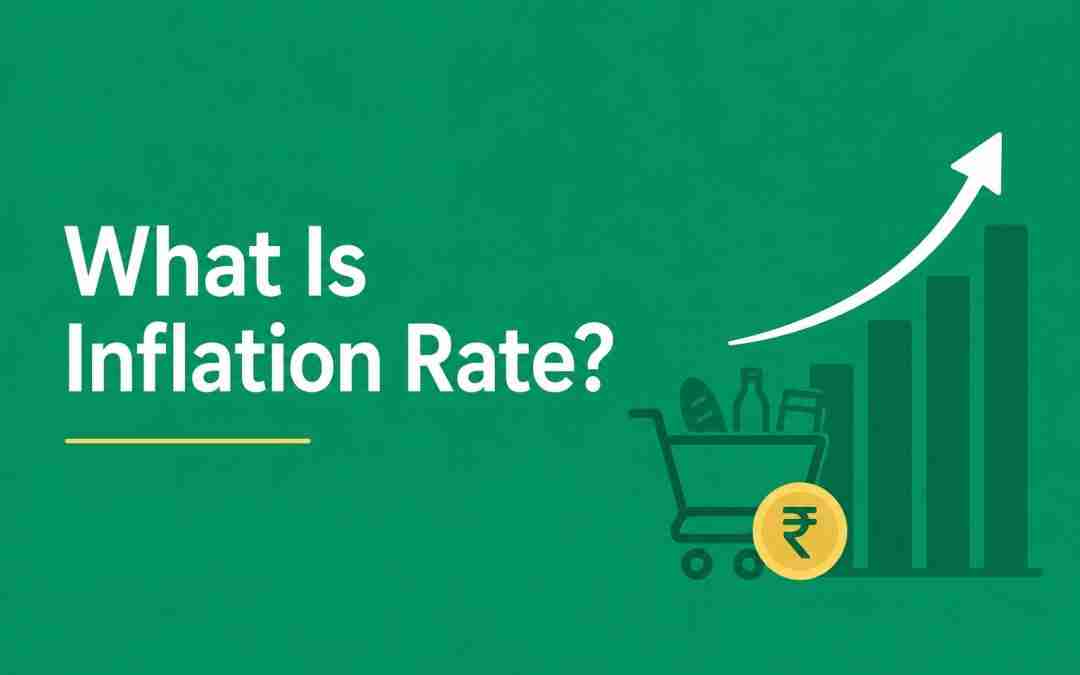
What Is Inflation?
Introduction
Have you ever walked out of a grocery store scratching your head at the bill? That packet of biscuits you bought last month—it’s two rupees more today. Same with milk, vegetables. Petrol, school fees, eating out—everything seems to creep upward over time.
That’s inflation. It just means prices rise as time passes. And when that happens, your money doesn’t go as far as it used to. Whether you’re a student, a parent, or running a small shop, inflation touches everyone. Understanding it helps you spend smarter, save better, and plan ahead.
What Is Inflation, Really?
In simple words: inflation is things costing more over time.
When prices go up, the value of your money goes down. You need more rupees to buy the same stuff. Economists call this “loss of purchasing power.” But in everyday language, it just feels like your wallet is getting lighter.
Example – Your favorite pack of chips costs ₹100 today. Next year, the same pack is ₹110. That extra ₹10? That’s inflation.
How fast prices rise is called the inflation rate. Governments track it closely because it affects everyone—from big businesses to your household budget.
Why Does Inflation Happen?
A few common reasons.
First – too many people want the same thing, and there isn’t enough to go around. Sellers then raise prices. Think about a popular housing colony: many buyers, few houses. Prices shoot up.
Second – making things becomes costlier. If diesel and petrol prices jump, transporting goods costs more. Shops pass that to you.
Third – sometimes there’s just more money floating around in the economy. People spend more, demand rises, and so do prices.
Different Kinds of Inflation
Demand‑pull inflation – People buying faster than shops can stock. Example: festival season. Everyone wants new clothes, sweets, gifts. Prices climb.
Cost‑push inflation – Production gets expensive. If fuel prices rise, everything that moves on a truck gets pricier.
Built‑in inflation – Living costs go up, so workers ask for higher pay. Businesses then hike prices to cover salaries. It becomes a loop.
Hyperinflation – Extremely rare but scary. Prices skyrocket daily. Groceries become unaffordable almost overnight.
Deflation – The opposite of inflation. Prices fall. Sounds nice, but if it goes on too long, people stop spending and the economy stalls.
Main Causes at a Glance
| Cause | What happens |
| Fuel gets expensive | Transport costs rise, goods get costlier |
| Demand jumps | Sellers increase prices |
| Supply shortages | Fewer items, higher prices |
| Wages go up | Business costs rise, then product prices rise |
| More money in system | People spend more, prices get pushed up |
Global events like wars, natural disasters, or supply chain jams can also trigger inflation.
How Inflation Affects Your Daily Life
For you as a buyer – Groceries, electricity, fuel, even shampoo cost more. Monthly budgets feel tighter.
For your savings – Money sitting in a bank account loses value if prices rise faster than the interest you earn.
For a small business – Raw materials, transport, staff salaries – all up. Either profits shrink or you raise prices.
For your salary – Sometimes you get a raise. But if living costs go up 8% and your hike is 5%, you’re worse off.
For investments – Some things (like gold or real estate) do well during inflation. Others may fall behind.
Good Sides and Bad Sides of Inflation
| Good | Bad |
| People spend rather than hoard money | Your money buys less |
| Businesses stay active | Monthly expenses rise |
| Economy grows | Saving feels pointless |
| Can create jobs | Uncertainty increases |
A little inflation is normal – even helpful. Trouble starts only when it runs too high.
How Governments Try to Control Inflation
The main tool? Interest rates. Raise the rates, loans get costlier, people borrow less and spend less. That cools down price rises.
In India, the Reserve Bank of India (RBI) watches inflation closely and adjusts rates when needed. The goal isn’t to kill inflation, just to keep it in a safe range.
Inflation vs Deflation
| Inflation | Deflation |
| Prices rise | Prices fall |
| Money buys less | Money buys more |
| Common in growing economies | Can freeze spending and investment |
Too much of either is bad.
Everyday Examples You’ve Seen
- Petrol and diesel: prices keep climbing year after year.
- House prices in most Indian cities – always higher than five years ago.
- School and college fees – up every academic year.
- Grocery bill – compare today’s to what your parents paid a few years back.
- Internet or OTT subscriptions – slowly getting pricier.
That’s inflation happening right in front of you.
Common Myths About Inflation
Myth 1: “Everything becomes expensive at the same rate.”
No. Some things jump fast (like vegetables in monsoon). Others stay flat for years.
Myth 2: “Inflation is always bad.”
Not really. Very low or zero inflation can mean a sluggish economy. Mild inflation is healthy.
Myth 3: “If my salary rises, I’m safe.”
Only if your raise beats inflation. Otherwise, you’re actually losing ground.
Conclusion
Inflation just means prices gently (or sometimes not so gently) rising over time. It changes how much you pay for food, fuel, fees, and fun. You can’t stop it, but you can understand it. And once you do, you’ll make better choices about spending, saving, and investing. That’s useful for everyone.
FAQs
What is inflation in one line?
Things are becoming more expensive over time.
What causes inflation?
Too much demand, higher costs, shortages, or too much money in the system.
Is inflation good or bad?
A little is fine. Too much hurts.
How does inflation affect savings?
Your saved money buys less in the future.
Who controls inflation in India?
The Reserve Bank of India, mainly by changing interest rates.
Inflation vs deflation?
Inflation = prices rise. Deflation = prices fall. Both are risky if extreme.