by Bethany Institutions | Jun 5, 2026 | Blog Recent Post
You’ve seen a car take a turn and not just slide off the road. Or the Earth going around the Sun. Or maybe you’ve swung a ball on a string as a child. All of that works because of a force called centripetal force.
Honestly, it’s a simple idea. If you want something to go in a circle, you’ve got to keep pulling it toward the middle. Stop pulling, and it’ll fly off straight. That’s it.
What does “centripetal” even mean?
It’s from old Latin words: centri (center) + petal (seeking). So it means “center-seeking.”
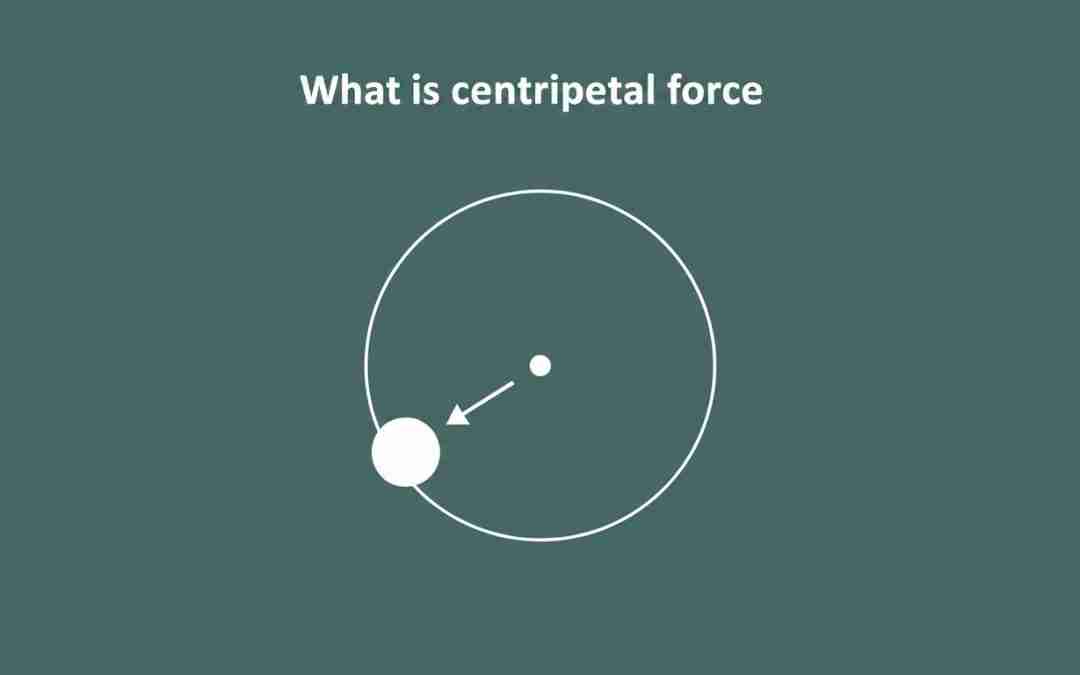
Take a ball on a string. Swing it around. Feel that tug on your hand? That’s the string pulling the ball inward. That inward pull is centripetal force. If the string snaps, the ball doesn’t keep going in a circle—it zips off in a straight line. No inward pull, no circle.
The formula (don’t worry, it’s easy)
Here’s what you’ll need for problems:
F = (m × v²) / r
- F = centripetal force (in Newtons)
- m = how heavy the thing is (mass)
- v = how fast it’s going (speed)
- r = radius (how big the circle is)
What this tells you:
Go faster → need more pull. Heavier object → need more pull. Bigger circle → less pull.
But how does it really work?
Even if you’re going at a steady speed, in a circle your direction is always changing. Changing direction means your velocity is changing. Changing velocity means you’re accelerating. That’s called centripetal acceleration, and yep, it points toward the center too.
Think of a car turning. Friction between the tires and the road is what pulls it inward. If the road’s icy, that friction drops, and the car skids outward. You’ve probably felt that.
Real-life examples (stuff you’ve actually seen)
Car taking a turn
Friction does the job. No friction = skid.
Planets going around the Sun
The Sun’s gravity pulls them inward. That gravity is the centripetal force. That’s why Earth hasn’t floated away or crashed into the Sun.
Roller coasters
When you go through a loop, the track pushes the car toward the center of the loop. That push keeps you on the track.
Swinging a ball on a string
Your hand feels the pull. That’s tension acting as centripetal force.
Washing machine spin cycle
Clothes spin in a circle. The drum pulls them inward. Water droplets don’t get pulled in enough, so they fly out through the holes—in a straight line.
Here’s what confuses most students
Centripetal force is not a separate force like friction or gravity. It’s just a name for whatever force happens to be pulling inward.
For a planet: gravity is the centripetal force.
For a car turning: friction is the centripetal force.
For a ball on a string: tension is the centripetal force.
So don’t go looking for a “centripetal force” on a list of forces. It’s a role, not a new player.
The whole centrifugal thing (people get this wrong all the time)
You’ve felt it: a car turns left, and you feel thrown to the right. Some call that centrifugal force. But here’s the truth—it’s not a real force. It’s just a feeling.
What’s really happening? Your body wants to go straight (that’s inertia). The car turns left. So you feel pressed against the door. No outward force actually acts on you.
Centripetal = real, inward.
Centrifugal = fake, feels outward.
A quick example (so you see how it works)
Let’s say a 2 kg ball moves in a circle of radius 4 m at a speed of 6 m/s. What’s the centripetal force?
F = (2 × 6²) / 4
6² = 36
2 × 36 = 72
72 / 4 = 18 newtons.
Answer: 18 N. That’s how hard the string (or whatever) has to pull.
Where do we use this stuff?
- Keeping satellites from flying off into space
- Designing curved roads so cars don’t slide
- Building safe roller coasters
- Sports like hammer throw
- Washing machines and lab centrifuges
- Figuring out how planets move
Engineers use it all the time to keep things safe.
A few things to watch out for in exams
- Don’t treat centrifugal force as real. It’s not.
- Remember: centripetal force always points to the center.
- Use the right radius. The radius is from the center to the path, not the diameter.
- Don’t call it a “new force.” It’s just whatever force is pulling inward.
Get those right, and you’re good.
So yeah, that’s centripetal force
It’s just an inward pull that makes things go in circles. You see it every day—cars turning, washing machines spinning, planets orbiting. Once you realize it’s not a magic new force, but just friction or gravity or tension doing a different job, it all makes sense.
by Bethany Institutions | May 11, 2026 | Blog Recent Post
You know when you try to push something heavy, like a table, and for a second it just doesn’t move? That annoying resistance? That’s static friction. It’s the friction that happens before anything starts sliding.
Featured Snippet (Quick Answer Block)
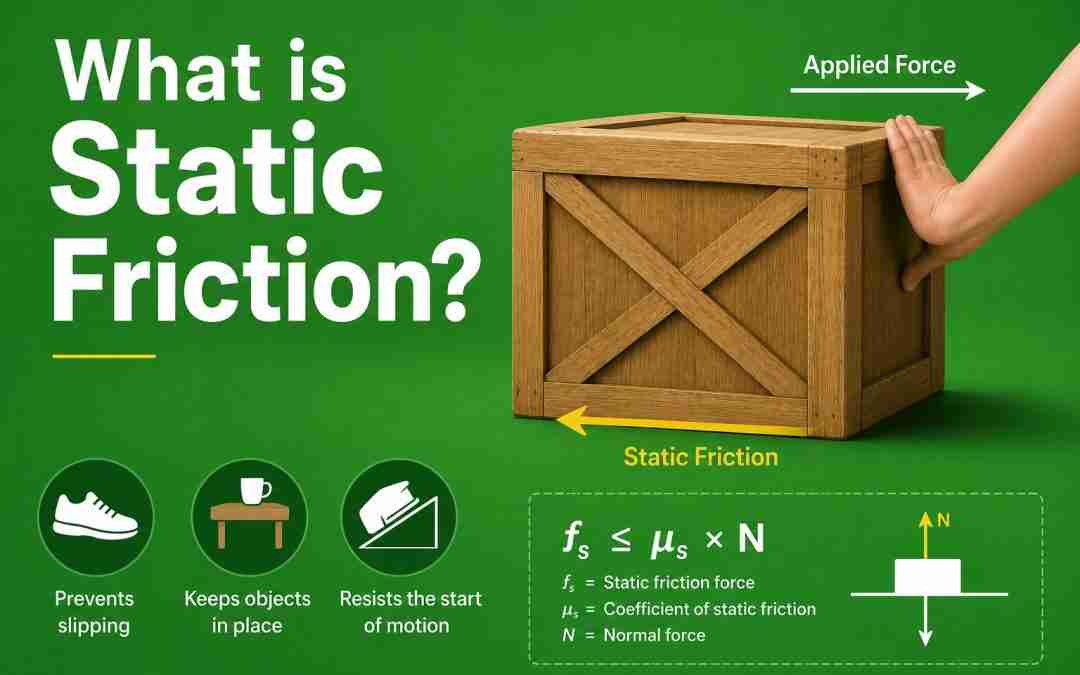
Static friction is the force that keeps a still thing still when you push it. Like when you push a box and it stays put – that’s static friction pushing back.
Definition of Static Friction
Here’s the easy way to say it: static friction acts on things that aren’t moving. It tries to keep them that way. Once something starts sliding, static friction disappears and another type of friction shows up.
Real-Life Examples of Static Friction
You deal with this all day without thinking about it.
- Walking – Your shoe pushes back. The ground pushes you forward. That grip is static friction. Without it, you’d slip like you’re on ice.
- Pushing a sofa – That “stuck” feeling before it finally moves? Static friction. Notice how it gets easier once it’s already sliding? That’s because static friction is gone.
- Parked car on a hill – Why doesn’t it just roll down? Static friction holding the tires. That’s it.
How Static Friction Works
Honestly, it’s very simple.
You push something. It pushes back exactly as hard. You push harder? It pushes back harder too. It just matches whatever you do.
But only till a point.
Push too hard, and it gives up. The thing breaks loose and starts moving. That’s when static friction quits and kinetic friction takes over.
Think of it like a friend who pushes back in a game of tug of war – but only until they can’t anymore.
Formula of Static Friction
Yeah, there’s a formula. But don’t worry.
fₛ ≤ μₛ × N
In normal words:
- fₛ = how much static friction is happening right now (this changes)
- μₛ = a grip number (high for rubber on road, low for ice on metal)
- N = how heavy the thing is pushing down
The little ≤ sign just means “less than or equal to”. So static friction can be small or big. It’s not one fixed number.
Factors Affecting Static Friction
Three things matter:
- What the surfaces are made of – Rubber on wood grips a lot. Wet glass on wet glass? Almost nothing.
- How heavy the object is – Heavier stuff has more static friction. That’s why a fridge is harder to move than a book.
- Roughness – Tiny bumps on surfaces hook into each other. That’s basically all friction is.
Static Friction vs Kinetic Friction
People mess this up all the time. Here’s the difference.
| Static Friction | Kinetic Friction |
| When? | When an object is still | When an object is sliding |
| Does it change? | Yes, it grows as you push harder | No, it stays about the same |
| Which is stronger? | Stronger | Weaker |
Main thing to remember: Starting something is harder than keeping it going. That’s why you feel a sudden looseness when something finally moves.
Common Mistakes to Avoid
- Thinking they’re the same thing – No. Static = still. Kinetic = moving.
- Thinking static friction is always the same number – Nope. It changes. Only the maximum is fixed.
- Thinking rougher always means more friction – Not really. Two very rough surfaces might touch less. It’s about how they fit.
Conclusion
Static friction is just the force that keeps stationary things still. It pushes back as hard as you push – until it can’t. Then things slide. You’ve felt this a hundred times today. That’s all there is to it.
FAQs
What is static friction in simple words?
It’s the force that fights you when you try to move something that’s sitting still.
Give examples of static friction.
- A phone on a slightly tilted book that doesn’t fall off.
- Your shoes are not slipping when you stand up.
- A cup on a table stays put when you nudge the table.
What is the formula of static friction?
fₛ ≤ μₛ × N. But honestly? Just know that static friction grows until it hits a limit, then stuff moves.
Is static friction stronger than kinetic friction?
Yes. Almost always. That’s why it’s harder to start moving something than to keep moving it.
by Bethany Institutions | Apr 23, 2026 | Blog Recent Post
Introduction
Let’s be honest—there’s a good chance you’ve opened an Excel sheet, stared at it for a moment, and thought, “Right… where do I even begin?” Rows everywhere, numbers all over the place, nothing quite where it should be.
That’s where sorting comes in. It’s one of those simple skills that makes everything else easier. Whether you’re organizing marks, names, dates, or even tracking expenses, once you get the hang of sorting, you’ll wonder how you ever managed without it.
So let’s walk through it together—step by step, no fluff.
What Does Sorting Actually Do?
In plain terms, sorting just means putting your data in a specific order. You can sort:
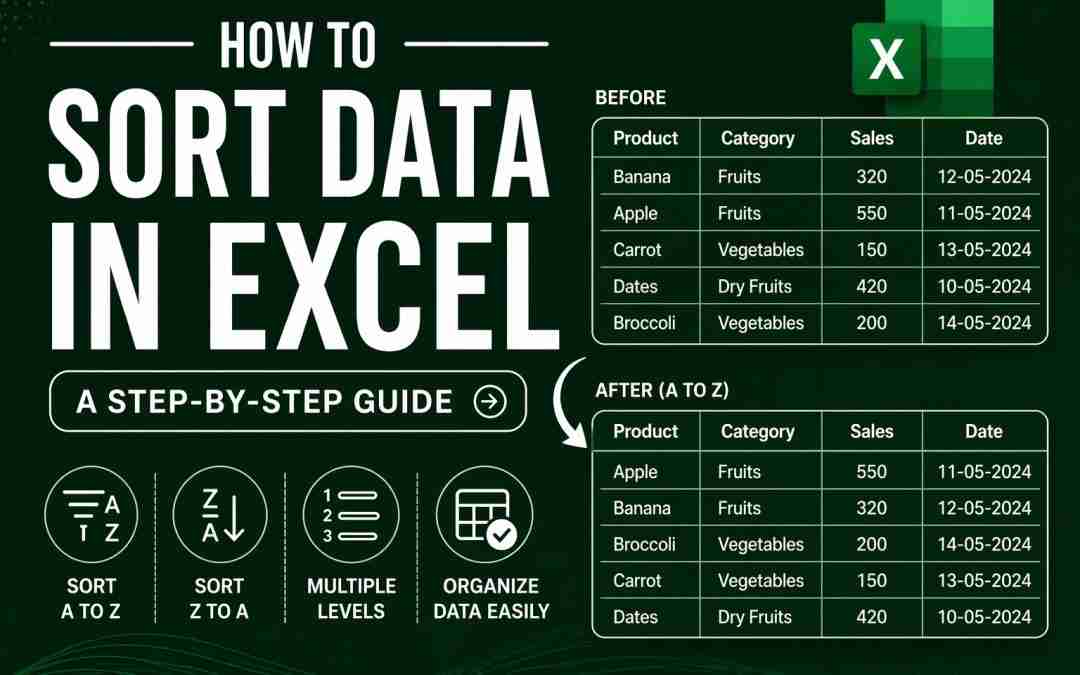
- Alphabetically (A to Z or Z to A)
- Numerically (smallest to largest, or the other way around)
- By date (oldest to newest, or newest to oldest)
And here’s the important bit: sorting doesn’t change your data—it just rearranges it so it’s easier to read and work with.
The Easiest Way to Sort
If you’re just starting out, this is the quickest route.
Quick Sort:
- Click any cell in the column you want to sort
- Go to the Home tab
- Click Sort & Filter
- Choose A to Z or Z to A
That’s it. Excel does the rest.
Sorting with the Data Tab (A Little More Control)
If you want a bit more say in what’s happening:
- Click anywhere inside your data
- Go to the Data tab
- Click the A→Z or Z→A button
Excel might pop up and ask if you want to expand your selection. Always choose Expand. That way, your rows stay together, and nothing gets scrambled.
Sorting by Multiple Columns (When One Just Isn’t Enough)
Let’s say you’ve got a list of students. You want them sorted by class first, and then by marks within each class.
Here’s how you do that:
- Click anywhere in your data
- Go to Data → Sort
- Pick your first column (say, Class)
- Click Add Level
- Pick your second column (Marks)
- Click OK
Now your data is neatly layered—first by class, then by marks. Much easier to read.
Sorting Dates Without the Headache
Dates should be simple to sort—and usually, they are.
- Select your date column
- Go to the Data tab
- Click A→Z (oldest first) or Z→A (latest first)
If your dates don’t sort properly, chances are Excel thinks they’re just text. It happens. The fix is easy: use the Text to Columns feature to convert them into actual dates, and you’re good to go.
Sorting by Colour (Yes, You Can Do That)
If you’ve been colour-coding your data—like highlighting pending tasks or flagging important rows—Excel lets you sort by those colours too.
- Go to Data → Sort
- Under Sort On, choose Cell Color
- Pick the colour you want to appear at the top
- Click OK
It’s a small thing, but surprisingly handy when you’re tracking priorities.
Sorting Left to Right (Not Just Top to Bottom)
Most people don’t know this, but Excel can sort horizontally too. If your data is arranged in columns (like months of the year across the top), you can sort rows instead of columns.
- Go to Data → Sort
- Click Options
- Choose Sort Left to Right
- Select the row you want to sort by
- Click OK
It’s not something you’ll use every day, but when you need it, it’s a lifesaver.
Common Mistakes (We’ve All Made Them)
Let’s save you a bit of frustration.
- Sorting just one column → This will mess up your entire dataset. Always expand the selection.
- Dates not sorting properly → They’re probably stored as text. Convert them to actual dates.
- Headers getting mixed into the data → Tick the “My data has headers” box before sorting.
- Blank rows causing chaos → Clean up your data first.
- Numbers behaving like text → Convert them to numbers before sorting.
A Few Handy Tips
- If your data is important, keep a backup before sorting—just in case.
- Messed up? Press Ctrl + Z to undo.
- Add a serial number column before sorting if you want to get back to the original order later.
- Use filters alongside sorting for even more control.
And if you’re using a newer version of Excel, here’s a little shortcut:
=SORT(A2:B10, 1, 1)
This formula sorts your data automatically—no clicking needed.
Conclusion
Sorting in Excel really isn’t complicated. It just feels that way until you’ve done it once or twice.
Once you get the hang of it, it becomes second nature. Your data looks cleaner, your work feels faster, and honestly, you just feel more in control.
So next time you open Excel and find yourself staring at a messy sheet, don’t just sit there—sort it out. You’ll be glad you did.
FAQs
- How do I sort data in Excel from A to Z?
Click a column → go to the Data tab → click A→Z. - Can I sort using more than one column?
Yes. Use the Sort option and add multiple levels. - Why are my dates not sorting correctly?
They’re likely stored as text. Convert them to date format using Text to Columns. - How do I avoid mixing up rows?
Always choose Expand the Selection when prompted.
5. Is there a formula to sort data automatically?
Yes—use the SORT() function if you’re on a newer version of Excel.
by Bethany Institutions | Apr 20, 2026 | Blog Recent Post
Let me ask you something.
Have you ever pushed open a door that was heavier than you expected? Or tried to stop a bicycle right before rolling into a pothole? Maybe you’ve wondered why a bowling ball feels impossible to throw as fast as a tennis ball.
That thing you’re feeling—the push, the pull, the effort—that’s force.
I remember sitting in my first physics class, staring at the whiteboard, thinking “what is force?” The teacher kept saying it’s a push or a pull, and honestly, I thought it couldn’t be that simple. But it really is. Let me explain it the way I wish someone had explained it to me back then.
Okay, So What Actually Is Force?
Here’s the thing.
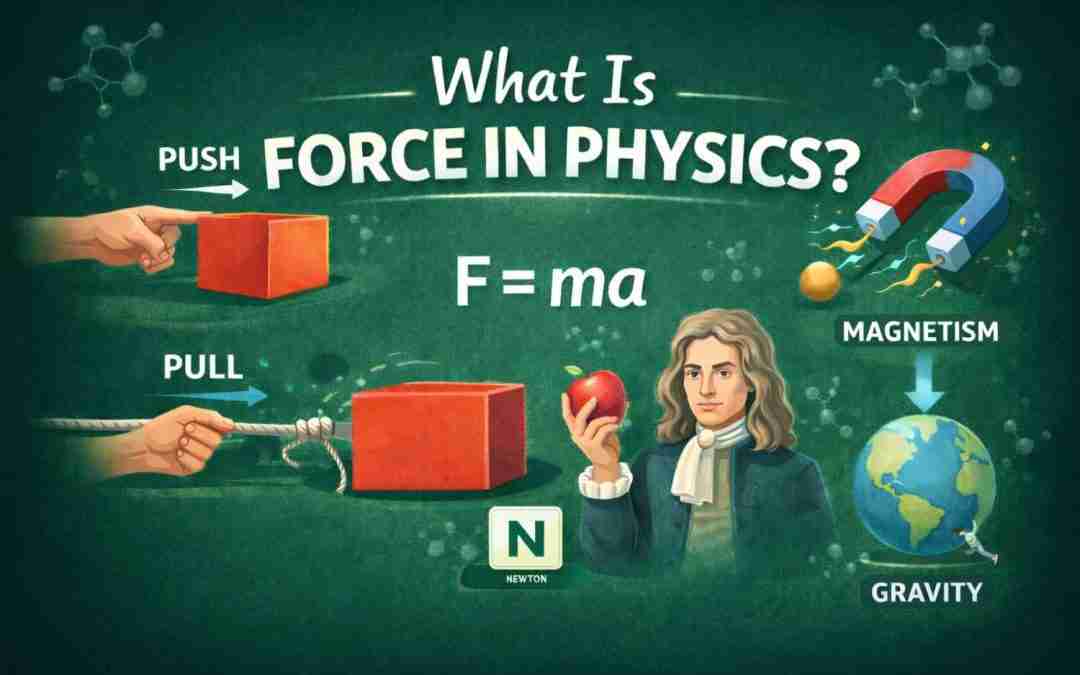
Force is just a push or a pull. That’s it. Nothing more complicated than that.
When you shove a shopping cart forward, you’re applying force. When your phone slips from your hand and smacks the floor, gravity just applies some force to it. When you squeeze a stress ball because your exam is tomorrow, yep—that’s force too.
The neat part? Force doesn’t just move stuff around. It can also change how fast something is going, which way it’s heading, or even squish it into a different shape.
There’s a formula you’ll see everywhere: F = ma. Force equals mass times acceleration. All it’s saying is that heavier things take more effort to get moving. Common sense, right?
We measure force in something called Newtons, or just N for short. Named after Isaac Newton—you know, the apple guy.
Not All Forces Are the Same
Some forces only work when you’re touching something. Others can reach across a room and do their thing without any contact at all. Let me walk you through both.
Forces That Need You to Touch Stuff
- Friction: This one’s the party pooper. It’s always trying to slow things down. It’s why your bike eventually stops if you stop pedaling. It’s also why you don’t eat pavement every time you walk on a sidewalk. Annoying sometimes, but honestly, we’d be sliding everywhere without it.
- Tension: Remember tug of war in school? That tight, pulling feeling running through the rope? That’s tension. It’s also what’s happening when a crane lifts a steel beam or when you pull your little brother around in a wagon.
- Normal Force: Fancy name, simple idea. Put a book on a table. Gravity wants to pull it down. The table? It pushes right back up. That upward push is the normal force. Basically, surfaces don’t like being pushed into, so they push back.
Forces That Work From a Distance
- Gravity: The classic. Drop something, it falls. Jump up, you come back down. Gravity’s just quietly pulling on everything all the time.
- Magnetism: Those magnets holding stuff on your fridge? That is magnetic force at work. It pulls certain metals toward it without ever touching them.
- Electrostatic Force: Ever rubbed a balloon on your hair and stuck it to the wall as a kid? That’s this one. Objects with electric charge either pull toward each other or push away. Pretty cool, honestly.
Newton’s Three Laws (But Make It Simple)
Isaac Newton figured out three rules that explain how force and motion work. They sound fancy, but they’re really just common sense when you break them down.
First Law: Things Are Lazy
Objects just want to keep doing whatever they’re already doing.
A ball sitting on the floor? It’ll stay there forever unless someone kicks it. A skateboard rolling down the driveway? It’ll keep rolling until friction or a curb stops it.
Ever been on a bus that stops suddenly and felt your body jerk forward? That’s this law in action. Your body wanted to keep moving. The bus disagreed.
Second Law: Heavier Stuff Is Harder to Move
This one’s just life experience dressed up as physics.
Push a friend on a skateboard—pretty easy, right? Now try pushing a car. Good luck.
That’s all F = ma is saying. More mass means more force needed to get things moving. Simple.
Third Law: Everything Gets a Reaction
For every action, there’s an equal and opposite reaction.
Push against a wall? The wall pushes back. That’s why your hands don’t just go through it.
Swim? You push water backward, water pushes you forward.
Rocket launches? Engines push hot gases downward, gases push the rocket upward.
It’s like the universe’s way of saying “whatever you do, something’s coming back at you.”
So What Does Force Actually Do?
When you apply a force to something, a few things can happen:
- It can start something moving. Kick a ball, and off it goes.
- It can stop something moving. Hit the brakes on your bike, and you stop.
- It can change direction. Turn the steering wheel, and the car turns.
- It can change shape. Squeeze some clay, and it squishes.
| If you do this… | This is what happens… |
| Kick a ball | It starts rolling |
| Hit the brakes | You stop |
| Turn the wheel | The car turns |
| Squeeze clay | It changes shape |
You’re Surrounded by Force Right Now
Seriously. Look around.
- That apple in the fruit bowl? Gravity’s pulling on it.
- The fact that you’re not sliding off your chair? Friction’s holding you there.
- A crane lifting something heavy outside your window? Tension’s doing the work.
- Those magnets holding up your kid’s drawings? Magnetic force.
- A cricket ball flying through the air? Muscular force from whoever threw it.
- A parachute floating down? Air resistance is slowing the fall.
It’s everywhere. You can’t escape it.
Wrapping This Up
So yeah. Force is just a push or a pull. It changes how things move, or what shape they take. Newton gave us a few simple rules to understand how it all works, and honestly, once you see it, you can’t unsee it.
Next time you’re walking, driving, or watching a game, pay attention for a second. You’ll notice force doing its thing all around you.
Actually, look around right now. Can you spot three different forces acting on things in your room? I bet you can.
FAQs
Q1. What is force in simple words?
A push or a pull. Honestly, that’s it.
Q2. What’s the unit of force?
Newton. Or just N. Named after Isaac Newton—the apple guy.
Q3. What are the two main types of force?
Contact forces—things like friction and tension where you need to touch something. And non-contact forces—like gravity and magnetism—where stuff happens without touching.
Q4. What does F = ma mean?
It’s Newton’s Second Law. Force equals mass times acceleration. Heavier things need more force to get moving. That’s all.
Q5. What’s the difference between balanced and unbalanced forces?
Balanced forces cancel each other out, so nothing changes. Unbalanced forces don’t cancel, so you get movement or a change in what’s happening.
by Bethany Institutions | Apr 15, 2026 | Blog Recent Post
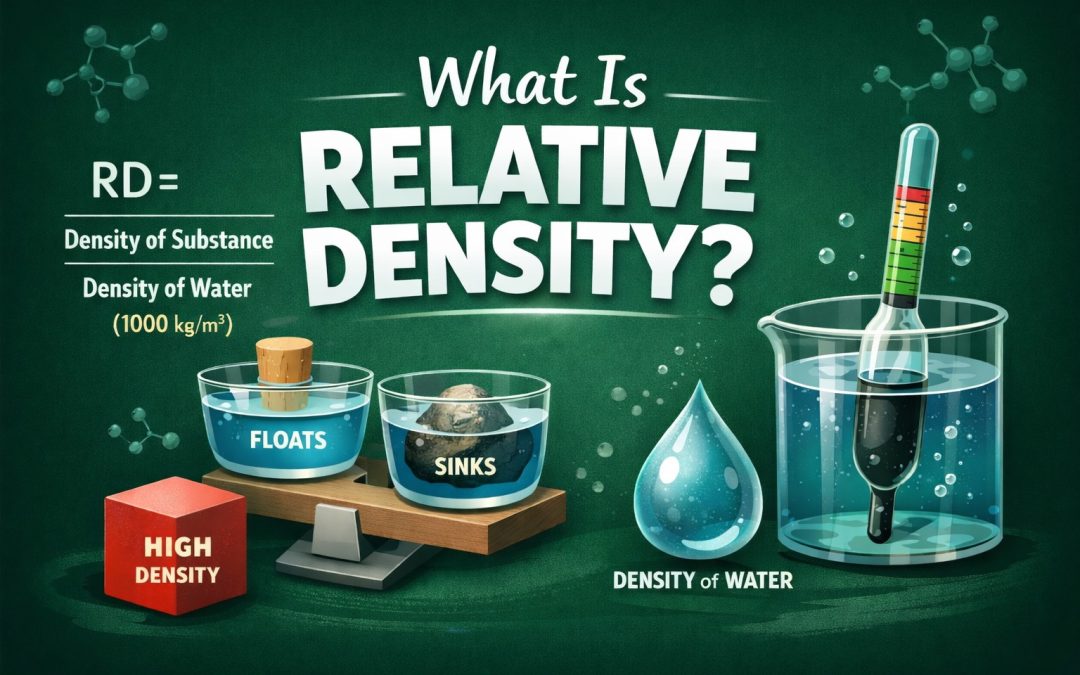
Why does ice float on water? Why does a ship made of steel stay afloat? The answer lies in what is relative density. Simply put, relative density helps us understand why some substances float while others sink. It is a key concept in physics and everyday life, from designing ships to testing liquids in laboratories. In this article, we will explore the definition, formula, measurement techniques, and real-life examples of relative density. By the end, you will clearly understand how this simple ratio explains complex physical behaviors.
What Is Relative Density?
We define relative density as the ratio of the density of a substance to the density of water. It is also called specific gravity. The formula is:
Relative Density = Density of Substance ÷ Density of Water
Here, the density of water is 1000 kg/m³ or 1 g/cm³. Relative density is a pure number and does not have any units. If the RD is greater than 1, the substance sinks in water. If it is less than 1, the substance floats. A relative density equal to 1 means the substance neither sinks nor floats. This simple measure helps compare substances without worrying about the units of density.
Formula of Relative Density
So, what is the formula for relative density is:
RD = Density of Substance / Density of Reference Substance (Water)
There are alternative ways to calculate it:
- Using mass: RD = Mass of Substance / Mass of Equal Volume of Water
- Using weight: RD = Weight of Substance in Air / Loss of Weight in Water
For example, suppose a substance has a density of 8000 kg/m³. Its relative density is:
RD = 8000 ÷ 1000 = 8
Since 8 > 1, the substance will sink in water. This simple calculation is widely used in laboratories, schools, and industries to compare materials efficiently.
Relative Density of Common Substances
Here is a quick look at the relative density of water and other common substances:
| Substance | Relative Density |
| Ice | 0.92 |
| Wood (Oak) | 0.6 – 0.9 |
| Water | 1.0 |
| Milk | 1.03 |
| Seawater | 1.025 |
| Aluminium | 2.7 |
| Iron | 7.87 |
| Copper | 8.96 |
| Gold | 19.3 |
| Mercury | 13.6 |
From this table, we can see that substances with RD < 1 float, while those with RD > 1 sink.
How Is Relative Density Measured?
Relative density can be measured in several ways. The most common is using a hydrometer. A hydrometer is a graduated float that directly measures RD. It is widely used in industries for liquids like milk, alcohol, and battery acid.
Another method uses Archimedes’ Principle. Measure the weight of a substance in air and then its weight when submerged in water. The difference gives the buoyant force, which equals the weight of water displaced. This allows calculating RD accurately.
A density bottle or specific gravity bottle is also used in laboratories. It compares the mass of a substance to the mass of an equal volume of water. This method is reliable for solids and liquids alike. Accurate measurement is crucial in industries where purity and quality control matter.
Relative Density vs. Density — Key Difference
It is important to understand the difference between density and relative density.
| Feature | Density | Relative Density |
| Definition | Mass per unit volume | Ratio of density to water’s density |
| Formula | ρ = m/v | RD = ρ substance / ρ water |
| SI Unit | kg/m³ | No unit (dimensionless) |
| Value of Water | 1000 kg/m³ | 1 |
| Purpose | Measures compactness | Compares substances to water |
Density measures how compact a substance is. Relative density provides a comparison without units, making it easier to predict whether a substance will float or sink.
Real-Life Applications of Relative Density
Relative density is not just a classroom concept — it plays an important role in many industries and everyday situations. Here are some key applications:
- Shipping & Shipbuilding — Helps determine if materials will float or sink, ensuring ships and boats are safe and buoyant.
- Food Industry — Used with a hydrometer to check the purity and quality of milk, honey, and edible oils.
- Medical Field — Measures urine specific gravity to monitor kidney function and detect potential health issues.
- Petroleum Industry — Classifies crude oil grades based on density for proper processing and storage.
- Gemology — Identifies precious stones by comparing their specific gravity to known standards.
- Battery Testing — Checks the acid density in car batteries to determine charge levels.
- Construction — Assists engineers in selecting materials with appropriate density ratios for safe and durable structures.
- Oceanography — Studies seawater density to understand currents, marine life behavior, and climate patterns.
Conclusion
Relative density is the ratio of a substance’s density to water’s density. Being dimensionless, it directly indicates whether a substance floats or sinks. Its applications span from food and medicine to engineering and oceanography. The next time you see ice floating in a glass or a wooden boat on a lake, you are observing relative density in action. Try comparing the relative density of everyday objects like oil, ice, and coins to predict which ones float. Relative density may be a simple ratio, but it reveals a lot about the physical world around us.
FAQs
Q1. What is relative density in simple words?
Relative density is the ratio of the density of a substance to the density of water. It tells us whether a substance will float or sink.
Q2. What is the formula for relative density?
RD = Density of Substance ÷ Density of Water (1000 kg/m³)
Q3. What is the unit of relative density?
Relative density has no unit. It is dimensionless because it compares two similar quantities.
Q4. What instrument is used to measure relative density
A hydrometer is the most common instrument for measuring relative density, especially for liquids.
Q5. What is the difference between density and relative density?
Density measures mass per unit volume (kg/m³), while relative density is a unitless ratio that compares a substance’s density to that of water.