by Bethany Institutions | Apr 8, 2026 | Blog Recent Post
India is a land of diversity, colour, and culture, each state telling its own unique story. Today, India has 28 states and 8 union territories, each governed from its own capital city.
Remembering all of them can seem a little difficult at first. But with the right approach, it’s actually simple and even enjoyable.
Whether you’re preparing for a GK quiz or just want to know your country better, this guide will help you learn all states and their capitals of India in the easiest way possible.
How to Learn Indian States and their Capitals: Step-by-Step Explanation
1. Start Small
Don’t try to memorise all names in one go. Begin with the states around where you live. For example, if you live in Maharashtra, start with Maharashtra and its capital, Mumbai. Then, move on to the neighbouring states and their capitals like Goa – Panaji, Gujarat – Gandhinagar, and Madhya Pradesh – Bhopal. Connecting the names with familiar locations makes it easier to recall.
2. Group by Region
Another smart way to remember 29 states of India and their capitals (including the previously counted 29th before Telangana split) is by dividing them into five clear regions: North, South, East, West, and Northeast.
Here’s how you can group them:
- Northern India: Delhi, Haryana, Punjab, Himachal Pradesh, Uttarakhand, Jammu & Kashmir
- Southern India: Tamil Nadu, Kerala, Karnataka, Andhra Pradesh, Telangana
- Eastern India: Bihar, Jharkhand, Odisha, West Bengal
- Western India: Maharashtra, Gujarat, Rajasthan, Goa
- Northeastern India: Assam, Arunachal Pradesh, Meghalaya, Manipur, Mizoram, Nagaland, Tripura, Sikkim
Breaking learning into regions helps you focus better without confusion.
3. Use a Table
Visual learners benefit from tables as they allow easy comparison between state and its capital.
| State | Capital |
| Andhra Pradesh | Amaravati |
| Arunachal Pradesh | Itanagar |
| Assam | Dispur |
| Bihar | Patna |
| Chhattisgarh | Raipur |
| Goa | Panaji |
| Gujarat | Gandhinagar |
| Haryana | Chandigarh |
| Himachal Pradesh | Shimla |
| Jharkhand | Ranchi |
| Karnataka | Bengaluru |
| Kerala | Thiruvananthapuram |
| Madhya Pradesh | Bhopal |
| Maharashtra | Mumbai |
| Manipur | Imphal |
| Meghalaya | Shillong |
| Mizoram | Aizawl |
| Nagaland | Kohima |
| Odisha | Bhubaneswar |
| Punjab | Chandigarh |
| Rajasthan | Jaipur |
| Sikkim | Gangtok |
| Tamil Nadu | Chennai |
| Telangana | Hyderabad |
| Tripura | Agartala |
| Uttar Pradesh | Lucknow |
| Uttarakhand | Dehradun (Winter: Gairsain) |
| West Bengal | Kolkata |
And now, the Union Territories.
| Union Territory | Capital |
| Andaman & Nicobar Islands | Port Blair |
| Chandigarh | Chandigarh |
| Dadra & Nagar Haveli and Daman & Diu | Daman |
| Delhi (NCT) | New Delhi |
| Jammu & Kashmir | Srinagar (Summer), Jammu (Winter) |
| Ladakh | Leh |
| Lakshadweep | Kavaratti |
| Puducherry | Puducherry |
Tables like these make the list of current state and capital easy to scan and recall.
4. Practice with Maps
Once you’ve memorised a few, switch to map-based learning. Point at each state and say its capital aloud. This exercise strengthens your memory visually and geographically. You’ll also learn how many states are there in our country and where each one lies on the map.
5. Revise Daily
Short and consistent practice sessions always beat last-minute cramming. Spend just 10 minutes a day revising the states with its capital, and within a week, you’ll be surprised by how many you can remember easily.
Expert Tips from Our Teachers
- Divide and Learn: Instead of memorising all names at once, study them region by region.
- Make it Fun: Use flashcards, quizzes, or even songs to recall names.
- Note Seasonal Capitals: Some regions, like Jammu & Kashmir, have different capitals for summer and winter.
- Connect with Stories: Link each capital with a mental image. For example, Jaipur is known as the Pink City, which helps you remember it’s Rajasthan’s capital.
- Use Colour Coding: Mark states in one colour and capitals in another on your map for quick visual recall.
Common Mistakes Students Make
- Mixing up Nearby States: Students often confuse capitals of neighbouring states, such as Lucknow (Uttar Pradesh) and Patna (Bihar).
- Ignoring Union Territories: Many focus only on states and forget UTs, though they’re equally important when learning about states and territories in India.
- Cramming Without Context: Rote learning might help in the short term, but linking each capital to its cultural or geographic identity ensures long-term memory.
- Not Revising Regularly: Forgetting daily practice leads to confusion and mix-ups. Consistency is key!
Example / Quick Illustration
Let’s learn about the Northeastern states and their capitals together.
| State | Capital |
| Assam | Dispur |
| Meghalaya | Shillong |
| Tripura | Agartala |
Memory Trick: Remember D-S-A (Dispur–Shillong–Agartala). Think of it as a short rhythm—say it out loud three times, and you’ll never forget it!
You can make similar short patterns for each region. For the South, remember B–C–T–H–A (Bengaluru, Chennai, Thiruvananthapuram, Hyderabad, Amaravati).
Bonus Tip: Use the Flow Chart of the State Government in India
Understanding how states function can make your learning more meaningful. A simple flow chart of the state government in India looks like this:
Governor → Chief Minister → Council of Ministers → State Departments
Each state capital houses the main administrative offices and acts as the hub of governance. Knowing this connection helps students understand why capitals are so significant beyond just being names on a list.
Conclusion
Learning the states and their capitals of India doesn’t have to be dull. When you break the list into regions, use visuals, and add memory tricks, it becomes more engaging and easier. With regular practice, even the most complex names will stick naturally. So grab a map, make flashcards, and start your fun learning journey today!
FAQs
How many states and capitals are there in India?
India has 28 states and 8 union territories, each with its own capital city.
What is the fastest way to learn states and capitals?
Divide them regionally, revise daily, and use maps or flashcards to reinforce memory.
Why is it important to know states and capitals?
It helps students in geography, competitive exams, and understanding India’s governance and diversity.
Are there any states with two capitals?
Yes, Jammu & Kashmir and Uttarakhand have separate capitals for summer and winter.
What are the 29 state and capital names in English?
You can refer to the table above. It lists all states in English with their capitals clearly mentioned
by Bethany Institutions | Apr 6, 2026 | Blog Recent Post
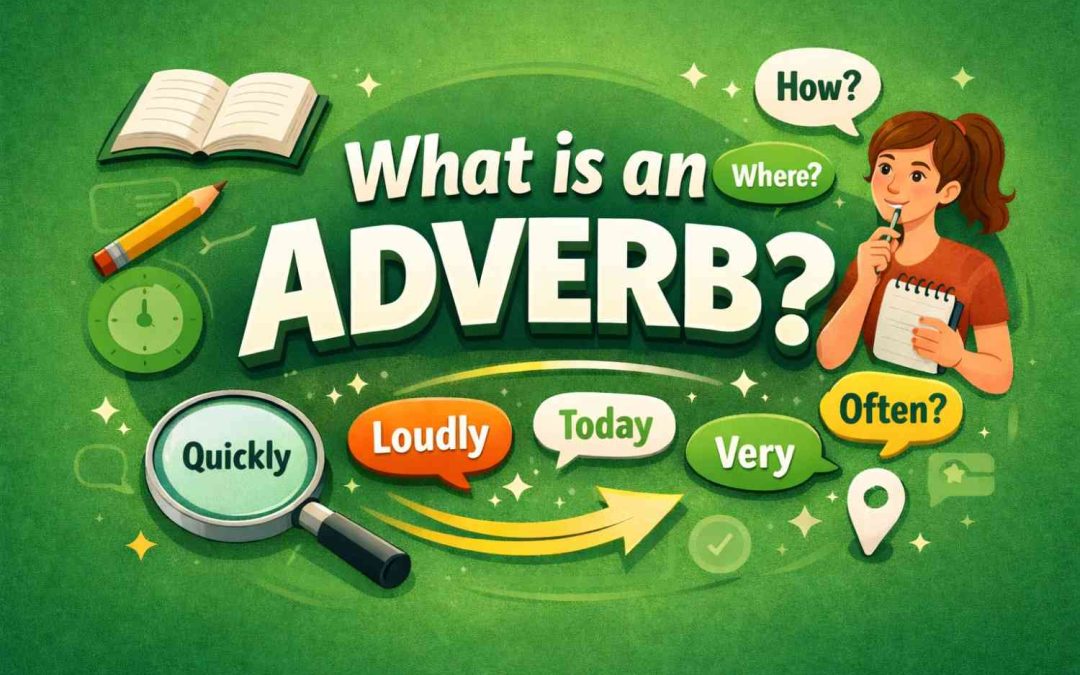
Have you ever wondered what makes a sentence more descriptive and detailed? The answer often lies in one powerful word, the adverb. In English grammar, adverbs play a key role in adding clarity and depth to your writing. They tell us how actions are performed, when they happen, where they occur, or to what extent something is true. Understanding adverbs helps improve both your writing and speaking skills. In this guide, we will explore what is an adverb, its types, examples, and practical tips for using them correctly.
What is an Adverb? — Definition
An adverb is a word that modifies a verb, an adjective, or another adverb. Its main function is to answer questions like How? When? Where? How often? and To what extent? For example:
- “She runs quickly.” — modifies the verb runs.
- “He is very tall.” — modifies the adjective tall.
- “She sings quite beautifully.” — modifies another adverb beautifully.
The term “adverb” comes from the Latin word ‘adverbium’, meaning “added to a verb.” Essentially, adverbs add more information to a sentence, making it precise and expressive.
What Does an Adverb Modify?
Adverbs are versatile and can modify different parts of a sentence.
- Modifies a verb: An adverb can describe how, when, or where an action happens. It adds more detail to the verb’s meaning. Example: “She spoke softly.” — tells us how she spoke.
- Modifies an adjective: Adverbs can change or intensify an adjective, showing the degree or extent of the quality described. Example: “It was extremely cold.” — emphasises how cold it was.
- Modifies another adverb: Adverbs can modify other adverbs to show the intensity or extent of the action, making it more precise. Example: “He drove very carefully.” — shows the degree of carefulness in driving.
- Modifies a Sentence: Some adverbs comment on or give context to an entire sentence, expressing attitude, opinion, or circumstance. Example: “Fortunately, we arrived on time.” — indicates luck or positive circumstance for the whole situation.
| Part of Sentence | Example |
| Verb | She ran quickly. |
| Adjective | It is incredibly hot. |
| Another Adverb | He sings very loudly. |
| Sentence | Sadly, the train was delayed. |
Types of Adverbs
Adverbs are divided into different categories based on their function:
Adverb of Manner
An adverb of manner describes how an action is performed. It tells us the way or style of doing something.
- Examples: quickly, slowly, carefully, loudly, politely
- Sentence: “She danced gracefully.” — shows the elegant way she danced.
Adverb of Time
An adverb of time indicates when an action occurs. It helps the reader or listener understand the timing.
- Examples: today, yesterday, soon, already, now, later
- Sentence: “He will call tomorrow.” — shows the specific time of the action.
Adverb of Place
An adverb of place shows where an action happens. It gives location or direction information about the verb.
- Examples: here, there, everywhere, outside, nearby
- Sentence: “The kids are playing outside.” — tells us the location of their play.
Adverb of Frequency
An adverb of frequency tells us how often an action occurs. It explains the repetition or regularity of actions.
- Examples: always, never, often, rarely, sometimes, usually
- Sentence: “She always wakes up early.” — indicates her habit or routine.
Adverb of Degree
An adverb of degree shows the intensity or extent of an action, adjective, or another adverb. It answers the question, “how much?
- Examples: very, quite, almost, too, enough, extremely
- Sentence: “The tea is too hot.” — indicates the level of heat.
Adverb of Reason / Purpose
An adverb of reason or purpose explains why something happens. It shows the cause or result of an action.
- Examples: therefore, hence, consequently, thus
- Sentence: “He was tired; therefore, he slept early.” — gives the reason for sleeping.
Interrogative Adverb
An interrogative adverb is used to ask questions. It helps gather information about time, place, reason, or manner.
- Examples: when, where, why, how
- Sentence: “Where did you go?” — asks for the location of the action.
Relative Adverb
A relative adverb connects clauses and modifies a noun or pronoun. It links ideas while providing additional information.
- Examples: where, when, why
- Sentence: “This is the place where we met.” — describes the location related to the noun place.
Conjunctive Adverb
A conjunctive adverb connects two independent clauses and shows the relationship between them, like contrast, result, or sequence.
- Examples: however, meanwhile, therefore, otherwise
- Sentence: “I was busy; however, I made time for you.” — shows contrast between two ideas.
How to Form Adverbs
Most adverbs are formed by adding -ly to an adjective:
- quick → quickly
- careful → carefully
- happy → happily
Some adverbs are irregular and do not use -ly:
- fast → fast
- hard → hard
- well → well
- late → late
Be careful with adjectives that look like adverbs:
- “He works hard.” (adverb)
- “It is a hard job.” (adjective)
Spelling rules:
- Words ending in -y: happy → happily
- Words ending in -le: gentle → gently
- Words ending in -ic: basic → basically
Position of Adverbs in a Sentence
Adverbs can appear in different positions in a sentence, depending on what they modify and the emphasis you want to create.
- Before the Verb: Placing an adverb before the main verb shows frequency or manner.
Example: “She always arrives early.” — emphasizes how often she arrives early. - After the Verb: Some adverbs naturally come after the verb to describe the action.
Example: “He runs fast.” — tells us how he runs. - After the Object: When there is an object, the adverb can follow it to describe the action.
Example: “She completed the task quickly.” — shows how the task was done. - At the Beginning of a Sentence: Adverbs at the start can set the scene or express attitude about the whole sentence.
Example: “Suddenly, the lights went off.” — indicates an unexpected event. - At the End of a Sentence: Ending with an adverb emphasizes the action or manner.
Example: “He spoke clearly.” — highlights how he spoke.
Adverbs vs. Adjectives — Key Differences
| Feature | Adjective | Adverb |
| Modifies | Noun / Pronoun | Verb / Adjective / Adverb |
| Answers | Which? What kind? | How? When? Where? |
| Example | beautiful | beautifully |
| Sentence | She is a beautiful singer. | She sings beautifully. |
Common Mistakes with Adverbs
When using adverbs, learners often make errors that can change the meaning of a sentence or make it unclear. Here are some common mistakes to avoid:
- Using an adjective instead of an adverb:
Example: “She sings beautiful.”
Correct: “She sings beautifully.”
- Confusing “good” and “well”: Good is an adjective, while well is an adverb. Using them incorrectly changes the meaning.
Example: “He plays tennis good.”
Correct: “He plays tennis well.”
- Double negatives: Using two negatives can make a sentence confusing or incorrect.
Example: “I don’t know nothing.”
Correct: “I don’t know anything.”
- Misplacing adverbs: Incorrect placement can create ambiguity.
Example: “She almost drove her kids to school every day.”
Correct: “She drove her kids to school almost every day.”
- Overusing adverbs: Using too many adverbs can make writing weak. It is often better to show actions clearly rather than relying on excessive adverbs.
Examples of Adverbs in Sentences
Here are 10 examples of adverbs in sentences:
- She speaks softly.
- He arrived early.
- The baby sleeps peacefully.
- They worked hard to finish the project.
- She sings beautifully.
- We will meet tomorrow.
- He is extremely talented.
- The dog ran outside.
- Fortunately, the rain stopped on time.
- He answered the question correctly.
Fun Ways for Students to Learn Adverbs
Learning adverbs can be enjoyable and interactive. Here are some effective ways for students to practice and understand them:
- Play adverb charades: Students act out an adverb while others guess the word, helping them understand the meaning through actions.
- Fill-in-the-blank exercises: Use sentences with missing adverbs, and students fill in the correct word to complete the meaning.
- Identify adverbs in a paragraph: Students read a passage and underline or highlight all the adverbs, improving recognition and understanding.
- Write a short story using adverbs: Encourage students to include at least five adverbs in their story to make it descriptive and detailed.
- Find adverbs while reading books or newspapers: Students look for adverbs in real texts, helping them see how adverbs are used naturally in writing.
Conclusion
Adverbs are essential building blocks of English. They add detail, clarity, and color to your sentences. By understanding their types and correct usage, you can make your writing more expressive and precise. Practice using adverbs in your daily writing and conversations to master them. Remember, great writing is not just about what you say — it’s about how you say it, and that’s where adverbs shine.
Frequently Asked Questions (FAQ)
Q1. What is an adverb in simple words?
An adverb is a word that describes or modifies a verb, adjective, or another adverb — telling us how, when, where, or how often something happens.
Q2. What are the 5 types of adverbs?
The main types are: Adverbs of manner, time, place, frequency, and degree.
Q3. How do you identify an adverb in a sentence?
Ask: How? When? Where? How often? To what extent? — the word that answers the question is likely an adverb.
Q4. What is the difference between an adverb and an adjective?
An adjective modifies a noun, while an adverb modifies a verb, adjective, or another adverb.
Q5. Do all adverbs end in -ly?
No. Many adverbs end in -ly (quickly, softly), but some do not, like fast, hard, well, late, and already.
by Bethany Institutions | Apr 1, 2026 | Blog Recent Post
Did you know most students run out of money before the month ends — simply because they never learned to budget? Managing finances may seem simple, but without a plan, even a small income can disappear quickly. Students today face increasing education costs, rent, and daily expenses. Developing financial literacy early is a critical life skill that ensures independence and stability.
In this article, we will explore what a budget is, why it matters for students, its benefits, and practical tips to manage money efficiently.
What is a Budget?
A budget and budgeting plan are ways to organize your money, knowing how much comes in and how much goes out each month. It helps you balance income and expenses to avoid running short. A key part of budgeting is distinguishing between needs and wants. Needs are essentials like food, transport, and tuition, while wants include entertainment, gadgets, or eating out.
There are several types of budgets students can use:
- Personal Budget: Tracks your own income and expenses individually.
- Monthly Budget: Covers all expenses for a month, helping plan ahead.
- Weekly Budget: Breaks down spending for short-term control.
- Zero-Based Budget: Assigns every dollar or rupee a purpose.
One popular strategy is the 50/30/20 rule, which allocates 50% of income to needs, 30% to wants, and 20% to savings. Think of a budget like packing a backpack for a trip: you place essential items first (needs), then fun or comfort items (wants), and finally, set aside a separate pocket for snacks or emergency supplies (savings). If you pack randomly, things get lost or you end up without what you really need — just like money without a budget.
Why Do Students Need a Budget?
Students often live on a limited and fixed income, from allowances, scholarships, or part-time jobs. Meanwhile, the cost of education, accommodation, and lifestyle keeps rising. Unfortunately, schools rarely teach define budget in economics or practical money management.
Without budgeting, students may face unnecessary debt or stress. Starting early builds responsible money habits that last into adulthood. Budgeting also prepares students to handle unexpected expenses without panic.
Key Benefits of Budgeting for Students
Budgeting helps students control their money, spend wisely, and prepare for the future.
Better Money Management
By budgeting, students can see where money goes each month. This awareness helps avoid overspending on non-essentials and stretches limited funds further.
Achieving Financial Goals
A budget makes saving for goals possible — whether it’s a new gadget, a trip, or an emergency fund. Short-term goals like monthly savings and long-term goals like tuition fees become easier to plan and achieve.
Reducing Financial Stress
Knowing bills and essentials are covered brings peace of mind. Budgeting reduces last-minute panic and supports mental well-being by eliminating financial uncertainty.
Avoiding Debt & Bad Financial Habits
Understanding how to manage money prevents reliance on credit cards or loans. Students learn to prioritise spending and avoid borrowing unnecessarily. This builds a debt-free mindset early.
Developing Discipline & Responsibility
Budgeting is a form of discipline. It teaches self-control and ensures that spending aligns with priorities. This discipline often carries over into other areas of life, like time management and goal setting.
Preparing for Independent Life
Managing a budget helps students transition smoothly from dependence on parents to financial independence. Skills like paying rent, grocery shopping, and handling bills become second nature.
Common Budgeting Mistakes Students Make
Students often underestimate small purchases such as coffee, snacks, or subscriptions. Other mistakes include:
- Not tracking daily expenses carefully, which causes small overspending to accumulate unnoticed over time.
- Forgetting irregular costs like birthdays, trips, or special events, leading to budget shortfalls.
- Setting unrealistic budget goals that are impossible to follow consistently, causing frustration quickly.
- Giving up after one month of minor budgeting mistakes, instead of adjusting and continuing.
- Confusing wants with needs, spending money on non-essential items rather than necessary expenses.
How to Create a Simple Budget — Step-by-Step Guide
Creating a budget doesn’t have to be complicated. By following these simple steps, students can manage their money effectively and build strong financial habits:
- Calculate your total monthly income, including allowances, part-time earnings, scholarships, or parental support consistently.
- List all fixed expenses, such as rent, tuition fees, transportation, phone bills, and subscriptions.
- List all variable expenses, including food, entertainment, clothing, personal care, and other daily costs.
- Set clear savings goals, like building an emergency fund, saving for future plans, or investments.
- Track your spending weekly using apps, spreadsheets, or a notebook to monitor every expense carefully.
- Review and adjust your budget monthly by analyzing what worked, what didn’t, and refining plans.
Following the budget definition economics approach ensures students understand how every dollar or rupee is accounted for.
Popular Budgeting Methods for Students
Budgeting doesn’t have to be complicated. Here are some popular methods that make managing money simple and practical for students:
- 50/30/20 Rule: Allocate 50% of your income to essential needs like food and rent, 30% to wants such as movies or outings, and 20% to savings. This method keeps spending balanced and ensures you save consistently.
- Zero-Based Budgeting: Every rupee or dollar is assigned a specific purpose, so nothing is left unplanned. This helps you control every part of your income and avoid unnecessary spending.
- Envelope Method: Use physical envelopes for different categories like food, transport, and entertainment. Once the money in an envelope runs out, you stop spending in that category, which prevents overspending.
- Pay Yourself First: Set aside savings before spending on anything else. By prioritizing savings first, you build an emergency fund and develop a habit of saving automatically.
- Weekly Budget Reset: Review your spending every seven days and adjust for the next week. This keeps your budget flexible and helps you correct mistakes before they grow.
Best Budgeting Tools & Apps for Students
Managing a budget is easier with the right tools. Using the essentials of budgeting with these tools ensures better control and financial awareness.
- Google Sheets / Excel Templates: Simple, customizable spreadsheets where you can track income, expenses, and savings. Great for students who like to see everything organized in one place.
- Mint: A free app that automatically tracks your spending and categorizes expenses. Perfect for beginners who want an easy way to monitor money on their phone.
- YNAB (You Need a Budget): Helps plan your money ahead of time and gives a clear picture of where every dollar goes. Ideal for students who want to be proactive with finances.
- Walnut / Money Manager: Apps especially useful for students in India, helping track daily expenses and manage budgets locally.
- Splitwise: Makes sharing and tracking expenses with roommates or friends simple. It helps avoid confusion and ensures everyone pays their fair share.
- Notebook Method: A low-tech approach using a notebook or diary to record income, expenses, and savings. Good for students who prefer writing things down and learning by doing.
Budgeting Tips Specifically for Students
Students can make their money go further by following simple, practical budgeting tips:
- Cook meals at home instead of eating out every day to save money.
- Use all available student discounts on transport, food, and educational resources regularly.
- Buy second-hand books, stationery, and supplies whenever possible to reduce unnecessary expenses.
- Avoid impulse purchases by waiting at least 24 hours before making decisions.
- Set weekly spending limits for entertainment and leisure activities to control expenses effectively.
- Share subscriptions like Netflix or Spotify with friends to save money efficiently.
- Build a small emergency fund, even ₹500 each month, for unexpected expenses.
The Long-Term Impact of Learning to Budget Early
Learning to budget early as a student can have a lasting impact on one’s financial life. The habits formed during student years often continue into adulthood, shaping responsible money management and helping avoid common financial mistakes. Students who practice budgeting are better prepared for future careers and family responsibilities, as they already know how to plan, save, and prioritize spending.
Budgeting also teaches the connection between careful money management and long-term wealth building, showing how small, consistent efforts can grow into financial stability over time. Many real-life stories demonstrate how students who learned to budget early were able to achieve goals like paying off loans, saving for higher education, or investing in future plans. Developing these skills early also builds confidence and sets the stage for financial independence, enabling students to handle money wisely without relying heavily on others in the future.
Conclusion
A budget is more than numbers; it is a tool for control and freedom. By starting with small steps, staying consistent, and refining over time, students can master money management early. Creating a simple budget today can lead to financial stability tomorrow.
“A budget is telling your money where to go instead of wondering where it went.” — Dave Ramsey
Frequently Asked Questions (FAQ)
Q1. What is a budget in simple words?
A budget is a plan that helps you decide how to spend and save your money wisely each month.
Q2. Why is budgeting important for students?
It helps manage limited income, avoid debt, reduce stress, and build smart financial habits early.
Q3. What is the 50/30/20 rule for students?
Spend 50% on needs, 30% on wants, and save 20% of your income every month.
Q4. How much should a student save every month?
Even saving 10–20% of income is a great start; consistency matters more than the amount.
Q5. How does budgeting prepare students for adult life?
It builds discipline, financial confidence, and money management skills needed for independent living.
by Bethany Institutions | Mar 30, 2026 | Blog Recent Post
With hundreds of schools available today, many parents feel overwhelmed when deciding where to enroll their child. Every school promises quality education, but determining how to choose the right school for your child can still feel confusing. This decision plays a major role in shaping your child’s future learning experience. This guide simplifies the process by explaining the most important factors parents should evaluate before making a choice.
Why Choosing the Right School Matters
Choosing a school is more than selecting a place for academics. The right environment supports a child’s intellectual, social, and emotional development. When parents understand how to pick the right school, they can create a strong foundation for lifelong learning. Schools with positive cultures often help students perform better academically while developing teamwork, communication, and confidence. Since early schooling shapes attitudes toward education, carefully evaluating options ensures children grow in an environment that motivates curiosity and personal growth.
Know Your Child First
Before researching schools, parents should understand their child’s personality and learning style. This step helps when deciding how to choose a school for your child and finding an environment where they can thrive.
- Identify learning style: Children learn in different ways. Some understand better through visual aids like charts, others prefer listening, while some learn best through hands-on activities.
- Recognise strengths and interests: Every child has unique talents. Some may enjoy mathematics or science, while others may be more interested in arts, music, or sports.
- Consider personality type: Introverted children may prefer quieter classrooms and smaller groups, while extroverted children may thrive in interactive environments.
- Evaluate special needs or gifted programs: Some children may benefit from additional support or advanced learning opportunities provided by specialized programs.
Key Factors to Consider When Choosing a School
Parents evaluating schools should carefully review several factors to consider when choosing a school.
Curriculum & Academic Programs
The curriculum determines what and how students learn. Boards like CBSE, ICSE, IB, State Board, and Cambridge follow different approaches. Some focus on conceptual learning while others emphasize exams. Look for balanced academics, creativity, and enrichment programs that support deeper learning and skill development.
School Culture & Values
A school’s philosophy shapes behavior and learning culture. Mission statements define goals, discipline policies guide conduct, inclusivity and anti-bullying promote respect, and alignment with family values supports character development.
Teacher Quality & Student-Teacher Ratio
Teachers strongly influence learning outcomes. Qualified educators adapt lessons to different learning styles, while smaller class sizes highlight teacher-student ratio importance by allowing personalized attention, consistent support, and effective teaching methods.
Infrastructure & Facilities
A school’s environment affects learning comfort and safety. Modern classrooms, libraries, and labs support academics, while playgrounds and technology enhance development. Strong security systems ensure school safety for children.
Extracurricular Activities
Activities beyond academics support creativity and confidence. Sports, arts, clubs, and competitions encourage teamwork, leadership, and skill development while helping students discover interests and hidden talents.
Location & Commute
Travel distance impacts daily routines and energy levels. Schools closer to home reduce fatigue, while safe transport, reliable buses, secure roads, and boarding options support convenience and safety.
School Fees & Affordability
Understanding the full fee structure helps parents plan financially. Evaluate tuition, additional charges, value for money, available scholarships, and long-term education costs before choosing a school.
School Reputation & Track Record
Reputation reflects quality and outcomes. Many parents consider academic performance school ranking, alumni achievements, awards, accreditations, and parent feedback when evaluating a school’s credibility.
How to Research and Shortlist Schools
Once parents know what they want, they can begin research using these school selection tips for parents.
- Online research: Start with education websites and school directories to identify nearby schools.
- Parent recommendations: Talking to other parents often reveals honest experiences.
- School websites: Read the prospectus and academic philosophy carefully.
- Shortlisting: Select schools that match your child’s needs and priorities.
- Comparison tools: Use education platforms to compare facilities, curriculum, and performance.
How to Evaluate a School
Visiting a school helps parents understand its real environment and see school infrastructure facilities firsthand.
- Campus tour: Schedule a guided visit to observe classrooms and common areas.
- Classroom observation: Look at student behavior, teaching methods, and engagement.
- Meet educators: Ask teachers and administrators about academic expectations.
- Student work displays: Notice boards often reflect creativity and activity levels.
- School atmosphere: The overall energy of the campus should feel welcoming and organised.
Questions to Ask Before Finalising a School
Before making a final decision, parents should ask important questions that also reveal parental involvement in school.
- What is the school’s teaching philosophy?
- How does the school support students facing academic difficulties?
- What is the student-teacher ratio in each class?
- How does the school communicate with parents?
- What systems support emotional and mental well-being?
- How is student progress monitored and reported?
- What are the policies on homework, exams, and assessments?
Red Flags to Watch Out For
While visiting schools, parents should stay alert to warning signs that may indicate problems with child’s learning needs and school fit.
- Overcrowded classrooms with limited attention for students
- Frequent teacher resignations or staff change
- Lack of transparency in fees and additional costs
- Poor safety standards or outdated infrastructure
- Negative parent feedback or unresolved complaints
- Excessive academic pressure without creativity or activities
School Checklist for Parents
Use this simple checklist to evaluate schools before making a decision:
- Curriculum fits your child’s academic goals
- Safety standards and campus infrastructure are reliable
- Qualified teachers and an appropriate class size
- Good extracurricular opportunities in sports and arts
- Fees are affordable, and the location is convenient
- School values align with family beliefs
- Admission process and policies are clear and transparent
Conclusion
Choosing a school requires careful evaluation of curriculum, teachers, environment, safety, and overall fit with your child’s personality and learning style. No school is perfect for every child. The best choice is one that supports your child’s growth and happiness. Visit multiple schools, ask questions, and trust your instincts. When parents, educators, and students work together, a school becomes more than an institution, it becomes a place where children grow, learn, and discover their potential.
Frequently Asked Questions (FAQ)
Q1. At what age should I start looking for a school for my child?
Parents should ideally begin school research 6–12 months before admission. Popular schools often have limited seats, so starting early improves your chances.
Q2. What is the most important factor when choosing a school?
The most important factor is overall fit, meaning the school environment, teaching style, and values align with your child’s personality and learning needs.
Q3. Is a private school better than a public school?
Both options have advantages. Private schools may offer more facilities, while public schools may provide affordability and community diversity. Choose based on needs and budget.
Q4. How do I know if a school is right for my child?
Observe whether the school’s teaching style, class size, culture, and activities match your child’s personality, comfort level, and learning style.
Q5. What curriculum is best — CBSE, ICSE, or IB?
CBSE focuses on structured academics, ICSE emphasizes language and detail, while IB encourages global thinking and research-based learning.
Q6. Should I involve my child in choosing a school?
Yes. Older children can share preferences about environment and activities. Younger children benefit from visiting campuses to feel comfortable before admission.
by Bethany Institutions | Mar 25, 2026 | Blog Recent Post
Every year, the world experiences stronger heat waves, rising sea levels, and rapid biodiversity loss. These changes affect how we live, what we eat, and the air we breathe. In this context, understanding our relationship with nature has become essential. Environmental education helps students recognize these connections and think about practical solutions. Understanding the meaning of environmental studies gives learners a clear foundation to explore how natural systems, human activities, and social decisions influence the planet and shape our shared future.
Understanding the World We Live In
One of the key benefits of this subject lies in the importance of environmental studies in helping students understand the natural systems that support life. By learning about ecosystems, water cycles, and climate patterns, students begin to see how different elements of nature are closely connected.
This knowledge builds awareness of how human life depends on clean air, safe water, fertile soil, and stable climates. Students also learn how pollution, deforestation, and excessive resource use can harm the environment. In addition, the scope of environmental studies extends beyond science, connecting geography, economics, and social policy to help students understand how environmental decisions affect society and development.
Developing Critical Thinking and Problem-Solving Skills
Environmental challenges rarely have simple answers. They involve science, society, economics, and public policy. Learning about these issues helps students analyze problems carefully and explore balanced solutions.
- Understanding complex environmental problems: Issues like climate change and pollution affect ecosystems and communities together, highlighting the significance of environmental studies in understanding global challenges.
- Learning to analyze data and evaluate choices: Students examine environmental data and compare solutions, helping them describe the importance of environmental studies through thoughtful analysis.
- Learning through real-world case studies: Examples such as pollution, deforestation, and urban planning show the importance of environmental science in finding practical and sustainable solutions.
Cultivating Civic Responsibility and Environmental Citizenship
Environmental education encourages students to understand their responsibilities as citizens and see how environmental awareness connects with public participation and policy decisions.
- Understanding environmental policies: Students learn about regulations and global agreements that protect natural resources, helping them understand what is the importance of environmental studies in shaping environmental policies.
- Building a sense of stewardship: Environmental learning encourages respect for nature and helps students see why environmental studies are important for responsible citizenship.
- Connecting learning with community action: Students participate in activities such as clean-ups, recycling drives, and tree-planting programs that create positive community impact.
Career Opportunities and Future Readiness
The environment directly affects human health and quality of life. Studying environmental systems helps students understand how natural conditions influence physical and mental well-being.
- Growing demand for green careers: Governments and organizations seek professionals who understand environmental challenges. The scope and importance of environmental studies becomes clear as industries focus on sustainable practices.
- Diverse career pathways: Students can pursue careers in environmental science, policy, conservation, urban planning, renewable energy, or environmental law.
- Environmental literacy across industries: Environmental awareness benefits many sectors, reflecting what is the scope of environmental studies in shaping decisions across industries
Promoting Health and Well-Being
The environment directly affects human health and quality of life. Studying environmental systems helps students understand how natural conditions influence physical and mental well-being.
- The link between environment and health: Clean air, safe water, and healthy ecosystems are essential for health. Environmental education highlights the importance of environmental science in understanding how pollution and climate change affect communities.
- Understanding air, water, and food systems: Students learn how natural resources support daily life, including how water, air quality, and food systems function.
- Encouraging healthier and sustainable choices: Environmental awareness encourages students to reduce waste, conserve energy, and adopt sustainable habits that support personal and environmental well-being.
Fostering Interdisciplinary Learning
Environmental Studies integrates knowledge from many academic fields. This approach helps students understand environmental challenges in a broader and more balanced way.
- Fostering interdisciplinary learning: Environmental Studies brings together knowledge from different academic fields, helping students understand environmental challenges in a broader and more balanced way.
- Connecting multiple fields of study: It combines insights from science, technology, social sciences, and the humanities to show how environmental issues influence societies and economies.
- Encouraging systems thinking: Students learn to see environmental systems as interconnected, understanding how natural processes, human activities, and economic systems affect each other.
- Collaboration across disciplines: Environmental challenges require cooperation among scientists, policymakers, engineers, and communities, encouraging teamwork and shared problem-solving.
Building a Sustainable Future
Environmental education prepares students to become thoughtful decision-makers who understand the long-term impact of human actions.
- Preparing future decision-makers: Students today will become future leaders and professionals. Environmental education helps them understand why environmental studies are important when making decisions about development, resources, and environmental protection.
- Investing in planetary health: Environmental awareness in schools supports long-term environmental well-being and encourages sustainable practices.
- Aligning with global sustainability goals: Environmental education connects with global initiatives like the United Nations Sustainable Development Goals that promote balanced and sustainable development.
Conclusion
Environmental education equips students with knowledge that extends far beyond the classroom. It strengthens analytical thinking, encourages responsible citizenship, and prepares young people to address global environmental challenges. As students learn how natural systems function and how human actions affect them, they develop the awareness and motivation needed to protect the planet and support a more sustainable future for generations to come.
FAQs
Q1. What is Environmental Studies?
Environmental Studies is an interdisciplinary field that examines the relationship between humans and nature. It combines science, geography, economics, and policy to understand environmental challenges.
Q2. Why should students study Environmental Studies?
Students study Environmental Studies to build environmental awareness, develop problem-solving skills, and prepare for future careers while learning how to make responsible decisions.
Q3. Is Environmental Studies only for science students?
No. Environmental Studies benefits students from all disciplines, including business, law, and social sciences, because environmental knowledge supports decisions across many fields.
Q4. What careers can Environmental Studies lead to?
Environmental Studies can lead to careers such as environmental scientist, sustainability consultant, conservation officer, policy analyst, environmental lawyer, and urban planner.
Q5. How does Environmental Studies help in everyday life?
It helps people understand resource use, reduce waste, conserve energy and water, and make sustainable choices that improve personal health and environmental quality.
Q6. Is Environmental Studies a good subject for school or college?
Yes. It develops awareness, practical knowledge, and critical thinking skills while preparing students to address environmental challenges and support sustainable development.
Q7. How does Environmental Studies relate to climate change?
Environmental Studies explains climate systems and human impacts on the planet, helping students understand climate change and explore practical actions to reduce environmental harm.
Q8. Can Environmental Studies make a difference in the real world?
Yes. Many students and young environmentalists lead sustainability campaigns, influence policies, and promote community action that creates positive environmental change.