by Bethany Institutions | Mar 17, 2026 | Blog Recent Post
A teacher plays a powerful role in shaping how a child learns, thinks, and grows. From the first day of school to the final years of education, teachers guide students through knowledge, discipline, and life lessons.
The importance of a teacher goes far beyond finishing a syllabus or preparing for exams. Teachers build confidence, inspire dreams, and support students during challenges. Their influence stays with learners long after school ends. Through patience, care, and understanding, teachers help students become responsible and capable individuals in society.
Who Is a Teacher in a Student’s Journey
A teacher serves as a guide, mentor, and constant source of encouragement. Inside the classroom, they explain lessons and support learning. Outside the classroom, they listen, advise, and motivate students during difficult moments. Teachers help shape habits such as punctuality, honesty, and respect.
Students often look up to teachers for inspiration. A kind word from a teacher can lift a student’s spirit. A firm correction can build discipline. Through daily interactions, teachers influence attitudes and behaviour. Their guidance helps students grow into confident and responsible individuals.
Teachers as Academic Guides
Teachers play a key role in shaping strong academic foundations and making learning meaningful for every student.
- Simplifying complex concepts: Teachers break difficult topics into easy steps, helping students understand lessons clearly and build strong basics for future learning.
- Encouraging curiosity: They welcome questions and create a safe space where students feel confident to explore new ideas without fear.
- Improving academic performance: Through regular practice, feedback, and motivation, teachers help students perform better in exams and develop effective study habits that support long-term success.
Teachers Shape Confidence and Personality
Teachers help students grow emotionally while building strong confidence in everyday learning.
- Encouraging participation: Teachers invite students to speak, share ideas, and take part in class activities. This support helps children overcome fear and shyness step by step.
- Building self-belief: Each small success boosts confidence and courage. Teachers celebrate progress to keep students motivated.
- Supporting through struggles: When students struggle, teachers guide and reassure them. They show that mistakes lead to growth. Over time, students build resilience and face challenges with confidence.
Teachers as Mentors and Role Models
Teachers guide students not only in studies but also in building strong values and life direction.
- Teaching values and ethics: Teachers share lessons on honesty, kindness, and responsibility. Their daily behaviour sets a powerful example for students to follow.
- Leading by example: Students watch how teachers speak, act, and handle challenges. These actions shape student attitudes and conduct.
- Guiding life choices: Many students turn to teachers for advice on subjects and careers. Teachers offer support based on strengths and interests. This guidance reflects the role of teacher in students life, where learning connects with personal growth and future goals
Emotional Support from Teachers
Teachers provide emotional strength that helps students stay balanced and motivated in daily life.
- Understanding student challenges: Students deal with pressure from studies, friends, and family expectations. Teachers notice emotional changes and step in with care and support.
- Listening and guiding: Teachers listen patiently to student concerns. They offer guidance to manage stress and worries in a healthy way.
- Creating a safe environment: A positive classroom makes students feel valued and secure. Teachers promote respect and optimism. When students feel understood, they perform better both emotionally and academically.
Key Roles of a Teacher
| Role | Impact on Students |
| Educator | Strong academic base |
| Mentor | Career direction |
| Motivator | Confidence building |
| Guide | Better decisions |
| Role model | Values and discipline |
Teachers and Skill Development
Teachers play an important role in building practical skills that students use throughout life.
- Improving communication skills: Teachers encourage discussions and presentations. These activities help students express ideas clearly and confidently.
- Developing teamwork and leadership: Group tasks teach students how to work together and take responsibility. They also build leadership qualities in a natural way.
- Encouraging creativity: Creative assignments allow students to think freely and explore new ideas. This boosts imagination and innovation.
- Strengthening problem-solving abilities: Teachers give tasks that require logical thinking and smart solutions. These skills prepare students for real-life situations and future success.
Importance of Teacher Student Relationship
A strong bond between teachers and students builds trust and respect. When students feel comfortable, they ask questions without fear. This openness improves learning outcomes.
Teachers who understand student needs can offer better guidance. Positive relationships encourage effort and consistency. Even after school years end, many students remember teachers who influenced their lives deeply and positively.
Role of Teachers in the Digital Age
Teachers blend technology with teaching to enhance modern learning.
- They use digital tools to make lessons engaging and interactive
- Online videos and presentations simplify complex topics
- Guided online resources support better understanding
- Teachers promote safe and responsible internet use
- Students learn digital awareness and discipline
- Traditional methods work alongside modern technology
- This balance improves overall learning outcomes
Understanding Teachers’ Broader Responsibilities
Beyond teaching lessons, educators manage classrooms, assess progress, and support individual learning needs. They communicate with parents and plan engaging activities. This shows what are the responsibilities of a teacher in shaping both academic growth and character development.
Teachers also adapt methods to suit different learning styles. Some students learn faster through visuals, others through practice. By adjusting approaches, teachers ensure every child receives proper support and encouragement.
How Teachers Support Students Daily
Teachers guide students through doubts, failures, and achievements. They provide feedback that helps improvement. They celebrate progress, no matter how small. This explains how teachers help us grow steadily and confidently.
Through regular interaction, teachers notice strengths and weaknesses. They offer extra help when needed. This personal attention helps students reach their full potential.
The Many Roles Teachers Play
Teachers act as educators, mentors, counselors, and leaders. They manage classrooms while inspiring dreams. These responsibilities highlight the multiple roles of a teacher that shape learning and personal growth every day.
Each role connects to building knowledge, confidence, and values. Together, they form a strong foundation for students’ success in school and life.
Teachers and Their Impact on Society
Teachers shape future professionals, leaders, and citizens. Their lessons influence how students think and behave in the world. This shows the role of teachers in society as builders of responsible communities and informed individuals.
When teachers educate with care and dedication, society benefits through skilled and ethical people. Education becomes a tool for progress and harmony.
Why Teachers Matter So Much
Teachers guide students in academics, emotions, and social development. Their daily support shapes habits, values, and confidence that last a lifetime. Their influence helps build strong individuals and a better society.
The 10 importance of a teacher include:
- Building strong knowledge foundations
- Boosting student confidence
- Teaching discipline and responsibility
- Encouraging positive behaviour
- Guiding career paths
- Supporting emotional well-being
- Improving communication skills
- Developing critical thinking
- Inspiring lifelong learning
- Shaping future leaders
Conclusion
Teachers shape more than academic success. They build character, confidence, and life skills. Through daily guidance and encouragement, they help students grow into responsible individuals. Their support during formative years creates lasting impact. A caring teacher inspires progress, opens opportunities, and continues to influence students long after schooling ends.
FAQs
Why are teachers important in students’ lives?
Teachers guide learning, build confidence, and support emotional growth. They shape knowledge, values, and habits that influence students for life.
How do teachers influence student success?
Teachers simplify subjects, encourage effort, and provide guidance. Their motivation and feedback help students improve academically and personally.
Can a teacher change a student’s future?
Yes, a supportive teacher can inspire confidence, guide career choices, and encourage positive decisions that shape long-term success.
What makes a good teacher for students
A good teacher listens, explains clearly, motivates learners, shows patience, and supports both academic and emotional development.
by Bethany Institutions | Mar 16, 2026 | Blog Recent Post
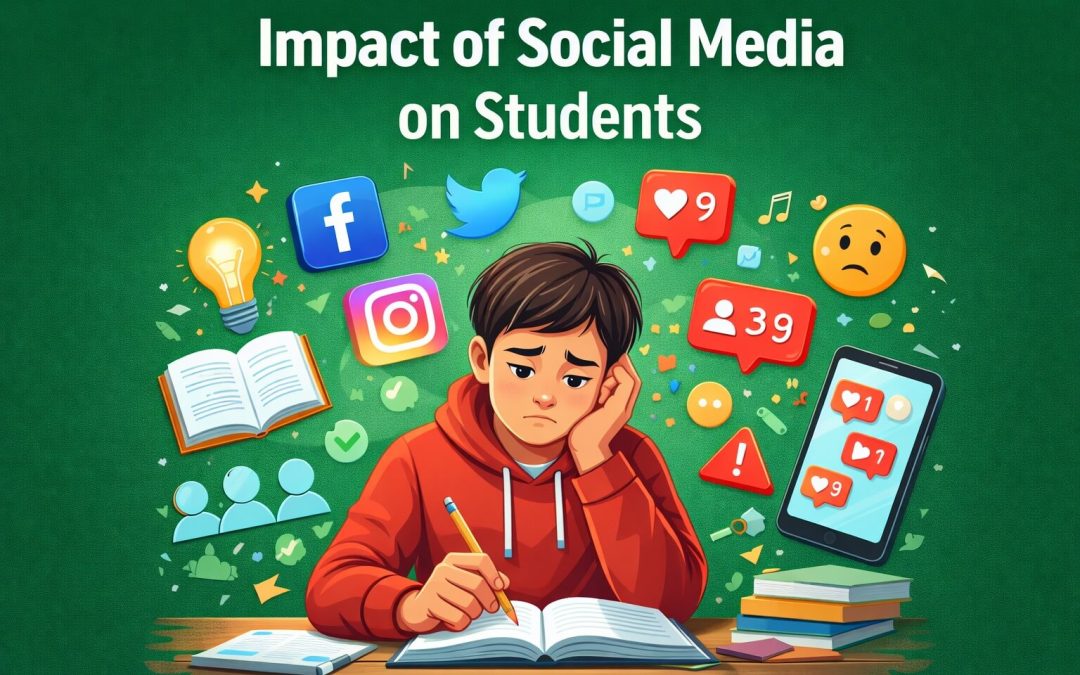
Social media has become a daily companion for students, shaping how they learn, relax, and connect with others. From watching educational videos to chatting with friends, online platforms influence almost every part of student routines.
The impact of social media on students is both helpful and challenging, offering quick access to information while also creating distractions. When used wisely, it can support growth and creativity, but careless use may affect focus, health, and emotional wellbeing in daily academic life too.
What Is Social Media and How Students Use It
Social media includes online platforms where people share content, communicate, and learn from one another. Students commonly use apps for messaging, video sharing, online communities, and study discussions.
Many learners rely on these platforms to watch tutorials, follow educational pages, and join subject-related groups. At the same time, social media serves as a space for entertainment, such as short videos, memes, and games.
Daily screen time varies among students. Some use it for a few hours, mainly for learning, while others spend long periods scrolling for fun. This mix of education and leisure makes social media a powerful but sensitive part of student life.
Positive Impact of Social Media on Students
There are many positive effects of social media on students, which include
Access to Learning Resources
Students can quickly find notes, articles, and study material on almost any subject through social media. This makes learning easier and more flexible outside the classroom, especially when quick revision is needed.
Educational Videos and Tutorials
Short lessons and explanation videos help students understand difficult topics in a simple way. Visual learning also improves memory, focus, and interest in studies.
Collaboration with Classmates
Online groups allow students to discuss homework, share ideas, and prepare for exams together, even after school hours, making teamwork stronger.
Awareness of Global Trends and Opportunities
Students stay updated about new courses, careers, competitions, and world events that help guide future goals.
Creative Expression and Skill Building
Many students share art, writing, and school projects online, which builds confidence and develops useful skills.
Negative Impact of Social Media on Students
Along with benefits, there is a clear negative impact of social media on students when usage becomes excessive.
Distraction from Studies
One common issue is distraction. Constant notifications pull attention away from studies, making it harder to concentrate.
Reduced Attention Span
Over time, frequent scrolling can reduce attention span. Students may struggle to focus on long lessons, books, or assignments.
Sleep Disturbances
Sleep problems are another concern. Late-night phone use affects sleep quality, leading to tiredness during classes and poor academic performance.
Low Self-Confidence from Comparison
Social comparison also affects confidence. Seeing edited photos and success stories can make students feel inadequate or unhappy with themselves.
Exposure to Misinformation
There is also the risk of misinformation. Not all online content is accurate, and students may believe false news or poor-quality study material without checking sources.
Effect of Social Media on Academic Performance
The effects of social media on education can be both positive and negative depending on how students manage their time.
- Poor time management: Excessive use of social media often wastes valuable study hours. Time spent online reduces time for homework, revision, and reading.
- Reduced focus through multitasking: Switching between studying and social apps lowers concentration and affects memory and understanding.
- Academic benefits when used wisely: Using social media for research, online classes, and group discussions helps students learn better through quick answers and shared notes.
- Need for balanced usage: Purposeful use supports academic growth, while uncontrolled use harms performance.
Social Media and Mental Health
Social media affects students’ emotions more than they realise.
- Emotional influence: Social media strongly affects students’ moods and self-image. Positive comments can boost confidence, but constant comparison often creates pressure.
- Stress and low self-esteem: Seeing perfect lifestyles, bodies, and achievements online may cause anxiety and make students feel inadequate.
- Cyberbullying risks: Hurtful messages, rumours, and online teasing can seriously harm mental health and emotional well-being.
- Importance of digital boundaries: Limiting screen time, avoiding negative content, and focusing on real-life connections help maintain emotional balance.
Social Media and Communication Skills
Social media shapes how students communicate every day.
- Improved online expression: One good effect of social media on students is improved online communication. Students learn to share ideas through messages, videos, and posts while connecting with people from different backgrounds.
- Reduced face-to-face interaction: Too much online chatting can make some students uncomfortable with real-life conversations.
- Changes in language habits: Frequent use of short forms and casual writing may weaken grammar and formal writing skills.
- Need for communication balance: Mixing online interaction with real-world conversations helps build strong overall communication abilities.
Advantages and Disadvantages of Social Media for Students
| Advantages | Disadvantages |
| Easy access to information | Distraction from studies |
| Online learning support | Screen addiction |
| Creative expression | Sleep issues |
| Networking opportunities | Mental stress |
| Awareness and exposure | Reduced physical activity |
Tips for Healthy Social Media Use for Students
Practising the do’s and don’ts of social media for students helps maintain balance and wellbeing.
- Set daily screen time limits to avoid overuse
- Use social platforms mainly for learning and skill development
- Avoid scrolling before bedtime for better sleep
- Follow educational and positive content
- Take regular breaks to refresh the mind
Role of Parents and Teachers
Parents and teachers play an important role in guiding responsible online behaviour.
- Teach students about online safety, privacy, and respectful communication
- Encourage balance between screen time and offline activities like sports, reading, and hobbies
- Use supportive monitoring instead of strict control
- Maintain open conversations to build trust and awareness
- Set a good example by practising healthy digital habits
Social media strongly shapes modern student life by offering learning resources, creativity, and global connections when used wisely. However, overuse can harm focus, sleep, and mental wellbeing. The benefits of social media for students appear only with balance and discipline. By setting limits, following positive content, and staying mindful, students can enjoy technology as a tool instead of a distraction.
Navigating the digital landscape is one of the most pressing challenges for parents and educators today. At Bethany Institutions, we believe that digital wellbeing is not an optional add-on, but a fundamental component of holistic student development.
On January 31, 2026, we hosted our Annual Digital Awareness and Wellbeing Session to address this exact challenge.
The event, titled “Digital Perspectives – The Experts Speak,” brought together over 400 parents from our Koramangala and Sarjapur campuses. Rather than offering a singular view, we curated a diverse panel to examine the issue from every angle:
Dr. Darelin (Psychiatrist) and Ms. Swati (Neurologist) provided clinical insights into the mental, emotional, and neurological impacts of screen use.
Mr. Vipin Pai (IT Professional) offered practical knowledge regarding the digital ecosystem.
Ms. Charanya (Parent and Journalist) and Ms. Aarefa (Student Representative) grounded the discussion in reality, sharing lived experiences from both the parenting and student perspectives.
The session included a panel discussion moderated by our Director, Dr. Akash Ryall, followed by an open forum led by Ms. Rohina Thomas, Head of the Counselling Department. This interactive format allowed parents to voice specific concerns and engage in a meaningful dialogue with the experts.
We are grateful to the Bethany Counselling Department for organizing such a timely and relevant session. The strong attendance and engagement from our parent community reinforce our shared commitment to guiding students toward a balanced, healthy, and aware relationship with technology.
FAQs
How does social media affect students’ studies?
It can support learning through resources and groups, but excessive use causes distraction and poor focus.
Is social media good or bad for students?
It is both helpful and harmful depending on how wisely it is used.
How many hours of social media is healthy?
Around one to two hours daily is generally considered balanced for students.
How can students reduce social media distraction?
By setting time limits, turning off notifications, and using apps mainly for educational purposes.
by Bethany Institutions | Mar 16, 2026 | Blog Recent Post
Introduction
“Ravi went to Ravi’s school because Ravi forgot Ravi’s bag.”
Doesn’t this sound odd? What is it that makes it sound weird? The repetition of the same name over and over again. This is where a pronoun steps in for a noun, so you don’t have to repeat it.
The same sentence becomes: “Ravi went to his school because he forgot his bag.”
Just using ‘he’ and ‘his’ makes everything sound normal.
Pronouns may be small words, but they play a big role in making sentences sound natural. Before we look at the different types, let us first understand the pronoun definition and how these words are used in everyday English.
What Is a Pronoun?
To understand grammar clearly, it helps to know the definition of a pronoun in simple terms.
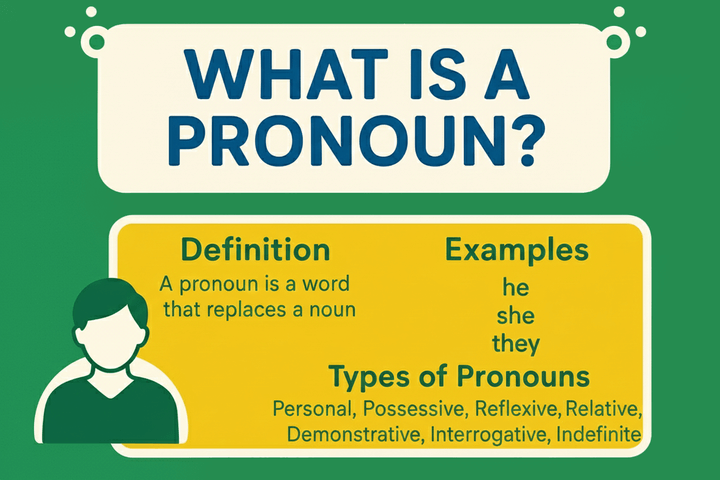
A pronoun is a word that replaces a noun or noun phrase to avoid repetition. We use it when the person, place, thing, or idea has already been mentioned or is obvious from the context.
Pronoun Definition
A pronoun is a word used in place of a noun.
Examples:
- Riya loves dancing. She practices every day.
- Riya is my friend. She is very kind.
- (She = Riya)
- The book is on the table. It belongs to me.
- (It = the book)
- Ravi and Meera are classmates. They study together.
- (Ravi and Meera = They)
Words like “he,” “she,” “it,” “they,” “this,” and “those” are all pronouns you use every day without even thinking about it.
To make the idea clearer, it also helps to look at the pronoun definition and examples used in everyday sentences.
Pronoun Definition for Class 2
For young learners, especially those in primary school, the easiest explanation is:
A pronoun is a word used instead of a noun.
Examples:
- Rahul is playing. He is happy.
- The cat is sleeping. It is sleeping on the mat.
This simple pronoun definition for Class 2 is often taught using pictures and worksheets.
Why Are Pronouns Important?
Pronouns keep language smooth, easy to follow, and concise. Without them, our sentences would sound stiff and robotic.
Here’s why they matter:
- They make language concise
- “My brother likes my brother’s bike” → “My brother likes his bike.”
- They help the writing flow
- Sentences read better when nouns aren’t repeated again and again.
- They make speech sound natural
- Imagine telling a whole story with no pronouns; it would be exhausting to hear.
- They help us refer to things quickly
- Words like this, that, these, and those point to things without naming them every time.
Pronouns make communication easier and more comfortable.
Understanding the definition and types of pronouns also helps learners recognise how they function in different situations.
How Many Types of Pronouns Are There?
Before learning them in detail, it is helpful to see the types of pronouns with definitions so that each category becomes easier to recognise.
There are seven main types:
- Personal Pronouns
- Possessive Pronouns
- Reflexive Pronouns
- Relative Pronouns
- Demonstrative Pronouns
- Interrogative Pronouns
- Indefinite Pronouns
1. Personal Pronouns
Used for particular people or things.
They change depending on whether they are the subject or object.
| Person | Subject | Object |
| First | I, we | me, us |
| Second | you | you |
| Third | he, she, it, they | him, her, it, them |
Examples:
- I love reading.
- They invited us.
- Can you help me?
2. Possessive Pronouns
Show ownership or belonging.
mine, yours, his, hers, ours, theirs
Examples:
- This book is mine.
- That house is theirs.
- Is this pen yours?
3. Reflexive Pronouns
Used when the subject and object are the same.
They end in -self or -selves.
myself, yourself, himself, herself, itself, ourselves, yourselves, themselves
Examples:
- She prepared herself for the exam.
- I hurt myself.
- They introduced themselves.
4. Relative Pronouns
Used to connect clauses or give more information about a noun.
who, whom, whose, which, that
Examples:
- The boy who won the race is my cousin.
- This is the girl whose bag was lost.
- The car that I bought is red.
5. Demonstrative Pronouns
Used to point towards specific things.
this, that, these, those
Examples:
- This is my favourite book.
- Those are the mountains we visited.
- These look delicious.
Use this/these for things close by and that/those for things further away.
6. Interrogative Pronouns
Used to ask questions.
who, whom, whose, which, what
Examples:
- Who is your teacher?
- Whose bag is this?
- What is your favourite colour?
- Which of the following is not a pronoun?
7. Indefinite Pronouns
Refer to people or things in a general way.
everyone, someone, anyone, nobody, nothing, everything, many, few, several, all, each, both
Examples:
- Everyone is excited.
- Nothing is impossible.
- Someone left their umbrella here.
- Many were invited, but few attended.
After learning each category, remembering the pronoun and its types and their definitions becomes easier when reading or writing sentences.
Noun and Pronoun Chart
| Noun | Pronoun | Example |
| Riya | she | Riya is my friend → She is my friend |
| The book | it | The book is new → It is new |
| Ravi and Meera | they | Ravi and Meera are here → They are here |
| Students | they | Students are in class → They are in class |
| My brother | he | My brother is tall → He is tall |
These noun and pronoun example sentences clearly show how pronouns replace naming words.
Examples in Sentences
If you are still wondering what pronouns are and their types are, the following examples show how they appear in everyday sentences.
- I am learning English. (Personal)
- This pencil is mine. (Possessive)
- He blamed himself. (Reflexive)
- This is the teacher who helped me. (Relative)
- These are beautiful flowers. (Demonstrative)
- Which of the books do you want? (Interrogative)
- Everyone enjoyed the concert. (Indefinite)
Five pronouns in one short paragraph
Riya said she would come to the park. I met her there, and we played together. This made everyone happy because they missed her last time.
Pronouns used: she, her, we, this, they
Quick Exercise
Identify the pronouns:
- He is my best friend.
- Those are beautiful paintings.
- Someone knocked on the door.
- The girl who sang is my cousin.
- I did it myself.
Answers: He, Those, Someone, who, myself
To build stronger grammar skills, students can also practice using common-noun and proper-noun worksheets, as well as pronoun exercises.
Common Mistakes Students Make
- Repeating the noun too many times.
- Using the wrong pronoun for singular and plural nouns.
- Confusing possessive adjectives (my, your) with possessive pronouns (mine, yours).
- Using “he” or “she” for objects instead of “it.”
Conclusion
Pronouns may be small words, but they play a big role in English grammar. They replace nouns, reduce repetition, and help sentences sound smooth and natural. Once students understand the different types of pronouns, they can write and speak with greater clarity and confidence.
Whether you are learning the pronoun definition for Class 2, practising with a personal pronouns worksheet, or trying to find the pronoun in a sentence, each exercise helps build a stronger understanding of how pronouns work.
With regular practice, using pronouns becomes second nature. The more you read, write, and speak, the more naturally you will use pronouns in everyday communication.
by Bethany Institutions | Mar 12, 2026 | Blog Recent Post
Communication is something we use every day, whether at home, in school, or at work. Strong communication skills allow us to share our thoughts clearly and make it easier for others to understand us. They help us build meaningful relationships, express ideas confidently, and avoid misunderstandings in daily life.
Good communication helps learning, teamwork, presentations, and career growth. Improving it makes life easier, smoother, and more enjoyable. Understanding the importance of communication skills is the first step toward becoming a confident and effective communicator.
What Are Communication Skills
An introduction to communication skills involves more than just talking. Communication is the process of sharing information, ideas, and emotions clearly and effectively. It includes verbal skills, such as speaking, nonverbal cues like gestures and body language, written communication through emails or reports, and listening skills, all of which are equally critical. Good communicators not only share information but also understand others, making communication a multidimensional skill essential for success in all areas of life.
Why Communication Skills Matter in Daily Life
Good communication helps students share ideas and understand others. This section will explain the importance of communication and how it supports social, academic, and personal growth.
Expressing Thoughts Clearly
Expressing your thoughts clearly means using words that others can understand easily. It helps you explain your ideas in class, during group work, or even with friends. When you communicate clearly, people listen better, and you are more confident in sharing what you think.
Building Better Relationships
Good communication helps students make and keep friends. When you can talk openly and listen carefully, people trust you more. It also helps in resolving small conflicts, working in groups, and connecting with teachers or peers, making school life smoother and happier.
Avoiding Misunderstandings
Many problems happen when people don’t explain themselves clearly. Learning to communicate well helps students share ideas, instructions, and feelings effectively. This reduces misunderstandings and makes teamwork, class activities, and learning much easier.
Confidence in Social Situations
Strong communication skills give students confidence. They help in class, meet new people, and participate in activities. Good communication makes students feel comfortable and respected in school and social settings.
Importance of Communication Skills for Students
The importance of communication for students lies in helping them learn better, build confidence, and succeed in both school and life.
Classroom Participation
Students who communicate well can ask questions and share their ideas. They can join class discussions confidently. This helps them understand lessons better and feel more involved in class activities.
Presentations and Group Discussions
Students need clear communication for presentations and group discussions. Speaking clearly and listening to others helps them share ideas and work well in teams. It also earns respect from teachers and classmates.
Improved Academic Performance
Good communication helps students understand lessons and clarify doubts. Asking questions and explaining answers clearly improves learning. This leads to better grades and overall academic success.
Interview and Career Readiness
Strong communication skills help students prepare for interviews and internships. Speaking confidently and listening carefully make them ready for jobs. These skills increase the chances of success in future careers.
Importance of Communication Skills at Work
Understanding what is the importance of communication skills can make daily tasks easier and help employees succeed in their careers.
Team Collaboration
Good communication helps team members share ideas and work together smoothly. Clear instructions and listening carefully prevent mistakes. Teams complete tasks faster and achieve better results when everyone communicates well.
Leadership and Management
Leaders need strong communication skills to guide their teams. Explaining tasks clearly and listening to team members builds trust. Leaders who communicate well can motivate others and solve problems efficiently.
Client Interaction
Clear communication is important when talking to clients. Listening to their needs and explaining solutions properly builds trust. This helps in keeping clients satisfied and maintaining good business relationships.
Professional Growth and Promotions
Employees with good communication skills often get more opportunities. They can share ideas clearly, work well in teams, and take on leadership roles. Strong communication can lead to promotions and career growth.
Key Benefits of Strong Communication Skills
Good communication is a part of the skills that help us succeed. It brings many advantages, including:
- Better confidence: Expressing yourself clearly helps you feel more self-assured in conversations and social situations.
- Clear thinking: Organising your ideas before sharing leads to better understanding and decision-making.
- Strong relationships: Effective communication strengthens trust and connection with family, friends, and colleagues.
- Problem-solving: Discussing issues openly allows for faster and more practical solutions.
- Career growth: Strong communicators are more likely to earn recognition, promotions, and new opportunities.
| Skill Area | How It Helps |
| Listening | Better understanding |
| Speaking | Clear expression |
| Writing | Professional clarity |
| Body Language | Strong presence |
Common Communication Mistakes to Avoid
Knowing these mistakes helps students communicate clearly in school and daily life.
- Interrupting others: Interrupting makes people feel ignored. Listening fully shows respect and understanding.
- Not listening properly: Not paying attention leads to confusion. Careful listening improves understanding.
- Unclear language: Using unclear words causes misunderstandings. Simple language keeps communication clear.
- Ignoring body language: Ignoring body language sends the wrong signals. Open posture and gestures help build a better connection.
- Too much digital communication: Depending only on digital messages and emails, communication can create confusion. Talking face-to-face helps people understand better.
Role of Communication in Personal and Career Success
Communication is very important in all parts of life. Understanding the role of communication in different spheres of life helps students grow and succeed.
- Confidence boost: Clear speaking and active listening help students feel confident in class and social settings.
- Stronger relationships: Good communication builds friendships and positive connections with peers and teachers.
- Leadership skills: Clear expression and attentive listening help students guide and support others.
- Future success: Strong communication opens opportunities in learning, work, and personal growth.
- Clear emails & messages: Simple words and mistake-free writing help ideas reach others quickly.
- Effective online meetings: Speaking clearly, listening well, and taking turns improve virtual discussions.
- Smart social media use: Clear and respectful posts prevent confusion and keep connections strong.
- Online professional etiquette: Polite and clear digital behaviour builds trust and a good impression.
Conclusion
Communication is a vital life skill that shapes learning, relationships, and career success. Small daily efforts in listening and clear expression build confidence, reduce misunderstandings, and create new opportunities. With regular practice, anyone can become a stronger communicator in both personal and professional life.
FAQs
Why are communication skills important?
They help convey ideas clearly, build trust, and improve relationships and career growth.
Can communication skills be improved?
Yes, consistent practice, feedback, and awareness can significantly enhance communication skills.
Which communication skill is most important?
Listening is often considered most important as it allows understanding before responding effectively.
How do students build communication skills?
Through classroom participation, group discussions, presentations, and regular practice in speaking and writing.
by Bethany Institutions | Feb 26, 2026 | Blog Recent Post
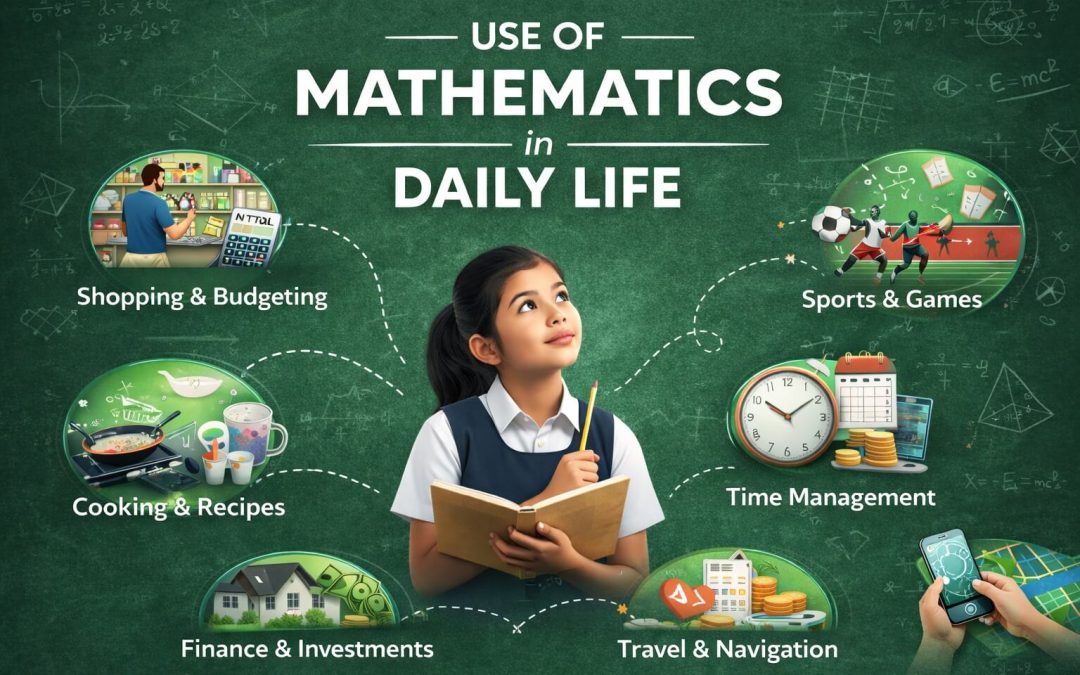
Math is part of everyday life, even when we do not notice it. From handling money and managing time to cooking and travelling, basic calculations guide daily decisions. Understanding simple math makes routine tasks easier and builds confidence in solving problems. The presence of mathematics in daily life helps people think clearly, plan better, and avoid mistakes. Whether at home, school, or work, numbers support almost every activity. Learning how math connects to real situations allows students and adults to use knowledge in practical and meaningful ways.
What Is Mathematics in Daily Life
Practical math refers to the use of numbers and calculations in real situations. It includes counting, measuring, comparing, and problem solving. People use math when they pay bills, read clocks, or measure ingredients.
Basic skills such as addition, subtraction, multiplication, and division help in everyday decisions. When people understand these concepts, they feel more confident and independent. These simple abilities form the foundation for more advanced thinking and planning in life.
Use of Math in Managing Money
Managing money is one of the clearest examples of the use of mathematics in daily life.
- Planning monthly budgets: People use math to divide their income for rent, food, savings, and other needs. This planning helps control spending and avoid unnecessary debt.
- Tracking income and expenses: By adding daily expenses and checking totals, people understand where their money goes. This habit encourages better saving and smarter financial choices.
- Understanding banking and bills: Math helps people read bank statements, calculate interest on savings or loans, and pay electricity or phone bills on time without mistakes.
- Making smart Shopping Decisions: People compare product prices, calculate discounts, and check final amounts before paying. These simple steps help save money and prevent overspending.
Mathematics in Time Management
Math helps people organise their day and use time wisely.
- Reading clocks and setting alarms for daily routines
- Planning school, work, and personal activities
- Estimating travel time before leaving home
- Scheduling tasks to meet deadlines
- Avoiding delays through better planning
- Improving focus and productivity
Math in Shopping and Cooking
Math supports accurate buying and proper food preparation.
- Adding prices while shopping
- Checking total bills before payment
- Comparing product quantities and prices
- Understanding weight and volume
- Measuring ingredients for recipes
- Adjusting portions for more or fewer people
- Ensuring better results in cooking
Math in Travel and Distance
Travel planning involves distance, speed, and cost. People calculate how far they need to go and how long it will take. Fuel estimates depend on distance and mileage.
Ticket prices, hotel stays, and travel budgets all use math. Route planning also requires comparing shorter or faster paths. These calculations help travellers save time and money while staying organised.
Application of Maths in Daily Life
Math plays a practical role in everyday decisions across home, school, and work life.
- Supporting daily home tasks: People use math to plan budgets, measure cooking ingredients, and organise time properly. These small calculations make daily routines smoother.
- Improving learning in school: Students solve math problems to build logical thinking and accuracy. This practice strengthens focus and problem-solving skills.
- Helping at the workplace: Math supports planning, handling data, and clear communication. It helps complete tasks correctly and on time.
- Making small decisions easier: Simple activities such as splitting bills, checking change, and planning trips rely on basic calculations. Over time, regular math use builds confidence and sharper thinking.
Importance of Learning Math Early
Learning maths from an early age plays a vital role in shaping a child’s thinking, showing the real importance of mathematics in everyday learning and future success.
- Sharpens thinking skills: Early practice helps children analyse problems and find clear solutions, building logical thinking habits.
- Strengthens other subjects: Maths supports learning in science, economics, and more by improving understanding of numbers and patterns.
- Boosts confidence early: Strong basics reduce fear of maths and prepare students for higher studies and careers.
How Students Can Apply Math in Real Life
Students use maths every day without realising it, which clearly shows the importance of maths in daily life and learning.
- Daily calculations: Adding shopping bills, managing pocket money, and planning homework time help build quick number skills.
- Learning through play: Games, puzzles, and challenges make maths fun while improving thinking abilities.
- Real-world connections: Tracking expenses and schedules helps students understand how numbers work in real situations.
Everyday Value of Math Skills
Many people often ask why math is important when they struggle with numbers. The answer lies in daily convenience and confidence. Math reduces errors in spending, planning, and time management.
It helps people think logically and solve problems calmly. With strong math skills, individuals make better decisions and handle responsibilities with ease. These abilities support personal growth and independence throughout life.
Common Ways People Use Math
There are countless examples that show the 10 uses of maths in our daily life, including Budgeting monthly expenses
- Cooking with measurements and portions
- Shopping and calculating totals
- Planning time and schedules
- Travelling and estimating distances
- Banking and managing accounts
- Measuring length, weight, and volume
- Saving money and setting goals
- Paying bills and tracking due dates
- Solving everyday problems
Conclusion
Mathematics is a practical life skill used in daily activities. It helps with planning, decision making, and understanding the world better. Strong math basics make everyday tasks simpler and improve confidence. When students learn to apply math outside textbooks, they see its true value in daily life. Regular practice builds accuracy and independence. Math does not remain limited to classrooms. It becomes a helpful tool that supports personal growth, smart choices, and success in both small and big moments of life.
FAQs
Why is mathematics important in daily life?
Mathematics helps in managing money, time, travel, and everyday decisions. It improves problem solving and logical thinking.
Where do we use math in everyday life?
Math is used in shopping, cooking, banking, travel planning, and even in digital payments and mobile apps.
How does math help students in real life?
Math builds reasoning skills, improves accuracy, and helps students manage tasks such as budgeting, measuring, and planning.
Can daily practice improve math skills?
Yes. Using math in small daily activities like calculating expenses or time improves speed, confidence, and understanding.