To learn more or apply for admissions in the academic year 2026–27. Click here
To learn more or apply for admissions in the academic year 2026–27. Click here
To learn more or apply for admissions in the academic year 2026–27. Click here
To learn more or apply for admissions in the academic year 2026–27. Click here
To learn more or apply for admissions in the academic year 2026–27. Click here
To learn more or apply for admissions in the academic year 2026–27. Click here
Education goes beyond textbooks, exams, and academic achievements. At its core, true education is about building character and guiding students to make ethical choices, cultivating resilience, empathy, and a commitment to making a positive impact in the world. At Bethany, we believe that values-based education is central to this mission, forming the foundation for a fulfilling life. Education is not merely about filling a mind with knowledge but about shaping a heart with values.
What is Values-Based Education?
Values-based education combines ethical principles and character development with academic learning. This approach provides knowledge and instills values like respect, empathy, honesty, and resilience, shaping well-rounded individuals who make thoughtful, ethical decisions and contribute positively to society.
At Bethany, our dedication to values-based education is integrated into every aspect of school life, from classroom interactions to co-curricular activities. This approach aligns with our mission to develop knowledgeable and compassionate individuals ready to face life’s challenges with integrity.
Why Values-Based Education is Essential
In today’s rapidly changing world, ethical dilemmas and social challenges are increasingly common. Academic knowledge is essential, but without a foundation of values, success may lack purpose. Values-based education builds crucial qualities such as resilience, empathy, and social responsibility, preparing students to navigate life with a strong moral compass.
The Role of Schools in Teaching Values
Schools play a vital role in shaping a child’s character, as students spend much of their time in a structured learning environment. At Bethany, teaching values is as important as academic subjects. Through our curriculum, we emphasise value education to help children understand the importance of ethical behavior and respect for others.
In classrooms and assemblies, students are encouraged to reflect on values like empathy, cooperation, respect, and resilience. Teachers act as role models, demonstrating these values daily and creating a nurturing environment where students feel safe to express themselves, ask questions, and learn from mistakes.
Key Values Taught in Values-Based Education
Values-based education centres around core values that serve as a moral foundation for students. Here are some of the key values we emphasise at Bethany:
Integrity: Teaching students to act honestly and take responsibility for their actions.
Empathy: Encouraging students to understand and respect others’ feelings and perspectives.
Respect: Creating a culture of respect for self, others, and the environment.
Resilience: Helping students develop the strength to face challenges with a positive attitude.
Responsibility: Instilling a sense of accountability for their actions and contributions to the community.
These values are embedded in everyday activities and interactions, helping students internalise them as part of their character. Every year, the school has a theme which the assemblies are woven around. For the year 2024-2025, the theme is “Every Person, Equal Respect, Every Day”. Through the assemblies and the value education classes, we aim to guide students towards becoming individuals who contribute positively to their communities.
How Values-Based Education Prepares Students for Life
Values-based education goes beyond character-building; it equips students with essential life skills. Here’s how it impacts various aspects of life:
Ethical Decision-Making: Values education encourages students to think critically about their choices, consider their impact on others, and make decisions that align with their values.
Respect for Diversity: In a globalized world, values-based education cultivates tolerance and appreciation for different backgrounds, preparing students to work collaboratively and respectfully.
Conflict Resolution: By teaching empathy and patience, values education enables students to handle conflicts calmly and constructively.
Leadership: Values-based education nurtures leaders who prioritise cooperation and ethical responsibility over personal gain.
Incorporating Values into Everyday Learning
At Bethany, we integrate values into every part of the school experience, from academic lessons to extracurricular activities. Here’s how we make values a daily part of our students’ lives:
Integrated Curriculum: Our curriculum includes discussions on ethical questions and moral dilemmas, allowing students to explore values within academic contexts. For example, literature classes may discuss themes of honesty and courage, while history lessons reflect justice and fairness.
Character-Building Programs: We offer programs focused on developing integrity, compassion, and responsibility. Through group discussions, workshops, and activities, students reflect on personal values and social responsibilities.
Community Service: Activities such as community service projects and “Joy of Giving Week” encourage empathy and social responsibility, helping students connect with the wider community and understand the importance of giving back.
FAQs
What is values-based education, and why is it important? Values-based education focuses on instilling ethical values and life skills alongside academic learning, developing well-rounded individuals capable of making responsible decisions and contributing positively to society.
How does values-based education differ from traditional education? Unlike traditional education, which often emphasizes academic achievements, values-based education integrates character development and ethical behaviour into the learning process, aiming for holistic growth.
What key values should be taught in schools? Key values include integrity, empathy, respect, resilience, and responsibility, which form the foundation of ethical and responsible citizenship.
How can parents reinforce values-based education at home? Parents can reinforce these values by modeling ethical behaviour, encouraging empathy, and discussing moral dilemmas with their children. Consistency between home and school strengthens the impact of value education.
Conclusion
In an era where academic excellence alone is not enough, values-based education forms the foundation for developing compassionate, ethical, and resilient individuals. At Bethany, we believe that nurturing character and instilling values is as important as academic success. Through a supportive environment and a curriculum that emphasises ethics, empathy, and respect, we prepare students to excel academically and navigate life with a strong moral compass.
We invite parents to join us in this journey of character-building. Together, we shape young individuals who will make a meaningful difference. At Bethany, we are committed to nurturing students and responsible, caring citizens ready to face the future with integrity and compassion.
As parents, we all want the best for our children, especially when it comes to their early learning and development. The first few years of a child’s life are a time of immense mental and physical growth. What children learn during these formative years shapes their future, laying the foundation for their academic, social, and emotional well-being. Parents play a central role in guiding and nurturing this journey, and there are countless ways to make learning fun, natural, and an essential part of everyday life.
The Importance of Early Learning in Child Development
Early learning is more than just memorizing numbers or the alphabets. It’s about sparking curiosity, enhancing creativity, and helping children understand the world around them. Studies show that children who receive early learning support tend to perform better academically, communicate more effectively, and adapt more easily to social situations as they grow older. At Bethany, we believe early learning is as much about developing character as it is about cognitive skills. Children can build a solid foundation for a lifetime of curiosity and growth with the right support.
Creating a Learning-Friendly Environment at Home
Your home is your child’s first classroom. Setting up a learning-friendly environment doesn’t mean turning your living room into a classroom – it’s about creating a space where children feel free to explore, ask questions, and make discoveries.
Set Up a Reading Nook: A cozy spot with books at eye level encourages a love for reading.
Hands-On Learning Spaces: Designate a space for hands-on activities like puzzles, blocks, and art supplies to spark creativity and problem-solving.
Display Learning Materials: Hang charts, shapes, or letters around the house. It’s amazing how much children absorb just by being around educational visuals.
Encouraging Learning Through Play
Play is one of the most powerful tools for early learning. When children play, they explore, experiment, and learn essential social and cognitive skills. Through play, children learn about cause and effect, develop motor skills, and improve their problem-solving abilities.
Pretend Play: Playing “house,” “doctor,” or “shop” allows children to understand real-world roles and practice empathy.
Building and Constructing: Activities like building with blocks help with spatial awareness, balance, and patience.
Outdoor Exploration: Nature provides a rich sensory experience. Take walks, look for bugs, play in the sand, or go on a treasure hunt – outdoor play stimulates curiosity and discovery.
Building Language and Communication Skills Early
Language is the bridge that connects us to others. Encouraging language development from a young age helps children express their thoughts and feelings, builds their vocabulary, and sets them up for success in reading and writing.
Read Together Daily: Even if it’s just for a few minutes, reading to your child daily exposes them to new words and ideas. Ask questions about the story to encourage interaction.
Talk, Talk, Talk: Describe what you’re doing, whether cooking, folding clothes, or shopping. Everyday conversations build vocabulary and comprehension and also expose them to real life situations.
Songs and Rhymes: Singing nursery rhymes or simple songs is a fun way to improve memory, rhythm, and language skills.
Hands-On Learning: Science, Art, and Problem-Solving at Home
Children are natural scientists, and simple, hands-on activities can satisfy their curiosity while teaching valuable concepts.
Art Projects: Finger painting, drawing, and crafting allow children to express themselves and build fine motor skills.
Simple Science Experiments: Something as simple as mixing baking soda and vinegar is a magical experience for children. It teaches cause and effect and introduces basic scientific concepts.
Cooking Together: Cooking is a fantastic way to learn measurement, counting, and following instructions. Plus, it’s a bonding activity that often ends with a tasty reward!
Social and Emotional Learning: Helping Children Interact and Empathize
Developing social and emotional skills is just as essential as learning the ABCs. Emotional intelligence – understanding one’s own emotions and empathizing with others – is a cornerstone of a happy and successful life.
Role-Playing Games: Play games where your child pretends to be a character, helping them see things from another person’s perspective.
Group Playdates: Interacting with other children teaches valuable social skills, such as sharing, turn-taking, and cooperating.
Expressing Emotions: Encourage your child to name and express their feelings. Teach them phrases like “I feel…” to help them navigate their emotions constructively.
The Role of Positive Reinforcement in Learning
Positive reinforcement – praising effort rather than perfection – is a powerful motivator for young learners. When children feel appreciated, they’re more likely to try new things and persevere through challenges.
Praise Effort, Not Just Results: Say things like, “I love how hard you worked on this,” rather than focusing on whether they got it “right.”
Create a Reward System: A simple sticker chart for completed tasks or kind behavior can motivate greatly.
Celebrate Milestones: Small successes are big achievements in early childhood. Celebrating them encourages children to keep going.
Balancing Structure and Freedom in Learning
Children thrive with routines, but they also need the freedom to explore. Striking a balance between structure and free play can promote independence while providing a sense of security.
Set Daily Routines: Regular meal times, nap times, and playtimes give children a sense of stability.
Allow Unstructured Play: Give children time each day to play on their own terms, whether making up a game or just exploring their surroundings.
Follow Their Interests: If your child is fascinated by dinosaurs, for example, read dinosaur books, draw them, and even make dinosaur stories together. Learning is most effective when it’s tied to their interests.
FAQs
What are the key benefits of early learning for child development?
Early learning supports cognitive, emotional, and social development, setting the foundation for lifelong learning and success.
How can parents encourage learning through everyday activities?
Integrate learning into daily tasks like cooking, cleaning, or shopping. Narrate what you’re doing, ask questions, and encourage your child to participate.
At what age should parents start focusing on early learning?
Learning begins from birth. Even as infants, children absorb language and respond to sensory stimuli. Start engaging them through talking, singing, and gentle interaction.
How can I balance fun and learning for my toddler?
Use play-based learning and focus on your child’s interests. Learning should feel like a natural, enjoyable experience, not a chore.
Conclusion
Encouraging early learning is about making learning a part of everyday life, filled with curiosity, joy, and discovery. You’re building their knowledge, confidence, and character by engaging with your child, talking, playing, and exploring together. At Bethany, we believe the partnership between parents and teachers is crucial in nurturing each child’s journey. So, let’s embrace these early years, filled with wonder and excitement, as we guide our children toward a lifetime of learning and growth.
Moving from pre-primary to primary school is a significant step for both children and parents. This transition shapes a child’s academic journey, social skills, and self-confidence, setting the foundation for years to come. As parents, our role in making this shift smooth and positive is invaluable. In this article, we share practical tips and insights to help you prepare your child for this exciting new chapter.
Understanding the Transition from Pre-Primary to Primary
The transition to primary school is not just a change of classrooms; it’s a pivotal developmental phase where children begin gaining independence, forming friendships, and engaging deeply in structured learning. This stage is crucial as it influences their confidence, resilience, and enthusiasm for learning.
Choosing the right school is essential for a smooth transition. Factors like curriculum, location, school culture, and facilities matter greatly. In Bangalore, parents often consider ICSE, CBSE, IGCSE, IB, or State Board schools, each offering unique approaches to learning. ICSE and CBSE are widely respected for their balanced curriculums, while IGCSE and IB provide an international perspective, focusing on inquiry-based learning and global awareness. Researching these boards and visiting schools can help you understand which environment best fits your child’s needs and future goals.
At Bethany High, we offer an ICSE curriculum that balances academic excellence with holistic development, nurturing values, creativity, and independent thinking. Our personalized approach, small class sizes, and inclusive environment help children feel valued and confident as they transition to primary school. If you’re seeking a school that supports academic and personal growth, Bethany High is an excellent choice.
Preparing Your Child for Academic Changes
Primary school introduces more structured academics, with a greater emphasis on reading, writing, and mathematics. You can help your child by gradually incorporating learning activities at home that mirror these changes. Encourage reading, engage in simple maths activities, and discuss new topics to make them feel familiar with academic expectations.
Emotional Readiness: Building Confidence in Your Child
Building confidence is key to helping your child adjust to primary school. Simple steps like allowing them to make choices, teaching them to handle small tasks independently, and talking about their feelings can make a difference. Encourage your child to share their thoughts and anxieties, reassuring them that feeling nervous about new experiences is natural.
Practical Tips for Parents
Develop Good Habits Establishing good habits early on can positively shape your child’s transition. Encourage them to follow a routine that includes time for sleeping, studying, and playing. Involving them in creating their own schedule helps instill a sense of responsibility and builds independence, both crucial for primary school success.
Encourage Independence Teaching children to be independent is important as they step into primary school. Simple tasks like dressing themselves, packing their school bag, or setting up their study area allow them to feel more in control and boost their self-esteem.
Practice Social Skills Friendships are an important part of school life. Arrange playdates or involve your child in group activities to help them practice social skills. Encouraging your child to share, take turns, and communicate openly will ease their social interactions in primary school.
Create a Learning-Friendly Environment at Home Setting up a dedicated, quiet study area at home can encourage focused learning. Stock it with age-appropriate educational resources like books, games, and creative materials. A positive learning space at home complements the structured learning environment at school, making the transition easier.
Talk to Your Child Frequently Talking to your child regularly about their experiences and feelings can help them process the changes they’re going through. Listen attentively to any concerns they have about starting primary school and reassure them. Keeping open communication builds trust and helps them feel supported.
Choosing between ICSE, CBSE, State Board, IGCSE, and IB schools in Bangalore can be a significant decision, as each board offers distinct advantages:
ICSE focuses on a broad curriculum with a strong emphasis on language, arts, and analytical skills, promoting a well-rounded education.
CBSE is more streamlined and suitable for families who might relocate. It also offers a standardized curriculum across India, often prioritizing science and mathematics.
State Boards emphasize regional culture and language, providing a solid foundation in local values and contexts.
IGCSE and IB follow international curriculums that encourage inquiry-based learning, critical thinking, and a global perspective, ideal for students studying abroad or gaining an internationally-minded education.
Choosing the board that aligns best with your child’s learning style and your family’s future plans can positively impact their growth and adaptability.
Dealing with Common Challenges
The transition to primary school may bring challenges like separation anxiety, adapting to a new routine, or coping with increased academic expectations. Here’s how you can help:
Separation Anxiety: Encourage small moments of independence, reassure them, and build excitement about school.
New Routine: Practice a school-like schedule a few weeks before term starts, including regular mealtimes, study periods, and sleep patterns.
Academic Pressure: Avoid putting too much emphasis on grades; instead, focus on nurturing a love for learning.
FAQs
What should parents expect during the first month of primary school? Parents may notice changes as their child adapts to new routines, academic demands, and social interactions. Some initial resistance or nervousness is natural, but most children settle in comfortably within a month with support.
What is the ideal age for transitioning from pre-primary to primary school in Bangalore? Generally, children transition to primary school around age 5 or 6, depending on the school’s specific age requirements and the child’s readiness.
How can I help my child adjust to a new school routine? Practicing a consistent routine at home before school helps children adjust to the primary school structure. This routine should include regular study time, early bedtime, and set meal times.
Conclusion
Transitioning from pre-primary to primary school is a major milestone in a child’s life. As parents, we play a vital role in making this transition smooth and positive by creating a supportive home environment, encouraging independence, and staying engaged with our child’s academic journey. At Bethany, we believe in working hand-in-hand with parents to help each child feel confident, capable, and ready for the exciting adventures of primary school.
We invite parents to join us in guiding young learners as they embark on this new phase. Together, let’s create a nurturing community where children can flourish academically, socially, and emotionally.
The concept of Junior Colleges started as community colleges that helped transition high school students into Universities for higher education. The key ideas that governed this concept were, inclusivity, security and quality education.
Bethany Junior College (BJC) was born with these ideas that aligned with the core values of our founder, Mrs. Mignon David. From its inception in 1991, BJC has been executing our promises to the community and the world at large.
One of the greatest advantages we have here at BJC is our personal pride— the enviable 1: 25 student-teacher ratio. This ensures that each child is known, understood and is cared for. In addition to this, we have an exceptional array of subject experts as teachers. Almost all of our teachers here have several years of experience teaching ISC and work very closely with the CISCE Council, as examiners, ranging from donning the hats of Team Leaders to Exam Coordinators. This facilitates a better learning experience for the students as it helps them steer through the Board examinations with better clarity and confidence.
We give our students hands-on learning experience through our fully-equipped labs, smart boards, and presentations, thereby marrying textual concepts with practical learning experiences. Students get to choose from eighteen elective subjects that are offered for the three streams, namely Science, Commerce and Humanities; with the latest addition to our elective subjects- Mass Media and Communication.
Every student who walks in through the portals of BJC is welcomed, accepted and understood. This is possible only through the able guidance of our Academic Head, Mrs Angeline Theophilus, who ensures that the experience of each student at BJC is a memorable and enriching one.
Yet another personal pride of ours is the rapport students share with the teachers here. It is unlike any you can hope to have. Our classrooms come alive with laughter, discussions, deliberations and quality learning.
“Junior college has been a refreshing change from high school. Its smaller classrooms foster better relationships and give us a chance to interact well, fostering a sense of community and friendship. Great teachers make for an easy setting to be honest with our doubts and concerns.” -XI Science
“We come as strangers and leave as family. One family, all protected, in a place we can call ‘home’.” – XI Humanities
“ BJC has helped us invent ourselves. The values instilled in us will forever stick around, shaping us into individuals ready to take on the world.” – XI Commerce.
Our students are encouraged to participate in a variety of extracurricular activities, the proof of which is seen in their active presence in almost every important event at Bethany, be it the Musicals, MUN, Intra-College Fest (IGNITE), Bake- a- thon, Sports meet, Competitions at the National and International levels. Our students do win it all!
Bethany Junior College is a haven for students, where they are encouraged to be themselves, irrespective of what backgrounds they come from. We guarantee that you will not regret your decision to join our esteemed family.
Sports have always been a part of my life. My mother made sure my sister and I had every opportunity to pursue sports. She enrolled us in gymnastics classes when I was just five years old.
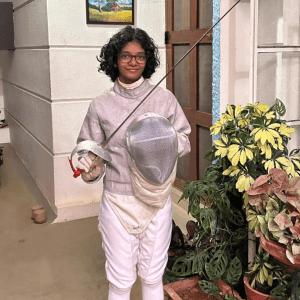
One day, at the same stadium, a poster caught my eye about fencing classes. It was a sport we had never heard of before, and I was intrigued. We asked the coach what it was all about, and he explained that fencing is like sword fighting combined with physical chess. There are three main styles or “weapons”—Foil, Épée, and Sabre—chosen for a person based on their physical and mental strengths.
I loved gymnastics and showed potential, but over time, my interest began to fade. However my mother was keen that I continue gymnastics.
At the time, I was only eight years old, which was too young to join, but my sister decided to give it a try. She chose Foil as her weapon, and I watched with fascination, eagerly waiting for the day I could join too. Eventually, my gymnastics coach was transferred to another city, and the gymnastics academy closed down, which marked the end of that chapter.
In 2018, when I was finally old enough, I joined fencing. My coach recommended I start with Foil because, once you learn it, it’s easier to pick up with other weapons. My mother hoped I would continue with Foil, so my sister and I could practice together. However, I knew that Foil wasn’t the right fit for me. I was much more drawn to Sabre.
I entered my first local competition with Foil and was thrilled to win a bronze medal. It was a significant achievement, that sparked something inside me—fencing was more than just a new activity; it was something I wanted to pursue.
A few months later, I decided to switch to Sabre. I had always felt a strong connection to it, so I focused on improving my skills in that weapon. I won a silver medal in the under-11 category and a gold in the under-13 category at an inter-school fencing competition. This helped convince my mother that Sabre was the right choice for me, although she still had some doubts.
As I continued training the announcement of the “Karnataka State Fencing Championship 2019” presented a critical decision: I had to choose one weapon to focus on. Fencing has a rule that once you compete with a particular weapon in an official event, you must stick with that weapon for at least three years. After much deliberation, I chose Sabre.
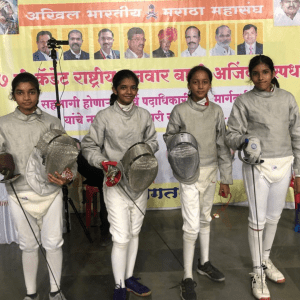
At the state championship, I won a silver medal, which earned me a spot on the Karnataka fencing team for the nationals. That was a turning point. I realized that fencing was no longer just a hobby for me—it was something I was serious about. My team and I worked intensely, training 5 hours a day, 6 days a week. Our hard work paid off when we won a team bronze medal. The experience taught me the importance of teamwork and the value of supporting each other.
However, the Covid-19 pandemic threw a wrench in my plans. Fearing the virus, I made the decision to take a break from training. It was one of the worst decisions I made in my life. While I was at home, many of my peers were improving their skills, and when I returned to the sport after a year, I was shocked at how much they had advanced. I found myself losing to younger competitors, and it was a hard pill to swallow.
After a devastating loss in the semi-final at the “Karnataka Mini Olympics 2.0, (2022)” I questioned whether I should continue fencing. It was heartbreaking to think about walking away after everything I had invested. What would I do without fencing? It had become a part of my identity. Thanks to my mother’s unwavering support, I found the strength to keep going. I set my sights on a bigger goal: to represent India at the Olympics.
Over the next two years, I remained consistently in the top four in my state and competed in national tournaments. Though my performance didn’t always meet my expectations, I never lost sight of my goal.
Then came 2023, a year that marked a major comeback for me. I participated in the “Cadet (Under-17) National Fencing Championship” in Mehsana, Gujarat, where my team won a silver medal. I was finally back in form. After so many years of being at my lowest, it felt like a fresh start. This victory gave me the chance to compete in the “Khelo India Youth Games 2023” in Chennai, where I was ranked 18th. Competing against the best players in India was a valuable experience that taught me so much.
Now, I’m preparing for the “Junior (Under-20) National Fencing Championship 2024” in December and the “Cadet (Under-17) National Fencing Championship” in January. If I finish in the top 8, I could compete in the selections for the Indian team to play in the ‘Common-wealth Games’ or ‘Asian Championship’.
Looking back, I realize how gymnastics played a crucial role in shaping my fencing journey. I’ve noticed that athletes who have been involved in sports from a young age tend to pick up new disciplines more quickly.
I owe all my success to my mother and sister. They are always in my corner, supporting me. I’m also extremely grateful to Robert sir and the entire school for being so encouraging and supportive.
Fencing has become more than just a sport for me—it’s my passion, my purpose, and my future.