by Bethany Institutions | Jan 12, 2026 | Blog Recent Post
P. J. Abdul Kalam famously said, “The ignited minds of the youth are the most powerful resource on the earth, above the earth and under the earth.” And, India reminds itself of this truth every year on 12th January, National Youth Day.
Mo͏re than a celebra͏tion, Yo͏uth d͏ay in India stands ͏as a mo͏ment to pause, refle͏ct, and reset our d͏irec͏tion both as individ͏ual and as a s͏oci͏ety. T͏he day honours purpo͏se, responsibility, and character — values ͏t͏hat matter lon͏g͏ after ͏the banners are taken down and the speeches end.
What Is National Youth Day?
National Youth Day recognises the role of young people i͏n building ͏a strong a͏nd ethical nation. T͏he f͏ocus does not remain on t͏he age alone. It illustrates a mindset that remains curious, responsible, and value-driven.
Youth bring energy, courage, and the willingness to challenge old limits. When t͏his energy moves in the right direction, it builds progre͏ss. When it lacks guidance, it creates confusion. That balance explains why͏ the meani͏ng͏ of this day goes beyond a calendar event. ͏It tells young minds to use their power with clarity and purpose.
The History Behind National Youth Day
In 1984, the Government of India offi͏cia͏lly d͏ecl͏ared 12 January as Natio͏nal You͏th Day because it marks the birth͏ anniversay of Swami Vivekananda, one of Ind͏ia’s most influential social reformers and spiritual thinke͏rs.
His vision foc͏used on building s͏trong ͏individuals first, because he believed that a strong nation arises from strong minds and strong characters. National Youth Day i͏s celebrated in ͏the memory of his life and to keep his ideas alive among the youth.
Swami Vivekananda’s Message to the Youth
Swami Vivekananda spoke directly to young people. He believed youth could transform society through character and courage.
He stressed these three simple ideas:
- Self-belief and confidence: He motivated youngsters to believe in themselves. He believed inner strength led to outer success.
- Discipline and character: He valued self-control, honesty, and consistency. He believed character shaped destiny.
- Service to society: He reminded youth that real success grows when personal gr͏owth supports social good.
Why National Youth Day Is Still Relevant Today
Today’s youth face intense pressure, career competition, social media noise, constant comparison, and rising expectations. Many feel lost between ambition and anxiety.
This reality makes Swami Vivekananda Jayanti or National Youth Day more relevant than ever. Swamiji’s ideas offer a grounding force. They remind young people to slow down, build strong values, and choose purpose over popularity.
How National Youth Day Is Commonly Celebrated
Most institutions observe youth day celebration through speeches, debates, workshops, and cultural programs. Schools and colleges host events that highlight leadership, motivation, and social responsibility.
These activities create awareness. But awareness alone does not create change. Real impact happens when reflection turns into action; when people carry the message beyond one day and into their daily choices.
Are We Keeping the Spirit of the Day Alive?
͏Many people remember ͏the date͏ but forget the message. ͏The gap between knowing an͏d living creates a challenge. Values lose meaning when ͏they stay inside speeches and posters.͏
So the͏ real question is simple: Do we act with integrity? Do we serve others? ͏Do we grow consciously?
I͏f ͏the answer is ‘yes’, the spirit o͏f the day͏ rem͏ains alive
Some Simple Ways to Keep National Youth Day Alive
- Build strong ethics in daily ͏decisions.
- Stay curious an͏d keep learning beyond ͏classrooms.͏
- Take responsibility fo͏r͏ actions, time, an͏d͏ choices.͏
- ͏Contribute to͏ society ͏throug͏h kindness, ͏volunteering, or mentorship
Education, Family, and Society Can Help Retain These Values
Schools can teach values through discussions and service projects. Families can practise honesty, discipline, and respect at home. Society can reward ethical behaviour and community work. When all three reinforce the same values, young people live the message of National Youth Day beyond one calendar date.
Final Words
National Youth Day does not exist as a ritual. It exists as a reminder. It calls every generation to live with purpose, discipline, and service. When young people act with awareness, they honour the day every moment — not just on January 12.
Your next step: Reflect on one value from this day and practise it this week. Small actions shape strong futures.
FAQs
Why is National Youth Day celebrated on January 12?
Beca͏use it mar͏k͏s the ͏birth anniversa͏ry ͏of Sw͏ami͏ Vivekananda, w͏hose ideas focuse͏d on ͏youth ͏empower͏me͏n͏t and͏ characte͏r building.
What is the main purpose of National Youth Day?
To inspire young people to build confidence, discipline, and a sense of responsibility toward society.
How can students observe National Youth Day meaningfully?
By ͏reflecting o͏n values͏, participa͏ting in͏ service activities, and applyin͏g its mes͏sa͏ge in daily life r͏ather than limiting it t͏o one-day event͏s.
Why is National Youth Day important for today’s generation?
It reminds young p͏e͏op͏le stay grounded, p͏urpose-driven, and socially responsible in a͏ world that’s changing at a rapid speed.
by Bethany Institutions | Jan 9, 2026 | Blog Recent Post
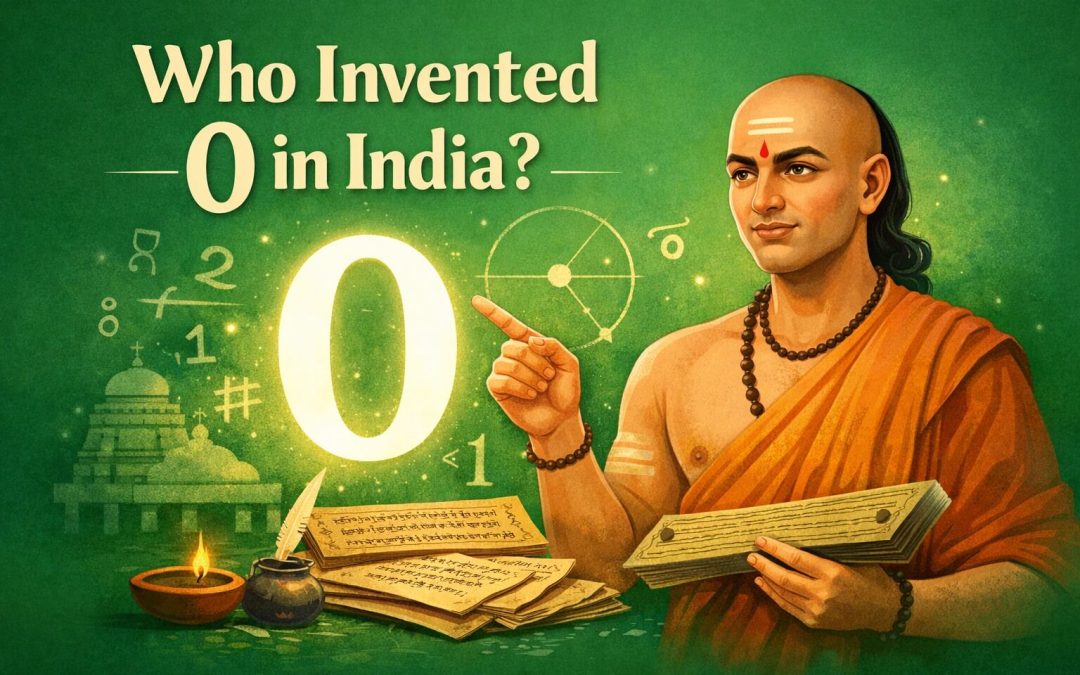
Imagine a world without zero. No calculators, no computers, no modern science. Numbers would be confusing, and even simple calculations would be hard. Zero may seem like “nothing,” but it is one of the most powerful numbers in mathematics. It allows us to count, calculate, and understand the world clearly. The question is: who discovered 0? Or, who gave the concept of zero? The story of zero is not just about a number—it is a story of human creativity, culture, and genius thinkers who changed the way we see numbers.What Is Zero?
Zero means there is nothing or no amount. It is more than just “nothing”—it is a real number we can use in math. Zero has two main jobs. First, it acts as a placeholder in numbers like 102, 305, or 1,007. Without zero, we wouldn’t know if a number is one hundred or ten! Second, zero is a number on its own.
For example, 7 + 0 = 7, 0 × 5 = 0, and 10 − 0 = 10. The importance of 0 in mathematics is huge because it forms the base for dividing numbers, understanding negative numbers, and writing large or small numbers like 1,000 or 0.01. Its role is the base for counting, calculations, and even computers today.
The Origin of Zero – Early Traces in Ancient Civilizations
Zero may seem simple, but its story goes back thousands of years. Different civilizations noticed the need to show “nothing” in numbers, and each created its own way to represent it. Here’s how zero first appeared in history:
Babylonian Civilisation
Around 300 BCE, the Babylonians used a symbol to show an empty place in their number system. They didn’t have zero as a number like we use today, but this symbol helped them avoid mistakes in calculations. It was an early step toward the zero we know now.
Mayan Civilisation
Far away in Central America, the Mayans developed zero around the 4th century CE. They used it in calendars and astronomy to keep track of days, months, and planets. Their zero was shown as a shell-shaped symbol. This shows that even in distant lands, people understood the need to show “nothing” in numbers.
Ancient India
The biggest change came in Ancient India. Indian mathematicians were the first to treat zero as a real number, not just a placeholder. They used it in calculations and discovered its special properties. When we ask which country invented zero, the answer is India. Indian scholars made zero a useful tool in mathematics, helping develop the decimal system we still use today.
Who Invented Zero as We Use It Today?
Two Indian mathematicians are very important in the story of zero: Aryabhata and Brahmagupta.
Many people ask, did Aryabhata invent zero? The answer is Yes. Aryabhata, a mathematician from the 5th century, used zero as a placeholder in his numbers. For example, in the number 102, the zero shows there are no tens. This made writing numbers easier and clearer. However, he did not fully create the rules for using zero in calculations, but his work helped spread the idea. His contributions are remembered as part of Aryabhata contribution in mathematics.
Later, in the 7th century, Brahmagupta wrote the first clear rules for using zero in math. He explained how to add, subtract, and multiply by zero. He even wrote about dividing by zero, which is still tricky today. Because of this, he is called the founder of modern zero.
Some people think Ramanujan invented zero, but that is not true. Ramanujan used the ideas already discovered by Aryabhata and Brahmagupta. The main credit for who invented the number 0 goes to these Indian mathematicians, who made zero more than just a placeholder and turned it into a real number that we use in math today.
How Zero Spread Across the World
Zero started in India, but over time, it traveled to other parts of the world. Different countries learned about it, used it, and made it even more useful. Here’s how zero spread:
From India to the Arab World
Zero reached Europe in the 12th century through Arabic books. At first, many Europeans did not accept it because the idea of “nothing” seemed strange or even risky. Slowly, scholars realized how useful zero was for counting, trade, and science. Over time, zero became widely accepted in Europe.
Introduction to Europe
Zero reached Europe in the 12th century through Arabic texts. At first, many Europeans resisted it because “nothing” seemed strange or even dangerous. But over time, scholars saw how useful zero was for arithmetic, trade, and science. Eventually, zero became widely accepted.
Global Adoption in Scientific Revolution
During the Scientific Revolution, zero became essential for science and technology. Mathematicians, astronomers, and engineers used it for accurate calculations. Zero made complex math possible and became a key part of modern science, technology, and everyday life.
Why Zero Is the Most Powerful Number
Zero is the foundation of the decimal system. It allows us to write very large and very small numbers. Zero helps us understand negative numbers and is used in algebra and calculus. In computing, zero and one form the binary code, which powers computers, smartphones, and AI. This shows the importance of 0 in mathematics and proves that a number representing “nothing” can change the world.
Real-Life Importance of Zero
Zero is everywhere in daily life, and students use it more than they realize. Here are some ways zero is important:
School and Exams
- Helps in math calculations like 50 + 0 = 50 or 100 × 0 = 0.
- Example: Scoring 0 marks in a question still counts and shows what to improve next time.
Time and Schedules
- Helps track class timings and schedules.
- Example: Your timetable shows periods starting at 10:00 AM or 00:30 for online study sessions.
Science Experiments
- Used in lab measurements.
- Example: Water freezes at 0°C, and zero can show no motion in physics experiments.
Computers and Technology
- Powers coding, online learning apps, and games.
- Example: When you play online games or use study apps, zero is used in programming and storing data safely.
Even though it seems like “nothing,” zero is very powerful and makes daily student life easier, from schoolwork to online learning.
Fascinating Facts About Zero
Zero is more than just a number. It has many unique and interesting features:
Zero as a Number
Zero is neither positive nor negative. It is neutral and sits in the middle of the number line, separating positive numbers from negative numbers. For example, 0 is the point between +5 and −5.
Zero in Roman Numerals
The Roman numeral system had no symbol for zero. Without zero, representing large numbers or performing certain calculations was much harder. This shows how important zero is in modern math.
Zero and the Calendar
In the Gregorian calendar, there is no year zero. The calendar goes from 1 BCE to 1 CE. This makes historical calculations tricky, especially when comparing events before and after this divide.
Zero in Language
The word “zero” comes from the Arabic word “sifr”, meaning empty or vacant. It became “zero” in Italian and English. Even the word cipher, used in coding and encryption, comes from “sifr,” showing zero’s role in technology and communication.
Zero in Sports
Zero is used in sports too! In tennis, a score of zero is called “love”, possibly from the French word l’œuf meaning egg, because of the shape of zero. In hockey or soccer, zero can also mean a “shutout,” showing strong defense.
Conclusion
Zero was not created overnight. It evolved over centuries, shaped by many civilizations and brilliant thinkers. From Babylon to India, from the Arab world to Europe, zero changed how humans understand numbers. The smallest number has the biggest impact in math, science, and technology. Asking who discovered 0 or who invented the number 0 reminds us of the genius of our ancestors. Zero shows that even “nothing” can hold infinite possibilities.
FAQs
Who is considered the father of zero?
Brahmagupta is called the father of zero because he created rules for using it in arithmetic.
Why is zero difficult to define?
Zero is unique because it means nothing and is also a number.
How is zero used in computers and digital technology?
Zero, with one, forms the binary code that runs computers and smartphones.
Can zero be positive or negative?
No. Zero is neutral. It is neither positive nor negative.
by Bethany Institutions | Dec 30, 2025 | Blog Recent Post
1. Introduction
Think about the objects you use every day — your notebook, study table, classroom board, door, or even your phone. Most of them have the same shape: a rectangle. Because rectangles are such a common part of our surroundings, learning about them feels familiar and easy.
One useful thing we learn about rectangles is how to find their area. Let’s go through this topic slowly and clearly, just the way it would be explained in class, with examples you can easily relate to.
2. What Is a Rectangle?
A rectangle is a simple shape with four sides and four corners. Each corner is a right angle, which means it measures 90 degrees. Another important point to remember is that the opposite sides of a rectangle are equal in length.
A rectangle has two main measurements: length and breadth (also called width). The length is usually the longer side, and the breadth is the shorter side.
3. What Does “Area” Mean?
In simple words, area means the amount of flat space a shape covers. When we find the area of a rectangle, we are finding the size of the surface inside its four sides. This is why area is always written in square units, such as square centimetres (cm²) or square metres (m²).
To understand this better, imagine placing small equal square tiles on the surface of a rectangle. If you cover the entire surface without leaving any gaps, the number of tiles you use gives you the area of the rectangle.
4. Formula for the Area of a Rectangle
4.1 The Basic Formula
The rule for finding the area of a rectangle is very straightforward:
Area = Length × Breadth
You may also hear teachers say this as length into breadth.
4.2 Why This Formula Makes Sense
The length tells us how long the rectangle is, and the breadth tells us how wide it is. If you imagine the rectangle filled with small equal squares, you’ll see that they are arranged in rows and columns. The number of rows depends on the length, and the number of columns depends on the breadth. Multiplying the length and breadth helps us count all these squares at once.
4.3 Units
Before writing your final answer, always check the units. If both length and breadth are given in centimetres, the area will be in square centimetres (cm²). If they are in metres, the area will be in square metres (m²). Forgetting the unit is a very common mistake, so be careful.
5. Step-by-Step Method to Find Area
You can find the area of any rectangle by following these simple steps:
Step 1: Read the question carefully and note down the length.
Step 2: Note down the breadth (or width).
Step 3: Multiply the length by the breadth.
Step 4: Write the answer along with the correct square unit.
Example:
Length = 8 cm
Breadth = 5 cm
Area = 8 × 5 = 40 cm²
So, the area of the rectangle is 40 square centimetres.
6. Solved Examples
Let’s solve a few examples together.
Example 1
Length = 7 cm, Breadth = 3 cm
Area = 7 × 3 = 21 cm²
Example 2
Length = 12 m, Breadth = 9 m
Area = 12 × 9 = 108 m²
Example 3
A classroom floor is 20 m long and 15 m wide.
Area = 20 × 15 = 300 m²
So, the area of the classroom floor is 300 square metres.
Example 4
Length = 5.5 cm, Breadth = 4 cm
Area = 5.5 × 4 = 22 cm²
7. Real-Life Uses of Rectangle Area
Finding the area of a rectangle is not just for exams. It helps in real life too — like knowing how much paint is needed for a wall, how big a table or book is, how much carpet is required for a room, or how much space is available when planning a garden or classroom seating.
8. Common Mistakes Students Make
Many students lose marks because of small mistakes. Some add the length and breadth instead of multiplying them. Others forget to write square units like cm² or m². Mixing different units, such as centimetres and metres, can also give the wrong answer.
Corrected example:
Length = 6 cm, Breadth = 4 cm
Wrong method: 6 + 4 = 10
Correct method: 6 × 4 = 24 cm²
9. Practice Questions
Try these questions on your own:
- Find the area of a rectangle with length 6 cm and breadth 4 cm.
- Find the area of a rectangle with length 15 m and breadth 10 m.
- A garden is 9 m long and 8 m wide. What is its area?
FAQs
What is the formula for the area of a rectangle?
Area = length × breadth.
Why do we use square units for area?
Because area is found by counting the number of squares that cover a surface.
Can length and breadth be the same in a rectangle?
Yes. When both are the same, the rectangle is called a square.
by Bethany Institutions | Dec 29, 2025 | Blog Recent Post
Adjectives are describing words that make our sentences clearer and more interesting. Students use them every day without even realising it—whether they talk about a tall tree, a kind teacher, or a tasty snack. In this article, we’ll explore the meaning, types, examples, rules, and a short practice exercise.
What Is an Adjective?
An adjective is a word that describes a noun or a pronoun. It tells us more about a person, place, animal or thing.
Why Should Students Learn Adjectives?
- They help add detail and clarity.
- They make your writing colourful and expressive.
- They make stories sound more engaging.
Easy Examples
- a red ball
- a tall building
- a kind person
How do Adjectives Work in Sentences?
Adjectives answer questions like What kind? Which one? How many? They can come before a noun or after a verb such as is, am, are, seems, or looks.
Examples:
- She has a small bag.
- The room is bright.
Types of Adjectives
These adjectives describe the quality of a noun. Words like happy, blue, tall, clean.
Examples:
- The tall tree touched the sky.
- She wore a blue dress.
Quantitative Adjectives (How much / How many)
These adjectives show quantity. Examples: some, many, few, much, several.
Examples:
- He drank some water.
- She has many books.
Demonstrative Adjectives (Pointing words)
Words like this, that, these, those.
Examples:
- This bag is mine.
- Those shoes are new.
Possessive Adjectives
Words showing ownership: my, your, his, her, their, our.
Examples:
- My brother is studying.
- Her puppy is very cute.
Interrogative Adjectives
Question words used before nouns: which, what, whose.
Example:
- Which colour do you like?
Numeral Adjectives
Show numbers or order: one, two, first, second.
Examples:
- I ate two apples.
- She won the first prize.
Indefinite Adjectives
Words like any, each, every, few, several, all.
Example:
- Each student received a badge.
Rules for Using Adjectives
- Adjectives usually come before nouns.
- They can appear after verbs like is, am, are, looks, seems.
- When using more than one adjective, follow the order: size → shape → colour → material.
- Don’t confuse adjectives with adverbs (adverbs describe actions).
Corrected examples:
- She bought cotton blue two shirts.
She bought two blue cotton shirts. - He is looking happily.
He looks happy.
Common Mistakes Students Make
- She is more smarter.
She is smarter. - He has a three red balloons.
He has three red balloons. - This books are heavy.
These books are heavy.
Keep explanations simple and child-friendly to help students remember the rules easily.
Short Practice Exercise
Fill in the blanks:
- She has a ___ dress.
- He bought ___ apples.
- This is ___ book.
Identify the adjective:
4. The tall boy ran fast.
5. I saw three birds.
Make a sentence using any two adjectives.
FAQs
- What is the easiest definition of an adjective?
A word that describes a noun or pronoun. - Can a sentence have more than one adjective?
Yes, you can use more than one adjective to give clearer detail. - How do adjectives make writing better?
They make sentences colourful, clear, and more expressive.
by Bethany Institutions | Dec 23, 2025 | Blog Recent Post
National Mathematics Day is a special occasion that reminds students and readers that ‘Mathematics’ isn’t only about numbers; it can be about curiosity, creativity, or exploration. Celebrated across schools and institutions, it motivates young minds to approach mathematics with interest and confidence rather than fear.
It is a day to remember Srinivasa Ramanujan, one of India’s most brilliant mathematicians, whose birth anniversary is celebrated as National Mathematics Day in India. His remarkable contribution to Mathematics inspires students to͏ pursue learning with ͏passion and determination, showing that challenges can be overcome͏ with dedication and curiosity.
Who Was Srinivasa Ramanujan?
Srinivasa Ramanujan was born on December 22nd, 1887, in Tamil Nadu. From a young age, he showed a deep love for numbers and patterns. While in school, he used to solve difficult problems in his own unique ways, often surprising the teachers.
Despite having limited͏ access to books and formal education, Ramanujan continued teaching mathematics to himself. He filled several notebooks with original ideas, formulae, and observations. His talent finally reached the British mathematician G.H. Hardy, who called him to Cambridge University. Their collaboration brought Ramanujan’s work onto the international podium, where it continues to influence many mathematicians.
Why National Mathematics Day is Celebrated?
The Mathematics Day celebration is dedicated to the marvellous journey and eternal contribution of Ramanujan. His works changed the way mathematicians viewed numbers, series, and patterns. Even today, researchers study his ideas to solve modern mathematical problems.
In 2012, the Government of India officially declared͏ December 22 the National Mathematics Day in India. The purpose was to encourage interest in mathematics among students and recognise the significance of learning mathematics. Schools make use of this occasion to make math fun and relevant, showing students that “math is a subject about discovery, not about difficulty.”
Ramanujan’s Most Famous Contributions
One of the most famous discoveries by Ramanujan is the number 1729. What is so remarkable about this number is that it can be expressed as the sum of two cubes in two different ways. It ͏is often taught to students ͏to show ͏how͏ numbers can have interesting͏ stories behind them.
Ramanujan also discovered many important infinite series and formulas. Though such ideas seem complicated, they actually help scientists and mathematicians to comprehend those patterns that repeat endlessly.
His work on number theory and partitions explained how numbers could be broken down in various ways. His notebooks, filled with ideas written years ago, continue guiding researchers,
Lessons We Learn from Ramanujan’s Journey
Ramanujan’s life gives several lessons to students on how hard work, curiosity, and confidence shape success.
Curiosity and Self-Learning Matters
Ramanujan showed ͏that a strong interest in learning ͏can lead to͏ great achievements. He explored mathematics on his own and learned deeply by asking ͏questions ͏and studying patterns. His journey encourages students to remain curious and enjoy͏ learning beyond͏ textbooks.
Facing Challenges with Courage
Life was not easy for Ramanujan, yet he never gave up on his passion. Despite health issues and limited resources, he continued working with dedication. His story reminds students that difficulties should not stop them from moving forward.
Creative Thinking Develops Confidence
Ramanujan approached mathematics in his own creative way. He believed in his ideas, showing trust in himself. This lesson encourages students to think differently, try new methods, and believe ͏in ͏their ͏strengths͏, even͏ ͏during challenging situations.
How Schools and Students Can Observe Mathematics Day
Mathematics Day can be celebrated in engaging ways that help students enjoy learning while understanding the importance of mathematics in everyday life.
Fun Learning through Activities
Schools can also arrange quizzes, puzzles, and problem-solving competitions to make learning interactive. Such activities help students practice logical thinking in a very light and fun way.
Storytelling and Classroom Discussions
Teachers may narrate incidents from their lives to motivate and inspire their students. A simple storytelling session helps learners relate mathematics to real life and to understand the importance of dedication and curiosity.
Creative Displays and Assemblies
Charts, models, or small exhibitions can be created by the students themselves with relevant mathematical concepts and ideas. Morning assemblies may include short speeches, facts, or inspirational quotes to help everyone understand why Mathematics Day is meaningful.
Fun Facts About Ramanujan
Here are some interesting facts about Ramanujan’s life that will excite children and help ͏them see͏ mathematics as something ͏curious and enjoyable.
Ideas Appeared Like Magic
Ramanujan often said that mathematical͏ ideas came to him͏ suddenly, almost like flashes of thought. He would wake up with new solutions in his͏ mind and͏ quickly write them down.
No Fancy Tools Needed
He did most of his work using simple paper, chalk, and a slate. Even without modern tools or calculators, his ideas impressed the world’s greatest mathematicians.
The Famous Number 1729
One day, Ramanujan astounded everybody by explaining why the number 1729 was special. Students to this day learn about this number as a light-hearted example of how numbers can have stories behind them.
Notebooks Full of Secrets
His notebooks were filled with thousands of handwritten formulas. Most of these were understood many years later, exemplifying just how advanced his thinking was.
FAQs
When is National Mathematics Day celebrated?
It is celebrated every year on 22nd December to honour the birth anniversary of Srinivasa Ramanujan. Students often ask when Math’s Day is celebrated, and this date is remembered across schools.
Why is Ramanujan important to mathematics?
He made groundbreaking discoveries in number theory and infinite series that still guide modern mathematics.
Why do schools celebrate Mathematics Day?
Schools celebrate the day to motivate students and make learning fun, while acknowledging Ramanujan’s contribution.
What activities can the students carry out on Mathematics Day?
Math quizzes, riddles, games, storytelling, competitions, and group games are some of the commonly used techniques.
What is special about the number 1729?
It is known as the Hardy–Ramanujan number. Many students learn about it while discussing Math’s Day is celebrated on December 22, making the concept easier to remember.