To learn more or apply for admissions in the academic year 2026–27. Click here
To learn more or apply for admissions in the academic year 2026–27. Click here
To learn more or apply for admissions in the academic year 2026–27. Click here
To learn more or apply for admissions in the academic year 2026–27. Click here
To learn more or apply for admissions in the academic year 2026–27. Click here
To learn more or apply for admissions in the academic year 2026–27. Click here
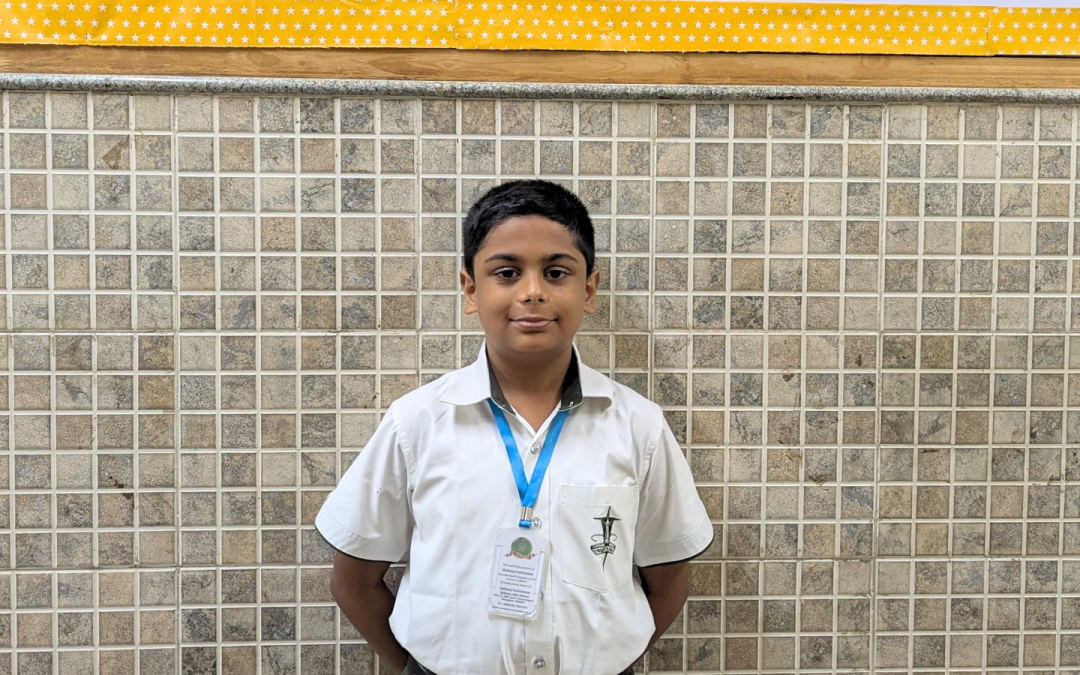
On his 11th birthday, Daivik SK, a student from class 5E, made a heartwarming gesture that touched the entire school community. Choosing kindness over celebration, Daivik decided to donate 5,000 rupees to Bethany Special School instead of having a traditional party. This decision reflected his deep compassion and desire to make a difference in the lives of children with special needs. This act of kindness by a young student has not only inspired his classmates but has also set an example of the impact that one can have, regardless of age.
Bethany Special School, established with the noble objective of supporting differently-abled children, strives to equip its students with the skills they need to live independent lives filled with grace and dignity. The school focuses on both academic and vocational training, ensuring that every student is prepared for a future where they can thrive independently. Daivik’s donation is a testament to the school’s mission and highlights the importance of community involvement in supporting such causes.
In addition to his selfless nature, Daivik is a talented young boy with a wide range of hobbies. He is in the fifth standard at Bethany and enjoys singing, drawing, and bird watching. However, his favourite pastime is playing the piano, where he spends much of his free time honing his skills. His love for music and nature reflects a well-rounded personality, and his recent gesture showcases a maturity beyond his years.
Daivik’s selflessness and thoughtfulness have left an indelible mark on his peers and the school. His actions serve as a powerful reminder of the importance of giving back to those in need and the impact that kindness over celebration can have on the world around us.
The Bethany High Sarjapur Annual Sports Meet was held on 9th August 2024 with great pomp and fervour, showcasing a spectacular display of athletic prowess, camaraderie, and school spirit. This year’s sports meet also attracted a large crowd, with enthusiastic students from over 15 different schools participating in the inter-school events.
The event commenced with a vibrant march past, featuring students from various grades representing their respective houses. They marched in unison to rhythmic beats, accompanied by enthusiastic cheers from their peers. The Chief Guest for the day, Mr. Bipin Fernandez, a former international hockey player and now an FIH-certified coach, alongside his wife, Mrs. Josephine Sequeira, declared the sports meet open to thunderous applause from the audience.
The athletic field was transformed into a lively arena as students showcased their talents across various track and field events. From exhilarating races to tests of strength and endurance, every participant displayed remarkable skill and determination. The crowd was kept on the edge of their seats, witnessing nail-biting finishes and cheering for their respective teams and schoolmates. Adding to the excitement, there were also vibrant displays by the students, which added a splash of colour and energy to the Bethany High Sarjapur Annual Sports Meet.
Medals and certificates were awarded to the winners of the various events, while trophies were presented for individual championships, the fastest girl and boy, march past, discipline, and overall championship. The meet concluded with a heartfelt message from the chief guest, who emphasised the importance of sports in fostering teamwork, resilience, and discipline among students.
The Bethany High Sarjapur Annual Sports Meet was a resounding success, thanks to the combined efforts of the students, teachers, and staff. It was a day filled with pride, joy, and unforgettable memories, truly reflecting the spirit and dedication of everyone involved!
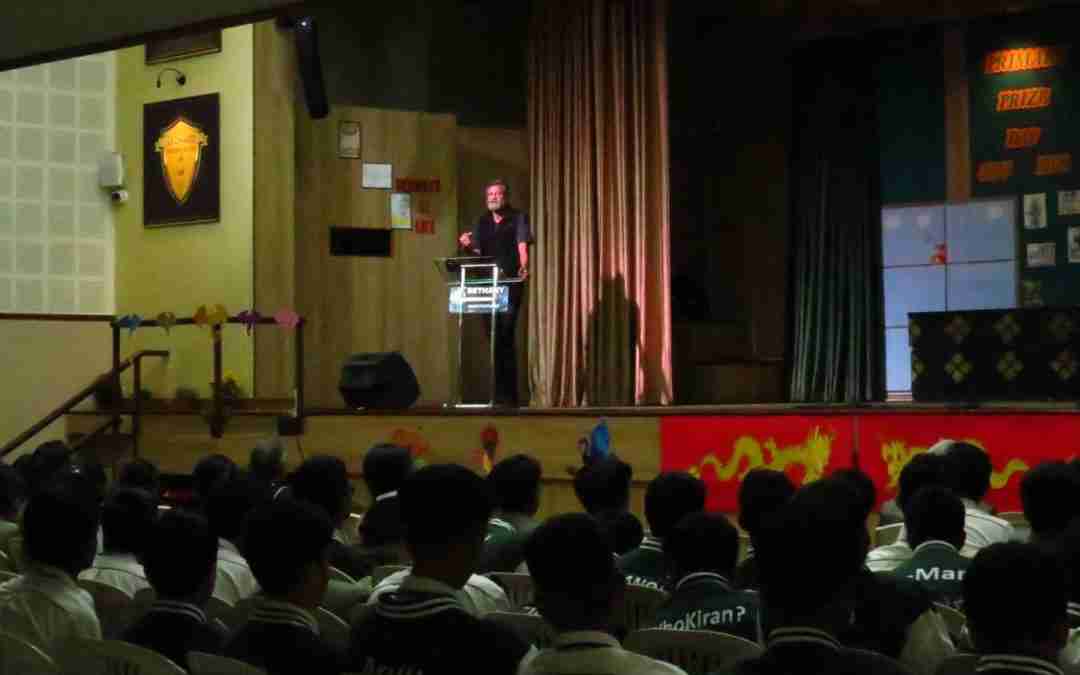
On August 5th, the Counselling department, in collaboration with the Junior College, organized a career talk for High School, Junior College, and NIOS students, as part of the Junior College series on careers. The session featured an insightful presentation by Thomas Dal, a renowned transportation designer and educator, who provided valuable insights into career opportunities in design. With over 30 years of experience in the design industry, Thomas was approached by the Strate School of Design Paris to set up and run the Asian branch of the Strate School of Design in Bangalore. Having played a pivotal role in shaping design education, Thomas spoke about the nature of design, the design process, required skills, industry trends, and future directions in his insightful talk.
Thomas detailed the design process, from market research to manufacturing, and discussed essential skills such as empathy, business understanding, and teamwork. He identified key trends, including sustainability, AI, and a 360-degree approach to design. His discussion highlighted the evolving nature of design careers and the impact of cultural and economic factors on career choices and job stability. The goal was to prepare for a future where design, technology, and empathy converged to create impactful and meaningful products.
At the end of the session, the students engaged with the speaker by asking questions. They enjoyed the talk and gained valuable insights from Thomas Dal, making it an interactive and enlightening experience.
About the Speaker
Thomas Dal is a trained transportation designer from Institut Superieur de Design ISD -France where he graduated best overall in 1999, with jury and industry felicitations. He also graduated from EAPLV (Paris) as naval architect in 2006, and has built many yachts everywhere in the world.
After working for a decade in the car industry, developing more than 60 cars projects for many European car makers, Thomas re-oriented his career towards education by starting from scratch the successful DSK-Rubika school of design in 2008. In 2011, Thomas quit DSK-Rubika to go back to France and start working for the Decathlon group as Director of Design and Innovation.
In 2017, the Strate School of Design Paris approached Thomas to open and run the Asian branch of the Strate school of design in Bangalore.
Driven by this challenge and understanding that the future of the world depends on education, this international multiple design award winner, grabbed the opportunity to come back to India and to enter the field of education in order to become a “designer of designers” and to set up the best design school of INDIA: Strate School of Design Bangalore.
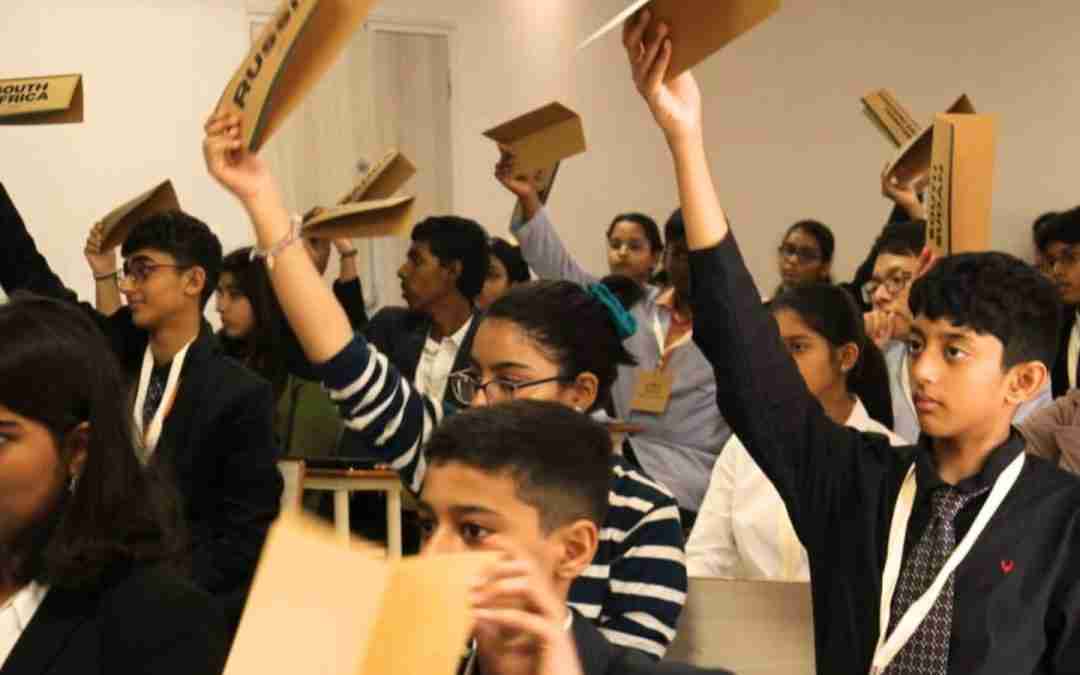
Bethany Institutions hosted its third edition of BJCMUN on the 5th and 6th of July, 2024 at the Koramangala campus. With over 275 delegates from the leading schools all over Bengaluru, BJCMUN 2024 set a benchmark only a few conferences can match. We witnessed challenging and engaging debates and deliberations, where the delegates lobbied hard for resolutions and performed to the best of their abilities.
The past thirty years have seen an incredible amount of international climate legislation passed. whether it’s the Kyoto Protocols in 1997, the Paris Agreement in 2015, or even more recent bilateral agreements. BJCMUN was committed to reflect the international community’s growing interest in the environment. To not just talk the talk, BJCMUN was themed ‘MUN for the Planet’ both inside and outside the committee room.
BJMCUN’s sustainable stationery and delegate kits were a significant step towards enacting tangible results that benefit the environment and the community around us.
The six committees BJCMUN hosted this year were the Disarmament and International Security Committee, the United Nations High Commissioner, the United Nations Office on Drugs and Crime, the United Nations Security Council, the Italian Mafia and the All India Political Parties Meet.
The event commenced with an opening ceremony attended by the chief guest, Mr. George Ollapaly, the Director, Dr. Akash Ryall, the Bethany Board Members and the Principal, Mr. Robert Khin. The Secretary General, Omkar Mantri, Bethany alumnus declared the conference open which paved way to deliberations, collaborations and embracing diverse perspectives. In its closing ceremony, the Chief Guest, Ms. Chandini Chhabra from Liana Forest farm enlightened the audience on the need for sustainable solutions to problems that threaten our lives and the planet alike.
BJCMUN believes that true progress emerges from stepping into different viewpoints – which is the very bedrock of how Model UN works.
With an impressive Executive Board and with their years of experience, BJCMUN has kept its promises to offer all its delegates a meaningful conference and an enriching experience. The conference concluded on the 6th of July with MUNWALA adjudged as the Best Delegation.
On July 16th, 2024, renowned architect and designer Dilip da Cunha shared his groundbreaking ideas on place, design, and sustainability. As someone deeply involved in transforming spaces and teaching design studios, his perspective on the intersection of climate change and social injustice is both timely and transformative. In his lecture he challenges conventional understandings of rivers, flooding, and our relationship with water. Through a deep dive into historical, geographical, and social contexts, da Cunha’s ideas invite us to rethink how we perceive and interact with our environment.
Redefining Place in the Modern Context
Da Cunha starts by challenging our understanding of “place.” Traditionally seen as an established space, he broadens this concept to encompass the entire planet. He asks, “As a designer, what is my role on the planet?” His answer is clear: “I design place.” He emphasizes the importance of grounding our world in time, allowing natural elements like rain to have their place, and working with the rhythms of nature, such as clouds and aquifers.
Surface and Line: The Building Blocks of Construction
In the realm of land and water, surface and line play crucial roles. Da Cunha describes surfaces as depthless areas and lines as breadthless lengths—fundamental devices we learn in school. However, he challenges us to reconsider how we establish and measure these surfaces. The conflict between surface and line has become evident due to climate change, driven by human exploitation and resource abuse.
Rethinking Floods and Rivers
Da Cunha begins with a simple yet profound statement: “Rivers flood when water crosses a line that I have drawn.” This line, an arbitrary boundary imposed by humans, defines what we consider a flood. He contrasts this with the natural, cyclical expansion of rivers like the Nile, which historically flooded vast floodplains without the rigid boundaries we associate with modern flooding. The Egyptians, he notes, lived within the river’s fluctuations, building high grounds amidst the floodplain rather than on its banks. This dynamic relationship with water is lost in our contemporary understanding, where rivers are contained, controlled, and their natural rhythms disrupted.
The Nile: A case study
Da Cunha’s exploration of the Nile provides a historical lens to understand how our perceptions of rivers have evolved. In ancient Egypt, the Nile’s annual flooding was a source of life and fertility, a natural phenomenon that shaped their civilization. However, when Herodotus asked the Egyptians about the Nile’s flooding, they had no clear answer, as they did not perceive the river in the same way the Greeks did. To them, the river’s expansion during the flood season was as natural as its contraction during the dry months. This observation underscores a fundamental shift in how different cultures understand and interact with natural phenomena.
Rivers, Rain, and Colonization
Da Cunha argues that the concept of a river as a fixed entity has colonized the more fluid, dynamic understanding of rain. He distinguishes between the Ganges (a river) and the Ganga (a phenomenon of rain), highlighting how colonial and modern perspectives have imposed rigid definitions on natural processes. This imposition has led to environmental degradation and social injustice, as communities traditionally dependent on rain cycles are forced to adapt to artificial constructs like rivers and dams.
Addressing Local Issues: Bangalore’s Water Challenges
Peninsular Gneiss is one of the oldest rock formations in India, dating back over 3 billion years. Bangalore, situated on peninsular Gneiss, has unique challenges with its water bodies and clay economies. He attributes the problem to exploration and improper treatment of low grounds. Covering drains leads to clogging, resulting in floods. He advocates for treating low grounds as valuable spaces that can be cultivated with grass, and not just seen as “lowly gutters”.
Using Bangalore as a case study, da Cunha illustrates the consequences of designing urban landscapes around the concept of rivers. Bangalore, historically reliant on rainwater harvesting through tanks and embankments, now faces severe water shortages due to the destruction of these traditional systems. The city’s current reliance on piped water from distant sources like the Cauvery River exemplifies the unsustainable nature of this approach. Da Cunha emphasizes the need to revert to rain-based water management systems, recognizing the intelligence of ancient practices that harmonized with natural water cycles.
The Interplay of Climate Change and Social Injustice
Da Cunha’s discourse extends to the broader implications of climate change and social injustice. He highlights how marginalized communities, particularly in formerly colonized regions, bear the brunt of climate impacts. These areas, already grappling with the legacy of colonization, face exacerbated challenges as climate change disrupts traditional agriculture and livelihoods. The migration of affected populations seeking better prospects underscores the urgent need to address both environmental and social inequities.
A Call for New Beginnings
Da Cunha’s lecture resonates with a call for new beginnings, urging the next generation to reimagine their relationship with the environment. He challenges us to move beyond the conventional spatial understanding of place, advocating for a temporal perspective that embraces the interconnectedness of our world. By recognizing the planet as our collective place, we can foster a holistic approach to design and sustainability.
Conclusion
Dilip da Cunha’s insights compel us to reconsider our definitions of rivers, floods, and our broader environmental interactions. His emphasis on rain-based systems, historical context, and the interplay of climate change and social injustice offers a comprehensive framework for rethinking our approach to environmental design. As we navigate the challenges of the 21st century, da Cunha’s vision of living between clouds and aquifers provides a compelling alternative to the river-centric paradigms that have dominated our thinking about the social issues of our time.
Maya Angelou said, “You can’t use up creativity. The more you use the more you have.” At Bethany, we believe that once the creative spark is ignited in a child, it is a gateway to unlimited creative possibilities and uncharted paths.
Bethany High has always been at the forefront of innovative education, the iCreate program is a perfect example of this. This unique initiative aimed to engage a large number of students from the Primary, Middle, High school and the NIOS departments. The program enkindled their inner creativity and helped students identify the potential hidden within them.
Bethany High School is the first school in Bangalore to organise such an experience for its students. From the 10th of June to the final performance on 14th June, the students were engaged in understanding and appreciating the creative arts from professionals in their respective fields.
A Week of Artistic Exploration
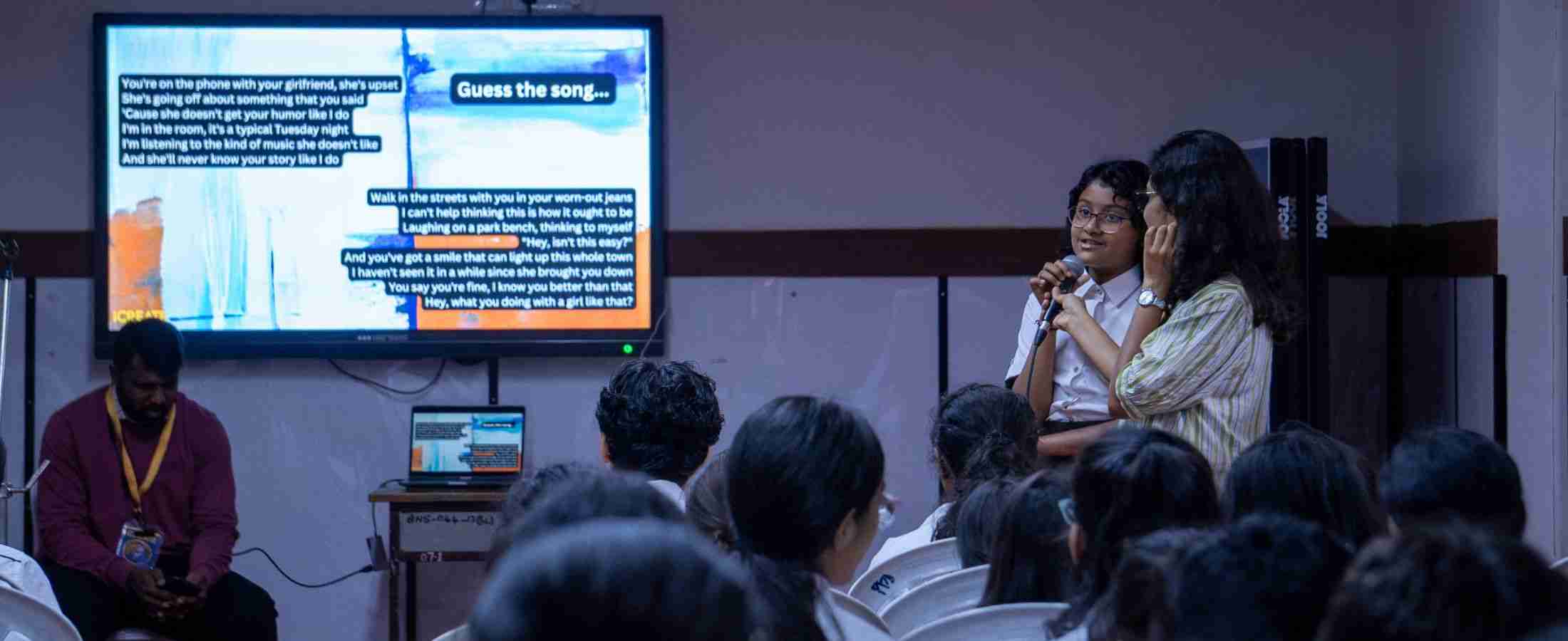
The students and parents chose a suitable creative stream through a form sent to each child prior to the program. Each department was allotted a time where they had an engaging interaction in the auditorium followed by small group learning. The students were divided into 120 groups across five creative streams: Art, Dance, Creative writing, Song writing, and Film making. With 60 minutes dedicated daily, for a period of five days, the program provided a safe space for students to identify and explore their creativity.
A Celebration of Individual and Group Expression
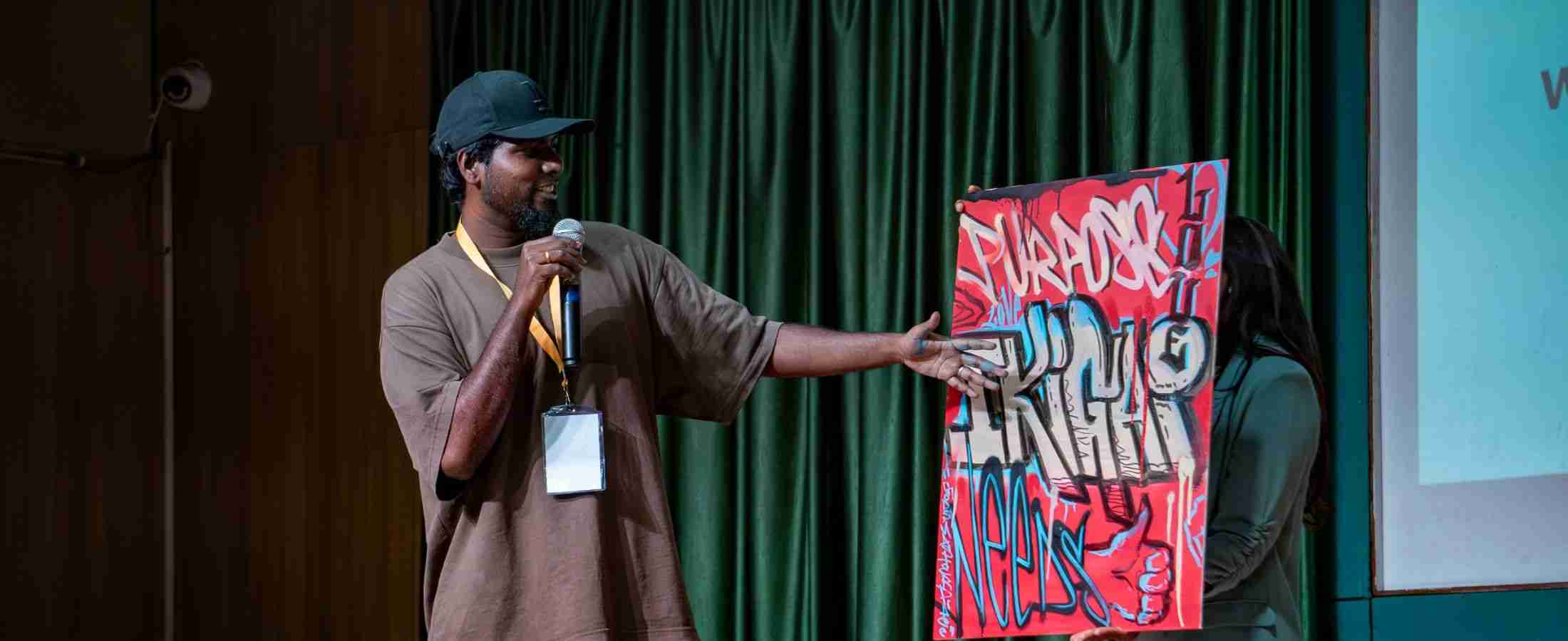
The culmination of the week was a grand presentation where the best work from each stream was showcased. Over 16 original songs, 12 short films, and countless paintings, colourful artwork, synchronised choreography segments, inspiring poems, powerful stories, and amusing essays were created. It was a testament to the power of iCreate in igniting students’ imaginations.
Stepping Outside Their Comfort Zones
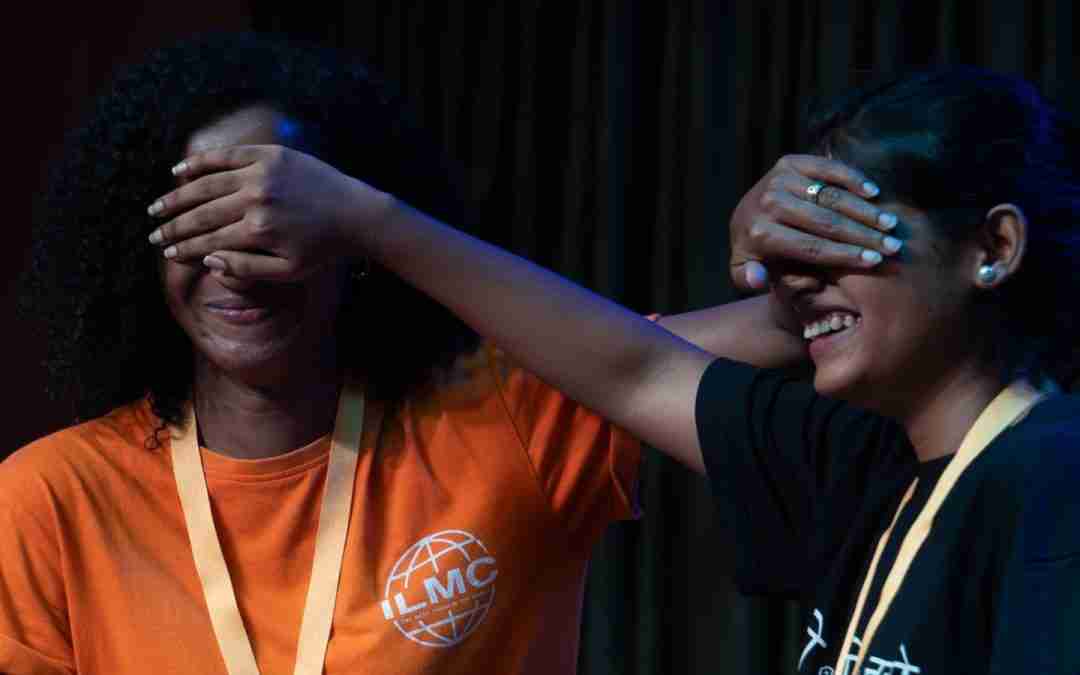
One of the most heart-warming aspects of iCreate was seeing students who might typically shy away from public performances come alive. The program fostered a sense of inclusivity, where everyone had the opportunity to sing, dance, explain their artwork, or recite their creations. It was a week that celebrated every student’s unique talents.
A Collaborative Effort
The success of iCreate goes to the visionary leadership of Miriam Joshua, founder of iCreate (VOH Culture), and the talented team of facilitators.
Award-winning filmmaker Mark Samuel, singer-songwriter Prakruthi Angelina, writer Susan Narjala, and a host of other artists, dancers, and photographers along with 25 volunteers, all played a crucial role in mentoring and guiding the students in finding their own unique voice.
iCreate was a resounding success, showcasing the potential of creative expression in education. It provided a platform for students to explore their talents, collaborate with peers, and step outside their comfort zones. The exposure to the creative arts ignited in the students a desire to be original and hone their unique talents and creative skills. At Bethany, we sow seeds today to create the musicians, songwriters, dancers, filmmakers and the artists of tomorrow…