

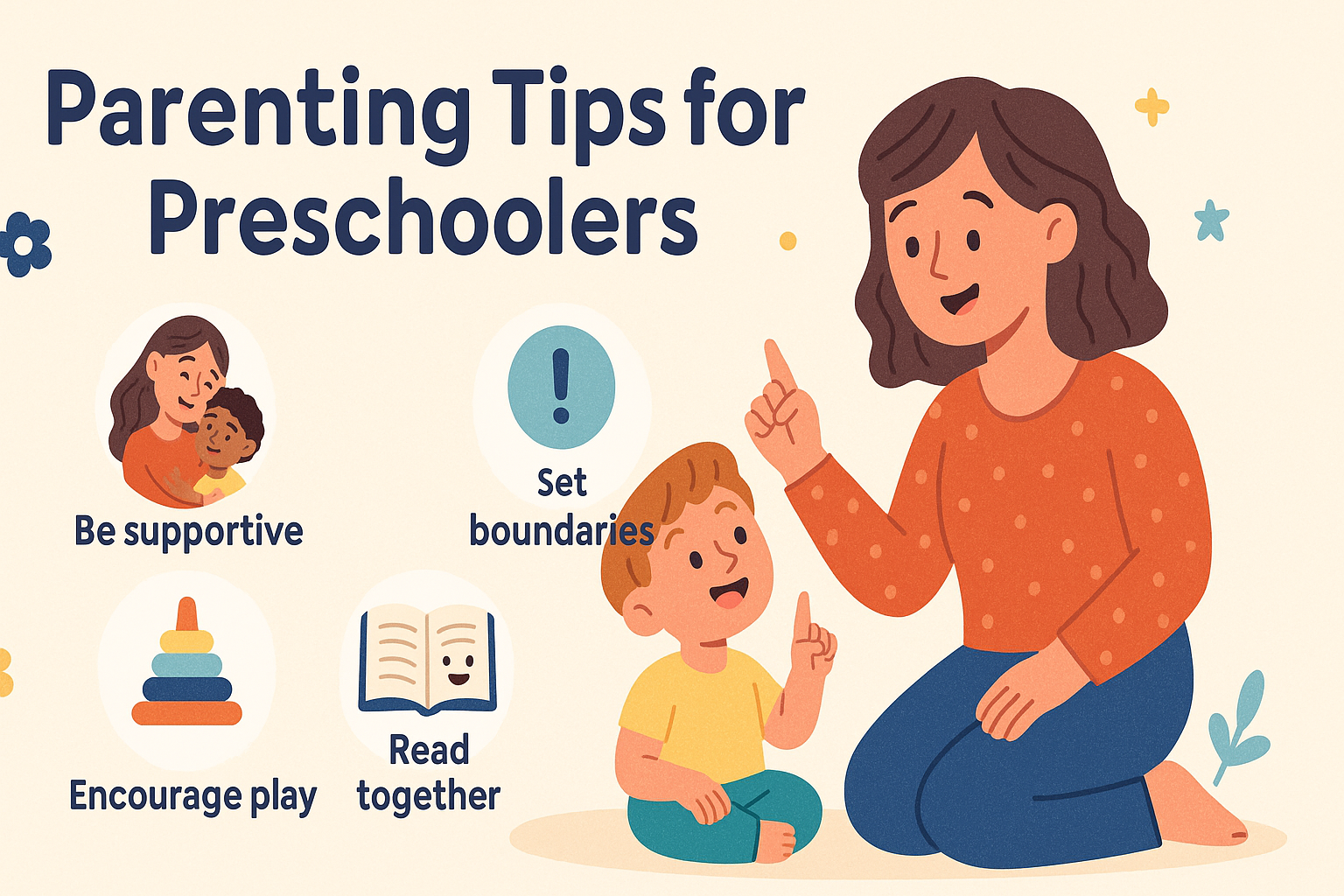
What is Parenting?
Parenting is a process of caring for young minds (Preschoolers – 3 to 6 years) to help them to grow and learn holistically. It involves commitment and dedication in a variety of skills setting the stage for success, not perfection. Parenting is a vital responsibility that shapes the future of the upcoming generation. It encompasses five essential elements of parenting (express care, share power, provide support, expand possibilities and challenge growth), emphasizing the holistic development of a child’s physical and mental well-being.
Parenting Styles
It is the general manner in which parents communicate expectations to their children. Parents develop their parenting styles from their own experiences growing up, their own personalities and influences from society and media. Realistic expectations of parents provide a supportive environment where a preschooler can thrive, learn and grow into a responsible adult. Preschoolers can benefit with this parenting approach as they will grow a strong bond with their parents, develop higher self-esteem and will be able to adapt to the new learning environment at their preschool.
Why Parenting is more important at preschooler age?
As compared to the other periods of life, the preschool years of a child are very important due to fast growth & development in all domains. They develop necessary skills for physical, cognitive and social development in these years. By the time a child is six years old, 90% of brain development has taken place.
Benefits of Positive Parenting for preschoolers:
The journey of parenting is both a privilege and a responsibility. The benefits of positive parenting can be seen through the strengthened relationship between the parent and child based on respect and effective communication.
Ø Teaching healthy emotional regulation.
Ø Providing opportunities for learning.
Ø Being a good role model.
Ø Helping them face their fears.
Ø Letting them make mistakes.
Ø Encouraging them to talk.
Ø Helping them learn problem solving.
Positive Parenting Tips for Preschoolers:
Home Environment:
Ø Assign age related chores. Take the help of the child in housework.
Ø Make them independent.
Ø Set do’s and don’ts for the child.
Parental Involvement:
Ø Playing with your child daily will develop team building skills.. Through play the child also learns turn taking and develops a sportive spirit. Taking the child to the park is a wonderful way to spend quality time as a family.
Ø Free play monitored by parents.
Ø Avoid comparisons and judgements.
Ø Teach your child to be independent, to grow up confidently. Avoid over protecting the child. However, let them be dependent on parents for meeting emotional needs.
Ø Praise desired behaviour when your child does something good thus building confidence.
Ø Help your child to come up with solutions to problems around them thus helping develop reasoning skills.
Ø Set clear boundaries and let them know the consequences.
Structured Routine:
Ø Limited gadget and screen time
Ø Monitor the diet of a Preschooler. Avoid junk and sugary food stuff. Have at least one meal a day with your child, helping them understand the importance of including vegetables and fruits in their diet.
Ø Establish a regular schedule for naps, bedtime, and wake-up time for your child. Preschoolers are recommended to get 10 – 12 hours of sleep daily, including naps.
Activities for Daily Living (ADL):
Ø Exposing the child to their surroundings.
Ø Involve the child in simple day to day chores.
Ø Teach your child how to respond to strangers and what to do if they get lost in a crowd or at a mall. Make sure they know their address, parents’ phone numbers, and how to seek help from a responsible person, such as a security guard or a police officer.
Develop Social and Emotional Skills:
Ø Set reasonable expectations and goals for the child.
Ø Allow choices like dressing or feeding themselves.
Ø Foster social skills, playdates and sharing.
Ø Avoid sleep overs at a young age unless there is an emergency.
Ø Teach your child to label his / her emotions. For eg: “ Dad I am sad ”.
Listening and Communication skills:
Ø Let them ask for what they want rather than providing them beforehand.
Ø Read a story book to enhance listening skills and create a situation for reasoning.
Ø Encourage your child to voice out and express his or her feelings.
Ø Listen to your child without interrupting. Put down distractions and listen & connect with your child.
Ø Practice communication by talking in complete sentences and use better vocabulary to develop good language skills.
Ø Encourage conversation by asking open ended questions.
Preparing your child for Kindergarten
- Independence / Life skills: Prepare the child for the activities for daily living (ADL Skills) like eating, recognize & differentiate the belongings, toilet training, boundaries, moral values, sleeping, routine, meet their needs independently.
- Social & Emotional: Social interaction, adaptations in a social setup, express their feeling and understand others emotions, sharing, caring, love for pets and other environmental adjustments.
- Expressive language: Encourage the child to communicate their needs in a complete sentence, read a story and ask the child to recall and retell the story.
- Physical Stamina: Perform simple workout exercises like jumping jacks, stretching and jogging with children are ways to improve stamina, ultimately it will cater to their physical fitness. Provide healthy meals including plenty of fruits, vegetables and multigrain for improving a child’s stamina. Make sure the child drinks plenty of water. Plan a structured co-curricular activity. Make a regular sleep routine.
- Mental Wellbeing: Good mental health allows preschoolers to think clearly, develop socially. Unconditional love from the parents will enhance the mental wellbeing of the child. Listening to your child narrating about their day will help them understand sequencing of events and vocabulary in a safe environment. The child will be able to face challenges and adapt to the changes he faces as he/she grows up.
Conclusion:
Every parent wants the very best for their child. Parenting the preschoolers is definitely an important time in one’s life. Involving parents to refine their young one’s social skills and to build foundation for their future learning. This will ensure parents feel confident that their preschooler is ready to move forward in life.