by Bethany Institutions | May 21, 2025 | Blog Recent Post
What is the Montessori Teaching Method?
When we first heard about the Montessori method,we’ll admit—we were intrigued. What made it so different from the usual preschool teaching methods we all grew up with? As we dove deeper, we realised that Montessori education is all about respecting the child as an individual. This method, developed by Dr Maria Montessori over a century ago, is not just a teaching style—it’s a philosophy.
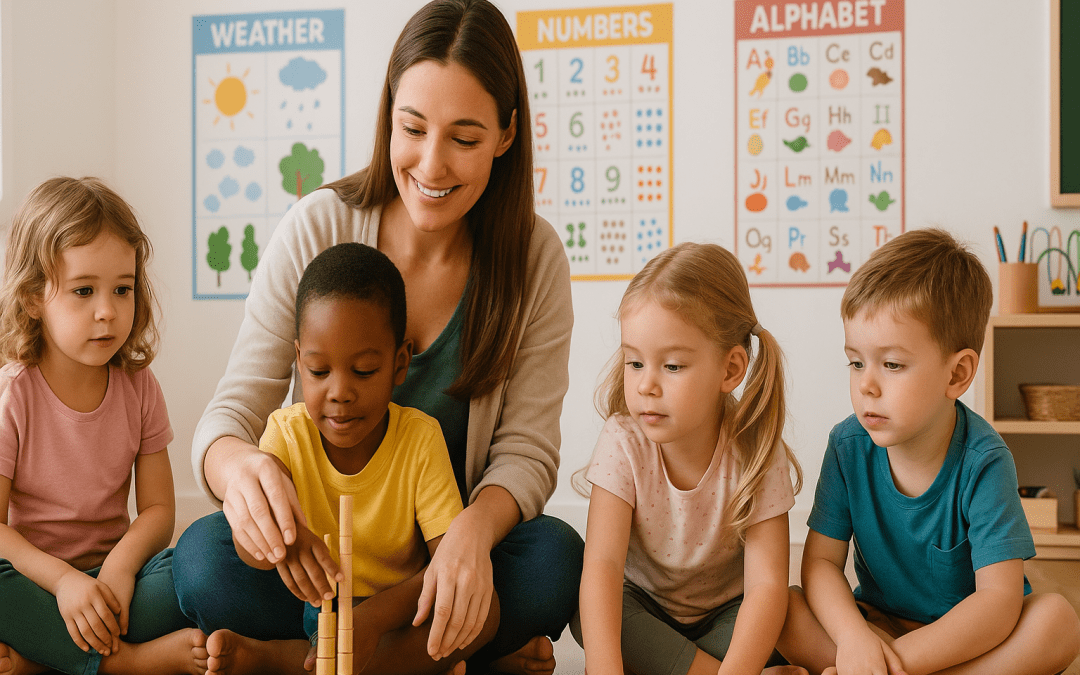
In essence, Montessori education focuses on child-centred learning, encouraging young learners to explore, discover, and develop at their own pace. Instead of one-size-fits-all instructions, children are free to choose activities that match their interests and developmental stage. In a Montessori classroom, learning isn’t something that happens to the child—it’s something they experience.
Core Elements of the Montessori Method in Bangalore’s PreSchools
Now, when we talk about Montessori education in Bangalore, it’s worth noting how well this approach has been embraced across the city. Several Montessori schools in Bangalore follow the authentic methodology, with beautifully structured environments designed to stimulate independent learning.
Some of the core elements you’ll typically find include:
- Prepared environments – where everything is child-sized and accessible, from the shelves to the learning materials.
- Mixed-age classrooms – allowing older children to mentor younger ones, and younger ones to learn from their peers.
- Trained Montessori teachers – who act more as guides than traditional instructors.
- Freedom within limits – where children choose their work but still operate within a set framework.
These elements together support early childhood development in Montessori schools, helping children blossom socially, emotionally, and academically.
How the Montessori Method Promotes Independence and Confidence
One of the most beautiful outcomes I’ve witnessed in Montessori classrooms is the sheer confidence children develop. From the moment they enter, they’re encouraged to do things on their own—be it buttoning their coats, pouring water into a glass, or choosing what they’d like to learn that day.
This sense of control gives children a feeling of ownership over their learning. Over time, this builds not just independence, but also a quiet self-assurance. They don’t just learn facts—they learn how to think, make decisions, and navigate challenges. Isn’t that what we all want for our little ones?
Montessori Learning Materials and Their Role in Child Development
If you’ve ever walked into a Montessori classroom, you might’ve noticed those colourful, tactile tools neatly arranged on shelves. These aren’t just toys—they’re carefully designed Montessori learning materials aimed at stimulating specific areas of development.
Each material is self-correcting. That means if a child makes a mistake, the design of the activity helps them realise and fix it themselves, without adult intervention. For example, a simple set of wooden cylinders helps children understand dimensions, sequencing, and coordination.
This type of hands-on learning in Montessori schools supports cognitive development, fine motor skills, and problem-solving abilities—all through play and discovery.
Benefits of Montessori Education in Preschool Years
Having seen the benefits of Montessori education firsthand, I can confidently say it lays a strong foundation for a child’s future. Here are just a few ways it helps:
- Fosters independence and responsibility
- Encourages curiosity and a love for learning
- Improves focus and concentration through self-directed tasks
- Builds social skills in a respectful, collaborative setting
- Supports emotional development through gentle guidance
Unlike traditional teaching methods, the Montessori curriculum and materials aim to develop the whole child—academically, socially, and emotionally.
Why Montessori PreSchools are Popular in Bangalore
With parents in Bangalore increasingly looking for holistic education models, it’s no surprise that Montessori preschools in Bangalore have gained popularity. The city is home to several well-established institutions that offer an authentic Montessori experience.
Many parents tell me they appreciate how these schools nurture children’s creativity, encourage them to question and explore, and respect their pace of growth. In a city that’s fast becoming a hub for education and innovation, the Montessori method fits right in.
Montessori Trained Teachers and Their Role
The teacher—or as we like to call them in Montessori, the guide—plays a crucial role. Unlike in traditional settings where the teacher is the centre of the classroom, Montessori educators step back to allow the child to take the lead.
Montessori preschool teacher qualifications include specialised training that helps them observe, assess, and gently support each child’s learning journey. They don’t lecture or instruct—they guide, model, and inspire.
This approach builds a warm, respectful relationship between the child and the adult, which, I believe, is fundamental to any learning environment.
Montessori in Comparison to Traditional Preschool Teaching Methods
So how does Montessori stack up against conventional preschool methods? Here’s a quick comparison from my perspective:
| Feature | Montessori | Traditional Preschool |
| Teaching Style | Child-led, exploratory | Teacher-led, structured |
| Curriculum | Flexible, interest-based | Fixed syllabus |
| Classrooms | Mixed-age groups | Age-segregated |
| Role of Teacher | Guide/Facilitator | Instructor |
| Assessment | Observational | Standardised testing |
This isn’t to say traditional schools are “bad”—every method has its place. But if you value child-centered education in Bangalore, Montessori offers a nurturing, flexible, and thoughtful alternative.
Choosing the Right Montessori PreSchool in Bangalore
Looking for the right Montessori school can feel overwhelming with so many options in the city. Here are a few tips I’d suggest:
- Visit the school – Observe the classrooms, look for authentic Montessori materials, and see how the teachers interact with the children.
- Check teacher qualifications – Ensure they are Montessori certified.
- Look for a prepared environment – It should feel calm, organised, and child-friendly.
- Ask about the curriculum – A genuine Montessori curriculum is broad, balanced, and age-appropriate.
- Talk to other parents – Their experiences can provide valuable insights.
If you’re exploring options, do have a look at our list of Pre-Schools in Bangalore where we’ve featured schools that follow diverse approaches, including Montessori.
FAQs
What is the Montessori teaching method?
It’s a child-centred educational approach where children learn through hands-on activities and guided exploration, rather than traditional instruction.
How does Montessori education benefit preschoolers?
It builds independence, nurtures curiosity, improves concentration, and helps children develop socially and emotionally.
What are Montessori learning materials, and how do they help children?
These are specially designed tools that promote hands-on learning. They are self-correcting and support sensory, motor, and cognitive development.
How do Montessori schools differ from traditional preschools?
Montessori schools focus on self-paced, interest-based learning with minimal adult interference, whereas traditional preschools often rely on structured lessons and direct instruction.
Conclusion
If you ask us, Montessori education is more than just a method—it’s a mindset. It sees the child not as an empty vessel to be filled, but as a capable, curious individual ready to discover the world. Especially in a bustling city like Bangalore, where we sometimes forget to slow down, Montessori offers a beautiful reminder to trust the child’s natural rhythm.
So, if you’re a parent on the lookout for a preschool that nurtures independence, curiosity, and lifelong learning, the Montessori learning approach in Bangalore might just be the perfect fit for your little one.
by Bethany Institutions | May 21, 2025 | Blog Recent Post
We’ve all been there—cramming the night before an exam, trying to remember definitions, dates, and formulas that we may never use again. At Bethany High, we believe it’s time to break free from this outdated pattern and bring real change to how assessments are conducted. That’s why we’re so passionate about revolutionizing education assessments with a focus on practical exams vs memorization.
Introduction: The Flaws of Traditional Memorization-Based Exams
For years, our education system has prioritised rote learning. While this may help in scoring marks, it rarely translates into meaningful understanding or real-world skills. Traditional exams often test a student’s ability to recall rather than apply knowledge, leaving little room for critical thinking or problem-solving skills.
We’ve seen firsthand how this approach can limit creativity, dampen curiosity, and stress out our students. The pressure to memorise instead of truly learn often turns education into a race rather than a journey.
Why Practical Scenarios are More Effective for Learning
Imagine students not just reading about how a chemical reaction works, but actually conducting the experiment. Or envision them solving a real-world business problem instead of writing an essay on market theories. This is the power of experiential learning.
Practical exams tap into active learning—where students are engaged, involved, and more likely to retain information. When assessments reflect real-life situations, students understand not just the “what” but the “why” and “how” behind concepts.
How to Implement Practical Scenarios in Exams
Moving away from memorisation doesn’t mean discarding all traditional methods. It’s about finding a balance that better serves our students. Here’s how we can integrate hands-on learning into the way we assess:
- Project-Based Assessments: Allow students to work on long-term projects that require research, analysis, and presentation.
- Open-Ended Questions: Rather than asking for definitions, pose questions that require application and reflection.
- Collaborative Tasks: Encourage teamwork and peer-to-peer learning with group assessments.
These approaches foster student engagement and align with student-centred assessment models that are growing popular across modern educational frameworks.
Benefits of Practical Exams for Students and Educators
When we incorporate practical scenarios into exams, we’re not just making assessments more enjoyable—we’re making them more effective. Some of the standout benefits include:
- Stronger Retention: Students remember concepts better when they apply them practically.
- Greater Engagement: Practical tasks feel more relevant and exciting.
- Improved Learning Outcomes: Problem-solving and critical thinking become part of the assessment.
- Better Preparation for Life: Students gain skills that prepare them for careers, not just tests.
From an educator’s point of view, assessing students through problem-solving assessments also provides deeper insight into their learning process.
Case Studies of Successful Implementation
Several schools and curricula across India are already embracing these methods. Take the ICSE curriculum, for instance. It often includes internal assessments that value practical application—be it in Science, Computer Studies, or even English projects.
At Bethany High, we’ve introduced scenario-based assessments in subjects like Environmental Science and Commerce. Students not only write answers but simulate real situations—planning eco-friendly campaigns, drafting budgets, and solving local civic problems.
One of our students recently shared how a practical economics exam—where they had to role-play as financial advisors—helped them truly understand budgeting in daily life. This kind of real-world application simply isn’t possible through memory-based tests.
Conclusion: Preparing Students for Real-World Challenges
We’re committed to ensuring that every child at Bethany High is not just exam-ready but life-ready. Moving from memorisation to practical scenarios isn’t just a change in method; it’s a shift in mindset. Through exam reform and innovative learning outcomes, we can build a future where students don’t just learn—they thrive.
FAQs
How do practical exams differ from traditional exams?
Practical exams focus on applying knowledge in real scenarios, unlike traditional exams that test memory and recall.
What are the benefits of experiential learning in exams?
Experiential learning enhances retention, critical thinking, and student engagement through hands-on, meaningful tasks.
How does ICSE’s curriculum often lean towards practical applications?
The ICSE curriculum includes project-based internal assessments that encourage real-life applications of academic concepts.
Why is practical education essential for tackling real-world challenges?
It builds problem-solving skills, adaptability, and the ability to apply knowledge outside textbooks.
Are practical exams more difficult than traditional ones?
Not necessarily—they’re different. While they may demand deeper thinking, they are also more engaging and rewarding.
Where can I learn more about schools offering progressive education in Bangalore?
You can explore more on ICSE Schools in Bangalore including what we offer at Bethany High.
We hope this has given you insight into how we’re revolutionizing education assessments at Bethany High. By embracing experiential learning and hands-on learning, we’re shaping a new era of education—one practical exam at a time.
by Bethany Institutions | May 19, 2025 | Blog Recent Post
When we think about education, we often focus on academics, achievements, and results. But there’s another side to the story—one that’s equally important, especially in a boarding school setting. That’s the emotional and mental well-being of our students. At Bethany High, and in many other boarding schools in Bangalore, we’ve come to realise just how vital mental health is for the growth and success of every child.
As someone who interacts with students daily, we can confidently say that supporting mental health in education isn’t just a bonus—it’s a necessity.
The Importance of Mental Health in Boarding Schools
Boarding school life can be an exciting journey, full of opportunities to grow, explore, and become independent. But it also comes with its own unique challenges. Being away from home, navigating new social environments, and balancing academics and co-curriculars can be overwhelming at times.
That’s why student well-being in boarding schools is at the heart of what we do. A child who feels emotionally safe and supported is more likely to thrive, both in and out of the classroom.
We aim to create an environment where every student knows that their feelings matter, and that it’s okay to ask for help. Because building emotional resilience in students begins with understanding and support.
Counseling Services and Emotional Support
One of the most effective ways to provide mental health support in Bangalore boarding schools is through trained counselling professionals. At Bethany High, we’ve made counselling services an integral part of our support system.
Whether a student is feeling anxious about exams or struggling with homesickness, our counselors are available for individual or group sessions. These sessions are confidential, non-judgemental, and always focused on the student’s well-being.
Other schools across Bangalore have also taken major strides in this area. Counseling services in boarding schools are no longer an afterthought—they are part of everyday life, with open-door policies, wellness workshops, and regular mental health check-ins.
Building a Supportive Community: Peer and Teacher Relationships
We know that professional help is essential—but equally important are the relationships students build with their peers and teachers.
At our school, we encourage a culture of peer support and emotional wellbeing. Whether it’s a buddy system for new students or open conversations during group activities, creating space for connection makes a world of difference.
Teachers, too, play a huge role. We train our staff to recognise the signs of emotional distress and offer a listening ear when needed. When students know that their teachers genuinely care, it creates a sense of safety and belonging.
Incorporating Mental Health into the Curriculum
Mental health isn’t a subject to be kept in the shadows. That’s why we try to weave it into our curriculum in subtle yet effective ways.
From sessions on mindfulness and stress management to workshops about empathy, conflict resolution, and self-awareness, our aim is to equip students with tools for life. Many other mental health initiatives in Bangalore schools are doing the same—making emotional literacy part of everyday learning.
We also celebrate World Mental Health Day with activities, performances, and student-led discussions. It opens up conversations and helps reduce stigma around mental health care in boarding schools.
Extracurricular Activities and Their Role in Mental Health
It’s not all about what happens in the classroom. Extracurricular activities play a huge role in nurturing emotional well-being in boarding school students.
When a child finds joy in art, music, sports, or drama, it boosts their confidence and provides an emotional outlet. At Bethany High, we encourage every student to explore activities that interest them, whether it’s hitting the football field or picking up a paintbrush.
Creative expression is therapeutic. Team activities, too, help students learn collaboration, communication, and empathy—all essential for good mental health.
Managing Stress and Academic Pressure
Let’s be honest—school life isn’t without pressure. Exams, assignments, and performance expectations can sometimes weigh heavily on students. That’s why boarding school stress management is something we take very seriously.
We organise regular stress-relief activities such as guided meditation, nature walks, and journaling sessions. Our teachers are trained to identify signs of burnout and step in with support.
Most importantly, we try to shift the focus from marks to growth. We encourage students to do their best but remind them that success isn’t just a number on a report card.
Homesickness and Adaptation to Boarding School Life
Every child reacts differently to being away from home for the first time. Some adapt quickly, while others take longer. Homesickness is natural—and very common.
That’s why our onboarding process at Bethany High includes buddy systems, welcome events, and regular calls with family during the initial weeks. We also make sure students have trusted adults they can approach any time they feel low.
Other boarding schools in Bangalore follow similar approaches. With time, children not only adapt but often come to see the school as their second home.
Parental Involvement in Student Mental Health
Even though children are away from home, parents still play a vital role in their emotional well-being. At Bethany High, we maintain open channels of communication with parents. From monthly updates to counselling check-ins and parent-teacher interactions, we ensure that parents are never out of the loop.
Identifying and Addressing Mental Health Challenges Early
Prevention and early intervention are key when it comes to student counselling and mental wellness. At our school, we’ve put systems in place to monitor emotional red flags.
Regular one-on-one check-ins, anonymous surveys, and teacher observations help us spot any concerning patterns. If a student needs further support, we connect them with external therapists or psychologists for specialised care.
This early action approach helps prevent bigger issues down the line and reassures students that their concerns are taken seriously.
FAQs
What mental health support do boarding schools in Bangalore provide?
Most top schools provide in-house counselling services, wellness activities, peer mentoring programmes, and mental health awareness workshops.
How do boarding schools help students manage academic stress?
Through time-management workshops, mindfulness sessions, and one-on-one teacher support. Students are encouraged to focus on personal growth rather than just marks.
What counselling services are available in Bangalore boarding schools?
Professional counsellors are available for regular sessions, both group and individual. Some schools also partner with external mental health professionals for additional support.
How do students cope with homesickness at boarding schools?
Through structured onboarding, buddy systems, regular communication with family, and supportive staff who help them adapt gradually to their new environment.
Final Thoughts
Mental health isn’t just a buzzword—it’s a foundation for a fulfilling school experience. At Bethany High, we strive every day to create a space where our students feel seen, heard, and valued.
We’re not alone in this. Many schools across the city are taking meaningful steps towards supporting mental health in education, and it’s heartening to see this shift.
Whether it’s through structured counselling, creative outlets, supportive relationships, or proactive wellness programmes, boarding schools in Bangalore are creating environments where young minds can truly flourish.
So, if you’re looking for the best boarding school in Bangalore that prioritises both academic excellence and emotional well-being, you’re already on the right path. Because at the end of the day, a healthy mind is the best foundation for a successful life.
by Bethany Institutions | May 19, 2025 | Blog Recent Post
When we think about our time in a boarding school or watch our students here at Bethany High grow through the years, we are constantly amazed at the transformation they go through. From shy, slightly nervous young children to confident, self-reliant individuals who can manage their time, take ownership of their tasks, and make thoughtful decisions—boarding life truly moulds them. And it’s not just about academics. Boarding schools build independence, self-discipline, and resilience that last a lifetime.
If you’ve ever wondered how boarding schools in Bangalore help students become independent and self-disciplined, let us take you behind the scenes. We’ll walk you through the little moments and systems that help shape our students, day by day.
The Role of Boarding Schools in Developing Independence
Living away from home at a young age is no small step. But it’s often the very thing that teaches students to stand on their own feet. In a boarding school, students learn to manage their lives without constant parental supervision. From waking up on time to keeping their belongings in order, they become responsible for themselves in the most real way.
What’s special about Bangalore boarding schools, like ours, is the balance we strike. Students aren’t just thrown into the deep end—we support them through the transition. Slowly but surely, they start making choices on their own and learn from them. This is the heart of independence in boarding school education.
Structured Routines that Build Self-Discipline
One of the first things students notice when they join a boarding school is the structure. Our days are planned with purpose. There’s a clear routine—from wake-up calls to study hours, sports, meals, and bedtime.
These boarding school routines and responsibilities are not about control. Instead, they teach students the importance of time management, consistency, and effort. The rhythm of daily life encourages them to be disciplined, because they see the benefits in their academic progress, physical health, and personal growth.
It’s truly inspiring to watch a student who once struggled with homework now setting their alarm early to revise before a test. That’s what self-discipline in boarding school students looks like in action.
Taking Responsibility for Personal and Academic Growth
Unlike in day schools, where much of a child’s progress is overseen by parents at home, boarding school students have to take ownership of both their academics and their day-to-day living. This means packing their bags for class, turning in assignments on time, organising their study space, and keeping track of their responsibilities—all without reminders from Mum and Dad.
Through this, students learn student accountability in boarding schools, and their sense of pride grows. It’s not just about passing exams—it’s about growing up and becoming capable. The environment encourages them to reflect on their actions, recognise where they can do better, and work on it. That’s true personal growth through boarding school routines.
Leadership and Team-work Opportunities
One of the most exciting aspects of boarding school life is the many chances students get to lead and collaborate. Whether it’s being a house captain, leading a team in a quiz competition, or organising a cultural event, students get hands-on experience with leadership and team-work opportunities.
These aren’t just titles—they come with real responsibilities. Leaders must listen, delegate, resolve conflicts, and guide their peers. It’s amazing how students rise to the challenge and often surprise themselves in the process. This is where we really see the emergence of life skills development in Bangalore schools.
Developing Problem-Solving and Decision-Making Skills
Let’s face it—no day is ever the same in a boarding school! There are moments when students have to make quick decisions, whether it’s how to resolve a misunderstanding with a roommate or how to handle a missed assignment.
We encourage them to think critically and weigh their options. They learn that every decision has consequences and that mistakes are learning opportunities. This fosters maturity and sharpens their problem-solving and decision-making skills—something that serves them well in life beyond school too.
How Boarding Schools Encourage Emotional Maturity
Being away from family, navigating friendships, handling responsibilities—it all builds emotional strength. Students learn how to cope with homesickness, regulate their emotions, and communicate better with peers and adults.
At Bethany High, we’ve seen countless students grow more empathetic, resilient, and self-aware thanks to the unique social environment of boarding life. Emotional intelligence is not something you can teach through textbooks—it’s learnt through lived experience. That’s why emotional intelligence and maturity in boarding schools is one of the greatest outcomes of this journey.
Discipline Through School Rules and Consequences
Let’s be honest—discipline is not always easy to accept, especially at first. But over time, students understand that rules are there for a reason. They ensure fairness, safety, and a healthy learning environment.
When a student breaks a rule, there are consequences. But more importantly, there are conversations. We take the time to help students reflect and understand why their actions matter. This builds accountability and helps cultivate a deeper understanding of right and wrong. It’s a cornerstone of student discipline at Bangalore boarding schools.
Extracurricular Activities and Their Role in Building Independence
From music and drama to robotics and sports, extracurriculars play a huge role in shaping independent thinkers. These activities require commitment, initiative, and follow-through. A student learning guitar must practise regularly, sign up for performances, and manage time around classes.
Participating in activities outside the classroom is where students discover their passions, build confidence, and become self-starters. In other words, boarding schools build independence not just in academics but in every sphere of life.
Mentorship and Guidance in Boarding Schools
While students are encouraged to be independent, they’re never alone. Teachers, wardens, mentors, and senior students all play a guiding role. At Bethany High, we place great emphasis on creating strong support systems where students feel heard and valued.
Mentors don’t just monitor performance—they offer advice, lend a listening ear, and help students navigate challenges. This balance of support and freedom makes a world of difference in a child’s journey to becoming independent.
Conclusion: A Foundation for Life
If we had to sum up what boarding school life offers—it’s a solid foundation. One built on independence, discipline, and emotional strength. The environment is structured, yes, but it also encourages self-expression and personal discovery.
For parents looking at the best boarding school in Bangalore, we’d say look beyond just the academics. Look for a school that nurtures life skills, builds resilience, and prepares your child to face the world with confidence. That’s what we do here at Bethany High—and we’re proud of every student who walks out of our gates ready to take on life with strength and purpose.
FAQs
How do boarding schools in Bangalore help students become more independent?
By placing students in an environment where they are responsible for their daily routines, academics, and choices, they gradually develop independence with the right support and structure.
What daily routines help build self-discipline in boarding schools?
Fixed schedules for waking up, studying, eating, exercising, and winding down teach students the importance of consistency and time management.
How do students manage responsibilities like academics and personal tasks?
They learn to prioritise, use planners, seek help when needed, and gradually take ownership of their learning and daily needs.
What leadership opportunities are available for students in boarding schools?
Students can take on roles such as prefects, house captains, or event coordinators, giving them real responsibilities that encourage leadership skills and teamwork.
Do boarding schools support emotional development?
Absolutely. The social environment, mentorship, and structured experiences help students grow emotionally and build maturity over time.
by Bethany Institutions | May 16, 2025 | Blog Recent Post
When we think back to our own childhood, some of our fondest memories are of playing—building castles in the sandpit, making up stories with dolls and cars, or inventing games with friends. At Bethany High, we truly believe that learning begins with play. In fact, it’s through play that children develop the foundation they need for lifelong learning.
In today’s fast-paced world, we sometimes forget that structured academics alone cannot help our youngest learners thrive. That’s where play-based learning in pre-primary education makes all the difference.
In this article, we’ll take you through why play is such a powerful tool in early childhood education, the different types of play, and how a play-based curriculum can lay the groundwork for a child’s holistic development in preschool.
What is Play-Based Learning?
At its core, play-based learning is an educational approach where play is the vehicle for learning. It’s not about letting children do whatever they want—it’s about structured yet flexible activities that are both fun and meaningful.
Children explore, imagine, question, and create. And while they think they’re just playing, they’re actually building crucial skills like problem-solving, communication, and critical thinking.
At Bethany High, our classrooms for pre-primary education are vibrant, interactive spaces designed to encourage curiosity and discovery through play. Whether it’s a role-play corner, a sensory table, or a construction zone, every part of our learning environment has a purpose.
The Role of Play in Early Childhood Development
You might be surprised to know just how powerful play can be for a young child’s development. It’s more than just a break between lessons—it’s the lesson itself.
Play fosters:
In fact, many studies have shown that children who engage in quality preschool learning through play show better adjustment in primary school, both academically and socially.
Types of Play in Pre-Primary Education
There are many forms of play, each contributing uniquely to a child’s growth. Here are a few we use in our play-centred teaching methods:
1. Free Play
Unstructured and led by the child, free play allows little ones to follow their interests. It boosts imagination and independence.
2. Guided Play
Here, the teacher sets up the environment or suggests a theme, but the child leads the play. For instance, setting up a “pretend market” where kids play shopkeeper and buyer.
3. Structured Play
These are goal-oriented games or activities like board games, memory cards, or pattern-building exercises. They help with cognitive skills like sequencing, sorting, and strategy.
4. Physical Play
Running, jumping, climbing—activities that support coordination, balance, and overall health.
5. Creative Play
This includes art, music, drama, and storytelling—wonderful ways for children to express emotions and ideas.
All these play types are seamlessly woven into the play-based curriculum in pre-primary schools like ours.
How Play-Based Learning Prepares Children for Primary Education
One common concern we hear from parents is: “Will my child be ready for primary school if all they do is play?”
The answer is a resounding yes!
Through play, children learn how to learn. They develop the ability to listen, concentrate, follow instructions, and work with others. These are the very skills that form the foundation for formal learning in higher classes.
By the time our students move on from their pre-primary years, they are not just academically ready—they’re emotionally and socially equipped to thrive in any learning environment.
The Teacher’s Role in Facilitating Play-Based Learning
You might imagine that in a play-based classroom, the teacher simply steps back and lets the children do their own thing. In reality, teachers play a crucial and active role.
At Bethany High, our teachers are trained to be facilitators of learning. They:
- Observe and understand each child’s interests and developmental stage.
- Introduce materials and ideas to extend play into learning.
- Ask thoughtful questions to encourage critical thinking.
- Ensure a safe and inclusive environment for all learners.
It’s this balance of freedom and guidance that makes early childhood play-based curriculum so effective.
Play-Based Learning and Emotional Wellbeing
Children often express their feelings through play. When a child builds a house and knocks it down, it might be more than just fun—it could be a way of processing emotions like frustration or curiosity.
Play helps children manage anxiety, build resilience, and develop a sense of control over their world. In our classrooms, we often see shy children bloom through group play or children with tantrums learn self-regulation through repeated, routine play activities.
In short, play-based learning techniques support emotional health in ways that lectures or worksheets never could.
Examples of Effective Play-Based Learning Activities
Let us share a few of our favourites from Bethany High’s pre-primary classrooms:
- The Nature Table: We collect leaves, stones, shells, and feathers and explore their texture, shape, and colour. Great for sensory development and language skills.
- Story Cubes: Children roll dice with pictures and build their own stories—a fantastic way to encourage creativity and literacy.
- Pretend Play Zones: From kitchens to doctor’s clinics, children role-play real-life scenarios, developing social understanding and empathy.
- Musical Chairs with a Twist: We incorporate counting or phonics in classic games to make learning seamless and fun.
- Building Stations: Using blocks, magnetic tiles, and recycled materials to build towers, bridges, or even imaginary cities—perfect for spatial awareness and problem-solving.
These aren’t just games; they are educational games for preschoolers that promote deep learning through joyful experiences.
How Parents Can Support Play-Based Learning at Home
Play-based learning doesn’t stop when school ends. In fact, parents are the child’s first and most important play partners!
Here are a few simple ways you can bring pre-primary education through play into your home:
- Allow time for unstructured play every day.
- Provide open-ended toys like building blocks, pretend kitchen sets, or art supplies.
- Let your child take the lead during play. Follow their interests.
- Playing together—board games, storytelling, or even cooking can be learning opportunities.
- Ask questions during play: “What happens if we do this?” or “Why did you choose that colour?”
FAQs
What are the main benefits of play-based learning in pre-primary education?
It encourages holistic development—intellectual, emotional, social, and physical growth—all while keeping learning enjoyable and meaningful.
How does play-based learning contribute to a child’s cognitive development?
Children learn problem-solving, memory, language, and logical thinking skills through interactive and exploratory activities.
What types of play are most effective in pre primary education?
A blend of free play, guided play, creative play, and physical play works best to address all aspects of a child’s development.
How can parents support play-based learning at home?
Encourage open-ended play, join in as a playmate and provide simple toys and opportunities for storytelling, building, and imaginative games.
Why We Believe in Play at Bethany High
At Bethany High, we are proud to be among the Best Pre-Primary Schools in Bangalore, and a big part of that comes from our deep belief in the power of play.
We’ve seen firsthand how children flourish when given the space, tools, and trust to learn through play. Our classrooms are buzzing with energy, laughter, and exploration—and that’s exactly how early education should be.
If you’re looking for a nurturing, inspiring, and play-rich environment for your little one, we’d love to welcome you to our world of joyful learning.