by Bethany Institutions | Sep 16, 2024 | Blog Recent Post
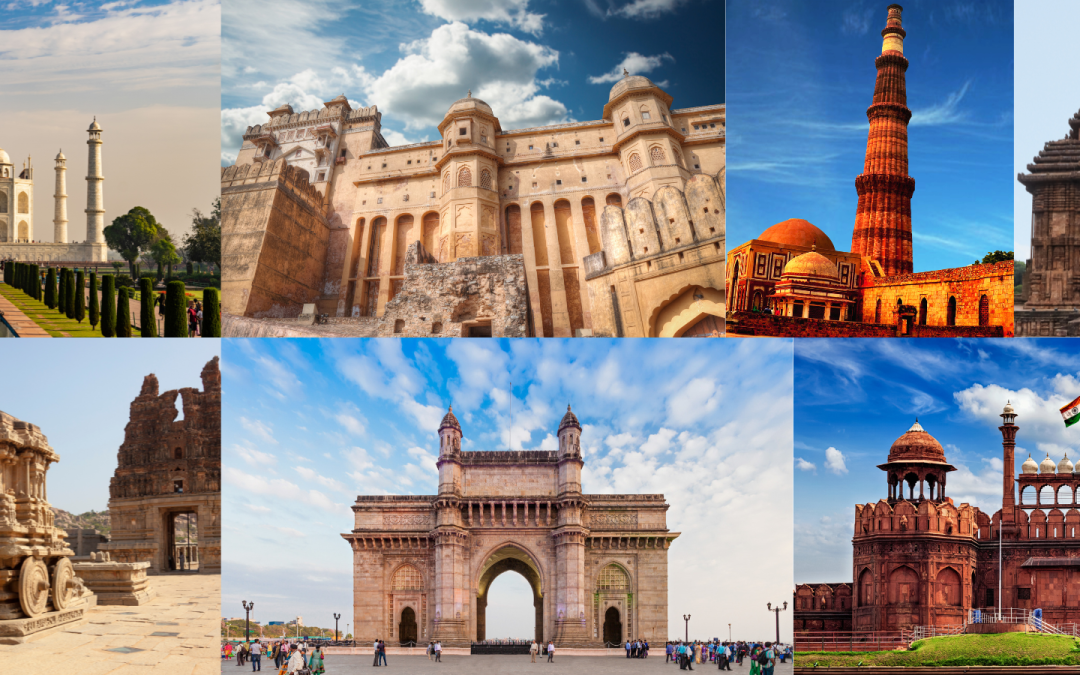
India is a treasure trove of history, culture, and heritage. Every corner of this vast country offers something unique, from ancient temples and forts to stunning palaces and breathtaking monuments. As we journey through some of India’s most famous indian historical places, we invite you to explore these 20 must-visit destinations that embody the essence of the country’s rich cultural heritage.
Exploring the historical places of India allows travelers and students alike to understand how centuries of culture, architecture, and tradition have shaped the nation we see today.
1. The Taj Mahal, Agra: A Symbol of Love and Architecture
Undoubtedly, the Taj Mahal is one of the most iconic and famous monuments in India. Built by Mughal Emperor Shah Jahan in memory of his beloved wife, Mumtaz Mahal, this UNESCO World Heritage Site stands as a symbol of eternal love. Its stunning white marble architecture, intricate carvings, and reflective pools make it a must-visit for anyone exploring India’s cultural heritage.
The Taj Mahal is often included in lists of the top 10 historical monuments in India because of its unmatched beauty and global recognition.
2. Jaipur’s Amer Fort: A Stunning Example of Rajput Architecture
Nestled in the Pink City of Jaipur, Amer Fort is a majestic example of Rajput architecture. This beautiful fort, with its large ramparts, cobbled paths, and a series of gates, reflects the valor and grandeur of the Rajput rulers. Inside, you’ll find palaces, temples, and beautifully decorated halls that glimpse India’s royal past.
3. Qutub Minar, Delhi: The Tallest Brick Minaret in the World
A UNESCO World Heritage Site, the Qutub Minar is an architectural marvel and one of the tallest brick minarets in the world. This historical monument in Delhi is a testament to India’s rich Islamic heritage and is surrounded by various other ancient structures, including the Iron Pillar of Delhi, which has puzzled scientists for its rust resistance.
Sites like Qutub Minar are considered places of historical importance because they reflect the architectural achievements of earlier civilizations.
4. Red Fort, Delhi: A Glimpse into India’s Mughal Past
Another UNESCO World Heritage Site, the Red Fort in Delhi, is a symbol of India’s rich Mughal history and one of the important places in india that is a must-visit. Built by Emperor Shah Jahan, this massive fort made of red sandstone once served as the main residence of the Mughal emperors. Today, the Red Fort stands as a reminder of India’s glorious past and is the site of the annual Independence Day celebrations.
5. Hampi, Karnataka: The Lost Empire of Vijayanagara
Hampi, a UNESCO World Heritage Site, is a historical treasure in Karnataka. Once the capital of the Vijayanagara Empire, the ruins of Hampi offer a glimpse into the architectural brilliance of ancient India. Temples, palaces, and forts dot the landscape, making it a must-visit for history buffs and travelers alike.
6. Fatehpur Sikri, Uttar Pradesh: A Mughal Masterpiece
Fatehpur Sikri was once the capital of the Mughal Empire under Emperor Akbar. The city is an architectural marvel and features grand palaces, courtyards, and mosques. The Buland Darwaza, one of the largest gateways in the world, is a key highlight of this UNESCO World Heritage Site.
7. Konark Sun Temple, Odisha: A Marvel of Ancient Engineering
The Konark Sun Temple is a 13th-century architectural masterpiece dedicated to the Sun God. This UNESCO World Heritage Site is known for its intricate carvings and the iconic chariot-shaped structure with twelve massive wheels. The temple is not only a symbol of India’s rich architectural heritage but also showcases the country’s advanced engineering skills during ancient times.
8. Sanchi Stupa, Madhya Pradesh: The Oldest Stone Structure in India
Sanchi Stupa is one of India’s oldest and most important Buddhist monuments. Built during the reign of Emperor Ashoka in the 3rd century BCE, this UNESCO World Heritage Site stands as a symbol of peace and enlightenment. The Great Stupa is renowned for its intricate carvings and sculptures that depict scenes from the life of Buddha.
9. Mysore Palace, Karnataka: A Royal Heritage
Mysore Palace is one of the most stunning palaces in India, known for its Indo-Saracenic architecture. The palace, once home to the Wodeyar dynasty, is a spectacular blend of Hindu, Mughal, Rajput, and Gothic styles. When illuminated at night, Mysore Palace is a sight to behold, drawing visitors from around the world.
10. Khajuraho Temples, Madhya Pradesh: Intricate Sculptural Beauty
The Khajuraho Temples, a UNESCO World Heritage Site, are renowned for their stunning erotic sculptures and intricate carvings. Built between the 9th and 11th centuries by the Chandela dynasty, these temples represent India’s architectural and artistic excellence.
Many travel guides list Khajuraho among the top 20 historical places in India because of its cultural and artistic significance.
11. Jallianwala Bagh, Amritsar: A Site of Historical Tragedy
Jallianwala Bagh is a somber reminder of India’s struggle for independence. The garden commemorates the tragic massacre of 1919, where British troops opened fire on unarmed civilians. A visit here is a poignant experience, offering insights into the sacrifices made for India’s freedom.
12. Gateway of India, Mumbai: A Symbol of Colonial History
The Gateway of India is an iconic landmark in Mumbai and one of the most important monuments of India’s colonial past. Built to commemorate the visit of King George V and Queen Mary to India, this grand structure stands as a symbol of British rule and its eventual end when the last British troops left India through this gateway in 1948.
13. Ajanta and Ellora Caves, Maharashtra: Buddhist and Hindu Masterpieces
Ajanta and Ellora Caves are India’s most famous UNESCO World Heritage Sites. These ancient rock-cut caves house Buddhist, Hindu, and Jain temples, with intricate carvings that depict scenes from mythology. Ajanta is known for its Buddhist paintings, while Ellora showcases a blend of Hindu, Jain, and Buddhist art and architecture.
14. Rani ki Vav, Gujarat: The Queen’s Stepwell
Rani ki Vav, located in Patan, Gujarat, is an ancient stepwell and a UNESCO World Heritage Site. Built in the 11th century, this stepwell was constructed in memory of a king by his queen and is known for its intricate sculptures and water management system.
15. Chittorgarh Fort, Rajasthan: A Symbol of Rajput Valor
Chittorgarh Fort, the largest fort in India, is a UNESCO World Heritage Site and a symbol of Rajput bravery and sacrifice. The fort has witnessed several battles and is associated with the tales of Rani Padmini and Maharana Pratap. A visit to this fort offers a glimpse into Rajasthan’s glorious history.
16. Elephanta Caves, Maharashtra: Hindu Cave Temples
Located on Elephanta Island near Mumbai, the Elephanta Caves are a UNESCO World Heritage Site. These rock-cut caves date back to the 5th century and are dedicated to Lord Shiva. The most famous sculpture in the caves is the Trimurti, a three-headed depiction of Shiva.
17. Victoria Memorial, Kolkata: A British Legacy
Victoria Memorial in Kolkata is a beautiful blend of British and Mughal architecture. Built in memory of Queen Victoria, this grand monument stands as a symbol of the British Empire in India. Today, it houses a museum showcasing India’s colonial history and artistic heritage.
18. Rameshwaram Temple, Tamil Nadu: A Pilgrimage of Devotion
Rameshwaram Temple, one of the holiest pilgrimage sites in India, is dedicated to Lord Shiva. The temple is known for its stunning corridors, ornate pillars, and intricate carvings. It is believed that Lord Rama built a bridge from Rameshwaram to Lanka during his quest to rescue Sita.
19. Mahabalipuram, Tamil Nadu: Ancient Shore Temples
Mahabalipuram, another UNESCO World Heritage Site, is famous for its ancient shore temples and rock-cut monuments. The stunning stone carvings and sculptures here depict stories from Indian mythology and highlight the artistic brilliance of the Pallava dynasty.
20. Mehrangarh Fort, Jodhpur: A Marvel of Rajasthan
Mehrangarh Fort, perched high above the blue city of Jodhpur, is one of the largest forts in India. Built in the 15th century, this majestic fort offers stunning views of the city and houses a museum showcasing the rich history and culture of Rajasthan.
A quick historical monument chart can also help students identify major monuments, their locations, and the dynasties that built them.
Conclusion
At Bethany High, we believe in providing our students with a holistic education that goes beyond the classroom. Just like our field trips and activities, which expose students to the wonders of the world around them, India’s vast array of historical places offers a glimpse into the nation’s rich cultural heritage and legacy. These iconic sites tell the story of India’s past and inspire future generations to appreciate and preserve the legacy for years to come.
Whether it’s the towering forts of Rajasthan, the serene beauty of the Taj Mahal, or the ancient wonders of Hampi, India’s historical landmarks stand as a testament to the country’s incredible diversity and cultural depth. Just as we encourage our students to explore, learn, and grow, we invite you to embark on your journey to these must-visit historical places in India. Through exploration, we understand who we are and where we come from—a valuable lesson that stays with us for a lifetime.
FAQs
Which Is the Coldest Place in India?
The coldest place in India is Drass in Ladakh, where winter temperatures can be as low as -30°C.
Which Is the Driest Place in India?
Jaisalmer in Rajasthan is considered the driest place in India.
Which Is the Hottest Place in India?
Phalodi in Rajasthan holds the record for the highest temperature in India, reaching up to 51°C.
Which Place in India Receives the Highest Rainfall?
Mawsynram in Meghalaya is the wettest place in India, receiving the highest annual rainfall.
Which Place Is Called Switzerland of India?
Khajjiar, a hill station in Himachal Pradesh, is often referred to as the “Switzerland of India.”
Which Places in India Experience Sunrise First and Last Respectively?
Dong in Arunachal Pradesh experiences the first sunrise in India, while Gujarat’s westernmost point near Koteshwar experiences the last sunset.
What Is a World Heritage Site?
A World Heritage Site is a landmark or area recognized by UNESCO for its cultural, historical, or natural significance.
How Many UNESCO World Heritage Sites Are There in India?
India has 40 UNESCO World Heritage Sites, reflecting its rich cultural and natural heritage.
by Bethany Institutions | Sep 12, 2024 | Blog Recent Post
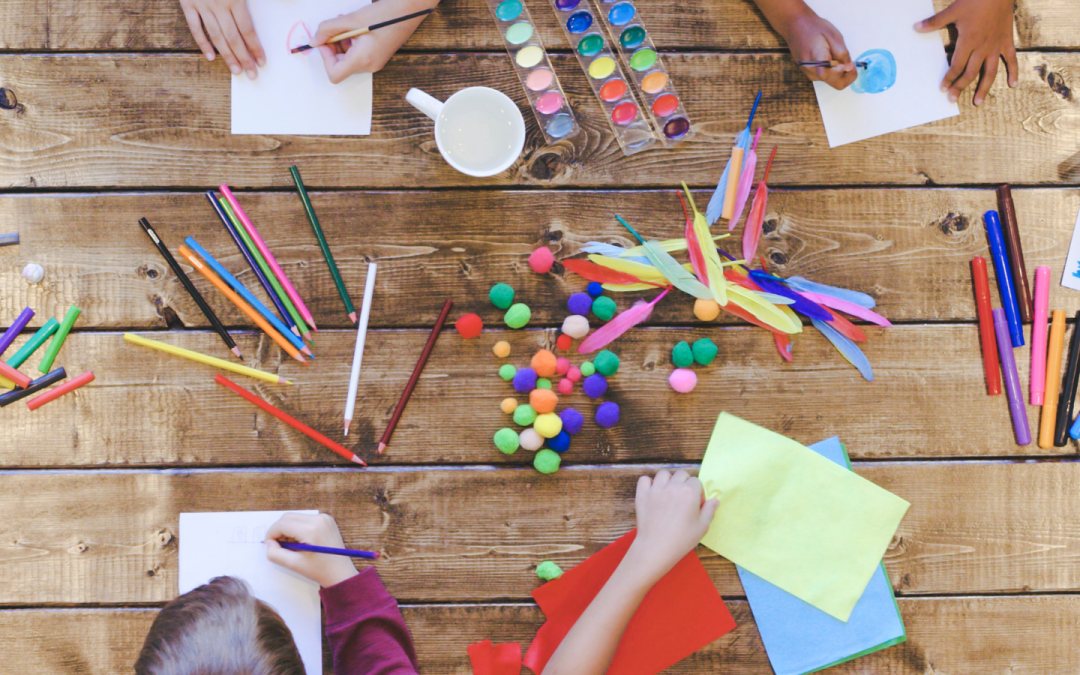
Art is more than just a creative outlet for children. It plays a crucial role in overall child development. At Bethany High, we firmly believe that art can nurture young minds and develop them into well-rounded individuals. When we talk about art in child development, we are referring to a holistic approach where art becomes a medium through which children explore, learn, and grow. Art education is not merely about drawing or painting but, it’s about enabling children to develop cognitively, emotionally, socially, and physically.
The Importance of Art in Early Childhood Development
Art is one of the fundamental building blocks of a child’s growth. From doodling on paper to crafting intricate models, children express themselves in ways that words sometimes cannot capture. The importance of art in child development lies in its ability to support cognitive and emotional development. Through artistic expressions, children learn how to process their thoughts and feelings, and this is particularly crucial during early childhood when the brain is rapidly developing.
Cognitive Development- How Art Stimulates the Mind
Engaging in art activities helps children to enhance their cognitive development. When children draw, paint, or sculpt, they are not only creating something new but also improving their hand-eye coordination, problem-solving skills, and memory. Art requires children to make decisions about colours, shapes, and sizes, which in turn enhances their critical thinking and decision-making abilities. Art education also helps children develop visual-spatial skills, enabling them to interpret and use visual information effectively.
Emotional and Psychological Benefits- Art as a Creative Outlet
Art serves as a creative outlet for children, allowing them to express their emotions and thoughts in a safe and supportive environment. Through art, children learn to understand and regulate their feelings. They can convey happiness, sadness, fear, or excitement through colours and shapes, which can be therapeutic and calming. This form of creative expression helps build self-awareness and emotional intelligence, enabling children to navigate their emotions more effectively.
Social Development- Building Connections Through Art
Art often involves collaboration, whether in group projects or discussions about each other’s work. Such activities encourage children to share ideas, listen to others, and develop empathy. Through creative arts education, children learn the value of teamwork and cooperation, which are essential social skills. Children often critique each other’s work in art classes. This promotes an environment where feedback is given and received constructively which in turn helps in building communication and interpersonal skills.
Physical Development- Fine Motor Skills and Hand-Eye Coordination
Creating art involves a lot of movement, whether it’s gripping a paintbrush, cutting shapes, or sculpting clay. These actions enhance fine motor skills and hand-eye coordination in young children. By practising these movements repeatedly, children develop better control over their motor skills, which is essential for everyday activities such as writing and using tools.
Encourages Imagination and Creativity
One of the advantages of art education is its ability to promote imagination and creativity. Art encourages children to think outside the box, explore new ideas, and come up with innovative solutions. It allows them to see the world in diverse ways, making connections between unrelated concepts and broadening their understanding. This imaginative play is crucial as it lays the foundation for future learning and problem-solving.
Language Development- Expressing Through Art
Art can also play a role in developing language skills. When children talk about their artwork or the artwork of others, they learn new vocabulary, improve their descriptive skills, and engage in storytelling. Discussions around art help children articulate their thoughts, enhancing their language development and communication skills.
Art Education in Schools- Integrating Art into the Curriculum
At Bethany High, we believe that art education in schools is not an add-on but an essential part of the curriculum. Integrating art into various subjects helps children to see connections between different areas of study. For example, history lessons can be enriched with art from the period being studied, and science can be made more engaging through creative projects like model-making or drawing diagrams. This interdisciplinary approach not only makes learning more engaging but also allows students to express what they have learned in unique and personal ways.
Boosts Self-Esteem and Confidence
Art gives children a space for freedom of expression without the fear of making mistakes. This promotes a sense of achievement and pride in their work, which in turn boosts their self-esteem and confidence. When children see their artwork displayed or receive positive feedback from peers and teachers, it reinforces a sense of competence and accomplishment. Art provides an inclusive environment where all students, regardless of their academic abilities, can excel and gain confidence.
Decision Making
Art requires children to make various choices, such as picking colours or deciding how to portray an idea. This process helps them build important decision-making skills. Unlike subjects with clear right or wrong answers, art offers many interpretations and solutions. This encourages children to think for themselves, consider different options, and make confident choices. Through art, they learn that different choices lead to different outcomes, helping them reflect on their decisions and understand their effects.
Visual Learning
Art improves visual learning by teaching children how to interpret, analyse, and understand visual information. Through activities like drawing, painting, and sculpture, children learn to pay attention to details and see how different elements relate to each other. These skills are useful not only in art but also in subjects like maths and science, where understanding diagrams, charts, and models is essential.
The Long-Term Impact of Art on Child Development
The long-term impact of art on child development is profound. Studies have shown that children who engage in art from a young age are more likely to perform well academically and socially. They tend to have higher self-esteem, better problem-solving skills, and are more adaptable to change. Art education helps children develop a sense of cultural awareness and empathy, as they learn to appreciate different perspectives and traditions.
Conclusion
Art is not just a subject but a fundamental part of a child’s development. Incorporating art into education is more than just teaching children how to draw or paint. It is about providing them with the tools to express themselves, think critically, and connect with the world around them. At Bethany High, we are committed to creating an environment where art is not just a subject but a way of life. We believe that through creative arts education, we can help shape children who are not only academically proficient but also emotionally intelligent, socially aware, and creatively inspired.
FAQs
What is the role of art in education?
Art plays a vital role in education by fostering creativity, improving cognitive skills, and helping children develop emotionally and socially.
What is the role of art in child development?
Art helps in developing fine motor skills, emotional intelligence, problem-solving abilities, and social skills among children.
Why is art important for child development?
Art is important because it encourages creativity, enhances cognitive development, boosts confidence, and supports social-emotional learning.
How can learning art impact child development?
Learning art can improve hand-eye coordination, critical thinking, emotional regulation, and social interaction, all crucial aspects of child development.
Why is art important in education for children?
Art is important because it promotes holistic development, fosters a creative mindset, and provides children with a medium to express themselves.
by Bethany Institutions | Sep 12, 2024 | Blog Recent Post
At Bethany High, we believe that education should empower every child with the tools needed to succeed where everything is interconnected. One of the most valuable tools we can give our students is the ability to speak more than one language. Bilingual education has become a cornerstone in many progressive educational institutions, and its benefits extend far beyond just the ability to communicate in multiple languages. It offers cognitive, cultural, and long-term career advantages that shape children into well-rounded individuals.
What is Bilingual Education?
Bilingual education is teaching academic content in two languages, i.e., the student’s native language and the other a second language. The aim is not just to teach another language but to use both as mediums for instruction, allowing students to develop proficiency in both. Bilingual education is uniquely important in countries like India, where linguistic diversity is celebrated. Children are often exposed to multiple languages from a young age, which helps them integrate better into their local and global communities.
The Importance of Bilingual Education
Knowing more than one language is no longer a luxury but a necessity in a world of globalisation. The ability to speak two or more languages equips children with essential communication skills and enhances their cognitive abilities. Bilingual education promotes intellectual flexibility, and cultural awareness, and even improves academic performance. As children become proficient in a second language, they gain access to a broader array of cultural, social, and economic opportunities.
Bilingual Education Benefits Children Learning a Second Language
Bilingual education offers many benefits for children learning a second language, making it a rewarding approach for families and schools alike. Some of the key advantages of bilingual education are as follows-
Cognitive Benefits of Bilingual Education
One of the most significant advantages of bilingual education is its impact on cognitive development. Children who learn in a bilingual environment tend to have higher problem-solving skills, creativity, and critical thinking abilities. Research shows that bilingual individuals have an easier time focusing on tasks, solving complex problems, and adapting to new situations. Switching between two languages improves memory retention and executive functioning, as the brain becomes more adept at managing and processing information.
Cultural Awareness and Social Skills
Bilingual education allows students to connect more deeply with their own culture while also cultivating an appreciation for other cultures. By learning a second language, children can communicate with people from diverse backgrounds, improving their social skills and empathy. In a multicultural country like India, where different languages are spoken across regions, bilingual education becomes crucial for promoting unity and understanding among students from various cultural backgrounds.
Academic Advantages
Many parents worry that learning a second language might obstruct a child’s academic performance in other subjects. However, studies have shown that the opposite is true. Bilingual education enhances academic performance by improving reading and comprehension skills. Bilingual children often outperform their monolingual peers in language-based subjects and show higher levels of academic achievement. Bilingualism also encourages abstract thinking and helps children apply concepts from one language to another, making learning a more interconnected experience.
Long-Term Career and Economic Benefits
Bilingualism is a significant asset in the present competitive job market. As businesses and industries become more global, the demand for individuals who can speak multiple languages is rising. Bilingual adults are more likely to be hired for roles requiring international communication and often command higher salaries. In addition, bilingual individuals have access to a broader range of career opportunities in India and abroad. Companies value employees who can navigate different linguistic and cultural contexts, making bilingualism a skill that opens doors to success.
Bilingualism vs. Monolingualism
While both bilingual and monolingual individuals can succeed in life, the advantages of bilingualism are hard to ignore. Bilingual individuals tend to have sharper cognitive skills, higher emotional intelligence, and a broader worldview. The ability to speak two languages allows children to communicate more effectively and adapt to different cultural settings, making them more versatile and confident in various environments.
Bilingual Education in India
India’s rich linguistic diversity makes it an ideal country for bilingual education. Many Indian schools, including Bethany High, have embraced bilingual education to help students learn regional languages and English. This approach enhances language skills and helps students connect to their cultural roots. The bilingual approach ensures that children are equally proficient in both languages, empowering them to excel in India’s multilingual society and beyond.
Activities and Approaches to Bilingual Education
Bethany High incorporates various bilingual education activities that engage students in meaningful language learning experiences. These include language games, storytelling sessions, and cultural immersion programs where students interact with peers from different linguistic backgrounds. We also encourage parents to be involved in their child’s language development by practising at home and participating in school activities that promote bilingualism.
Conclusion
Bilingual education offers profound benefits that go beyond just learning a second language. It encourages cognitive growth, enhances cultural awareness, and opens up long-term career opportunities for students. At Bethany High, we are proud to promote bilingual education as a way to prepare our students for success in a globalised world. By embracing bilingualism, we ensure that our students excel academically and become empathetic, culturally aware individuals ready to thrive in any environment.
For more information on how bilingual education can benefit your child, or to learn more about our school’s programs, please contact us at Bethany High.
by Bethany Institutions | Sep 9, 2024 | Blog Featured Post, Blog Recent Post
A Junior College is a post-secondary educational institution that serves as a stepping stone between high school and a full-fledged degree programme at a university. These institutions play a vital role in making higher education more accessible through flexible curriculum, affordable tuition, and convenient locations.
Junior Colleges emerged in the early 20th century as a revolutionary concept in education which served as an experiment to extend high school education. Pioneered by William Rainey Harper, the first president of the University of Chicago, these institutions were designed to bridge the gap between high school and university education. Harper’s vision of dividing the university into senior and junior colleges laid the foundation for a system that, by the late 20th century, had grown to over 1,200 junior colleges in the United States, accounting for nearly 40% of all undergraduate enrolments. These colleges became vital hubs for accessible, democratic education, providing opportunities that were previously out of reach for many.
In India, the concept took root in the 1950s when educational leaders sought to adapt the Cambridge School Certificate Examination to better serve Indian students. This led to the establishment of the Council for the Indian School Certificate Examinations (CISCE), which began administering the Indian School Certificate Examination (ISC) after Class 10. The ISC, conducted in English, is a pivotal examination that follows two years of rigorous study, aligning with the national educational goals and setting the stage for students’ success in higher education.
Bethany Junior College, Koramangala, established in 1991 exemplifies our desire to set higher standards in higher secondary education to our students in the two crucial years that precede their University education. The Junior College got its own campus in 2005, diagonally opposite the old campus, catering to the needs of our students in choosing their desired streams in Classes 11 and 12.
Importance of Junior College in the Education System
- In India, one of the pioneers in the successful establishment and functioning of Junior Colleges is the CISCE. As a National Board, it has a rich legacy beginning in 1958, rooted in the Cambridge University Examinations conducted in India at the time. The CISCE has always stood firm on its values and principles, as stated in its mission statement and motto: Empowering Minds and Transforming Lives since 1958.
- CISCE’s approach to education is built on the core belief that diversity and plurality are the fundamental strengths for the evolution of ideas. Our schools are designed to motivate pupils towards the cultivation of excellence, both in the Indian and global experience. We place a strong emphasis on values, both spiritual and cultural, which form the bedrock of our educational experience.
- Our schools are dedicated to fostering an ‘Indian Ethos,’ ensuring that they have strong roots in the national psyche while being sensitive to national aspirations. This commitment helps cultivate students who are not only academically proficient but also deeply aware of their cultural heritage and societal responsibilities.
Purpose and Benefits of Junior College
Junior Colleges have always stood out and pioneered many changes, always adopting and adapting to the global scenario and demands. With the release of the New Education Policy (NEP 2020) introduced by the Government and the changes proposed, CISCE too will be making suitable course corrections to be in sync with these proposals.
Benefits of attending a Junior College
Every Junior College affiliated to the CISCE ensures that certain key ideas, such as trust and fair play, are at the core of our values. In such a system, there is minimum monitoring by the CISCE, thereby allowing schools to evolve their own niche.
Junior Colleges in India also strive to have an Indian ethos, that is, strong roots in the national psyche. We are always sensitive to our national aspirations.
- Catering to the needs of the children.
- Giving freedom to experiment with new ideas and practices.
- Diversity and plurality – the basic strength for evolution of ideas.
- Schools to motivate pupils towards the cultivation of:
- Excellence – The Indian and Global experience.
- Values – Spiritual and cultural – to be the bedrock of the educational experience.
- Trust and fair play.
- Minimum monitoring.
- Allowing schools to evolve their own niche.
Meet Our Alumni
Poojitha Reddy, a proud alumnus of Bethany Junior College owes majority of her personality development to Bethany. “Serving as President during my time at Junior College, I was able to make memories for a lifetime while learning skills like effective people and time management. The kind of exposure one gets at Bethany truly prepares them for the real world whilst providing a comforting environment to grow. Further, the high competence of all the students in Junior College nudges one to be the best versions of themselves, inculcating a positive competitive spirit. With highly knowledgeable and experienced teachers, classes are engaging and allow for personal attention as well. Be it academics, extra curricular activities or the overall quality of education, there isn’t a better place to be. Bethany will always be Home!”
Junior College Programmes
The Indian School Certificate Examination (ISC) has been framed and designed as an Examination through the medium of English, after a two-year course of studies beyond the Indian Certificate of Secondary Education Examination (Class X) or its equivalent. All candidates eligible to appear will be required to enter for English (Compulsory) with three, four or five elective subjects and be assessed by the school in Socially Useful Productive Work and Community Service (Compulsory).
Differences between various Junior College programmes(Humanities, Commerce and Science)
The CISCE offers a range of subjects from which students can select subjects of their choice, across the boundaries of Humanities, Commerce and Science, in keeping with their aptitude and ability.
- The ISC curriculum emphasises on the development of effective communication skills in English and other languages.
- The vast practical experiences built into the curriculum enable students to become active problem-solvers, in addition to gaining academic excellence.
- ISC offers a wide range of subjects for students to select from, based on their aptitude and abilities.
- The ISC examination caters to the needs of all students, where the assessment is based on an array of simple, difficult, analytical, and critical thinking questions.
- The curriculum is framed to ensure students are equipped for tackling all forms of competitive entrance examinations at the National & Global arena.
- It focuses on soft skills development which helps in handling new and complex situations successfully in life.
- ISC provides opportunities for holistic education.
Specialised programmes at Bethany Junior College.
Bethany Junior College offers specialised programs to the ISC aspirants in the three respective streams- Science, Commerce and Humanities. We also offer a wide variety of subjects for the students to choose from- English, Physics, Chemistry, Mathematics, Biology, Economics, Computer Science, Physical Education and Fine Arts respectively for the Science stream. Accounts, Commerce, Business Studies, Economics, English, Mathematics, Fine Arts and Physical Education are the subjects offered to the Commerce stream.
For the Humanities stream, the range of subjects to choose from are- English, Sociology, Psychology, Economics, Home Science, Elective English, Fine Arts and Physical Education.
Admission to Junior College
The admission process at the Bethany Junior College consists of filling up the applications online, an entrance examination that tests the students’ basic knowledge followed by an interactive session with the prospective students and parents..
Students who have cleared the ICSE examination or any equivalent one by any other board, with 90% and above are the candidates preferred for the Science stream and 85% and above for the Commerce stream and 80% and above for the Humanities stream.
Key dates and application procedures
Application Availability: Forms are available online in August (for feeder schools) and September (for the main school).
Submission: Fill out and submit the online application along with required documents.
Entrance Test and Interaction
- Pre-Nursery/Nursery: Selection is based on interaction with Academic Coordinators.
- Classes above Junior 1: Selection is based on entrance tests in English, Maths, and a second language.
Notification and Confirmation: Parents receive confirmation and are required to complete fee payment.
Final Step: Submit the signed application form and documents at the school office to finalize admission.
Tips for prospective students and parents.
Understand the Curriculum
Familiarise yourself with the courses and programs offered. Review the curriculum and understand the prerequisites for your intended program.
Develop Study Skills
Junior college often requires more self-directed learning. Enhance your study habits, time management, and organisational skills to stay on top of assignments and exams.
Review Basic Concepts
If you’re entering a specialised field, brush up on relevant basic concepts to ensure you’re well-prepared for advanced topics.
By staying organised, proactive, and open-minded, you’ll set yourself up for a successful and fulfilling junior college experience.
Junior College vs. High School
One of the key differences between Junior College and traditional high school lies in the level of academic rigour and the focus on career preparation. Junior Colleges provide a more specialised education, with programmes designed to prepare students for specific fields of study at the university level.
In contrast to high schools, where the curriculum is often more general, Junior Colleges offer courses that are directly aligned with the demands of higher education and the job market. This means that students who attend Junior Colleges are often better prepared for the challenges of university and have a clearer sense of their career goals.
Furthermore, Junior Colleges typically offer more flexibility in terms of course selection and scheduling, allowing students to tailor their education to their individual needs and interests. The smaller class sizes also mean that students receive more personalised attention, which can greatly enhance their learning experience.
Conclusion
Junior Colleges play a pivotal role in the education system, providing an accessible and supportive pathway to higher education. By offering a range of academic programmes and fostering a holistic approach to learning, these institutions help students develop the skills and knowledge they need to succeed in university and beyond.
At Bethany Junior College, we are committed to empowering our students through a comprehensive education that combines academic excellence with personal growth. Whether you are looking to pursue a career in science, commerce, or the humanities, our programmes are designed to help you achieve your goals.
We invite you to explore the opportunities that await you at Bethany Junior College and take the first step towards a bright and successful future.
by Bethany Institutions | Sep 7, 2024 | Blog Recent Post
Introduction
At Bethany High School, we believe that a strong curriculum combined with effective pedagogical practices is the foundation of a successful education. As an ICSE-affiliated institution, we are committed to providing a well-rounded education that nurtures academic and personal growth. The Curriculum and Pedagogy at Bethany High are designed to equip students with the skills they need to thrive in a rapidly changing world.
Understanding the ICSE Curriculum
The ICSE curriculum is known for its comprehensive and balanced approach. It is an English-medium curriculum offering a broad-based education that places equal emphasis on academics, sports, and extracurricular activities. At Bethany High, we follow a spiral curriculum structure, where students revisit core concepts as they progress through their education, each introducing more depth and complexity. This method ensures that students build a strong foundation of knowledge, enabling them to apply what they’ve learned across various subjects.
Core Subjects and Electives
At Bethany High School, we offer a comprehensive curriculum that evolves as students progress through each educational stage. Our curriculum is designed to provide a balanced education, integrating core academic subjects with a wide range of co-curricular activities.
Pre-Nursery to Class 5: Building Strong Foundations
- Mandatory Subjects: English | Mathematics | Environmental Sciences | Social Studies | Value Education | General Knowledge (GK) | Arts & Crafts | Music | Dance | Physical Education (P.E.)
- Language Options: Second Language – Kannada | Hindi (with Hindi students studying Kannada as a third language).
Classes 6 to 8: Expanding Horizons
- Mandatory Subjects: English | Mathematics | Physics | Chemistry | Biology | History & Civics | Geography | Value Education | General Knowledge (GK) | Arts | Dance | Physical Education (P.E.)
- Language Options: Second Language – Kannada | Hindi (with Hindi students continuing Kannada as a third language).
Classes 9 to 10: Specialising for the Future
- Group 1 (Mandatory for All Students): English Language | English Literature | Second Language (Kannada / Hindi / French) | History & Civics | Geography
- Group 2:
- Science Stream: Mathematics | Physics | Chemistry | Biology
- Commerce Stream: Mathematics or Economics | Commercial Studies
- Group 3 (Choice of One): Art | Computer Application | Drama | Physical Education | Western Music
Classes 11 to 12: Preparing for Higher Education
- Group 1 (Mandatory for All Students): English Language | English Literature | Socially Useful Productive Work (SUPW)
- Science Stream:
- Compulsory Subjects: Mathematics | Physics | Chemistry
- Elective (Choose One): Biology | Home Science | Computer Science | Economics | Physical Education | Fine Arts
- Commerce Stream:
- Compulsory Subjects: Accountancy | Economics | Commerce
- Elective (Choose One): Mathematics | Business Studies | Physical Education | Fine Arts
- Humanities Stream:
- Compulsory Subjects: Sociology | Psychology
- Elective (Choose One): Economics | Home Science | Physical Education | Fine Arts | Elective English
Benefits of the ICSE Curriculum
The ICSE curriculum is designed to foster comprehensive learning and critical thinking. Students develop a strong understanding of the material by revisiting core concepts and exploring them in greater depth. Additionally, the curriculum’s emphasis on cross-disciplinary linkages encourages students to think critically about how their knowledge can be applied in different contexts.
Pedagogical Approaches at Bethany High School
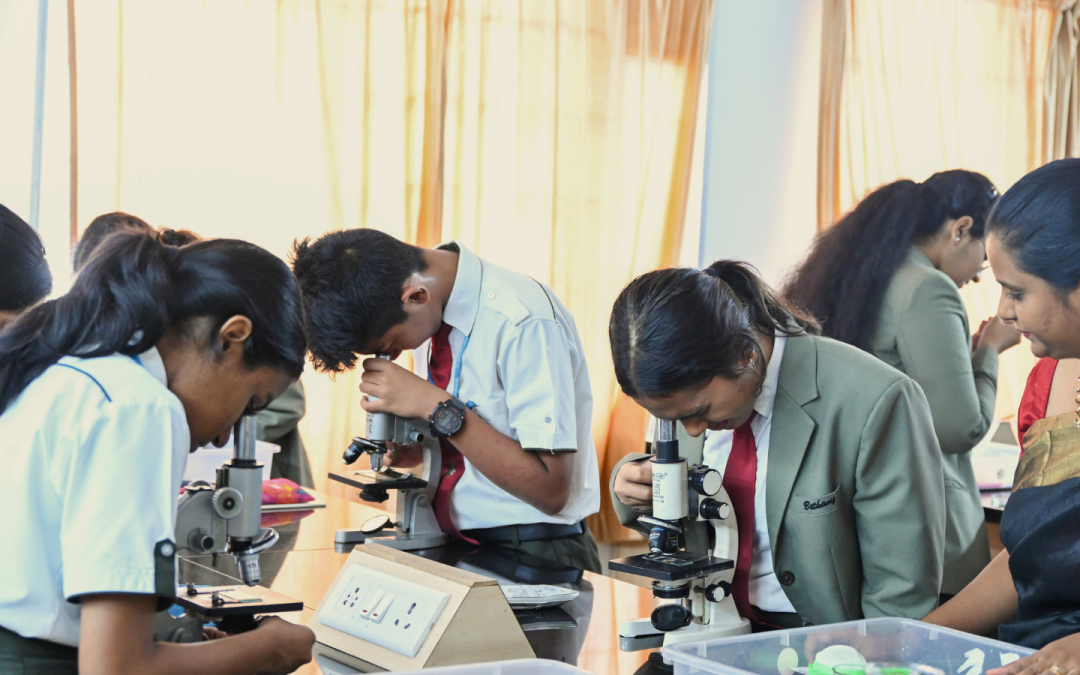
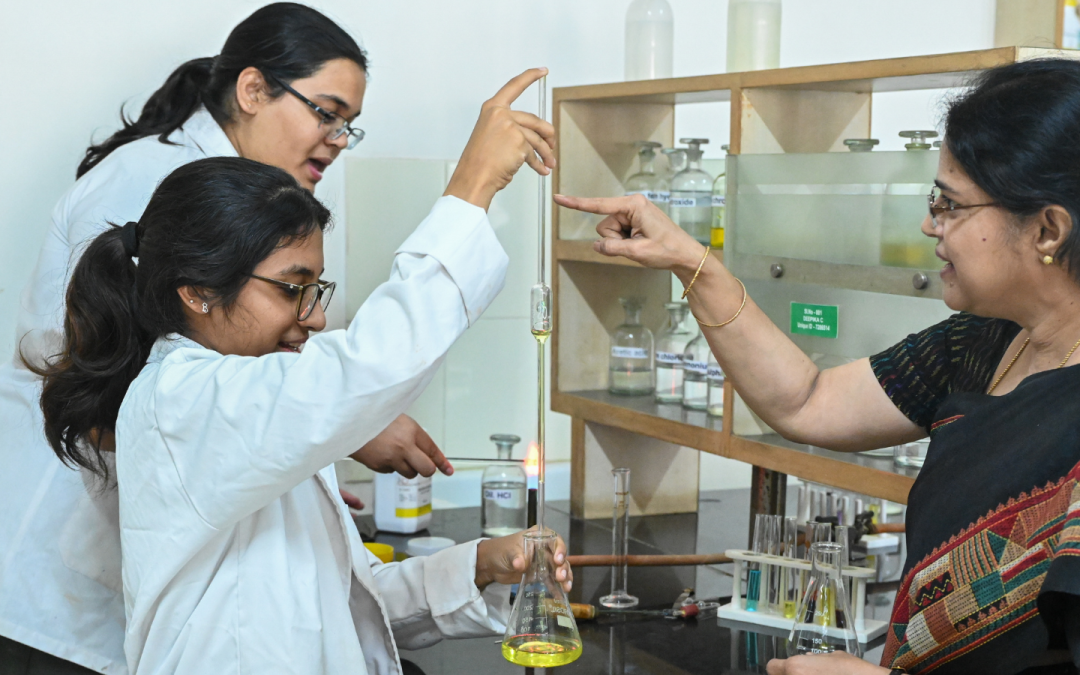
At Bethany High, we use various teaching methods to ensure that learning remains engaging and relevant. Our classrooms are equipped with smart screens, and lessons are enriched with digital content. Students participate in scheduled lab sessions for hands-on learning and go on field trips and excursions to bring their studies to life.
Assessment and Feedback
We believe in continuous assessment as part of the learning process. Our students are evaluated through a mix of tests, quizzes, projects, and other assessment methods, which provide a comprehensive view of their progress and help them stay on track.
Holistic Development through the Curriculum
Our curriculum goes beyond academics, integrating co-curricular activities that promote holistic development. At Bethany High, students engage in a wide range of activities that help them discover their passions and develop essential life skills.
Integration of Academics, Sports, Arts, and Community Service
A well-rounded education includes not just academic achievement but also personal growth. Our students participate in community service projects, such as fundraising for the Bethany Special School, and participate in events like the Model United Nations, Bethany Carnival, and the annual Bethany Musical. These experiences help students develop leadership skills, empathy, and a strong sense of social responsibility.
Subject-Specific Focus: Science, Humanities, and Commerce
Bethany High offers specialised academic streams, allowing students to focus on subjects that align with their future goals:
- Science Stream: Students explore subjects like Physics, Chemistry, and Biology, preparing them for careers in fields such as medicine and engineering.
- Commerce Stream: With subjects like Accountancy, Economics, and Business Studies, students are equipped for careers in business, finance, and entrepreneurship.
- Humanities Stream: This stream offers subjects like Sociology, Psychology, and Fine Arts, ideal for those interested in the arts, social sciences, and education.
Our subject specialists guide students in making informed decisions about their academic paths, ensuring they are well-prepared for higher education and beyond.
Innovations in Teaching and Learning
Innovation is at the heart of our teaching practices. We continuously update our methods to incorporate the latest educational research and technology. Our classrooms are equipped with digital learning tools supporting interactive and modern teaching methods, ensuring our students are engaged and motivated.
Bethany alumni from all streams have excelled in higher education in India and abroad. They remain happily connected to the school, frequently visiting to meet their teachers and mentor current students. Many alumni have even enrolled their own children at Bethany, making us proud grandparents. Our robust alumni association actively participates in reunions and maintains a presence at our Sports Day events, fostering a strong sense of community and continuity.
This enduring connection with our alumni enriches the learning environment and provides current students with invaluable insights and mentorship opportunities. Our alumni’s success stories inspire our students to aim high and achieve their full potential.
Conclusion
At Bethany High School, we are dedicated to providing a well-rounded education that prepares our students for the challenges of tomorrow. Through our ICSE curriculum and innovative pedagogical practices, we nurture future leaders ready to positively impact the world.
Please contact us for more information about our curriculum and teaching methods or to schedule a visit.