by Bethany Institutions | Sep 19, 2024 | Blog Recent Post
The Importance of Road Safety for Kids
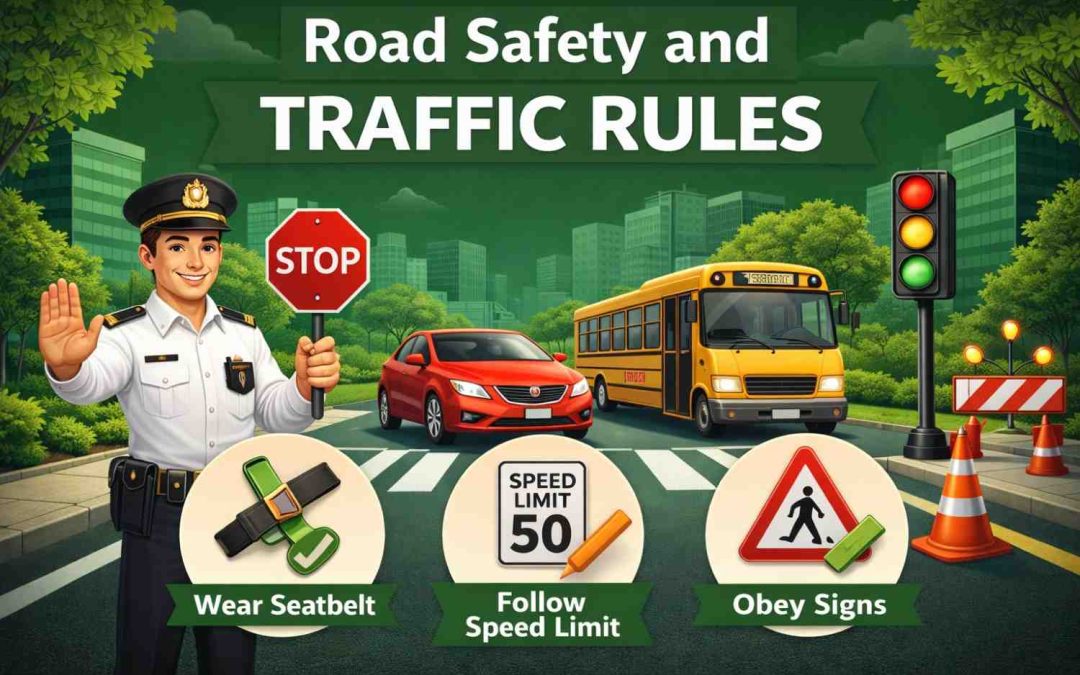
Road safety is an essential life skill that every child must learn. Whether they’re walking to school, riding a bike, or playing outside, understanding the importance of road safety rules for students can make all the difference. At Bethany High, we believe in teaching children these important lessons early on so they grow into confident, independent, and responsible individuals.
In this blog, we’ll explore 15 vital road safety rules every child should know to stay safe and secure while navigating the streets.
Rule 1: Look Left, Right, and Left Again Before Crossing
One of the most basic and essential road safety rules for students is to always stop at the edge of the road look left, right and left again to check for oncoming traffic before crossing. This ensures that children are alert and aware of any vehicles, bikes, or cyclists approaching.
Rule 2: Use Pedestrian Crossings and Follow Traffic Lights
Children should always use designated pedestrian crossings, such as zebra crossings or traffic lights when crossing the road. Teaching them techniques like road safety when crossing the road such as when to follow the green man signal or wait for the red light will help them understand the importance of road safety signals from a young age.
Rule 3: Always Walk on the Sidewalk
Walking on the sidewalk or footpath, instead of the road, keeps children away from traffic. It is especially important in busy areas. Where sidewalks are unavailable, children should walk facing the traffic so they can see oncoming vehicles.
Rule 4: Hold Hands with an Adult When Crossing
For younger children, it’s essential that they always hold an adult’s hand when crossing busy roads or even quieter streets. This provides them with an extra layer of safety and reinforces the importance of being cautious.
Rule 5: Wear a Helmet When Riding a Bicycle or Scooter
Head injuries are common results of accidents involving bicycles or scooters. Therefore, children should always wear a properly fitted helmet when cycling or riding a scooter to protect themselves from potential head injuries.
Rule 6: Avoid Distractions While Crossing the Road
Children must learn to focus while crossing the road. This means no texting, listening to music with headphones, or playing games on mobile devices. Their attention should solely be on the road, ensuring they are fully aware of their surroundings.
Rule 7: Never Run Across the Road
Running across the road is dangerous as it increases the chance of tripping or misjudging oncoming traffic. Children should always walk briskly but carefully when crossing the road.
Rule 8: Be Extra Careful Near School Zones
School zones can be chaotic, with buses, cars, and children all in one place. Kids should be especially careful and watchful near school zones, waiting for vehicles to stop fully before crossing, and listening to school guards or adults on duty. Schools often conduct a road safety awareness programme at school to teach children how to behave responsibly in traffic-heavy areas.
Rule 9: Don’t Play Near Roads
It’s tempting for children to play near roads, but it can be extremely dangerous. Balls can roll into the street, or children may run into traffic without thinking. Safe play should always be in parks or playgrounds, away from the road. Teaching children road safety education will help them take precautions and prevent serious injuries.
Rule 10: Be Aware of Stranger Danger While on the Road
When on the road, children should be taught to be cautious of strangers. If approached, they should keep their distance and seek help from a trusted adult, such as a teacher or police officer, if they feel unsafe. Teachers can assign road safety education assignment to help students research and understand safety concepts better
Rule 11: Do Not Multitask While Crossing The Road
Crossing the road requires full attention. Whether it’s eating, using a phone, or even talking too much, children should avoid multitasking and remain focused on the task of safely crossing the road.
Rule 12: Stay Away from Moving Vehicles
Children should always stay clear of moving vehicles, particularly when near driveways, car parks, or at bus stops. Teaching them about mandatory traffic signs in India can also help them understand when vehicles must stop or slow down. They must wait until vehicles have completely stopped before they approach or move past them.
Rule 13: Be Aware of Weather Conditions
Weather conditions can affect visibility and road conditions. Whether it’s raining, foggy, or dark, children should be extra cautious, wear bright or reflective clothing, and walk carefully to avoid slipping or being unseen by drivers.
Rule 14: Don’t Distract the Driver
When travelling in a vehicle, children should be reminded not to distract the driver by shouting, throwing things, or making sudden loud noises. They must remain calm and follow safety rules inside the vehicle.
Rule 15: Never Cross The Road at Curves
Curves and bends in the road limit a driver’s visibility. Children must be taught to avoid crossing at such dangerous spots and instead find a straight section of the road where they can clearly see oncoming traffic and vice versa.
Conclusion: Building Lifelong Safe Habits
At Bethany High, we are dedicated to nurturing well-rounded individuals who excel not only in academics but also in essential life skills. By teaching them what is road safety and instilling the basic road safety rules, we aim to empower children to become responsible and mindful citizens who value their own safety as well as the safety of others. Together, we can cultivate lifelong habits of caution, confidence, and road safety awareness, ensuring that our students are prepared to navigate the world safely and responsibly. Let’s join hands in building a future where safety is second nature.
FAQs
What are road safety rules?
Road safety rules are guidelines and practices that help keep pedestrians, cyclists, and drivers safe on the road. They include awareness of traffic rules, traffic signals, pedestrian crossings, and basic road etiquettes, ensuring everyone shares the road safely.
Why should we follow traffic rules?
Following traffic regulations in India helps prevent accidents, protects lives, and ensures smooth movement of vehicles and pedestrians. It’s a shared responsibility for everyone on the road.
Why is it important to wear a helmet while cycling?
Wearing a helmet protects the head from serious injuries in the event of a fall or accident. It’s a simple but crucial safety measure, especially for children.
Why is road safety important for kids?
Road safety is essential for protecting children from accidents and teaching them how to navigate roads safely. It instills responsible behaviour early on, reducing risks and creating lifelong safe habits.
What should children do if there are no pedestrian crossings available?
Children should find a safe spot where they can clearly see the traffic in both directions, ensure no vehicles are coming, and then cross the road while walking briskly.
How can parents reinforce road safety rules at home?
Parents can reinforce road safety by practising what they preach—showing their kids how to cross the road safely, using seat belts, following traffic signals, and explaining safety concepts during daily commutes and RTO rules for commercial vehicles, among others.
When should children start learning road safety rules?
Children should start learning basic road safety rules as soon as they begin walking. As they grow older, they can gradually be introduced to traffic rules in India, along with more advanced concepts like cycling safety and pedestrian etiquette.
What should kids do if they get lost while walking?
If children get lost, they should stay calm, avoid crossing busy streets, and seek help from a trusted adult or authority figure, such as a police officer or a nearby shopkeeper. For safety reasons, they should always carry an Identification card with them that has their parents’ contact number.
Are there specific road safety rules for kids riding school buses?
Yes, children should wait for the bus at a safe distance from the road, never run toward or away from the bus, and always wait until the bus has stopped fully before boarding or getting off.
What kind of clothing is best for kids to wear when walking or biking in low light?
Kids should wear bright, reflective clothing or accessories to ensure they are easily visible to drivers.
Why is it important to not use mobile phones or headphones while crossing the road?
Using mobile phones or headphones can distract children, making them less aware of their surroundings. It’s important to stay focused and attentive to avoid accidents.
by Bethany Institutions | Sep 19, 2024 | Blog Recent Post
Introduction
Volcanoes are one of nature’s most awe-inspiring yet unpredictable wonders. They can be as majestic as they are dangerous, with the power to reshape entire landscapes instantly. While volcanoes are not as prevalent in India as in some other parts of the world, the country has its share of active and dormant volcanoes. Understanding these natural phenomena helps us appreciate the Earth’s dynamic processes and the geological wonders that shape our environment. Let’s explore India’s active and dormant volcanoes and learn more about these fascinating landforms.
What is a Volcano?
A volcano is a rupture in the Earth’s crust through which hot magma, volcanic ash, and gases escape from below the surface. When the pressure of the magma builds up, it forces its way to the surface, often resulting in a spectacular display of molten rock, ash clouds, and sometimes explosions. Once the magma reaches the surface, it is referred to as lava.
Volcanoes form in areas where tectonic plates converge or diverge or where the Earth’s crust is particularly thin. Over time, these eruptions create mountains and islands, constantly reshaping the landscape.
Different Types of Volcanoes
- Shield Volcanoes:
Shield volcanoes are broad, gently sloping volcanoes that resemble a warrior’s shield. They are primarily formed by low-viscosity lava that flows easily, resulting in wide, gently rising mounds. Shield volcanoes typically produce non-explosive eruptions, with lava flowing for long distances.
Example: Mauna Loa in Hawaii. - Stratovolcanoes (Composite Volcanoes):
These tall, steep-sided volcanoes are made up of layers of hardened lava, tephra, pumice, and volcanic ash. Stratovolcanoes often have explosive eruptions caused by the high viscosity of their magma, which traps gases and increases pressure.
Example: Mount Fuji in Japan. - Cinder Cone Volcanoes:
Cinder cone volcanoes are the smallest type of volcano. They are made up of volcanic debris, such as ash and cinders, accumulating around a single vent. These volcanoes typically have short-lived eruptions and steep sides.
Example: Parícutin in Mexico. - Lava Domes:
Lava domes form when lava is too thick to flow far from the vent, resulting in a dome-shaped mound. The pressure within these domes can build up over time, causing violent eruptions.
Example: Mount St. Helens in the United States.
List of Volcanoes in India
Here is a table summarising some of India’s notable volcanoes:
| Volcano Name | Location | Activity Status |
| Barren Island | Andaman and Nicobar Islands | Active (Last eruption in 2020) |
| Narcondam Island | Andaman and Nicobar Islands | Dormant (Last eruption in 1681) |
| Baratang Island | Andaman and Nicobar Islands | Mud volcano (Not highly active) |
| Dhinodhar | Gujarat | Extinct (500 million years ago) |
| Dhosi Hill | Haryana | Dormant (750 million years ago) |
| Tosham Hills | Haryana | Extinct (732 million years ago) |
| Loktak Lake | Manipur | Supervolcanic caldera (Status unknown) |
| Deccan Plateau | Maharashtra, Karnataka | Extinct (Approx. 25 million years ago) |
Active, Dormant, and Extinct Volcanoes in India
Barren Island
Barren Island, located in the Andaman Sea, is the only active volcano in India. It has a long history of eruptions, with its first recorded outbreak in 1787. The island’s most recent eruption occurred in 2020. The sight of glowing red lava against the night sky and daytime ash clouds makes this an extraordinary volcanic feature in India.
Narcondam Island
Narcondam Island is home to a dormant volcano in the Andaman Sea, located to the northeast of Barren Island. The last known eruption occurred in 1681, and since then, the volcano has remained inactive, though minor activity, such as gas releases, was observed as recently as 2005.
Baratang Island
Baratang Island is famous for its mud volcanoes rather than traditional lava eruptions. Located in the Andaman and Nicobar Islands, these mud volcanoes emit mud, gases, and small amounts of lava, but they are considered less dangerous than other types of volcanic activity. The last recorded activity was in 2005, following the 2004 Indian Ocean earthquake.
Deccan Plateau Volcanoes
The Deccan Plateau, spanning across Maharashtra and Karnataka, is an ancient volcanic region. It was formed approximately 66 million years ago, and its extensive lava flows cover much of central India. Although now extinct, the Deccan Traps represent one of the largest volcanic formations in the world.
Causes of Volcanic Eruptions
Volcanic eruptions are caused by the movement of magma from beneath the Earth’s crust. Some of the main triggers include:
- Tectonic Plate Movements: When tectonic plates collide, separate, or slide past one another, the resulting cracks in the Earth’s crust allow magma to escape.
- Pressure Build-up: Over time, the pressure of gases and molten rock beneath the surface increases until the volcano erupts.
- Subduction Zones: Areas where one tectonic plate moves under another, causing magma to rise to the surface.
- Hotspots: Specific areas where the Earth’s mantle is particularly hot, creating magma that breaks through the crust.
Types of Volcanic Eruptions
- Effusive Eruptions: Lava flows steadily out of a volcano without much explosiveness. These are characteristic of shield volcanoes.
- Explosive Eruptions: Violent eruptions with pyroclastic flows, ash clouds, and significant lava expulsion. These eruptions occur in stratovolcanoes.
- Phreatic Eruptions: Steam-driven explosions caused by water interacting with magma, often creating ash clouds and debris without much lava.
Historical Eruptions of Indian Volcanoes
India’s most notable volcanic activity has come from Barren Island. Since 1787, this volcano has erupted over 10 times. Though long extinct, the Deccan Plateau’s volcanic activity played a significant role in shaping the Indian subcontinent millions of years ago.
Importance of Studying Volcanoes in India
Studying volcanoes helps us understand the Earth’s geological processes and can provide essential insights into seismic activity, plate tectonics, and climate change. Monitoring volcanic activity is crucial for public safety and disaster preparedness in regions like the Andaman and Nicobar Islands.
Conclusion
India may not be known for frequent volcanic activity, but the presence of volcanoes like Barren Island and Narcondam offers a unique glimpse into the dynamic forces shaping our planet. By understanding these geological wonders, we deepen our appreciation for nature’s power and prepare ourselves for future events. At Bethany High, we believe in fostering curiosity and learning about the natural world. We encourage students to explore these natural wonders and introduce some of them in our Social studies classes as part of their educational journey to develop their sense of wonder about our world.
FAQs
- What Is a Dormant Volcano?
A dormant volcano is a volcano that has not erupted for a long time but still has the potential to erupt again. Dormant volcanoes can remain inactive for thousands of years, but the possibility of future activity still exists. - What Is an Active Volcano?
An active volcano is one that has erupted recently and is likely to erupt again. These volcanoes show signs of activity, such as gas emissions, magma movement, or seismic activity. Barren Island in the Andaman Sea is an example of an active volcano in India. - What Is Volcanic Eruption?
A volcanic eruption transports magma, gases, ash, and volcanic rock from beneath the Earth’s surface through a volcanic vent. Eruptions can vary from gentle lava flows to violent explosions that throw ash and rocks high into the atmosphere. - How Do Volcanoes Erupt?
Volcanoes erupt when magma from the Earth’s mantle rises to the surface due to the movement of tectonic plates or pressure build-up within the Earth’s crust. When the pressure becomes too great, magma, gases, and ash are forced through the Earth’s surface cracks, creating an eruption. - How Many Volcanoes Are in the World?
There are more than 1,500 potentially active volcanoes worldwide, excluding those found along the deep ocean floor. - How Many Active Volcanoes Are There in India?
India has only one active volcano: Barren Island, located in the Andaman and Nicobar Islands. - Where Is the Active Volcano in India?
The only active volcano in India is located on Barren Island in the Andaman and Nicobar Islands, around 138 km from Port Blair. - Which Is the Active Volcano in India?
Barren Island in the Andaman and Nicobar Islands is the only active volcano in India. - How Many Volcanoes Are There in India?
India has a few volcanoes, including Barren Island (active) and Narcondam Island (dormant), and several extinct volcanoes, such as those found in the Deccan Plateau and Tosham Hills. - How Many Active Volcanoes Are There in the World?
There are about 1,500 active volcanoes worldwide, not including the ones found beneath the ocean. - Which Is the Biggest Volcano in the World?
The biggest volcano in the world by volume is Mauna Loa in Hawaii, which covers an area of around 5,271 Square Kilometres. - Which Is the Largest Volcano in the World?
Mauna Loa in Hawaii is the largest volcano in the world by volume and area. - How Many Types of Volcanoes Are There?
There are four main types of volcanoes:
- Shield Volcanoes: Wide and gently sloping, with slow lava flows.
- Stratovolcanoes (Composite Volcanoes): Tall, steep-sided, and known for explosive eruptions.
- Cinder Cone Volcanoes: Small, with steep slopes, formed by volcanic debris.
- Lava Domes: Created by slow extrusion of viscous lava, forming dome-shaped mounds.
- Which Country Has the Most Volcanoes?
Indonesia has the most volcanoes globally, with more than 130 active volcanoes.
by Bethany Institutions | Sep 17, 2024 | Event Featured Post, Event Recent Post
Bethany High School, Koramangala, hosted its much-anticipated Annual Athletic Meet from 21st to 23rd August 2024. The event was a spectacular display of athleticism, teamwork, and sportsmanship, with the grand finale held on 23rd August featuring the best sporting talents from High School, NIOS, and Junior College students.
The finale kicked off with a vibrant March Past, setting the tone for an exciting day of events. The athletes participated in a variety of competitions, including the 100m sprints, relay races, an alumni race, a visitors’ race, and even a staff race, which brought great excitement to the spectators. It was truly a delight to see the young athletes in action, giving their best amidst loud cheers from their peers and teachers.
The highlight of the event was the presence of Mr Gul Mohammed Akbar, a renowned Marathon Race Director, who graced the occasion as the chief guest. In his inspiring address to the students, he emphasised the importance of maintaining physical fitness, avoiding the pitfalls of social media and addictions, and staying away from negative influences. He also encouraged the students to follow rules and regulations and respect their parents and teachers, reminding them that each person is unique and a masterpiece in their own way.
After a thrilling series of events and intense competition among the four houses, Mignon House emerged as the overall winner with an impressive 352 points. Leonard House closely followed with 344 points, while Darrel House and Satur House secured 246 and 241 points, respectively.
The Annual Athletic Meet 2024 at Bethany High School was a celebration of athletic talent and a testament to the school’s commitment to holistic development, promoting both physical and moral growth in its students. Congratulations to all participants, and especially to Mignon House for their outstanding victory!
by Bethany Institutions | Sep 16, 2024 | Blog Recent Post
Creative writing is the art of expressing thoughts, emotions, and stories in a unique and imaginative way. Unlike academic writing, which focuses on facts and analysis, creative writing encourages originality and personal expression. It includes a range of writing forms, such as poetry, short stories, novels, plays, and more. Creative writing skills for students allow them to explore their imaginations, experiment with different writing styles, and develop their voices as writers.
For students, developing creative writing skills is more than just learning how to write creatively; it’s about learning how to think creatively. These skills help students create interesting characters, build exciting storylines, and use descriptive language that brings their writing to life. As educators, we can use different strategies to develop these creative writing skills in our students, making them more confident and capable writers.
The Importance of Creative Writing in Education
Creative writing plays a vital role in education. It encourages students to think outside the box, enhances their cognitive and emotional development, and improves their overall communication skills. Writing creatively helps children learn how to express themselves more clearly, boosts their imagination and creativity, and allows them to explore different perspectives. These skills are not only essential for academic success but also for personal growth and effective communication in all areas of life.
Brainstorming
It is important for students to brainstorm and generate ideas before putting it on pen to paper. Brainstorming allows young writers to explore different themes, characters, and plots, helping them to develop a clear direction for their stories. Encourage students to jot down any ideas that come to mind, no matter how simple or wild they may seem. Using tools like mind maps, word lists, or group brainstorming can help students think more broadly and explore different creative ideas.
Organising
After students have come up with their ideas, the next step is to organise them clearly. Teaching them to make outlines is a great way to help them structure their writing. Outlines help them plan the beginning, middle, and end of their stories so everything makes sense and keeps the reader interested. Using tools like story maps or flowcharts can also help them see how their writing is put together, making the whole process easier and less overwhelming.
Drafting
The drafting phase is where students begin to write their stories or essays based on the ideas and structure they’ve planned. At this stage, it’s important to encourage them to focus on getting their ideas down on paper rather than worrying about perfection. Remind them that the first draft is just a starting point and that they will have opportunities to revise and improve their writing later. This approach reduces the pressure and allows for a freer flow of ideas, enhancing their creative writing process.
Revising
Revising is an important step in writing where students check their work to make it clearer and more organised. Encourage them to read their drafts carefully, looking for places to add details, improve characters, or make descriptions better. Giving feedback at this stage is important because it helps students make their writing stronger. Peer review sessions are also helpful, as students can share ideas and learn from each other, creating a supportive learning environment.
Strategies to Enhance Creative Writing Skills
To help students improve their creative writing, we can incorporate various strategies and techniques into the classroom:
- Teach Different Writing Styles- Expose students to different types of writing, such as poetry, fiction, non-fiction, and plays. Understanding these different creative writing styles allows them to choose the format that best suits their ideas and inspires them to experiment with new forms.
- Encourage Regular Reading- Reading widely and regularly is one of the best ways to enhance creative writing skills. By reading various genres and authors, students learn different narrative techniques, gain a better understanding of language, and get inspired to create their own stories.
- Use Real-Life Situations for Writing Prompts- Providing students with writing prompts based on real-life scenarios helps them relate to their writing more personally. This approach not only makes writing more engaging but also helps them develop empathy and a deeper understanding of different perspectives.
- Encourage Students to Keep a Diary- Writing in a diary allows students to practise writing regularly and reflect on their thoughts and experiences. This habit can help improve their writing fluency, build confidence, and serve as a source of inspiration for future creative projects.
- Provide Opportunities to Read Aloud- Reading their work aloud helps students identify areas that need improvement, such as awkward phrasing or inconsistent pacing. It also builds their confidence in their writing abilities and helps them become more expressive and articulate.
- Use Sentence Starters and Prompts- Offering sentence starters and creative writing prompts can be particularly helpful for students who may struggle with where to begin. These tools provide a starting point and can spark new ideas and stories.
- Engage in Cooperative Writing Activities- Collaborative writing projects, such as group storytelling or writing a play together, can help students learn from one another and inspire each other. Cooperative writing also encourages teamwork, communication, and creativity.
- Get Creative with Teaching- Incorporate multimedia resources, such as videos, pictures, or music, to inspire students’ writing. Creative teaching methods can make the writing process more dynamic and enjoyable.
- Encourage Parents to Help at Home- Parents can play a crucial role in supporting their children’s writing development. Encourage parents to provide a quiet space for writing at home, discuss their children’s stories with them, and encourage regular reading.
- Practice the ‘Show, Don’t Tell’ Rule- Teach students to make their writing more vivid by showing rather than telling. Instead of writing, “The boy was scared,” they can write, “The boy’s hands trembled, and his heart raced as he stepped into the dark room.” This technique makes writing more engaging and immersive.
- Provide Inspiration- Offer students visual or written prompts, such as photographs, artworks, or quotes, to inspire their creativity. Regularly changing these prompts can keep the creative juices flowing.
- Assign In-Class Writing Activities- Regular in-class writing exercises help students practise writing without the pressure of a formal assignment. Short, timed writing sessions can also improve their ability to think and write quickly.
Creative Writing for Different Age Groups
Creative writing strategies should be tailored to the age and developmental stage of the students. Younger children may benefit from more guided activities, such as fill-in-the-blank stories or drawing their story ideas. Older students can handle more complex writing tasks, such as writing essays, developing characters, or crafting short stories.
Assessing and Celebrating Creative Writing
Assessment of creative writing should focus on encouraging improvement rather than solely on grading. Providing constructive feedback, celebrating creative efforts, and recognising progress can motivate students to keep writing and refining their skills. Hosting writing competitions, publishing student work in school magazines, or organising reading sessions can also help in celebrating and showcasing their creativity.
Conclusion
Creative writing is not just about crafting stories; it’s about cultivating a mindset that values creativity, self-expression, and effective communication. By incorporating these strategies into the classroom, we can help students develop strong creative writing skills. This will serve them well throughout their education and beyond. Encouraging creativity in writing empowers students to think independently, express their unique voices, and become more confident in their abilities as writers.
FAQs
What are the skills needed for creative writing?
Creative writing requires skills such as imagination, creativity, strong vocabulary, grammar, narrative structure understanding, and the ability to develop characters and plots.
How can students improve their creative writing skills?
Students can improve by practising regularly, reading widely, using prompts, revising their work, and engaging in collaborative writing activities.
What is creative writing, and why is it important?
Creative writing is the art of expressing ideas and stories uniquely. It is important because it helps in developing critical thinking, creativity, and effective communication skills.
How can parents support their children’s creative writing at home?
Parents can support by providing a conducive writing environment, encouraging regular reading, discussing stories, and providing positive feedback.
What are some different types of creative writing styles?
Different styles include poetry, short stories, novels, plays, and creative non-fiction, each offering unique opportunities for expression.
by Bethany Institutions | Sep 16, 2024 | Blog Recent Post
Learning new words is always exciting, especially when we discover how they work together to help us express ourselves better! One of the easiest ways to make our language more colourful and fun is by learning opposite words. Opposites, also known as antonyms, help us understand the world in different ways. Knowing that the opposite of ‘hot’ is ‘cold’ or ‘big’ is ‘small’ allows us to describe things more clearly and with greater precision. Learning an opposite word in English also strengthens vocabulary and improves communication skills
In this blog, we’ll explore 50 essential opposite words in English that are not only fun to learn but also help kids communicate with confidence. Let’s dive into this exciting journey of language and discovery!
What is an Opposite Word?
Opposite words/antonyms, are pairs of words with contrasting meanings. These are linguistic expressions that provide a new meaning completely opposing another. There are many opposite word in English that children learn as they build their vocabulary and language skills. Understanding opposite words is a fundamental part of language development. They play an effective role in developing cognitive skills, fostering critical thinking, and improving communication abilities. Learning opposite words also helps children understand the importance of parts of speech, as they begin to see how adjectives, verbs, and nouns work together to give meaning and clarity to sentences.
Why Opposite Words Matter for Kids?
Teaching opposite words has numerous benefits, such as:
- Cognitive Development- Learning opposites helps enhance mental flexibility and the ability to categorise complex information. This skill boosts cognitive analysis from an early age.
- Language Skills- Understanding opposite words helps improve vocabulary and the ability to understand context. It allows children to express ideas more clearly and with precision. As children strengthen their vocabulary, they also become more confident in learning advanced word lists like 50 difficult words with meaning for class 3.
- Critical Thinking- Exploring opposite concepts fosters critical thinking by encouraging kids to compare and contrast ideas. This mental exercise builds logical reasoning and problem-solving skills.
- Expanded Vocabulary- Opposite words increase vocabulary, helping children communicate more effectively and articulate thoughts clearly.
- Comprehension Skills- By understanding relationships between words and their opposites, kids can better comprehend texts, improving both reading and writing skills.
- Conceptual Understanding- Opposite words help in solidifying understanding in complex subjects like maths and science. These concepts are especially helpful when teaching opposite words in English class 1 students who are building their foundational vocabulary.
- Parental Involvement- Teaching opposite words provides parents with an opportunity to engage in their child’s learning process, fostering both educational growth and personal bonding. These concepts are especially helpful when teaching opposite words in English class 1 students who are building their foundational vocabulary.
- Social Skills- Improved communication skills through the use of opposites help children navigate social situations more effectively.
- Language Learning- Knowledge of antonyms offers multilingual benefits by providing the foundation for comparing and contrasting words across different languages.
50 Opposite Words for Kids
Here is a list of opposite kids to make classroom activities more structured and engaging.
| Word | Opposite Word | Sentence |
| Good | Bad | The taste of this is good, but it later turned bad. |
| Large | Small | I once had a large toy collection, but now it’s much smaller |
| Beautiful | Ugly | The drawing was beautiful, but she later made it ugly. |
| Fast | Slow | A bike is fast, but a bicycle is slow. |
| Useful | Useless | This information is useful, but that is useless. |
| Bright | Dark | Mornings are bright, but nights are dark. |
| In | Out | I went in and came out of the mall. |
| Honest | Dishonest | I’m honest in my work, but he was dishonest. |
| Start | End | Here is the start of the line, and there is the end. |
| Opposite | Same | First, we sat on opposite sides, but later we sat on the same bench. |
| Open | Close | This shop was open during the day and closed at night. |
| Small | Big | This chocolate is big, but that one is small. |
| Love | Hate | I love dogs, but hate cats. |
| Wet | Dry | My shirt is wet, but my trousers are dry. |
| More | Less | I don’t eat more, I eat less. |
| Up | Down | He went up and down the hill. |
| Early | Late | I slept early but woke up late. |
| Healthy | Sick | She was healthy but the weather made her sick. |
| Left | Right | There are two sides, left and right. |
| Front | Back | Children sat in the front and back rows. |
| Male | Female | He is male, and she is female. |
| Infant | Adult | I was an infant then, but now I’m an adult. |
| Truth | Lie | I told the truth, but he lied. |
| Neat | Dirty | My room was neat once, but it became dirty. |
| Polite | Impolite | She is polite, but he was impolite. |
| Tight | Loose | The shirt was tight, so I loosened it. |
| Sharp | Blunt | The knife was sharp, but it became blunt. |
| Play | Work | I play in the evenings and work at night. |
| Addition | Subtraction | Maths has both addition and subtraction problems. |
| Hot | Cold | The coffee was hot, but now it’s cold. |
| Far | Near | The book is far, but the pens are near. |
| East | West | The sun rises in the east and sets in the west. |
| North | South | I was born in the north but now live in the south. |
| Always | Never | Always be kind to others, never hurt anyone’s feelings. |
| All | None | They were all present in the morning, but none by the evening. |
| Together | Alone | We stayed together, not alone. |
| Even | Odd | 2′ is an even number, while ‘3’ is odd. |
| Empty | Full | The glass was empty, now it’s full. |
| Easy | Difficult | That problem was easy, but the other was difficult. |
| On | Off | Switch on the light, and switch off the fan. |
| Freeze | Melt | Freeze the water, then let it melt. |
| Solid | Liquid | Ice is solid, while water is liquid. |
| Laugh | Cry | Let him laugh, not cry. |
| Sweet | Bitter | The curry was sweet, but the pickle was bitter. |
| Full | Half | The glass was full, and I drank half. |
| Question | Answer | I will ask the question, and you give the answer. |
| Day | Night | There was light during the day, and dark at night. |
| Clever | Stupid | She is clever, but he acted stupidly. |
| Son | Daughter | I am his son, and she is his daughter. |
| Alive | Dead | My grandmother is alive, but my grandfather is dead. |
Best Ways to Teach Opposite Words to Kids
- Interactive Games- Games like ‘Opposite Charades’ make learning antonyms fun and engaging. You can also turn it into an opposite word game, making the activity more interactive and exciting for children.
- Flashcards- Visual cards help children grasp meanings more easily.
- Matching Games- These can reinforce vocabulary by pairing words and their opposites.
- Storytelling- Include opposite words in stories to engage children’s imagination.
- Songs & Dance- Fun songs with opposite word pairings make learning more memorable.
- Outdoor Learning- Point out opposite concepts in real-world settings, like “hot” and “cold” or “up” and “down.”
Conclusion
At Bethany High, we believe that learning is a joyful journey. By introducing opposite words, we enrich children’s vocabulary, improve their understanding of language, and help them express themselves with clarity and confidence. At our school, we integrate fun and interactive methods into the learning process, ensuring that students not only gain knowledge but also enjoy their educational experience. Our focus is on creating confident, articulate communicators who are prepared to thrive in the world. Let’s continue this exciting language journey together, inspiring young learners to explore, grow, and succeed with the support and guidance they receive at Bethany High!
FAQs
At what age should I start teaching opposite words to my child?
You can start teaching opposite words to children around the age of 3, when they begin developing basic language skills.
Why are opposite words important for children’s language development?
They enhance vocabulary, improve comprehension, and foster cognitive and critical thinking skills, helping children better understand and interact with the world around them.
Are there specific techniques for teaching opposite words through visuals?
Yes, using flashcards, crossword puzzles, and games like ‘Memory Match’ can make visual learning effective.
How can I make learning opposite words enjoyable for my child?
Incorporate games, storytelling, and interactive activities like role-playing or art projects to make learning antonyms fun and engaging. You can also use an opposite words worksheet for class 1 to provide simple practice activities that reinforce learning in a fun way.