To learn more or apply for admissions in the academic year 2026–27. Click here
To learn more or apply for admissions in the academic year 2026–27. Click here
To learn more or apply for admissions in the academic year 2026–27. Click here
To learn more or apply for admissions in the academic year 2026–27. Click here
To learn more or apply for admissions in the academic year 2026–27. Click here
To learn more or apply for admissions in the academic year 2026–27. Click here
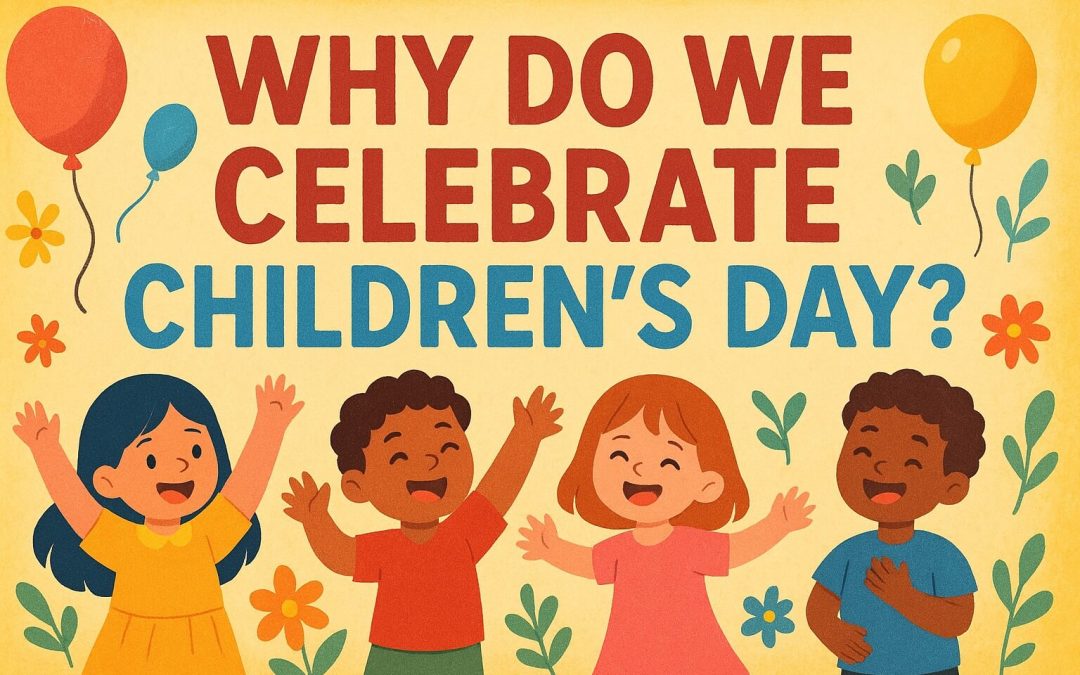
We all know 14th November as the day dedicated to children. It’s celebrated across India to honour Pandit Jawaharlal Nehru, lovingly known as Chacha Nehru. But Children’s Day is more than just a special occasion for children. It carries a deeper meaning and purpose.
Here’s what Children’s Day truly stands for, and why we celebrate it.
History of Children’s Day in India
The history of Children’s Day in India has a unique story. Initially, the country observed it on 20th November as part of Universal Children’s Day. After Pandit Jawaharlal Nehru died in 1964, the date was moved to 14th November to mark his birth anniversary.
Nehru’s lifelong dedication to children’s welfare, education, and equal opportunities inspired this change. His vision for nurturing young minds and promoting happiness became the foundation for the celebration. Today, the day honours Nehru’s commitment and reminds us of the importance of protecting children’s dreams and potential.
The True Meaning of Children’s Day
So, why do we celebrate Children’s Day?
Promoting Children’s Rights, Education, and Well-Being
Children’s Day celebrates every child’s right to learn, play, and grow. It reminds us of the importance of education and emotional well-being for children to develop into confident and happy individuals.
Reminding Adults of Their Duty
The day highlights the responsibility of adults to protect, guide, and nurture young minds. Children need care, attention, and support to explore their talents and reach their potential.
Encouraging a Caring and Fair Society
Children’s Day also encourages a society that values kindness, creativity, and equality. Observing this day inspires us to build an environment where all children feel loved, respected, and encouraged to follow their dreams.
How Children’s Day Is Celebrated
Celebrating Children’s Day in Schools
Across schools in India, Children’s Day is marked by vibrant celebrations filled with fun, laughter, and learning. Classrooms come alive with cultural performances, creative competitions, and playful role reversals in which teachers step into students’ shoes for a day. Teachers often perform skits, songs, or dances to make their students feel cherished and appreciated. Many schools also stage performances inspired by Pandit Nehru’s ideals, reminding everyone of the importance of nurturing children’s education, curiosity, and well-being.
At Bethany, the day is a joyful blend of music, dance, games and performances by teachers along with a variety of food stalls put together by the High school students of Bethany Koramangala. This children’s day is also special because we are celebrating our children and Film screening followed by an interactive Q&A session with Russian filmmakers by School Cinema International Film Festival (SCIFF).
Children’s Day at Home and in Communities
Beyond schools, families and communities join in the celebration by spending quality time with children through fun activities, games, and shared learning experiences. Many NGOs and educational institutions organise outreach drives, wellness check-ups, and community programmes to support children from all walks of life. Public events and campaigns held on 14th November also help raise awareness about children’s health, rights, and education, reinforcing the message that every child deserves equal opportunities to grow, learn, and thrive.
Jawaharlal Nehru’s Vision for Children
Children’s Day is closely linked to Pandit Nehru’s beliefs. Many Jawaharlal Nehru quotes on Children’s Day, such as “children are like buds in a garden,” highlight the importance of nurturing children with care. Nehru established institutions such as AIIMS, IITs, and IIMs to create an educated and progressive India. He also championed free primary education. His belief in science, curiosity, and compassion remains the foundation of modern education. His vision was to empower children with knowledge and empathy, shaping a generation that would grow up to contribute meaningfully to society.
Why Children’s Day Still Matters Today
The significance of Children’s Day remains firmly embedded in our society, reminding us of our shared responsibility for every child’s growth and happiness.
Despite progress, many children still face barriers to education, healthcare, and equal opportunity.
This day calls on communities to bridge those gaps to prioritise learning, health, and joy in every child’s life. More than just a celebration, it’s a reminder and a call to action: when we create spaces where every child can learn, explore, and thrive, we honour their potential and shape a brighter future for all.
Conclusion
Celebrating Children’s Day is about much more than festivities. It’s a reminder to nurture every child’s potential and joy for learning. It calls on us to lead with love, empathy, and curiosity as we shape young minds for the future.
By supporting their dreams, encouraging creativity, and fostering kindness, we carry forward Pandit Nehru’s vision of a nation where every child feels seen, valued, and inspired to make a difference.
FAQs
Why is Children’s Day celebrated on 14th November in India?
It marks the birth anniversary of Pandit Jawaharlal Nehru, who believed in the power of children to shape the future.
What is the importance of Children’s Day?
Children’s Day emphasises children’s rights, education, and well-being. It reminds society to nurture every child with care and opportunity.
How is Children’s Day celebrated in schools?
Schools host cultural events, games, storytelling sessions, and teachers’ performances to make the day memorable for students.
What was Nehru’s vision for children?
He believed children are the foundation of a strong nation and worked to ensure education, equality, and scientific growth for them.
How can parents celebrate Children’s Day at home?
Spending quality time with their children by playing games, reading, cooking together, or watching a movie can strengthen the bond and encourage creativity.
Rhyming words make learning English fun for young children. Studies show that kids who hear rhymes early develop better vocabulary, listening, and memory skills. Rhymes also help children notice sounds, which prepares them for reading. When kindergarteners learn simple rhyming words, they enjoy playing with language and build stronger communication skills. This guide shares 50 English rhyming words for young learners, plus tips, examples, games, and activities to make rhyming a daily, enjoyable habit that boosts confidence and creativity.
Teachers often introduce rhyming words in small groups so children can recognise sound patterns more easily. Many lessons begin with 10 rhyming words in English and gradually expand to 20, 30, or even 50 rhyming words as students become more confident. This structured approach works especially well for rhyming words for UKG, KG class, and early primary learners.
Step-by-Step Guide to Learning Rhyming Words
Learning rhyming words helps children improve reading, speaking, and listening, and it makes language more fun. Teaching rhymes is easier when teachers use clear and playful methods.
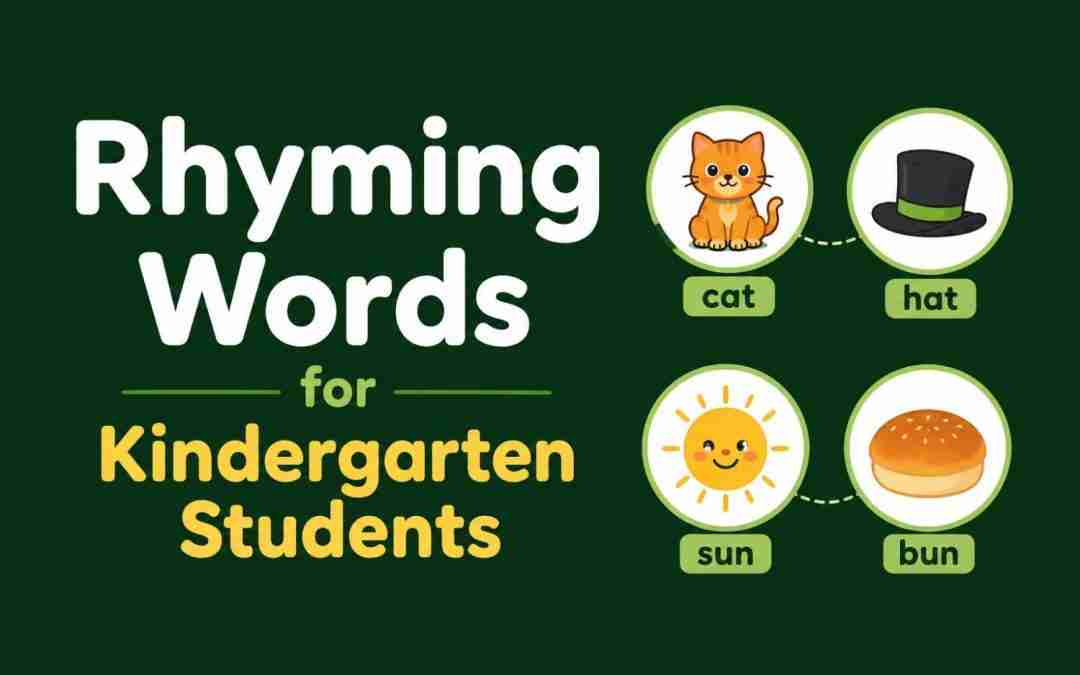
Many teachers use a rhyme chart to group words with similar endings, such as -at, -og, and -oon. A well-designed rhyming words chart helps children quickly identify patterns and makes classroom practice more interactive. Visual tools, such as rhyming words paired with pictures, are particularly effective because children can connect the sound of a word to a familiar image.
1. Listen Carefully
Start by saying two words out loud and listen to how they end. Paying close attention helps children hear sound patterns and learn which words rhyme.
2. Identify the Rhyme
Listen for the ending sounds in words. Words rhyme when their last sounds are the same. For example, “cat” and “hat” rhyme because they both end with the “-at” sound. Learning this helps children hear and use sounds, which is important for reading and writing.
3. Practice with Word Pairs
Start with simple and familiar pairs like “dog-log” or “sun-fun.” Practising with these pairs helps children notice sound patterns. As they improve, add new words with similar endings to make it a bit harder.
4. Use Fun Rhyming Activities
Add rhyming to games, songs, or flashcards. Activities like clapping along, singing nursery rhymes, or matching cards make learning fun and hands-on. When children join in, they remember patterns better and enjoy learning more.
By listening, finding rhymes, practising pairs, and playing games, children build stronger sound skills, learn new words, and feel more confident spotting rhymes in daily language. Teachers can also make a rhyming words chart to visually show common sound patterns in the classroom.
Key Rules and Tips for Teachers
Rhyming words for Jr. KG are a vital part of early language learning. Here are some key tips for teachers to make teaching rhymes both effective and fun:
Understand the concept: Rhymes match ending sounds, not spelling. For example, “see” and “tree” rhyme despite having different letters.
Start simple: Begin with short vowel sounds like “cat,” “hat,” and “bat” to build a foundation.
Use creative materials: Integrate songs, poems, and stories that naturally include rhymes to make learning enjoyable.
Encourage oral practice: Let children repeat words aloud to boost memory, pronunciation, and confidence.
Gradually increase difficulty: Introduce longer and more complex rhyming words as students get used to the basics. Using rhyming words in sentences helps children see how rhymes fit into everyday language.
Use visual and hands-on tools: Try flashcards, charts, or matching games to help children remember sound patterns and keep lessons lively.
Consistent reinforcement: Revisit rhyming words regularly to strengthen retention and recognition in everyday language.
Common Mistakes Students Make
Even with practice, children sometimes find rhyming tricky. Teachers can help by spotting and fixing these common mistakes early:
Assuming similar spellings rhyme: Words like “cough” and “rough” look alike but sound different, so they don’t rhyme.
Listening to the wrong sounds: Many focus on the initial sounds instead of the final ones, missing the actual rhyme pattern.
Confusing sound with spelling: Rhyming depends on how a word sounds, not how it’s written.
Overlooking word endings: Students may ignore the final syllables that determine whether two words rhyme.
Skipping pronunciation practice: Without saying words aloud, children struggle to accurately hear rhyming similarities.
Recognising these mistakes helps students sharpen their listening skills and understand rhymes correctly.
Example / Quick Illustration
Word: Cat
Rhymes with: hat, bat, mat, sat.
In a sentence: “The cat wore a hat.”
Word: Dog
Rhymes with: log, frog, jog, bog
In a sentence: “The dog jumped over the log.”
10 Rhyming Words in English
If you are starting, here are 10 rhyming words that are easy for young learners to understand:
Cat – Hat
Sun – Fun
Dog – Log
Book – Look
Bee – Tree
Ball – Wall
Pen – Hen
Car – Star
Light – Kite
Room – Broom
These 10 rhyming words in English are commonly taught to preschool and kindergarten students because they are simple, familiar, and easy to pronounce.
Three Letter Rhyming Words
Three-letter rhyming words are ideal for beginners because they focus on short and simple sound patterns. Examples include:
Cat, Bat, Hat
Pin, Tin, Win
Top, Hop, Mop
Bug, Hug, Rug
Pan, Man, Fan
These words are excellent for rhyming words for UKG and help children recognise ending sounds with ease.
Rhyming Words for Kindergarten
Here is a list of over 100 rhyming words you can use in the classroom or at home. These words are chosen to make it easy and fun for young children to hear and practice different sounds.
1
play
day
say
2
sun
fun
run
3
hat
cat
bat
4
bat
rat
mat
5
man
can
pan
6
log
dog
fog
7
run
bun
fun
8
book
look
cook
9
bin
tin
fin
10
ball
wall
call
11
star
car
far
12
pen
hen
ten
13
pig
wig
fig
14
bed
red
fed
15
jar
far
star
16
bee
tree
see
17
shoe
blue
true
18
home
dome
foam
19
light
fight
kite
20
cry
try
dry
21
five
live
dive
22
top
mop
drop
23
read
lead
seed
24
go
flow
blow
25
down
brown
town
26
cake
lake
make
27
tall
fall
small
28
gold
fold
scold
29
sky
buy
high
30
soon
noon
spoon
31
map
tap
lap
32
bill
drill
fill
33
class
pass
mass
34
food
good
wood
35
rope
hope
soap
36
joy
toy
boy
This list of rhyming words helps preschoolers spot sound patterns and practice saying words with confidence.
Tips to Make Rhyming Fun for Kids
When rhyming is fun, children stay interested and learn more quickly. Try these creative ideas in your classroom:
Use songs and poems: Play nursery rhymes or short poems to help children hear and repeat rhyming patterns.
Interactive games: Include clapping, tapping, or matching rhyming cards to keep activities lively.
Visual flashcards: Combine images with words to boost memory and sound recognition.
Storytime practice: While reading, ask children to identify rhyming words in the story.
Daily practice: Add rhymes to everyday talk, morning greetings, or bedtime chats.
Reward participation: Offer praise or small rewards to encourage consistent effort.
Group activities: Let children find rhymes together to build teamwork and excitement.
Rhyming challenges: Ask kids to make short sentences with new rhyming words. For example, have them use worksheets with 3-letter rhyming words to help them understand simple sound patterns.
Use props and toys: Add puppets, balls, or blocks for interactive learning.
Keep lessons playful: When learning is fun, children become curious and enjoy rhyming even more.
As children progress, they can explore some rhyming words in English across different themes and sound families. Whether you teach 15 rhyming words, 40 rhyming words, or a complete list of 50 rhyming words, the goal is the same: helping children recognise sounds, expand vocabulary, and enjoy learning through play.
Conclusion
Rhyming words are a fun and effective way to build vo cabulary, listening, and early reading skills. By following simple steps, practising in pairs, and playing interactive games, children can quickly learn to rhyme. Parents and teachers can use this guide to make learning English enjoyable and memorable.
FAQs
Why do we learn rhyming words in kindergarten?
Rhyming words in kindergarten help children become better listeners, speakers, and readers. Rhymes also make it easier for kids to remember words and notice sound patterns.
Do rhyming words need the same spelling?
No, spelling is not important for rhyming. Words like “see” and “tree” rhyme because they end with the same sound, not the same letters.
How can parents practice rhyming at home?
Parents can help by reading poems, singing rhyming songs, playing matching games, or using rhyming worksheets to help children learn and enjoy rhymes every day.
Most of us grew up thinking that good grades were everything. We were told that scoring high in school would unlock top colleges, good jobs, and a stable future. And for a long time, that made sense. But the world has changed.
As parents, educators, and lifelong learners, we’re starting to question that old belief. Is academic excellence still enough in today’s world? Or are we just teaching kids to memorise facts and chase marks, without really helping them think, adapt, or create?
What Are We Really Measuring Through Exams?
Exams have been the go-to method of assessing student performance for generations. But let’s be honest, what do they truly measure? In most cases, it’s memory. Not curiosity. Not critical thinking. Not how well a student can apply knowledge in the real world.
And this is where things start feeling heavy. The pressure to ace high-stakes exams isn’t just stressful; it can be emotionally exhausting.
We see it all around us, especially in students preparing for board exams. According to an article by ETV Bharat, many young learners in India go through serious emotional struggles during this time. It’s more than just pre-exam jitters. Some face anxiety, burnout, and even start tying their self-worth to the marks they get.
The truth is, exams might show how well someone remembers content in the moment, but they often take a toll on mental well-being and a lifelong love for learning. And that’s something we can’t afford to ignore.
What Happens When We Remove the Exam Lens?
We’ve all heard it: “Good grades lead to good colleges and better jobs.” But let’s be real, does acing tests really prepare students for life? At Bethany Institutions, we’ve learned that it doesn’t. What does? Curiosity, exploration, and real understanding.
When in a classroom, students ask “Why does this matter?” instead of “Will this be on the test?”, that shift alone changes everything. The pressure fades. Students dive into learning because they want to, not because they have to. They start asking bold questions. They connect ideas. They get excited. And in that excitement, real learning happens.
In his now-legendary TED Talk, education expert Sir Ken Robinson famously said, “We are educating people out of their creative capacities.” (Watch here) He argued that the current system, obsessed with conformity and academic benchmarks, sidelines the very essence of learning: Curiosity, innovation, and self-discovery.
At Bethany Institutions, we couldn’t agree more. When we give students space to think, explore, and even make mistakes, we see them grow. Not just as learners, but as thinkers and doers.
Our approach isn’t about producing perfect report cards. It’s about building skills that actually matter, such as critical thinking, problem-solving, and adaptability. We’re preparing them for life, not just for exams. And that makes all the difference.
When it comes to assessing this kind of learning, how we measure progress is key. Rather than relying solely on traditional summative assessments, we need a system that helps students grow throughout the learning process. That’s where formative assessments play a vital role.
How Formative Assessments Help Over Summative Ones
Not all assessments are bad. But how we assess learning makes all the difference.
Let’s break it down.Carnegie Mellon University explains two core assessment types: Formative and summative.
Summative assessments, such as final exams and standardised tests, evaluate learning at the end of a unit or term.
Formative assessments, such as group projects, journal entries, feedback loops, and peer evaluations, occur continuously and are designed to improve learning, not just measure it.
Here’s the beauty of formative assessment: it supports a growth mindset. Students learn that they can improve through effort, feedback, and self-reflection. It makes learning personal. It shifts the focus from marks to mastery.
And no, this doesn’t mean there’s no accountability. In fact, this kind of ongoing feedback creates better accountability. Students are not just performing, they are progressing.
What the Real World Really Values (And Why Schools Should Reflect That)
Let’s take a moment to step outside the classroom and look at the world students are walking into.
According to theWorld Economic Forum’s Future of Jobs Report 2023, the most in-demand skills for the next decade are not about knowing the right answer, they are about knowing how to think. Employers are actively looking for:
Analytical thinking
Creative problem-solving
Resilience and adaptability
Emotional intelligence
Technology literacy
Collaboration and leadership
These are not things you can cram for the night before an exam. They are developed through hands-on experiences, real-world projects, reflection, and relationship-building, none of which are fostered by filling in multiple-choice sheets under time pressure.
If schools are meant to prepare students for life, shouldn’t they reflect the world students are entering?
How Bethany Is Thinking Ahead
At Bethany Institutions, we don’t believe in simply keeping up. We believe in leading.
That’s why our educational philosophy goes far beyond the textbook. We aim to create well-rounded individuals who are not only academically strong, but emotionally grounded and socially responsible.
Here’s how we do it.
Project-based learning: Students explore real-world problems through collaborative projects that integrate multiple subjects and skills.
Inquiry-led classrooms: We encourage curiosity. Students are not just told the answers, they are empowered to find them.
Life skills programmes: From public speaking and financial literacy to empathy and emotional regulation, our curriculum includes skills that matter beyond the school walls.
Creative assessments: Instead of grading only what students can memorise, we also assess how they think, create, collaborate, and grow.
We’re not saying marks don’t matter. They do. But they are only one piece of the puzzle. What matters more is preparing students to live with confidence, curiosity, and compassion.
Join Us in Rethinking Education
It’s time to reconsider how we educate our children. Rather than concentrating solely on exams, we should focus on equipping them with the skills and mindset needed to face the challenges and embrace the opportunities life brings. Education should be about fostering confidence and resilience, preparing them for the future in a meaningful way. We owe it to our children to offer an education that goes beyond exams, one that prepares them for life itself.
Bethany is committed to doing just that. But we can’t do it alone. We need parents, educators, and change-makers to join us in this movement.
Let’s create a generation of learners, not just test-takers. Let’s raise thinkers, doers, and dreamers. Because the future doesn’t come with answer keys. It demands creativity, courage, and continuous learning. And that’s exactly what we’re here to build.
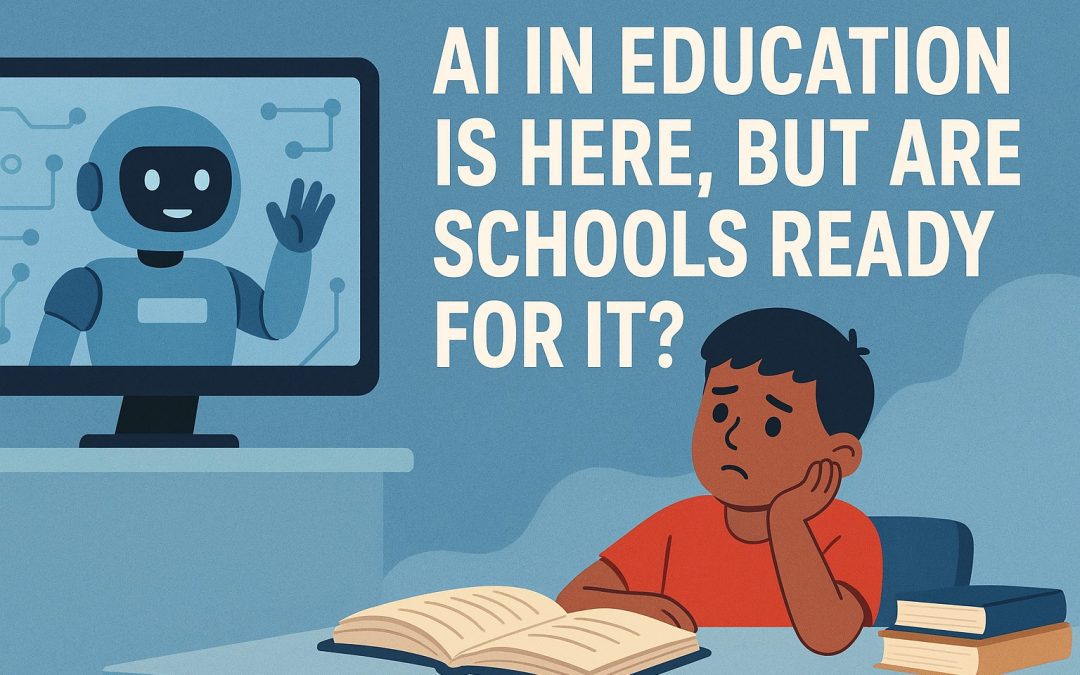
Artificial Intelligence is no longer just science fiction or Silicon Valley jargon. It’s in our homes, our phones, and yes, in our classrooms, too. From AI-powered personalised tutoring apps and adaptive learning platforms to tools that can write essays or generate instant, real-time feedback, AI transforms how students learn and teachers teach.
But amidst all this change, there’s one question that matters more than ever.
Are Indian schools truly ready for AI?
At Bethany Institutions, we’ve always believed in staying ahead of the curve. But more than that, we believe schools must be thoughtful, not just tech-savvy. AI in education isn’t just a new gadget. It’s a whole new way of thinking about what learning looks like, and here’s how we see it.
AI Is Changing Learning. Dramatically.
Gone are the days of “one-size-fits-all” education. Today, AI can analyse how each child learns best and adapt accordingly. For learners who need more time, AI offers revision. For the fast-paced, it opens doors to more advanced material. Whether it’s a student who needs more time on algebra or one who races ahead in English literature, AI-powered platforms are stepping in where traditional methods couldn’t.
Tools like Khan Academy’s AI tutor, Byju’s personalised journeys, and Google’s Read Along app are already being used by Indian students from metros to tier-2 cities.
And that’s not all.
In India, the Central Board of Secondary Education (CBSE) has already introduced AI as an optional skill subject from Class IX to XII, and almost8 lakh students enrolled in these courses in 2024–25. Kendriya Vidyalayas are running pilot programmes using AI tools to personalise learning. Even popular edtech platforms like Toppr are integrating AI to make content smarter and more responsive.
In other words, the technology is here. What we do with it next matters most.
At Bethany, we see this as a huge opportunity. AI should be used to personalise learning and not standardise it. Every child learns differently. If AI can help us cater to that, while teachers focus on mentorship and values, that’s a win.
The AI Revolution in Assessments
Here’s a hard truth: Traditional exams don’t always tell the full story of what a student knows or can do. But that’s starting to change, thanks to AI.
Today, AI isn’t just helping students with tutoring or homework. It’s also beginning to transform how we assess their learning. Imagine an exam that doesn’t just give a score, but instantly shows which topics a student struggled with or which concepts each child missed.AI-powered assessment systems can also grade multiple-choice tests in seconds and even analyse essays for grammar, structure, and writing style, delivering feedback in minutes instead of weeks. That kind of immediate response can help students learn from their mistakes right away.
Plus, these assessments, powered by AI, are also making online tests smarter and more secure. Some platforms use them to spot unusual patterns that might indicate cheating. This is increasingly important as digital exams become more common.
But that’s not all.
These tools or systems can also support teachers in powerful ways. With insights from AI assessments, educators can identify learning gaps early, adjust lesson plans, and offer timely support, making sure no one falls through the cracks.
But, of course, there are valid concerns, too. Parents and teachers alike worry that students might lean too heavily on AI and use it to generate answers or complete assignments without really learning. And that’s a real risk.
That’s why many education experts at our school say AI should be seen as a “co-pilot,” not the driver. In other words, it’s a tool to support thinking and not replace it. For example, a teacher might encourage students to use an AI chatbot to gather information for a project, but still expect them to come up with their ideas and conclusions. This keeps learning active, creative, and student-driven, rather than letting algorithms do all the work.
AI and the Role of Teachers
At Bethany, we’re convinced AI is here to help teachers, not replace them. In fact, many experts echo this. There are fears of “teacher displacement”, but the reality is a role shift. Instead of delivering facts, teachers become learning facilitators. AI handles routine tasks, while the teacher focuses on discussion, critical thinking, and motivation. As oneIndia Today report notes, educators will move “from deliverers of information to facilitators of learning,” which will “definitely require new skills and training”.
But we must be honest in acknowledging that this shift can be overwhelming. It’s a big change to learn new tech. That’s why teacher training is crucial. In India, initiatives like 1M1B (One Million for One Billion) are already empowering teachers: They have trained over500,000 educators in future tech, including AI. And at Bethany, we believe all schools should scale up similar efforts if we ever want our teachers to gain confidence with AI tools.
The Real Question: Are We Prepared?
Despite the promise of AI, thedigital divide remains a real concern. Many Indian schools still struggle with infrastructure, internet access, and basic digital literacy. In fact, a global survey by EdWeek found that87% of educators had received no formal AI training as part of their professional development, and only around 10% had even minimal exposure. Introducing AI without addressing these gaps would only widen the inequality.
That’s why readiness must go beyond devices. It’s about:
Training teachers, not just students.
Choosing the right tools, not the most expensive ones.
Asking tough questions about ethics, bias, and data safety.
So, Are We Ready?
The truth is, while India is experimenting with AI in education, there’s still a long way to go in terms of readiness.
We need:
Stronger infrastructure (especially in rural areas)
Clear ethical policies for AI use in schools
Robust teacher training
Indian-language-friendly AI platforms
Student data protection norms
At Bethany, we’re not just watching the AI wave. We’re preparing for it. We’ve initiated internal dialogues, encouraged safe experimentation, and are learning alongside our students and teachers. We’re also taking deliberate steps by piloting AI-assisted assessments, training our educators, and engaging with policymakers to ensure AI benefits all students, not just a few. In the end, our school believes that readiness is not just about having the tools. It’s about having the right mindset.
Embracing Change Thoughtfully
AI in education is an exciting frontier. It can personalise lessons, free teachers for deeper engagement, and bridge gaps for many learners. At Bethany, we’re excited by these possibilities. But excitement is not enough, readiness matters. We must ensure our schools have the resources, training, and wisdom to use AI wisely.
We see our role as both learners and leaders. We are observing how AI unfolds in Indian education and will introduce it carefully when the time is right. We will pilot small projects, listen to feedback from teachers and parents, and always put students’ well-being first. Our goal is clear: to enrich our students’ learning without losing sight of human values.
To fellow educators and leaders: let’s keep talking. How can we use AI to make Maths class fun, or help our quiet students speak up?
To parents and students: Be curious but cautious. Ask questions about how these tools work and how your privacy is protected.
And, to policymakers: Let’s invest in infrastructure and training, so every school, in every village and city, can benefit.
In the end, AI is here, and it will stay. The question isn’t if schools should use it, but how. Are we ready to guide it? We at Bethany invite fellow schools, innovators, and stakeholders to join us in building a bold, balanced, and beautifully human education system even in an AI-driven world.
Not long ago, “burnout” was a word we associated with frazzled office workers or maybe college seniors during finals week. Today, that word is echoing in middle school hallways and high school classrooms.
We’re seeing children as young as ten experiencing stress, fatigue, and anxiety levels once considered “normal” only in adult professionals.
But let’s be clear. This isn’t just about kids being dramatic or too sensitive. This is about a changing world that’s putting intense pressure on young shoulders, and we atBethany Institutions believe that every school needs to know why this matters and what to do about it.
The Pressure Starts Early
Children today are growing up in an environment that’s far more fast-paced and demanding than ever before. Academic competition begins before they even learn long division. There are entrance exams for nursery school. Coding bootcamps for thirteen-year-olds. College counselling sessions in the ninth grade.
Parents aren’t to blame. Many are simply trying to give their children the best start possible. But when “best” becomes synonymous with “nonstop achievement,” we have a problem.
The Many Faces of Burnout
So, what does student burnout look like in a school-going child? It can be subtle because it often creeps in gradually. On the surface, a burnt-out student might seem “lazy” or disengaged – losing motivation, struggling to concentrate, or letting grades slip. But look closer, and you might notice deeper signs of exhaustion.
According to an article by theLearning Counsel, common symptoms of burnout in school-aged kids include:
Emotional fatigue (kids who are chronically drained and irritable)
Physical fatigue (always tired, low energy)
A negative attitude toward school, and
Disinterest in learning or activities they used to enjoy
Burnt-out students may also withdraw from friends, skip assignments, or complain of frequent headaches or sleeplessness. But that’s not all.
Research shows that student engagement often drops after fifth grade as academic pressures build. By middle school, some kids already feel overwhelmed and helpless, classic hallmarks of burnout, which can snowball into complete disengagement from classes. And by High school, some students ( facing more intense workloads) might express cynicism (“What’s the point of all this?”) or appear “checked out” even though they once were eager learners.
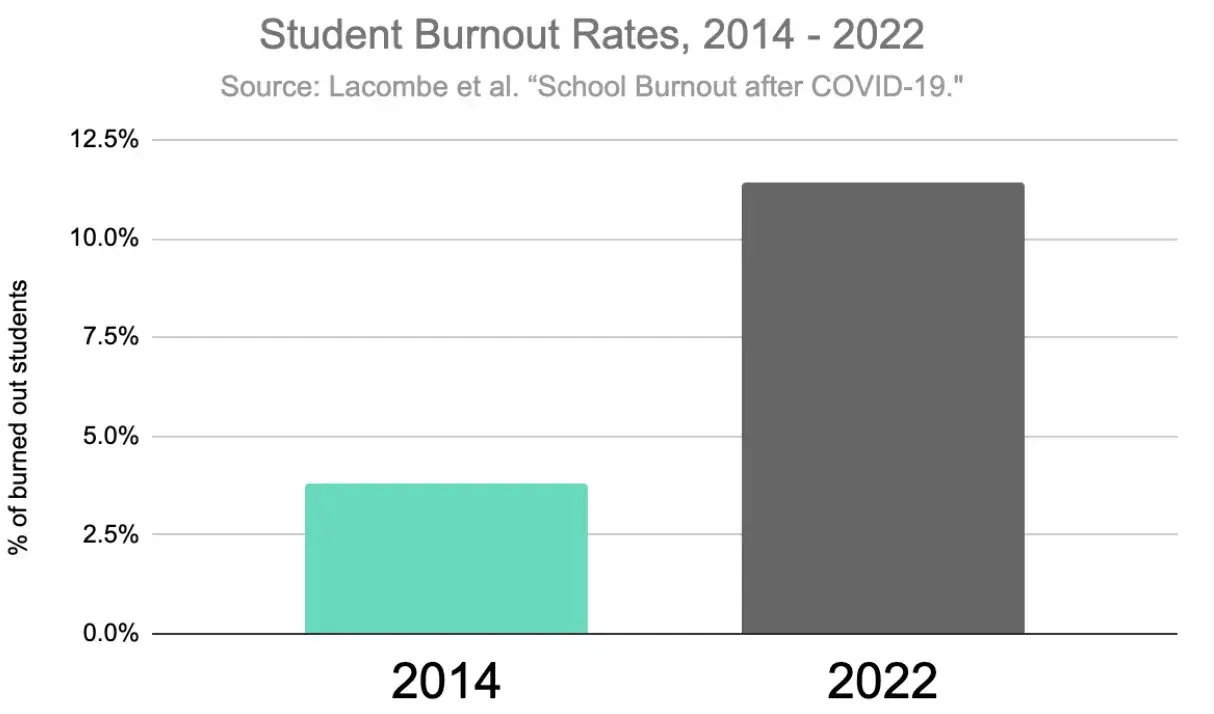
Figure: Severe burnout among high school students has risen sharply. In oneEuropean study, 11.4% of students reported severe burnout in 2022, up from 3.8% in 2014. Burnout is clearly affecting younger students, and the pressures of recent years (like pandemic disruptions) have only exacerbated the trend.
What’s Causing This Wave of Burnout in School Kids?
Why are students as young as 12 or 15 feeling burnt out? There isn’t one simple cause – it’s usually a mix of factors piling on. Here are some of the big ones:
1. The Academic Pressure to Perform
Many kids today feel like they have to be great at everything: top grades, extracurriculars, sports, social life, all while thinking about college before they’ve even hit high school. Plus, “If you are not ahead, you are behind” has become a common mindset, and it’s a recipe for burnout.
2. Performance Anxiety and the Need to be “Perfect”
Hand-in-hand with pressure comes fear of failure. Frequent high-stakes tests, constant grading, and the competitive academic culture can make kids extremely anxious and keep them in a constant state of stress.
For some, even a single B or a failed quiz triggers panic that “I’m not good enough.” Over time, this anxiety wears them down. They may start avoiding challenges or feel paralyzed by the need to always be perfect. Middle schoolers, for instance, are still learning to cope with evaluation; when they feel everything “counts” toward their future, it can become overwhelming.
3. Digital Overload
Today’s youth are practically born with smartphones in hand, and this constant screen time and information overload are taking a toll on their mental well-being. Think about it: a student spends7 hours a day or more on screens – researching for assignments, doing online classes or homework, then scrolling YouTube or Instagram into the night. This near-constant digital engagement can lead to “technostress,” a tech-induced strain that leaves students mentally fried. And it’s not just about blue light or sedentary habits. The never-ending stream of notifications, the pressure of social media comparisons (“Everyone else seems to be hndling life better!”), and the inability to truly unplug all contribute to a growing sense of exhaustion and anxiety. The result? Tired, overstimulated minds that struggle to focus and cope.
4. Lack of Balance and Downtime
According toPsychology Today, a schedule that’s too intense with zero time to relax or have fun is a major driver of burnout.
Many young people today have schedules that would make an adult’s head spin. School, sports practice, music lessons, tutoring, clubs – and repeat. With life on this hamster wheel, there’s no time to recover or play, and students end up exhausted and cynical.
In other words, pushing kids to do that one extra thing (one more class, one more club, one more hour of homework) can backfire badly. Children need time to be children – to play, to daydream, to sleep – yet that time keeps shrinking. By high school, afternoons and weekends become extensions of work, not breaks from it. No wonder teenagers are running on empty.
5. Sleep? What Sleep?
Most teens are chronically sleep-deprived. Late-night studying, exam prep marathons, and doomscrolling have taken the place of proper rest. And when kids are always tired, they can’t focus, they get frustrated easily, and everything feels harder.
In fact, a report by theHindustan Times found that over 70% of Indian kids sleep less than 7 hours a night during exams, and some even sleep as little as 3 to 5 hours. That’s way below the 8 to 10 hours experts recommend for teenagers. And this isn’t just during exam season. Many students fall into these poor sleep habits all year round, making them even more vulnerable to burnout.
What Can Schools Actually Do About It?
At Bethany Institutions, we believe education must go beyond academics. Burnout is real, and we see it as a call to action. As educators, parents, and mentors, it’s our responsibility to create environments where students thrive, and not just survive.
Here’s how we’re working on that:
1. Reclaim Balance
It’s time to rethink the “more is better” mentality. At Bethany, we encourage a course load and activity roster that challenges kids without overloading them. Sometimes that means deliberately doing less – dropping one advanced class for a regular one, or keeping weeknights free from extra clubs.
Our educators are also trained to recognise signs of burnout and stress. They know when to slow things down, when to offer support, and when to simply listen.
2. Protect Sleep Like It’s Gold
Both schools and families should treat sleep as a non-negotiable priority. Educators might avoid assigning homework that requires all-nighters and consider later school start times. Parents can set consistent bedtimes and limit late-night device use. They can encourage device-free dinners, tech-free hours before bed, or even one day a week with no social media.
3. Listen Without Fixing
Sometimes kids don’t need advice. They just need someone who hears them. Let them vent. Don’t dismiss how they feel. “I’m tired” might mean more than just a rough day. And if they do need help, guide them to support (counsellors, mentors, etc.).
This Is a Wake-Up Call. Let’s Not Hit Snooze
Burnout isn’t a trend or a buzzword; it’s a warning. If we don’t shift how we approach school and student life, we’re going to keep raising kids who are done before they even begin.
But we can change that. At Bethany Institutions, we believe schools have the power to lead this shift. Because no dream university or prestigious job is worth a childhood lost to burnout.
So let’s take a breath and reimagine the journey. We hope you’ll join us.