by Bethany Institutions | Aug 4, 2025 | Blog Recent Post
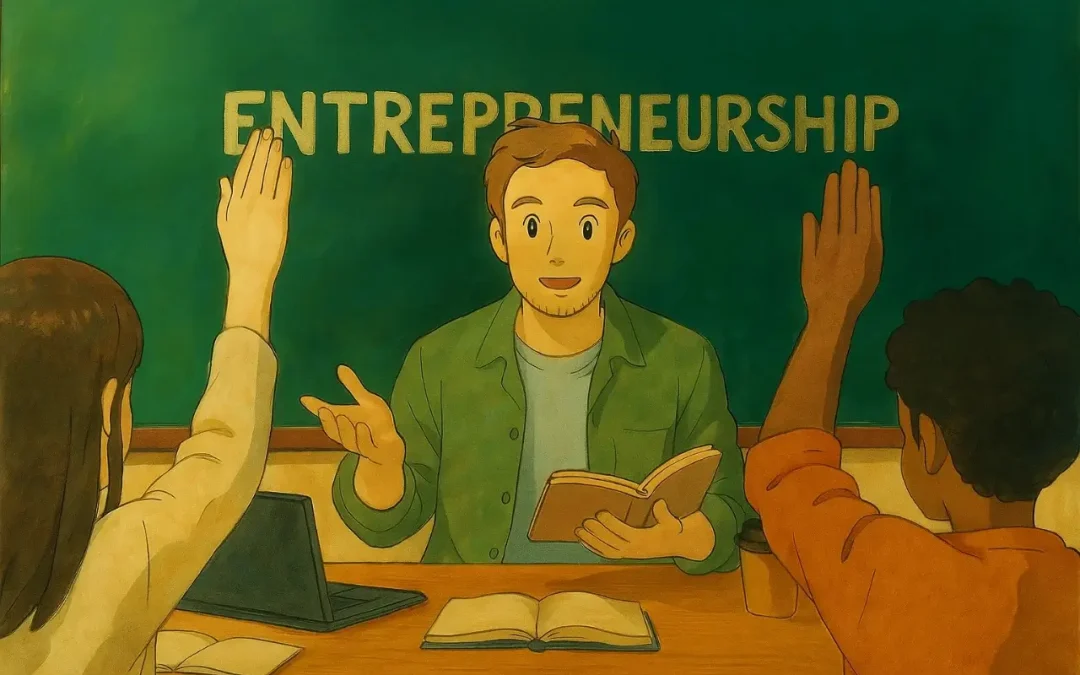
Imagine sitting through years of “Commerce” classes, memorising balance sheets and business laws, but never really learning how to start a business. In fact, it’s no surprise that while over 32% of students say they want to start their own businesses, very few feel prepared to take the leap.
The truth is, the world has changed. Start-ups can disrupt entire industries overnight. Take Zerodha, for instance. This Indian fintech startup revolutionised stock trading by introducing zero brokerage fees, forcing traditional players to rethink their entire business models. In this new reality, just learning traditional commerce isn’t enough.
Today’s world needs creators, problem-solvers, and leaders, not just employees. That’s why it is time for schools to move beyond theory and start teaching real-world entrepreneurship skills like innovation, resilience, leadership, and creative thinking that empower students to build their futures.
At Bethany Institutions, we have always championed forward-thinking education.
Our school believes that while traditional commerce classes do a great job of introducing students to business fundamentals at the high school level, they often stop short of igniting the entrepreneurial spirit that’s essential today.
Why Traditional Commerce Education Isn’t Enough
Commerce, as traditionally taught, builds a strong foundation in subjects like accounting, financial reporting, business studies, and economics. But in most Indian schools, the curriculum ends up being textbook-heavy, packed with theories and formulas.
While we understand that these are undoubtedly valuable, they are still primarily reactive skills and tools for managing an existing system, not for disrupting or innovating within it.
And that’s not all.
Traditional commerce curricula often miss out on:
- Innovation and Creativity: Students learn how businesses work, but not how to create or reinvent them.
- Risk-taking and Resilience: There is little exposure to the uncertainties and challenges of starting or managing new ventures.
- Practical Application: Theoretical knowledge isn’t always linked to real-world scenarios, leaving students underprepared for practical challenges.
In short, students often end up ready to fit into existing jobs, but not prepared to create new opportunities.
Entrepreneurship changes that. It teaches students to think independently, solve problems creatively, and embrace uncertainty. It is about having the courage to start something new, the resilience to keep going when things get tough, and the agility to pivot ideas when needed.
Of course, this doesn’t mean teaching entrepreneurship the way colleges or MBA programmes do. At the school level, it’s about sparking interest through simple, relatable experiences. When broken down into age-appropriate activities, even younger students can begin to grasp the mindset behind entrepreneurship and get a taste of what it means to think like an entrepreneur.
And in a country like India, where more than 65% of the population is under 35 (Economic Survey of India, 2024), can we afford not to nurture entrepreneurial thinking early on?
Why Entrepreneurship Matters More Than Ever
The 21st-century economy is much more than just finding a job. Students graduating today face a reality where:
Students graduating today face a reality where:
- Creativity and critical thinking outrank rote memorisation
- Leadership and adaptability are prized across every industry
- Tech entrepreneurship is reshaping economies globally
But that’s not all.
We are also living in an era where entire industries are being disrupted within years. Jobs that didn’t exist a decade ago (think app developers, digital marketers, sustainability consultants, driverless car engineers, or podcast producers) are booming today. Likewise, many traditional roles are evolving rapidly.
And that is where teaching entrepreneurship education to students matters.
It prepares students to:
- Identify opportunities where others see challenges
- Think out of the box and innovate solutions instead of waiting for them
- Create value for society, not just profit
- Lead ethically and empathetically
- Approach challenges with a solution-oriented mindset
In other words, teaching entrepreneurship requires cultivating a mindset that embraces responsibility, resilience, and making an impact.
Even the National Education Policy (NEP 2020) explicitly encourages fostering entrepreneurship and innovation skills among students (at the high school level). In fact, the policy advocates for experiential learning, critical thinking, and flexibility in course choices, all of which are vital to entrepreneurship education.
Additionally, initiatives such as the Atal Innovation Mission (AIM) and the Atal Tinkering Labs are already paving the way to provide students with the tools and platforms to experiment, innovate, and bring their business ideas to life.
In a similar spirit, Delhi’s Business Blasters programme has emerged as a pioneering initiative to grow entrepreneurial mindsets among school students. Launched under the Delhi government’s “Entrepreneurship Mindset Curriculum,” this scheme provides students with seed funding to develop and pitch fundamental business ideas, with some even becoming profitable before they graduate.
What Teaching Entrepreneurship Looks Like
So, what does teaching entrepreneurship look like in a school setting?
It’s hands-on, messy, and wonderfully transformative.
At Bethany, we believe in moving beyond textbooks into experiential learning. Our aim is to help students live the entrepreneurial mindset, and not just read about it. Some of the ways we do this include:
- Competitions where students defend their ideas, developing the confidence to pitch and problem-solve on the spot
- Workshops and hackathons where students brainstorm creative solutions to real-world problems and learn to think divergently
- Case study analysis of business successes and failures that encourages students to ask, “What would I have done differently?”
- Social impact challenges, where students design solutions for community issues, combining empathy with innovation
- Embedding entrepreneurship across subjects, so students start to see how business thinking applies to areas like science, arts, or even civics
- Encouraging students to initiate and manage projects, fostering ownership and practical experience
And these are not merely theoretical exercises. For instance, in our Junior College, students once conducted a simulation where they started a company, issued shares among classmates, declared profits, and even distributed dividends, getting a hands-on taste of what it means to run a business. In another initiative, students helped run a tuck shop, learning to manage inventory, track profits, and understand customer needs in real time.
Through these initiatives, we aim to nurture a generation of innovators, leaders, and changemakers. In fact, the skills our students develop naturally through such experiences include:
- Critical thinking
- Financial literacy
- Marketing basics
- Leadership and teamwork
- Persuasion and communication
The Road Ahead
At Bethany Institutions, we’ve always prided ourselves on preparing our students for the world they are about to enter, not the one we grew up in. That’s why we’ve begun teaching basic entrepreneurship skills to our high school students.
Although we know that not every student will become a startup founder, we believe every student will someday need to think independently, solve problems, and adapt quickly.
And that’s the true value of learning entrepreneurship early.
By shifting focus from solely teaching commerce to fostering entrepreneurship, we can equip students with the skills and mindset needed to navigate and shape the future. We invite more schools across India to join us on this journey.
by Bethany Institutions | Aug 4, 2025 | Blog Recent Post
What does it mean to educate a child?
Is it about perfect scores and flawless report cards?
Or is it about equipping young people to make sense of the world, to lead it, shape it, and serve it with compassion and courage?
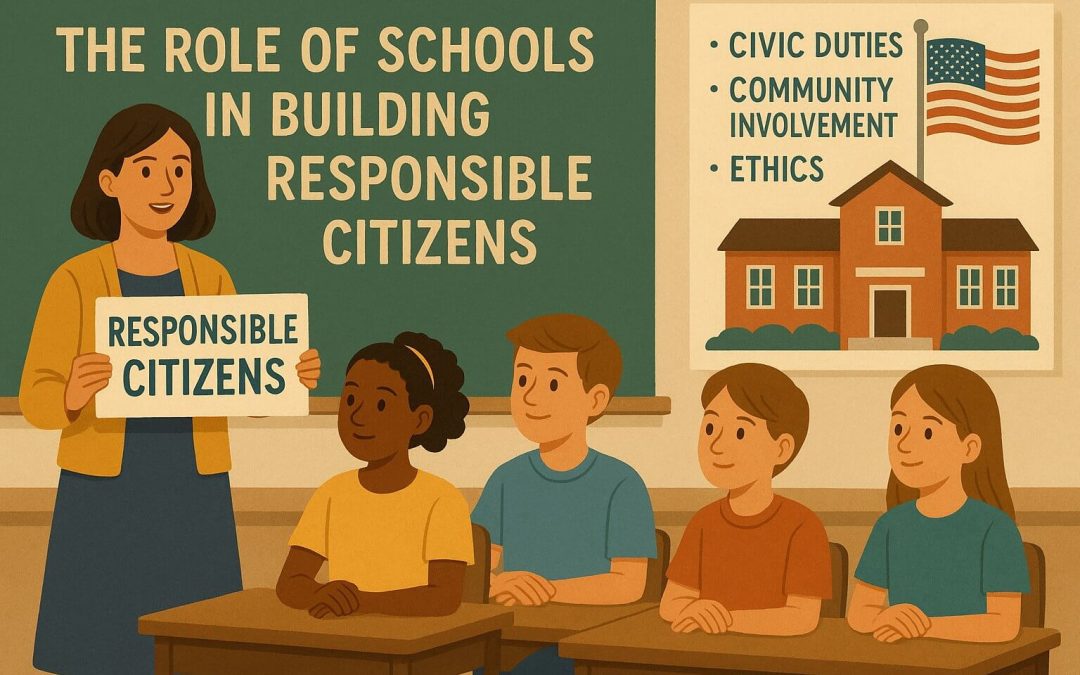
At Bethany, we’ve always believed that the role of a school goes far beyond academics. We are not just preparing our students for university entrances or board exams.
We are preparing them for life. For leadership. For citizenship.
In today’s world, where climate change, social unrest, AI ethics, and political polarisation are daily headlines, we don’t just need students who can recite facts. We need young people who can ask the right questions, stand up for what’s right, and build a better future.
Because let’s face it: the world doesn’t just need toppers. It needs torchbearers. It needs changemakers. And that journey begins in the classroom.
Why Can’t Responsibility Wait?
We’re living in a time when the stakes are higher than ever. Whether it’s the climate crisis, inequality, digital ethics, or gender inclusion, the world’s problems are no longer distant or abstract. They’re personal, present, and pressing.
Young people around the globe are already stepping up. Greta Thunberg was just 15 when she sparked a global climate movement. Afroz Shah, a lawyer from Mumbai, mobilised thousands to clean up Versova Beach – one of the world’s largest citizen-led environmental efforts.
In other words, this is the era of young changemakers. But they don’t just appear out of nowhere. They’re shaped quietly and consistently by the values, environments, and people around them, which is why schools have an extraordinary role to play.
In fact, a study from McCann Worldgroup Truth Central (2021) found that 77% of APAC’s Gen Z believe they have a responsibility to drive social change. The intention is there. Our job as educators is to help turn that intention into a lifelong impact.
What Does a Responsible Citizen Look Like Today?
Gone are the days when being a “responsible citizen” simply meant following rules and casting a vote every five years. Today, citizenship is active, dynamic, and deeply human.
It means being aware of the world, but also willing to improve it.
It means having empathy in an increasingly divided world.
And the courage to act, even when it’s inconvenient.
A responsible citizen is someone who not only knows their rights but respects their responsibilities — to others, to the environment, to democracy, and to truth.
However, the challenge is that these aren’t skills students can memorize from a textbook. They have to be lived, practiced, and experienced. And that’s where schools come in.
Five Ways Schools Can Shape Future Leaders and Changemakers
1. Teaching values that matter
From youngest learners to graduating seniors, schools should build their curriculum around values that matter, like: honesty, compassion, humility, and responsibility.
For instance, when a child learns to reflect on ethical dilemmas in a novel or understands the human cost behind a scientific discovery, they begin to see the world differently. They start connecting knowledge to meaning.
2. Giving students a voice and real responsibility
Leadership doesn’t begin with titles. It begins with opportunity.
That’s why schools should actively involve students in decision-making through student councils, leadership forums, and class-led initiatives. From organising events to leading fundraisers, students must learn how to plan, collaborate, speak up, and take ownership. At Bethany, this comes alive through the Bethany Student Organisation (BSO), a dynamic student-led body that organises events and activities across the school.
In fact, on 16th August 2024, the BSO independently organised and presented an entire school assembly, complete with skits, music, dance, and even stand-up comedy. The assembly carried a strong message about what it means to lead and take responsibility. It was a reminder that when students are trusted with real responsibilities, they rise to the occasion and often surprise us with what they are capable of.
3. Connecting learning to the real world
Classrooms can’t be bubbles. To raise changemakers, we must expose students to real-world issues — not just in theory, but in practice.
Whether it’s a clean-up drive, a sustainability project, or a visit to an NGO, schools need to give students a chance to step outside their comfort zone and into the shoes of others.
At Bethany, for instance, our Annual Road Run has, in recent years, included a parallel clean-up initiative, giving students, staff, and even parents the opportunity to give back to the community while quite literally walking the talk on civic responsibility.
4. Creating space for curiosity and dissent
We believe respectful disagreement is a sign of a healthy democracy and a healthy classroom. That’s why we think schools should encourage students to question, debate, and express alternative viewpoints — not to win arguments, but to learn from each other.
One way we put this into practice is through platforms like Model United Nations (MUN) and debate competitions, both within school and on external stages. Our students regularly participate in conferences like Euro MUN, where Khushi Rao of Std 9 was recently recognised as Best Verbal Delegate in the Continuous Crisis Committee. Similarly, Joyce Naidu and Aisha Iqbal of Std 10 won first place at the prestigious Frank Antony Memorial Debate held at St. Joseph’s High School in July 2025.
As French playwright Eugène Ionesco once said, “It is not the answer that enlightens, but the question.” We couldn’t agree more. A changemaker is never afraid to ask why, and we believe that skill starts when a student learns to question things around them.
5. Introducing students to real role models
Children often become what they see. Therefore, schools should strive to expose students to leaders from diverse backgrounds, not just CEOs and celebrities, but also activists, educators, scientists, and everyday heroes. Over the years, we’ve had inspiring individuals like Retd. Major General Deepak Naidu, Dr. Deepa Malik, and Mr. Alistair Freese speak to our students, offering a glimpse into lives shaped by discipline, resilience, and service.
In other words, when students see change being led by people who look like them or even come from the same communities, they begin to believe they can lead, too.
What We’re Doing at Bethany
At Bethany, we see our role not just as educators, but as co-architects of character. From the moment a student walks through our gates, we begin planting the seeds of responsibility.
It starts with our values—integrity, empathy, service, and resilience, woven into every lesson, interaction, and opportunity.
We’ve also made civic engagement a living part of school life. Whether it’s clean-up drives, outreach to underserved communities, or awareness campaigns led entirely by our students, we make sure learning moves beyond the classroom and into the real world.
Our student leadership programmes are also designed not just for show, but for substance. From student councils that represent diverse voices to Model United Nations that teach diplomacy and empathy, we encourage every student to find their voice and use it with courage.
And then there are the small, everyday choices that build character: helping a peer, owning a mistake, and standing up for someone who is being excluded. We celebrate those just as much as academic wins.
Our Daily Promise
Every school morning, when we see our students walk in, some sleepy-eyed, chatty, full of potential, we’re reminded of the trust families place in us. And we take that trust seriously.
That means teaching our students how to lead, how to listen, how to care. It means helping them understand that the future isn’t something they inherit; it’s something they co-create.
At Bethany, we promise to shape citizens who don’t wait for change, but become the change.
Because the world needs leaders with heart, courage, and conscience.
And we believe those leaders are already here, sitting in our classrooms, dreaming big.
Final Thought
At Bethany, we don’t just see students. We see future activists, innovators, teachers, artists, entrepreneurs, and everyday heroes.
In fact, we believe every child has the potential to be a changemaker. And that belief isn’t just a vision, it’s already in motion. Whether it’s students leading clean-up drives, raising their voices in debates and Model UNs, organising assemblies through the BSO, or drawing inspiration from real-world leaders who’ve walked our halls, the seeds of responsible citizenship are being sown every day.
Because at Bethany, shaping future leaders isn’t a promise. It’s already happening. One lesson, one student, one bold idea at a time.
by Bethany Institutions | Aug 4, 2025 | Blog Recent Post
“The greatest enemy of knowledge is not ignorance; it is the illusion of knowledge.”
– Stephen Hawking
Today, young people aren’t starving for information. They are drowning in it.
Think about it. Every day, a student scrolling through Instagram, WhatsApp, or YouTube takes in more information than someone living 100 years ago encountered in their entire lifetime! One quick swipe and they’re flooded with opinions, breaking news, viral trends, and endless forwarded messages.
While it’s amazing to have so much information at our fingertips to empower our younger generations, there is a big problem: not all of it is true or is exaggerated.
In fact, according to a Microsoft survey, more than half (64%) of Indian internet users have encountered fake news online. Even scarier, a UNICEF report points out that children and teens are especially vulnerable to believing misinformation online.
Here at Bethany Institutions, we believe it’s time to act. Schools must act as the first line of defence against misinformation.
Because honestly, if education isn’t helping our kids think critically, verify information, and question what they read and hear, then we aren’t truly educating them.
The Misinformation Crisis and Its Impact
Misinformation in India has surged to alarming levels, especially through social media, which now generates 77% of all misinformation. Plus, nearly 80% of India’s first-time voters say they have been bombarded with fake news on social media, with over one-third acknowledging that misinformation has directly influenced them.
In other words, misinformation isn’t just annoying; it’s potentially dangerous. It can create unnecessary fear, lead to poor decisions, and even cause harm in communities.
For instance, in Kannur, Kerala, misinformation about the measles-rubella vaccine caused vaccination rates to drop drastically to about 20%. It took a concerted and extensive awareness drive in schools and communities to dispel the myths and raise the rate to around 70%. Misinformation, quite literally, can become a matter of life and death.
But that’s not all.
In the digital playground where our children spend hours every day, truth and misinformation often wear the same clothes. Every piece of information looks polished, credible, and convincing, making it harder for young minds to differentiate between what is fact and what is fiction.
That’s why it’s essential to address this issue of misinformation proactively. In such an environment, we believe schools must step beyond traditional education and actively teach students to critically evaluate and question the information they consume.
Now that artificial intelligence has become so pervasive in our lives, the problem of misinformation has reached new heights. AI tools can now generate fake news articles, realistic images, deepfake videos, and even synthetic voices that are nearly impossible to distinguish from real ones.
A UNESCO report raises serious concerns that AI could even be used to sow doubts about historical facts such as the Holocaust, either by accident or with malicious intent. Moreover, a BBC study found that popular AI chatbots like ChatGPT, Gemini, Copilot, and Perplexity frequently produce inaccurate or distorted news summaries.
While these technologies hold incredible potential, they also make it easier than ever to spread false or misleading information on a wide scale. For young people growing up in an AI-driven world, learning how to spot digitally manipulated content and question even the most convincing media is not just a useful skill. It’s essential for responsible citizenship and digital literacy in today’s world.
Why Schools Are Uniquely Positioned to Lead the Fight Against Misinformation
Trust is a rare currency today. But inside classrooms, it still thrives.
Students inherently believe what they are taught at school. They trust their teachers, mentors, and school systems. This positions schools uniquely to intervene early and:
- Teach students how to critically evaluate information.
- Equip them to verify facts before believing or sharing.
- Instil a lifelong habit of questioning sources and intentions.
By intentionally incorporating media literacy and digital awareness into school life, we can build resilient and informed young minds ready to face the complex world of misinformation with confidence.
Because the battle against misinformation won’t be won through more firewalls or fact-checking websites alone.
It will be won when every child learns to ask simple, powerful questions like:
“Is this really true?”
“Who created this information, and why?”
“Is this source reliable and reputable?”
“Can I verify this information independently?”
How Our School Helps Students Stand Strong Against Misinformation
At Bethany Institutions, beyond the day-to-day curriculum, we actively organise programmes and teach lessons to build our students’ digital discernment. Even our youngest learners are joining this mission.
On 12th February 2025, our Grade 3 students at Bethany High (Sarjapur) hosted a special assembly titled “Disconnect to Connect,” using songs and skits to urge everyone to put down their devices and spend quality time with family. It was heartwarming to see eight-year-olds reminding the adults in the room to unplug and be present with each other in an increasingly digital world.
Likewise, in December 2024, our middle and high schoolers led an “E Warriors” assembly on online safety and responsible digital behaviour. These young “digital warriors” put on skits about cyberbullying, privacy, and the allure of clickbait to show how easily misinformation spreads and how we can fight it. By the end of the session, the students pledged to be more vigilant and kind online.
Students as Agents of Change Beyond the Classroom
Media literacy isn’t just something students leave behind when they step out of school. It travels home with them and spreads into their communities.
At Bethany, we’ve seen our students teaching their grandparents how to spot fake news or respectfully challenging family members who share questionable WhatsApp forwards.
In many families, our students are the unofficial tech experts, naturally positioned to guide older family members who spend more time watching TV or scrolling through WhatsApp from misinformation.
And we are not alone in recognising this dynamic. In Kerala, a district-wide initiative called Satyameva Jayate trained high schoolers across 150 schools to spot fake news online. These students became trusted community ambassadors, successfully encouraging scepticism toward rumours.
This example highlights a principle we hold dear: when students become agents of change, they can bridge the generational gap and help inoculate entire families against misinformation.
Building a Future Where Truth Prevails
In an age where misinformation can spread faster than facts, the responsibility on educational institutions has never been greater.
We cannot leave the battle for truth to journalists, policymakers, or technology companies alone. It must begin much earlier—in our schools and classrooms.
By teaching students how to think critically, ask tough questions, and courageously stand for truth, we empower them to navigate the digital world with wisdom and confidence. Those skills, instilled at a young age, will serve them and society for a lifetime.
Imagine a world where misinformation struggles to find a foothold because our young people are too informed, too curious, and too critical to fall for it. That’s a future worth building, and schools are the perfect place to start.
As Nelson Mandela so powerfully reminded us:
“Education is the most powerful weapon which you can use to change the world.”
by Bethany Institutions | Aug 4, 2025 | Blog Recent Post, Uncategorized
Introduction: Discovering Identity Through Theatre
At Bethany High, we believe every child has something to say, and creating opportunities for freedom of expression is a clear objective. The Theatre Club has interactive sessions that push children out of their comfort zones and help them confidently express themselves. This also inculcates learning to work together as teams improving group dynamics. With engagements like acting, improvisation, script writing, wordplay, and stage exercises, we guide students to discover and express their unique voices.
Why does finding your own voice matter?
Strong communication skills are the bedrock of academic achievement, personal relationships, and professional success today. Freedom to express your views is integral for presenting ideas, collaborating effectively, and articulating emotions. Through theatre activities, the students are exposed to spontaneous moments and develop verbal and nonverbal communication skills, leading to better body language, public speaking, and enhanced empathy as listeners.
How Theatre Builds Confidence and Communication Skills
Theatre offers avenues for self-discovery and exposure to the process of creativity.
Here are a few ways that it enhances confidence and in turn communication skills:
- Expression Through Words and Actions
Theatre activities push students to think out of the norm, articulate thoughts, and utilise body language effectively. They learn to convey ideas and emotions while delivering monologues and creating stories spontaneously. - Improving Listening and Responding
Improvisation exercises and role-playing encourage thoughtful responses. These activities sharpen students’ ability to process information and react naturally, enhancing verbal and non-verbal communication. - Public Speaking with Confidence
Performing on stage in front of an audience helps students overcome stage fright and develop poise. They practice clarity, projection, and engaging delivery of speech. This in turn helps them for future presentations, debates, and interviews. - Teamwork and Collaboration
Theatre thrives on teamwork. Students work together to bring stories to life, learning how to cooperate, resolve conflicts, and share responsibilities—skills that translate into better group dynamics. - Adaptability and Creativity
Theatre encourages quick thinking and adaptability. Whether solving unexpected stage challenges or creating unique character interpretations, students learn to think on their feet—a crucial skill in dynamic environments.
Activities in Bethany’s Theatre Club
At Bethany High, our Theatre Club is packed with activities that make learning fun and impactful:
- Improvisation Workshops: Strengthen creativity and quick thinking through lively improvisation exercises.
- Script Reading and Role-Playing: Explore scenes and characterisation honing articulation and expression.
- Collaborative Productions: Work as a team to stage memorable performances.
Success Stories: The Bethany Impact
Our Theatre Club has transformed countless students, helping them grow into confident individuals and performers. For example, Megha Perumparambil who joined the club in middle school as someone unsure of how to channel her creative urges, and she progressed into taking up Drama as a 3rd Group subject in High school and after 4 rounds of auditions, landed multiple supporting cast roles in BIG FISH the 2024 Bethany Musical. Another student, Ethan Mudartha, was one of the tiny, shy ones in Primary and mostly quiet; he found his voice in the Theatre Club and was selected to be part of two Bethany Musicals, most recently he was the giant, and learnt to walk on 2 feet tall stilts for 2024 Musical. Stories like this highlight the power of theatre to bring out the best in every student and the freedom to be themselves.
Why Choose Bethany’s Theatre Club?
Bethany High stands apart in integrating performing arts into education. Here’s what makes our Theatre Club unique:
- A Nurturing Environment: We provide a supportive space where students can explore, make mistakes, and grow without judgment.
- Experienced Mentors: Our talented teachers guide students with expertise and encouragement, helping them excel in communication and theatre.
- 360O Learning: Theatre is part of Bethany’s commitment to nurturing well-rounded individuals, offering opportunities in music, art, and drama alongside academics.
- Global Opportunities: With a rich history of musicals, inter-school events, and international accolades, Bethany High is a gateway to world-class performing arts exposure.
FAQs
- What is the goal of Bethany’s Theatre Club?
To help students find their voice, and build confidence, harness creativity while nurturing their love for theatre. - How often do theatre sessions happen?
The Theatre Club is part of the Middle School Clubs program, and every section in Grade 7 goes through 6 sessions of theatre activities, crafting stories, and communication.
Conclusion: Building a Future of Confident Communicators
Bethany’s Theatre Club is more than a platform for performance—it’s a foundation for personal and professional growth. By combining creativity, collaboration, and communication, we prepare students to excel as life is a stage. Join us in celebrating the power of theatre to transform skills and shape futures.
Discover how Bethany High, one of the best ICSE schools in Bangalore, empowers students through arts and academics.
by Bethany Institutions | Jun 30, 2025 | Blog Recent Post
We’ve all heard the phrase, “Catch them young.” At Bethany High, we believe that this doesn’t just apply to academics or sports—it applies just as much to cultivating an entrepreneurial mindset in education. In a world that’s changing at breakneck speed, helping our learners think like entrepreneurs is one of the most powerful things we can do to prepare them for the future.
Introduction: The Value of Entrepreneurial Skills for Children
Why should children learn about entrepreneurship? Isn’t it something that only grown-ups worry about? Well, not anymore. In today’s world, being entrepreneurial isn’t just about starting businesses—it’s about problem-solving, creativity, leadership, and resilience. These are life skills every child can benefit from, no matter their future career.
At Bethany High, we’re passionate about nurturing more than just textbook knowledge. We want to raise young leaders, creative thinkers, and solution-seekers. Developing entrepreneurial skills is an important part of this journey.
How to Enhance an Entrepreneurial Mindset in Kids
Building an entrepreneurial mindset starts with curiosity. We encourage our students to ask questions, take initiative, and explore their interests. Here are some ways we foster this mindset:
- Encouraging curiosity: We reward questions just as much as answers. A child who asks “Why?” and “What if?” is already thinking like a changemaker.
- Allowing room for failure: Entrepreneurship is about trying, failing, and trying again. In our classrooms, mistakes are learning opportunities.
- Giving students voice and choice: Whether it’s choosing a project or suggesting an idea, we give students the freedom to lead.
These approaches slowly but surely nurture independence and confidence—key ingredients in the entrepreneurial recipe.
Key Skills Every Young Entrepreneur Should Develop
No matter the age, every young entrepreneur benefits from a solid foundation of practical and emotional skills. Some of the most important ones include:
- Creativity and innovation: Finding new solutions, generating fresh ideas, and being open to trying new things.
- Communication: Whether it’s pitching an idea or working with a team, being able to express oneself clearly is crucial.
- Problem-solving: Young entrepreneurs need to think critically and find smart ways to overcome obstacles.
- Resilience: Setbacks are inevitable. What matters is bouncing back stronger.
- Time management and organisation: Juggling studies, projects, and passions takes planning.
At Bethany High, our projects and classroom activities are designed to help children naturally develop these business skills for children.
Incorporating Entrepreneurial Education in the Classroom
You don’t need a business textbook to teach entrepreneurship. It can be woven into everyday learning.
We incorporate entrepreneurship education in several ways:
- Project-based learning: Students take on real-world problems and work on creating solutions. For example, creating a product or designing a campaign.
- Children’s business projects: We’ve had students set up mini pop-up stalls during school events, selling handmade crafts or baked goods.
The idea is to make entrepreneurship real, hands-on, and exciting.
Successful Young Entrepreneurs: Inspiring Stories
Dr Bharath, a proud alumnus from the 2000 batch, is a shining example of entrepreneurial spirit and dedication. He currently runs Mithra Multi-speciality Hospital and founded his company, Zivatronix, in 2022 post-COVID, with a vision to support home healthcare. Dr Bharath credits much of his inspiration to his teacher who played a pivotal role in shaping his journey into being a confident individual leading him into entrepreneurship.
Safia Hayath, from the 2000 batch, is a passionate entrepreneur and the founder of Shades Creative Gallery, an inspiring art space located in Koramangala, Bangalore. Her creative journey began back in her school days at Bethany, where the SUPW (Socially Useful Productive Work) period sparked her interest in the arts. She fondly recalls how her teachers encouraged her to explore her creative potential and played a key role in inspiring the path she follows today.
Conclusion: Preparing the Next Generation of Innovators
At Bethany High, we’re not just preparing students for exams—we’re preparing them for life. And in today’s world, that means helping them think like entrepreneurs.
By cultivating entrepreneurial skills, encouraging business ideas for kids, and providing the right support and environment, we can turn our learners into leaders.
We believe every child has the potential to innovate, inspire, and impact the world. Let’s give them the tools to do just that.
FAQs
How can I encourage my child to think like an entrepreneur?
Start by encouraging curiosity. Let them explore their interests, take initiative, and make decisions. Involve them in small household projects and talk about how businesses work.
What are the essential skills for young entrepreneurs?
Creativity, communication, problem-solving, resilience, and time management are key. These help children think independently and act confidently.
How can schools teach entrepreneurship to children?
Through project-based learning, real-world problem-solving activities, mentorship programmes, and exposure to successful entrepreneurs.
Why is it important to create awareness and help youngsters explore entrepreneurship?
Because the world needs innovators. Exploring entrepreneurship early builds confidence, independence, and the ability to think critically and creatively.
Are there any good junior colleges in Bangalore that support this mindset?
Yes, several institutions—including our own—offer platforms for innovation and entrepreneurship. If you’re looking for supportive junior colleges in Bangalore, we’d be happy to guide you.
Let’s work together to raise a generation of creators, not just consumers. Let’s turn learners into entrepreneurs!